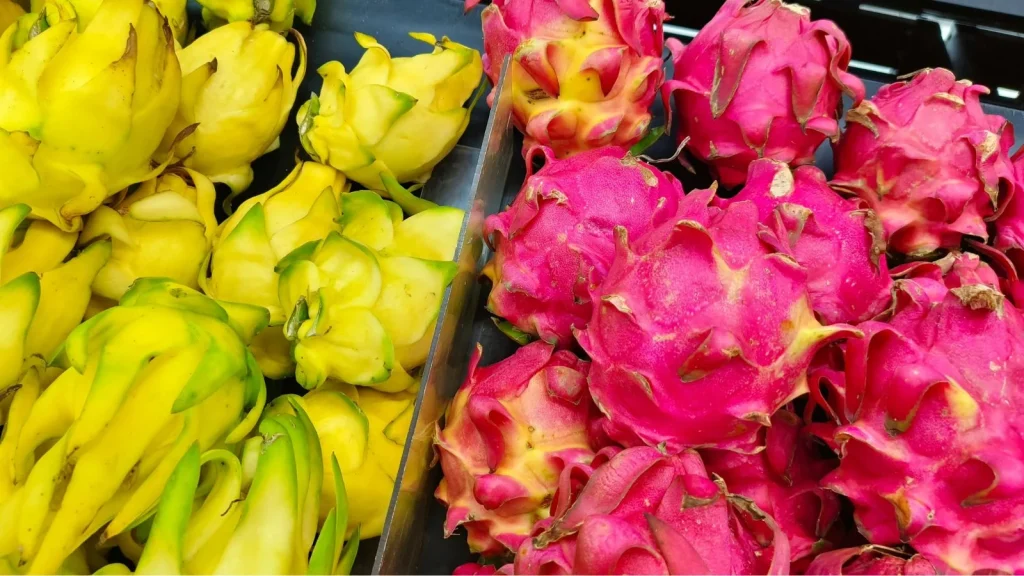
Dragon fruit varieties — a short introduction to this piece.
Dragon fruit varieties: Quick Notes
Originating in Mexico, Central and South America, dragon fruit is popular in subtropical regions around the globe. Its delicious appeal carries it to grocery shelves near and far. With vigorous growth and robust fruiting, growing the long-lived specimen in the home landscape is a great adventure.
Dragon fruit (pitahaya) is a cactus with fast-growing, vine-like stems. Unlike its xeric, desert-dwelling relatives, it prefers temperate conditions and moderate moisture during the growing season. It thrives in climates that are mostly frost-free, hardy in USDA zones 10 and 11. Elsewhere, it grows in pots and raised beds with protection against cold conditions.
Dragon fruit yields sweet, fleshy fruits in vibrant colors like magenta and yellow. Striking nighttime blooms appear with impressive size, form, and fragrance. We’ll explore dragon fruit varieties suitable for incorporating into our edible landscapes to brighten the garden and our culinary endeavors.
Growing Dragon Fruit
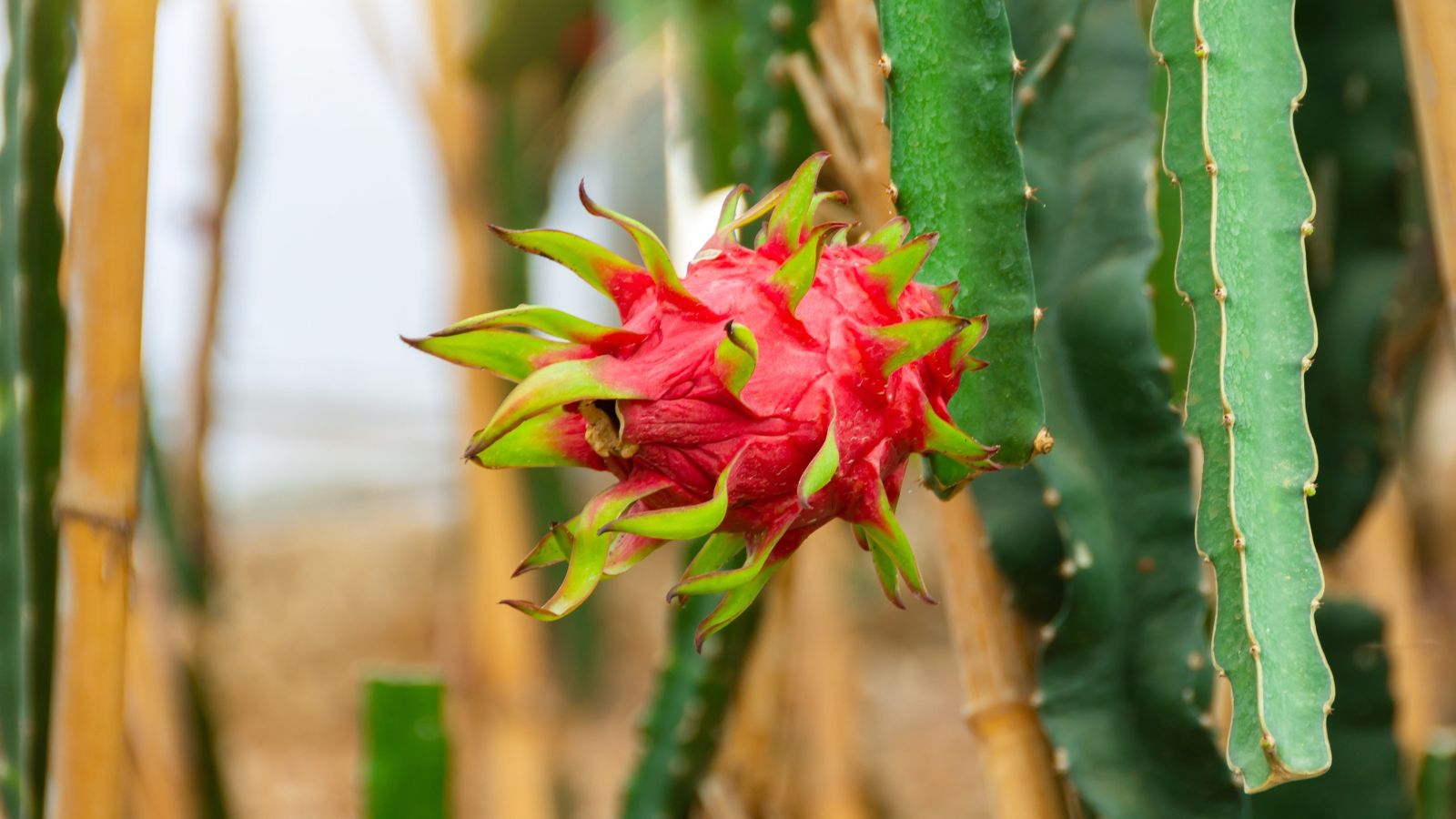
There are many species and numerous cultivars of dragon fruit, the most common of which we see being Selenicereus undatus. These are the pink-skinned fruits with white, fleshy interiors and a multitude of tiny black seeds. Depending on the species, the oval fruits may be pink, red, or yellow, and may be spiny or spineless. Interiors range from translucent white to deep purple.
Pitahaya has thick, triangular stems that grow long segments to climb or sprawl. The vigorous cacti can grow up to 20 feet in their native range, but usually stay a manageable 6 to 12 feet outside of subtropical zones. In the home garden, they grow in pots, raised beds, and in the ground with trellised support.
A simple but sturdy post and frame make a suitable structure to support the crowns. The vining stems grow upright in their first year on a post before spreading and branching laterally on the trellis.
Because dragon fruit grows widely in subtropical regions throughout the world, there are numerous named and unnamed cultivars originating from wild species. Part of the adventure of growing the tropical fruit may be not knowing exactly what variety you’re growing.
When sourcing pitahaya, consider the variety and its pollination requirements. Purchase them as nursery potted specimens for a head start toward faster fruiting. They grow easily from cuttings, bearing fruit in one to two years.
The cacti are often self-fruitful, producing berries without requiring cross-pollination from another variety. But others are self-sterile, relying on a different variety nearby for pollen transfer by moths, bats, and others. Two or three different types of dragon fruit can boost fruiting. Hand pollinating helps, too, to ensure pollen transfer between the flower parts.
Pitahaya performs best in mild air and soil temperatures (optimal growing temperatures are between 65 and 77°F or 18 and 25°C). Move them indoors or to a sheltered space to overwinter in cold climates.
‘Sugar Dragon’
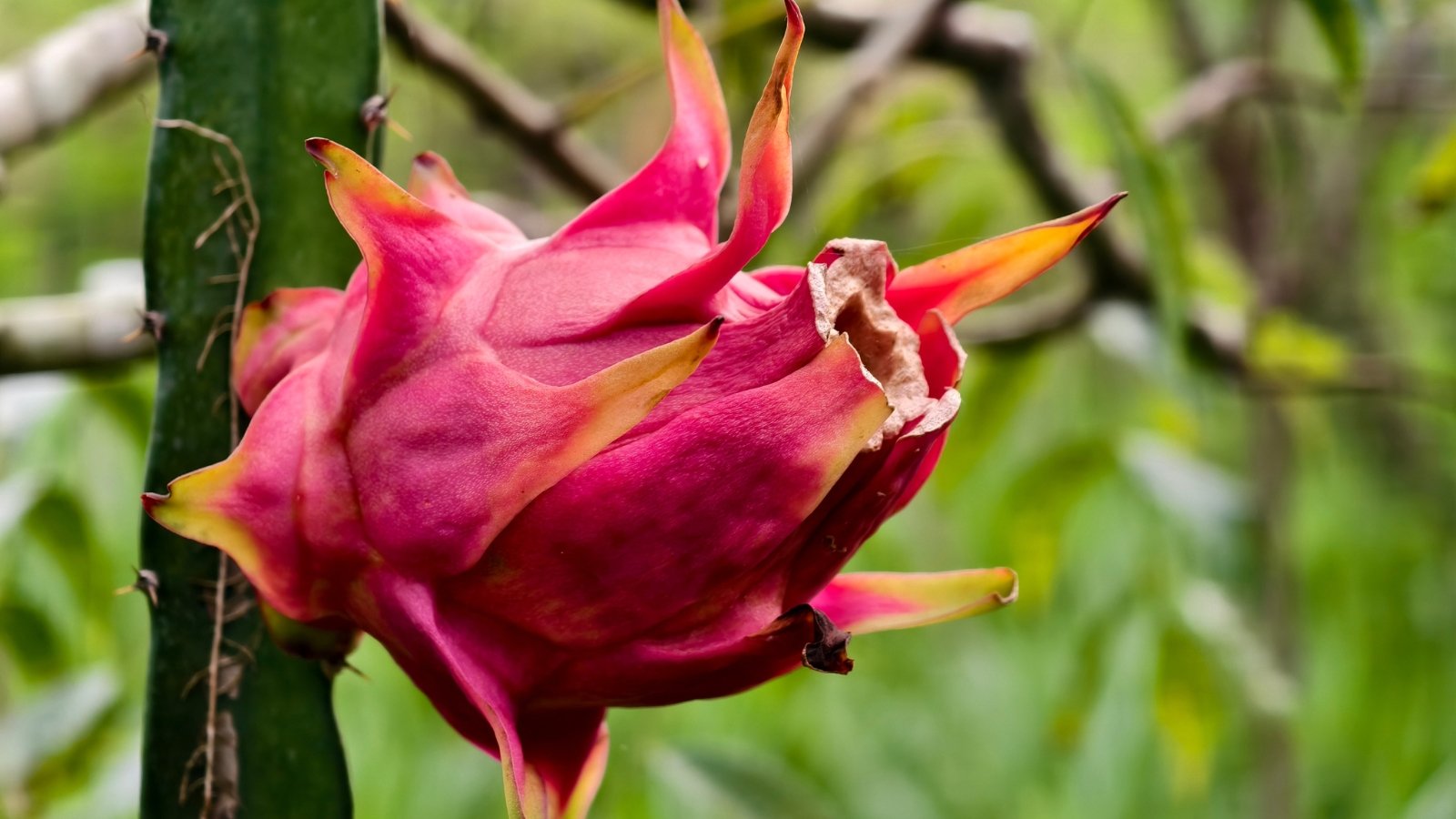
‘Sugar Dragon’ is one of the favorite dragon fruit varieties and a good fit for beginners and collectors alike. It’s hardy and easy to grow with good fruit production. A hybrid of H. guatemalensis, the showy fruits have red skins and rich purple-red interiors and a superlative sweetness.
The Brix scale measures dissolved sugars for a sweetness rating of fruits and vegetables, and gives this variety a high value. The Brix scale ranges from 0 to 32, with higher numbers equating to greater sweetness. ‘Sugar Dragon’ has fruits around 18, with mature plants reportedly yielding those in the 20s. This sweet variety is delicious fresh and also in preserves, juices, smoothies, and sorbets.
‘Sugar Dragon’ has small spines along the midribs of its thick, olive green stems. Massive white flowers with yellow tones can reach 15 inches across. They boast a long bloom cycle that starts early and ends late in summer into fall (for more fruits).
The variety is self-fertile and serves as a good cross-pollinator for those that rely on another dragon fruit to set fruit. Provide extra winter protection in zone 9 to overwinter outdoors.
‘Delight’
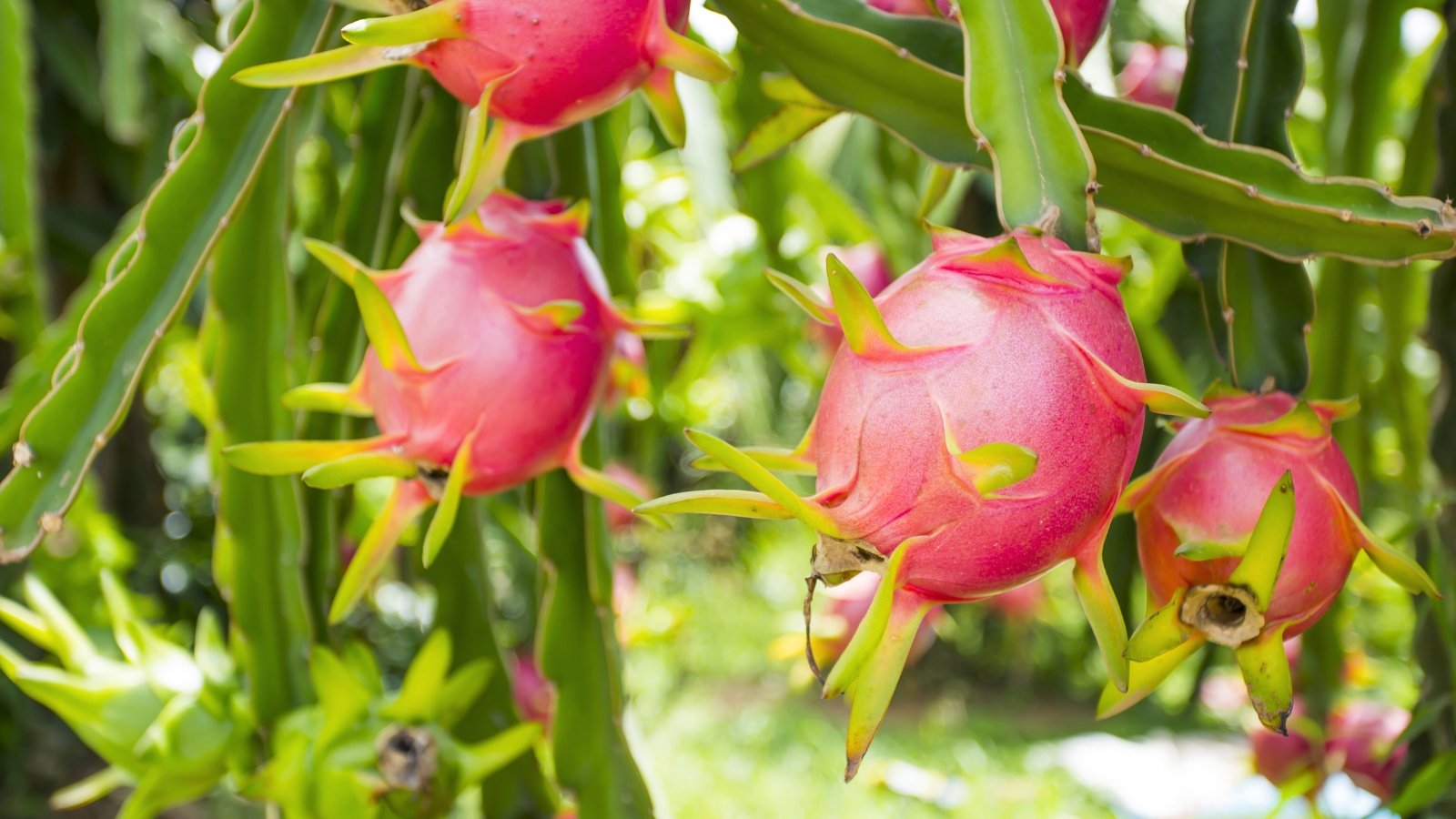
‘Delight’ is true to its name in its sweet flavor and vivid color with firm fruits, good production, and durable growth. The bright, red-pink fruits have white, fleshy pulp.
‘Delight’ is a cultivar of H. undatus and H. guatemalensis, and a seedling selection by the California Rare Fruit Growers and a Paul Thomson hybrid. Paul Thomson (co-founder of the group) hybridized a number of top-performing pitahayas in California and several on our list, as well as other exotic fruits.
‘Delight’ is self-pollinating with good fruit set without the need for another variety. Hand pollinating ensures the highest yields and the largest berries. The huge flowers have a long bloom time in summer, leading to the medium-sized, dense fruits.
‘Palora’
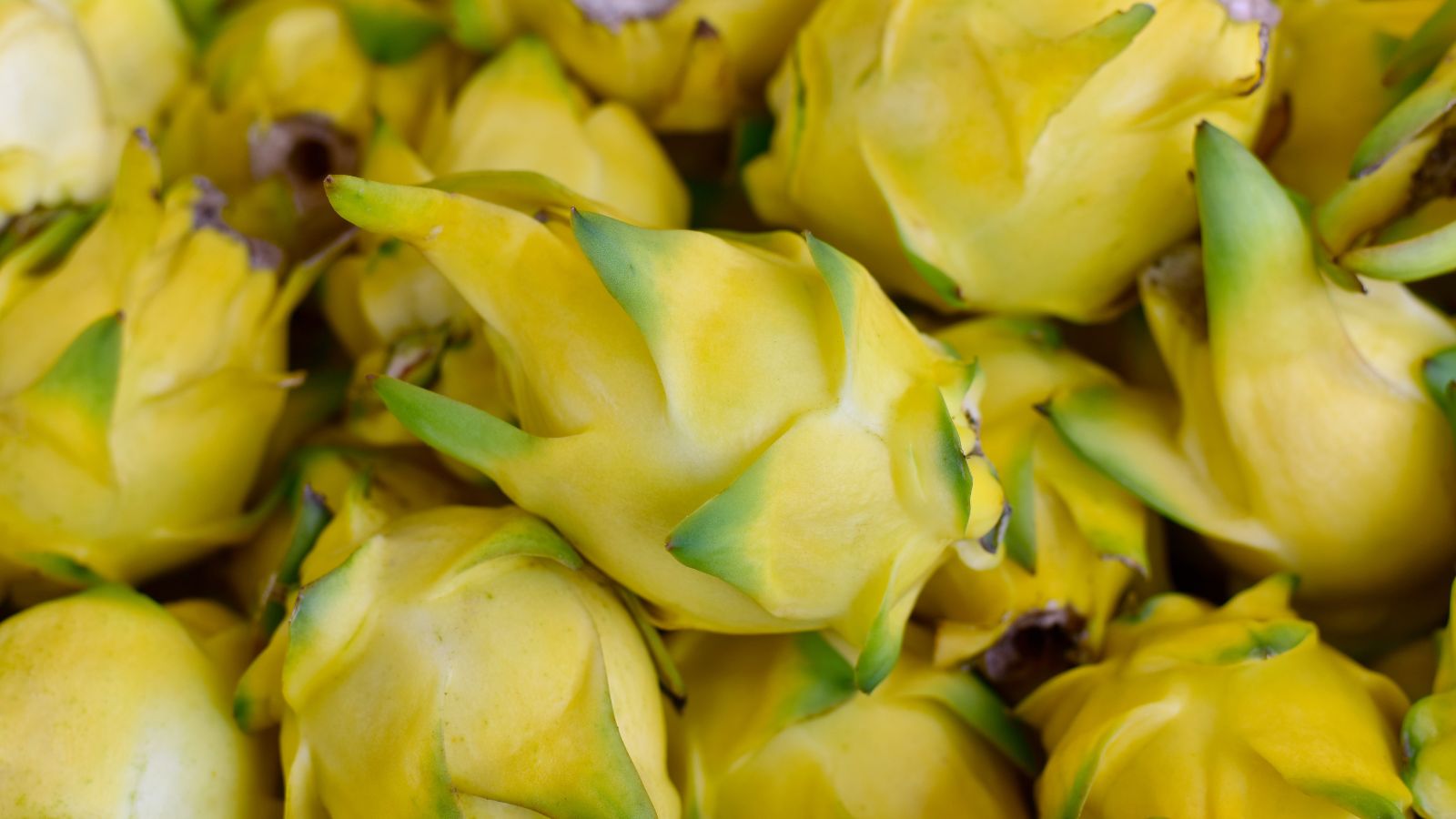
Known for its sweet, flavorful berries, some hail the yellow dragon pitahaya as the best-tasting cactus fruit there is. Sweet and colorful, the skin is bright yellow with green-tinged scales, and the pithy interior is white with the characteristic edible black seeds embedded in the pulp. With a flavor described as pineapple and honey, the sweetness rating on the Brix scale is in the high 20s.
Related to Hylocereus, the genus has self-pollinating nocturnal bell blooms. Flowering is among the longest of the dragon fruits and lasts all summer, with fruiting that begins in fall and continues over the winter. The sizeable, meaty fruits take time to develop, at over 75 days. Brush away small spines on the berries before harvesting.
‘Palora’ is a showy variety from Ecuador that’s not only tasty, but it’s also suitable for the home landscape with more vigor than the straight species. Fruits are larger, and stems grow faster. Growers also note good cold hardiness, rebounding from freezing conditions.
Both Hylocereus and Selenicereus cacti tolerate light frost and recover quickly, but are susceptible to cold damage in prolonged temperatures below 40°F (4°C), as well as fungal problems in rainy spells. Growing pitahaya in movable pots makes it easier to control its growing conditions.
‘Vietnamese White’
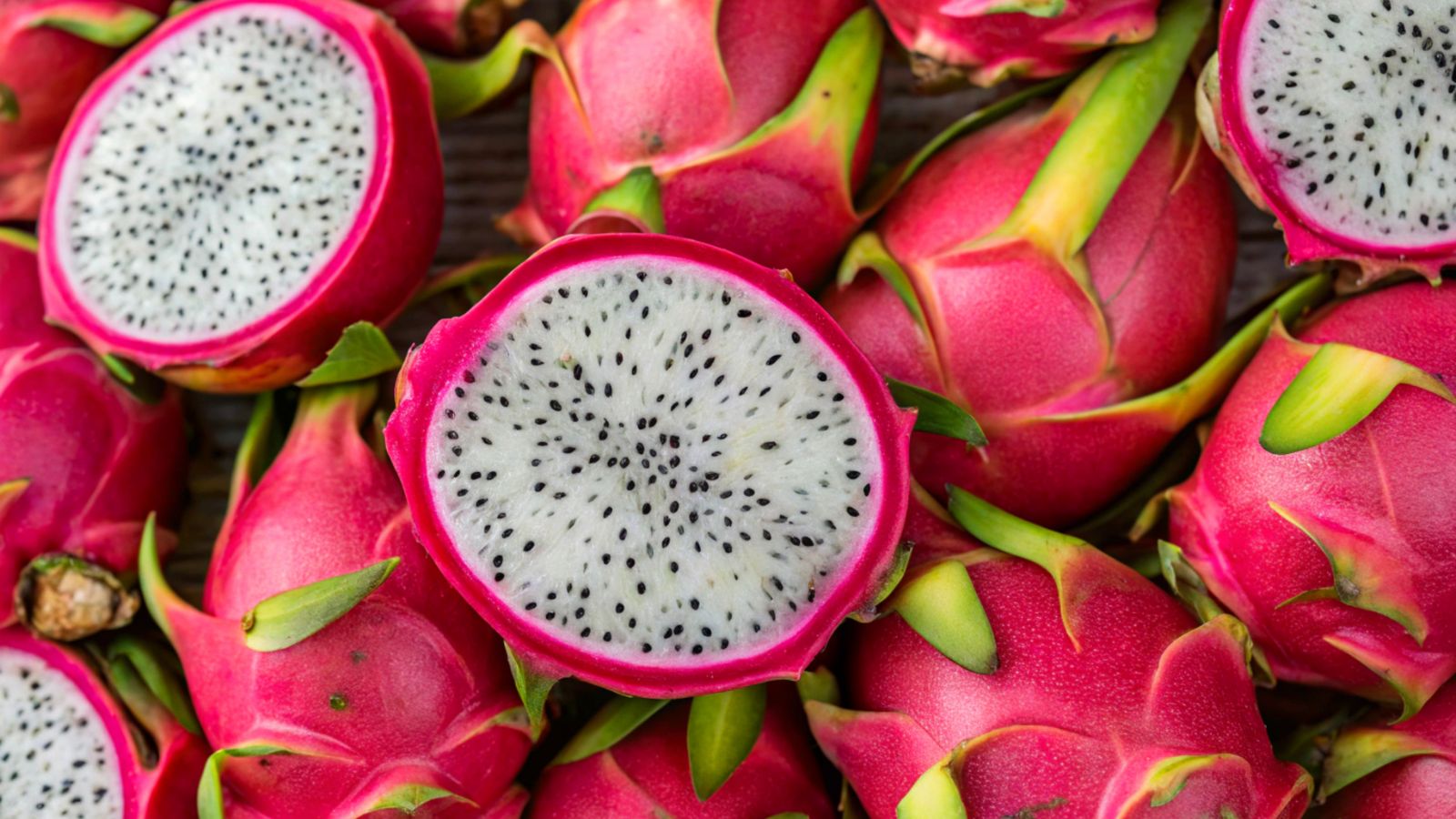
‘Vietnamese White’ yields bright pink fruits with greenish scales and crisp white flesh. Tangy and juicy, the sizable fruits bring high contrast with their pretty looks.
This fuchsia, white-fleshed dragon fruit variety is a top pick for beginners. It shows good disease resistance, is self-fertile, and sets a high number of buds, like ornaments on a tree. Thin the buds to promote larger, more flavorful fruits rather than high numbers. ‘Vietnamese White’ is a good source of pollen for other varieties that require cross-pollination.
‘Dark Star’

‘Dark Star’ captivates with dark pink skin, light green fins, and a deep magenta interior. Almost too pretty to eat, the Paul Thomson hybrid (likely named 9S, originally) brings a sugary, balanced flavor described as mild grape. The large fruits can weigh up to one and a half pounds, with loads of tropical sweetness and a Brix rating of 19.
‘Dark Star’ is self-sterile and requires a compatible variety for cross-pollination. ‘American Beauty’ makes a pretty partner in a large container.
‘American Beauty’

As a dark-fleshed species, ‘American Beauty’ is a striking variety with deep purple-pink pulp beneath cerise-pink skin and green scales. The attractive, rounded fruits have a flavor that matches their beauty, juicy and sweet at peak ripeness. As the skin holds its red tone, experiment with picking time to achieve the best flavor.
Like ‘Sugar Dragon,’ ‘American Beauty’ is one of the earliest dragon fruit varieties to set buds, flowering in about three weeks after budding. Earlier fruiting means a longer season of blooms and berries, though ‘American Beauty’ produces slightly more slowly than some others.
‘American Beauty’ is self-fertile and a source for others that need cross-pollination. Stems are more slender than other dragon fruit varieties while maintaining fruits that can weigh half to one pound.
‘Physical Graffiti’
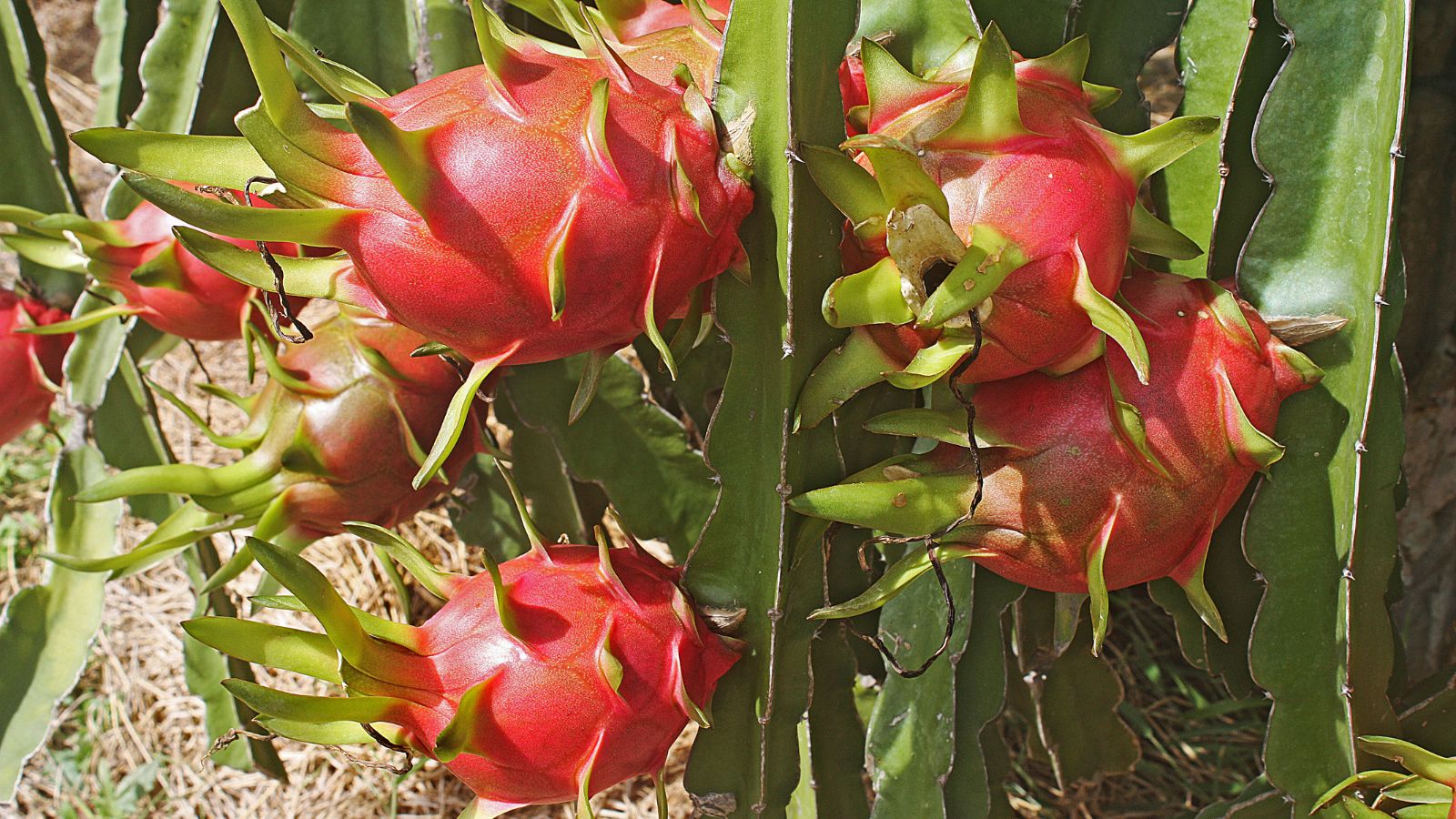
‘Physical Graffiti’ is another highly-rated, fuchsia-fleshed variety that’s enough to get anyone hooked on dragon fruit. Both sweet and acidic qualities lend an exceptional and balanced flavor with notes of raspberry and kiwi. Skins are dark pink for a beautiful blend with the bright interior.
The H. guatemalensis and H. undatus cultivar produces medium to large berries up to one and a half pounds. ‘Physical Graffiti’ is self-sterile and needs another red-fleshed variety for fruiting. ‘American Beauty’ and ‘Florida Red’ are good pairings.
‘Physical Graffiti’ produces masses of blooms along its vigorous canopy, large and white for evening interest to moths and bats. It flowers continually throughout the summer, producing numerous fruits with good pollination.
Dragon fruit varieties appears here to highlight key ideas for readers.