
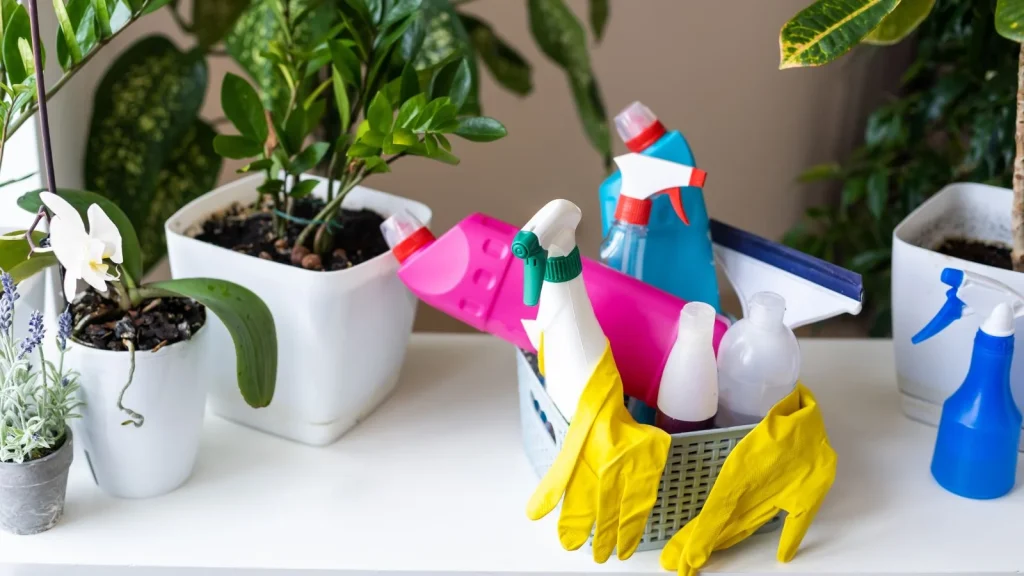
Mold and mildew — a quick note to anchor this piece for readers.
Mold and mildew: Quick notes
When you’re eager to get plants in the ground (or in this case, in pots), taking time to sanitize containers probably feels like an unnecessary extra step. I’ll admit I’ve been guilty of skipping this task myself, especially when I’m in a hurry to transplant seedlings or pot up a new plant.
But reusing dirty pots is one of those shortcuts that can come back to haunt you. Innocent-looking containers could be harboring fungal spores, bacterial diseases, or pest eggs that survived from the previous season.
The risks are particularly high if the previous plant struggled with issues like root rot, powdery mildew, or damping off. These diseases can persist on pot surfaces long after the plant is gone. Even pots that held healthy plants can accumulate mineral deposits, algae, and other residues that create an environment where problems can take hold.
Luckily, you don’t need specialized equipment or expensive products to sanitize your planting pots. There are a few routes you can choose, most of which require items you probably already have around your home.
I will say, it’s not inevitable that you will kill all your new plants if you don’t sanitize your planting pots first. Many gardeners skip this step without issues. But, if there is any chance of mold or mildew spreading to your new plants, why not take all the precautions you can?
Remove All Dirt
Rinse pots with water to remove any residue.
To sanitize your planting pots, start by getting rid of every bit of old soil and debris. Any soil particles left behind can harbor diseases from previous plants, turning your ‘clean’ pot back into a disease risk the moment you add new soil. Many bacteria and fungi are annoyingly resilient.
Dump out the old potting mix completely, then use a brush to scrub away dirt clinging to the sides or caught in drainage holes. Pay special attention to any textured surfaces where soil likes to accumulate.
If you’re dealing with particularly stubborn, dried-on soil, let the pots soak in warm water for 20 to 30 minutes first. This softens everything up and makes the scrubbing process much easier on your hands. A knife or similar flat tool can help scrape off thick deposits without damaging the pot.
Don’t forget the outside of the pot either. While the inside is more critical for disease prevention, a completely clean pot gives you a better starting point for the sanitizing steps that follow. Plus, they just look more aesthetically pleasing overall when they’re completely clean.
Scrub with Dish Soap
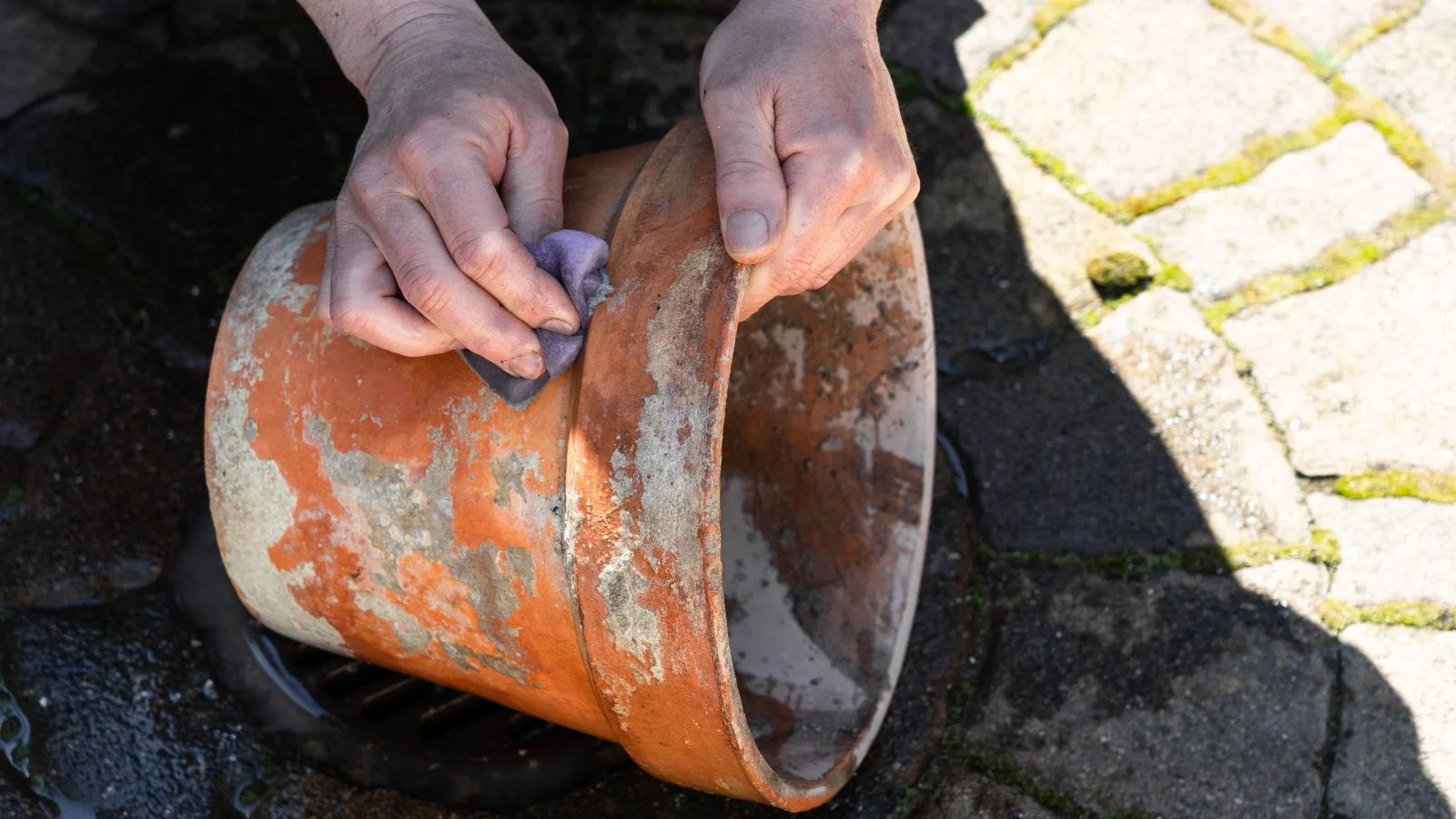 Dish soap removes any remaining dirt.
Once the loose dirt is gone, a wash with dish soap eliminates most remaining problems. Soap breaks down oils and organic residues that might be left over after your initial rinse. You just need warm water and regular dish soap.
Scrub all surfaces thoroughly, inside and out. A sponge works fine for smooth pots, but you’ll want a brush (the same brush you used before) for anything with texture or for getting into corners and crevices. This is also your chance to tackle those mineral deposits that build up on terra cotta and clay pots. A little extra scrubbing with soapy water usually removes them, though stubborn deposits might need a stronger soak, which comes later.
Rinse everything thoroughly after washing. Soap residue isn’t great for plants, so make sure you’ve washed it all away before moving to the next step to sanitize your planting pots.
Soak in Bleach Solution
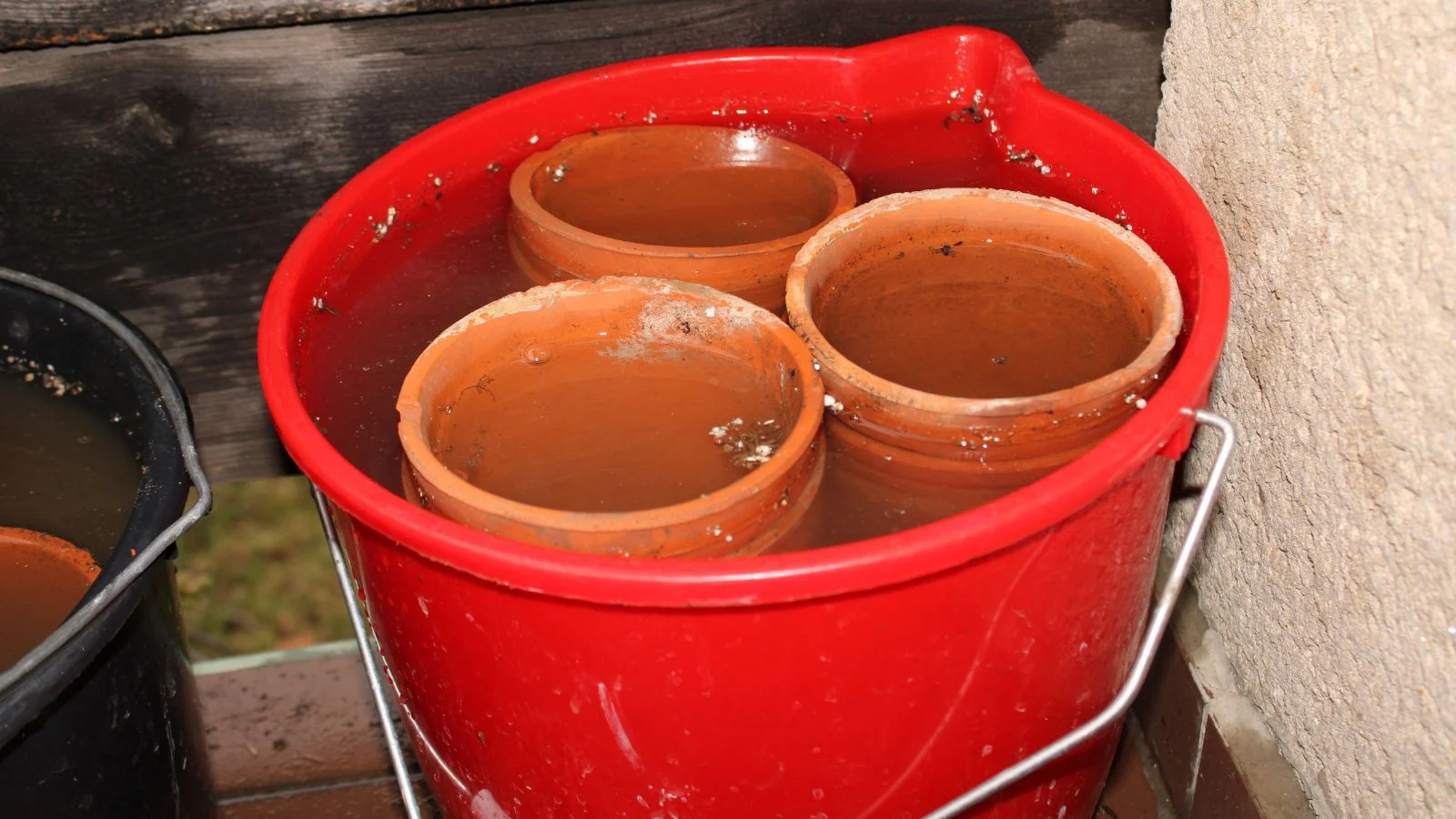 Bleach kills any problematic bacteria and fungi.
For thorough sanitization, especially if you’re cleaning multiple pots at once or dealing with containers that held diseased plants, a bleach soak is hard to beat. Bleach kills virtually everything, including mold, mildew, and anything that might pose a threat to your new plants.
Mix one part bleach to nine parts water in a large bucket or basin. Submerge your clean pots completely in the solution and let them soak for at least 10 minutes. If you have more pots than will fit in your bucket, work in batches.
After soaking, rinse the pots thoroughly with clean water. Let the pots air dry completely before storing or using them. Bleach can be rough on your hands, and the fumes aren’t great, so work in a well-ventilated area and consider wearing gloves. Avoid splashing too, unless you want bleach spots on your gardening clothes.
Try Rubbing Alcohol
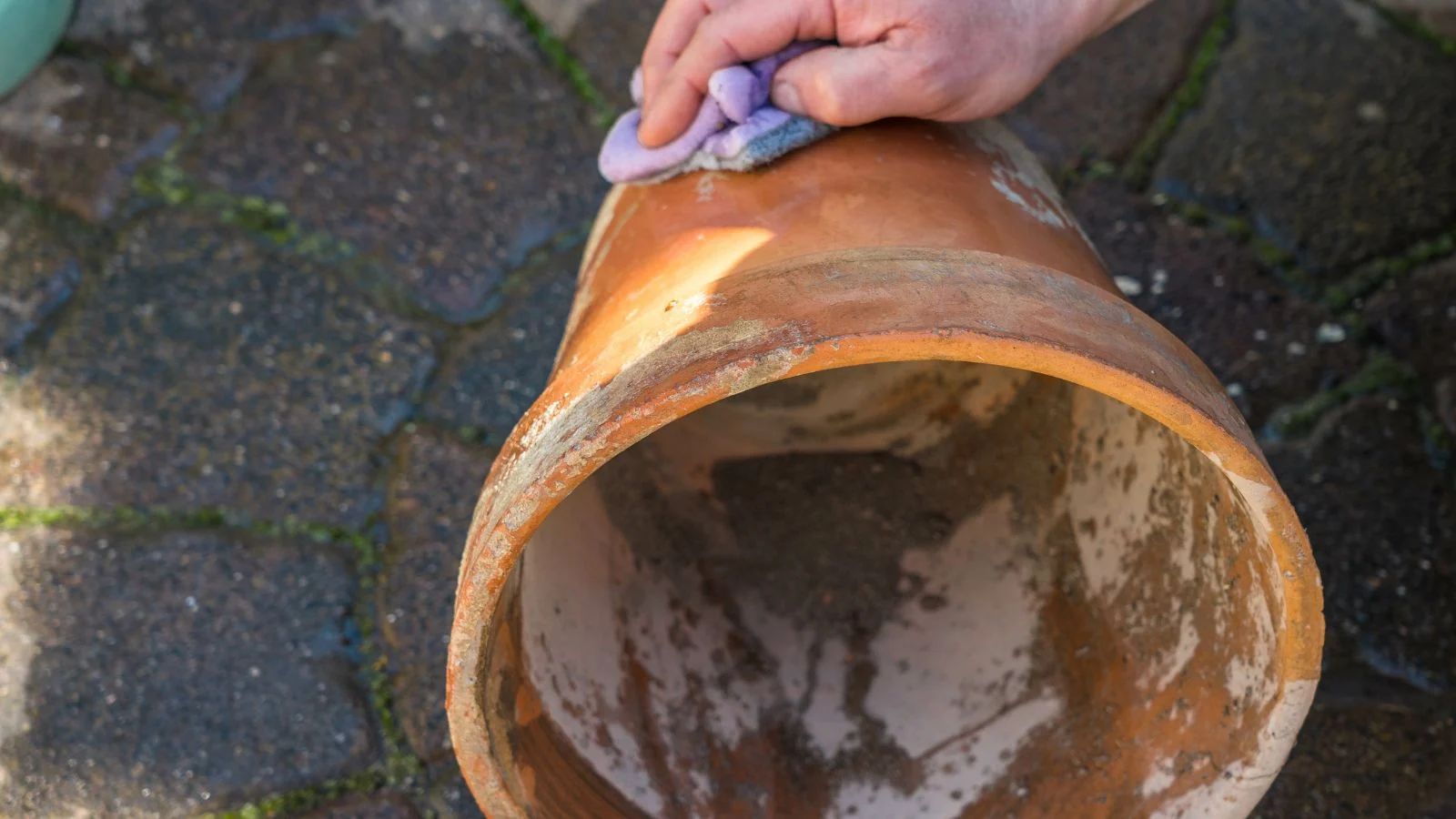 For single pots, rubbing alcohol is easier to use.
When you’re only dealing with one or two pots, or if you prefer to avoid bleach, rubbing alcohol is a convenient alternative to sanitize your planting pots. It’s effective against most pathogens and evaporates quickly, saving you a lot more time than the bleach process.
Use 70% isopropyl alcohol (the standard concentration at most stores) and apply it with a clean cloth or paper towel, wiping down all interior and exterior surfaces. For small pots, you can pour a bit of alcohol inside and swirl it around to coat everything, then wipe the outside. Let the alcohol sit for a minute or two to do its work before wiping any excess.
There’s no mixing solutions, no soaking time, and no rinsing required. The alcohol evaporates on its own, leaving pots ready to use almost immediately. This makes it ideal for quick jobs when you need to repot something right away.
The downside is cost and practicality for large-scale cleaning. But for a few pots here and there, it’s a preferred method as you don’t need to deal with bleach.
Use Household Surface Cleaners
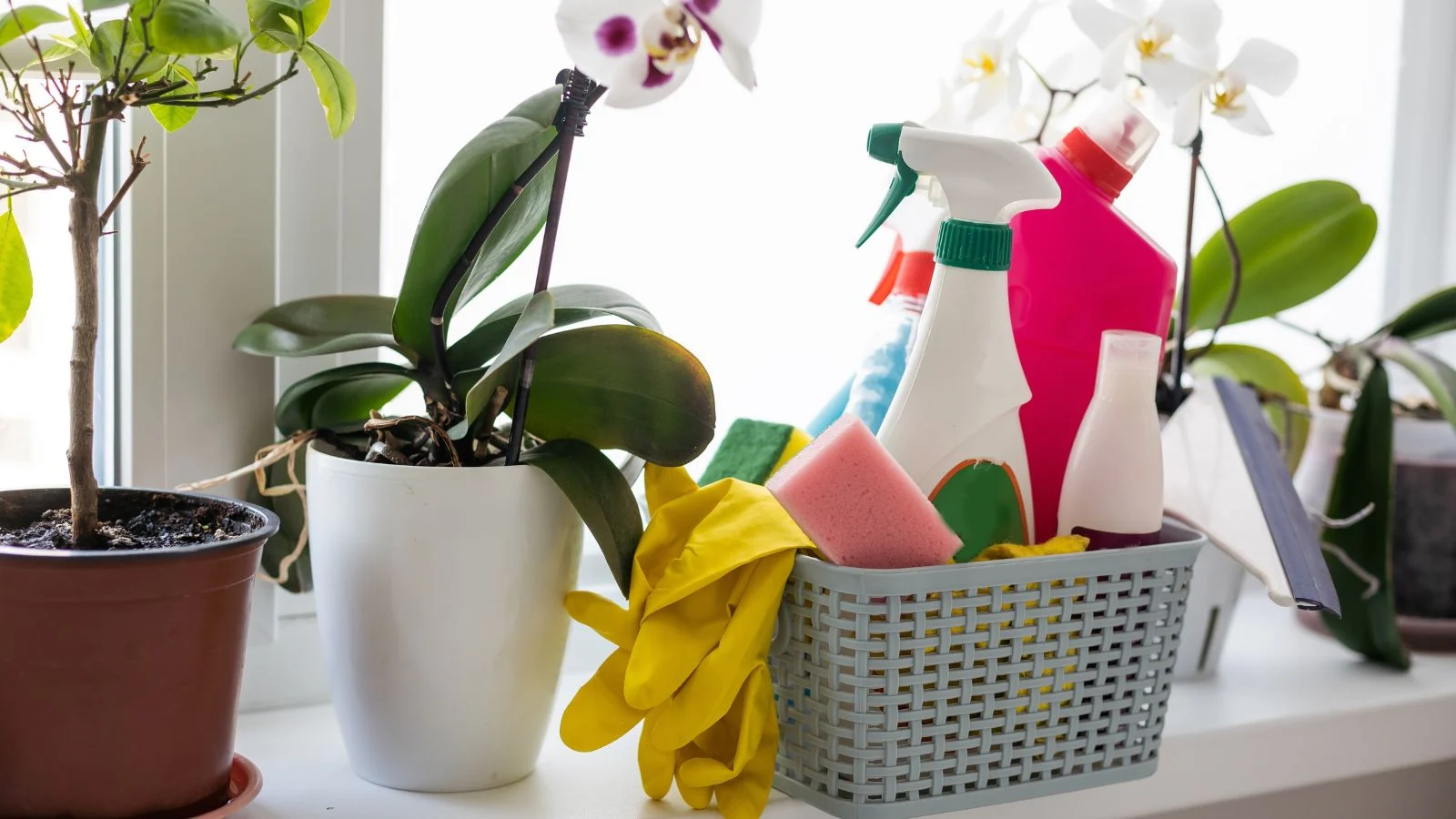 Use surface cleaners as a last resort.
If you don’t have bleach or rubbing alcohol on hand, household surface cleaners can work to sanitize your planting pots in a pinch. Many all-purpose cleaners or disinfecting sprays contain ingredients that kill common pathogens, making them reasonably effective for pot sanitization.
The catch is that you don’t always know exactly what’s in these products or how effective they are. They’re designed for household surfaces, not gardening equipment, so they might not tackle all the fungal spores or bacteria that can affect plants. Still, they’re probably better than nothing if you’re in a situation where other options aren’t available.
Disinfecting wipes are particularly convenient for this purpose. You can quickly wipe down pots without mixing solutions or getting out buckets, making the whole process faster when you’re short on time. Just make sure the wipes or spray you’re using actually contains disinfecting ingredients, as regular cleaning products that just remove dirt won’t sanitize.
After using any household cleaner, rinse pots thoroughly before planting. Unlike rubbing alcohol, which evaporates completely, many surface cleaners leave residues that could potentially harm plants. A good rinse with clean water eliminates this concern.
I’d recommend this method only as a backup option when you can’t access better alternatives. For regular pot sanitization, bleach solution or rubbing alcohol gives you more reliable results with less uncertainty about what you’re actually accomplishing.
Mold and mildew comes up here to connect ideas for clarity.
We reference Mold and mildew briefly to keep the thread coherent.











delightful composition; the colors work so well together. So cozy.