
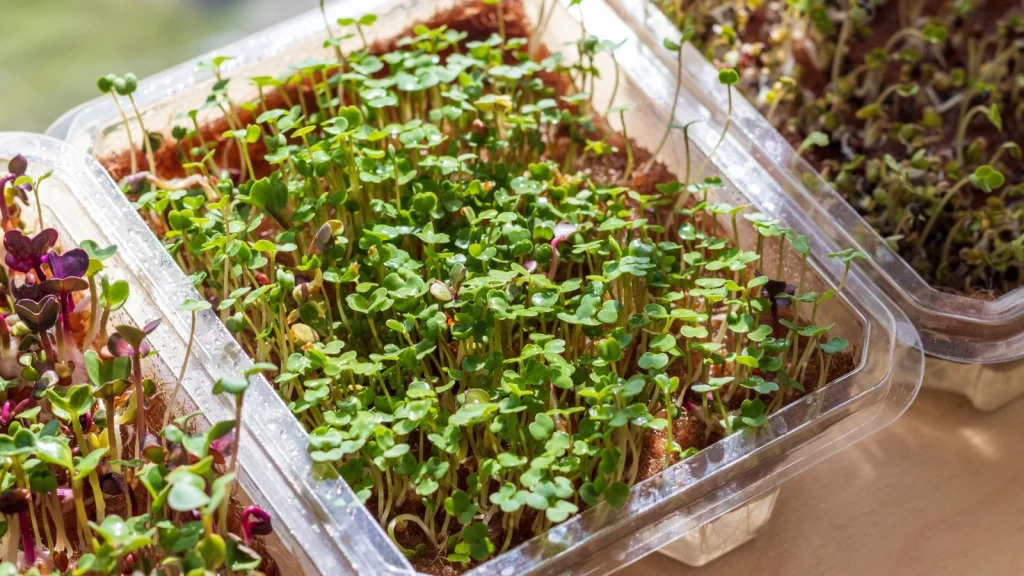
Yellow floppy microgreens. A brief context to set expectations.
Yellow floppy microgreens: Quick notes
Microgreens are known for being vibrant, crisp, and full of color when you harvest them. That’s why we love them, after all. So what happens when you try to grow your own, only to find disappointing yellow leaves and weak, floppy stems? This issue is more common than you think, and it’s not just you.
Yellow, floppy microgreens aren’t a sign you lack a green thumb. I don’t really believe in ‘green’ or ‘black’ thumbs anyway. Rather, these problems almost always trace back to easy growing conditions that are relatively simple to adjust. Most growers experience these issues at least once, and figuring out what went wrong is just part of the learning process.
Microgreens grow so quickly that small problems become obvious fast. Luckily, this rapid feedback actually works in your favor. Once you identify the issue, you can correct it immediately and see improved results in your next microgreen sowing.
Here are the five most common causes of yellow, floppy microgreens and how to fix each one.
Ciao Bella Basil Blend Microgreens
Ciao Bella Basil Blend Microgreens Seeds
Umami Asian Blend Microgreens
Umami Asian Blend Microgreens Seeds
Mild Mix Microgreens
Mild Mix Microgreens Seeds
Use a Grow Light
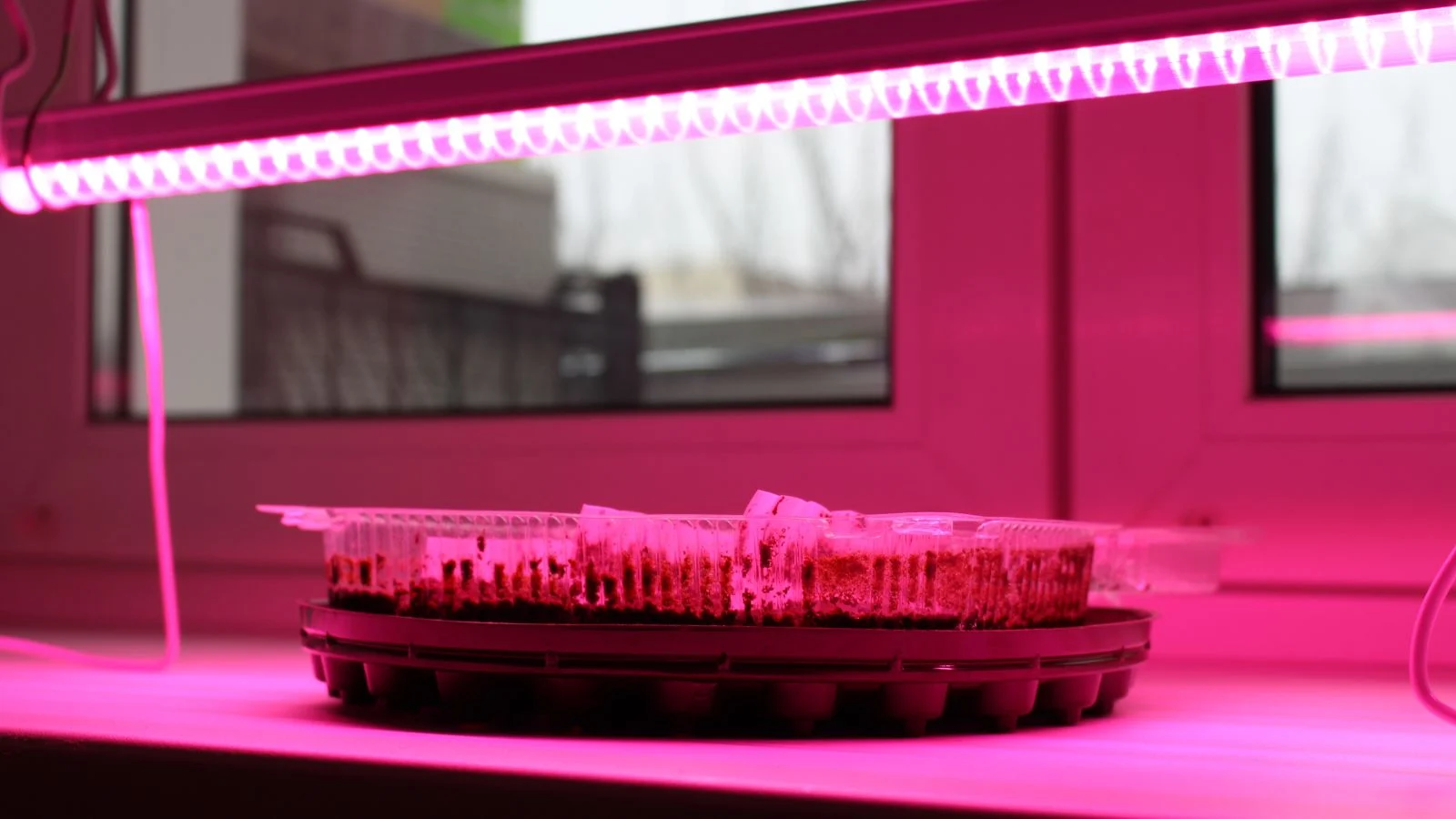 Winter sunlight indoors is usually not enough for strong microgreens.
Inadequate light is the number one reason microgreens turn yellow and grow tall and weak instead of compact and sturdy. This happens when plants stretch desperately toward light that isn’t bright enough to support proper growth.
Microgreens need strong light from the moment they emerge from the soil. A sunny windowsill might seem sufficient, but unless you have a south-facing window with unobstructed sun all day, natural light probably isn’t enough. Winter light is particularly inadequate. And even then, your microgreens will likely lean sideways toward the sun anyway, rather than growing upwards.
Grow lights solve this problem by providing consistent, bright light for as many hours as plants need (around 12 hours up to 16 hours per day). This gives microgreens the intensity and duration they require without depending on weather or season. Microgreens grown under proper lighting emerge with thick stems, deep green color (or whatever color is appropriate for the variety), and stand upright rather than flopping over
If you’re already using grow lights but still seeing pale, stretched growth, check the distance between lights and plants. Lights positioned too high may not provide enough intensity, leaving yellow, floppy microgreens, even if they’re running for adequate hours.
Clean Your Trays
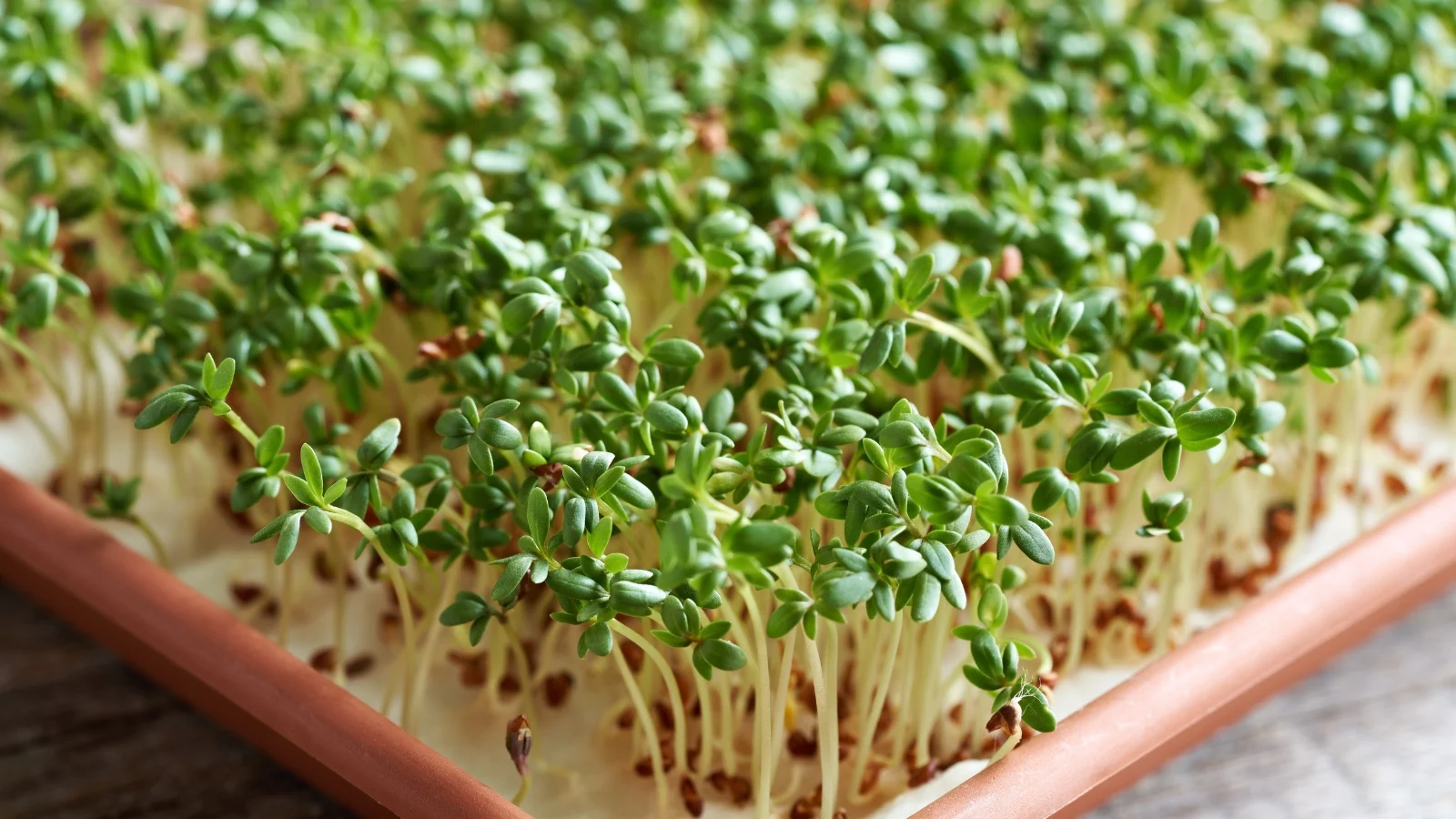 Dirty trays can transmit diseases between microgreens.
Dirty growing trays harbor fungal spores and bacteria that cause damping off, a disease that makes seedlings suddenly collapse and die. This can cause microgreens to yellow, weaken, and flop over at the soil line. Damping off is a constant battle for me with my microgreens and general seedling trays.
Damping off spreads quickly in the moist conditions that microgreens need for germination and early growth. Once it takes hold, there’s no saving that batch. And if you don’t clean your trays correctly before you try again, you’ll encounter the same problem over and over again.
Prevention is the only effective approach to avoid yellow, floppy microgreens, and that starts with sanitizing your trays between plantings. Don’t just rinse them out and reuse them. You need to disinfect them to eliminate pathogens from previous grows. This isn’t always necessary if you haven’t dealt with fungal issues before, but since you won’t really know until you grow, it’s less effort to clean trays properly from the start than start all over again later on.
Wash trays thoroughly with hot, soapy water first to remove any soil or organic matter. Then sanitize with a diluted bleach solution (one part bleach to nine parts water) or rubbing alcohol, letting trays soak for at least 10 minutes. Rinse thoroughly and allow to dry completely before using again.
If you’ve had damping off problems, also clean any tools, work surfaces, and watering cans that contact your trays. The pathogens can persist on any surface and reinfect new plantings even if you sanitized the trays themselves.
Change the Soil
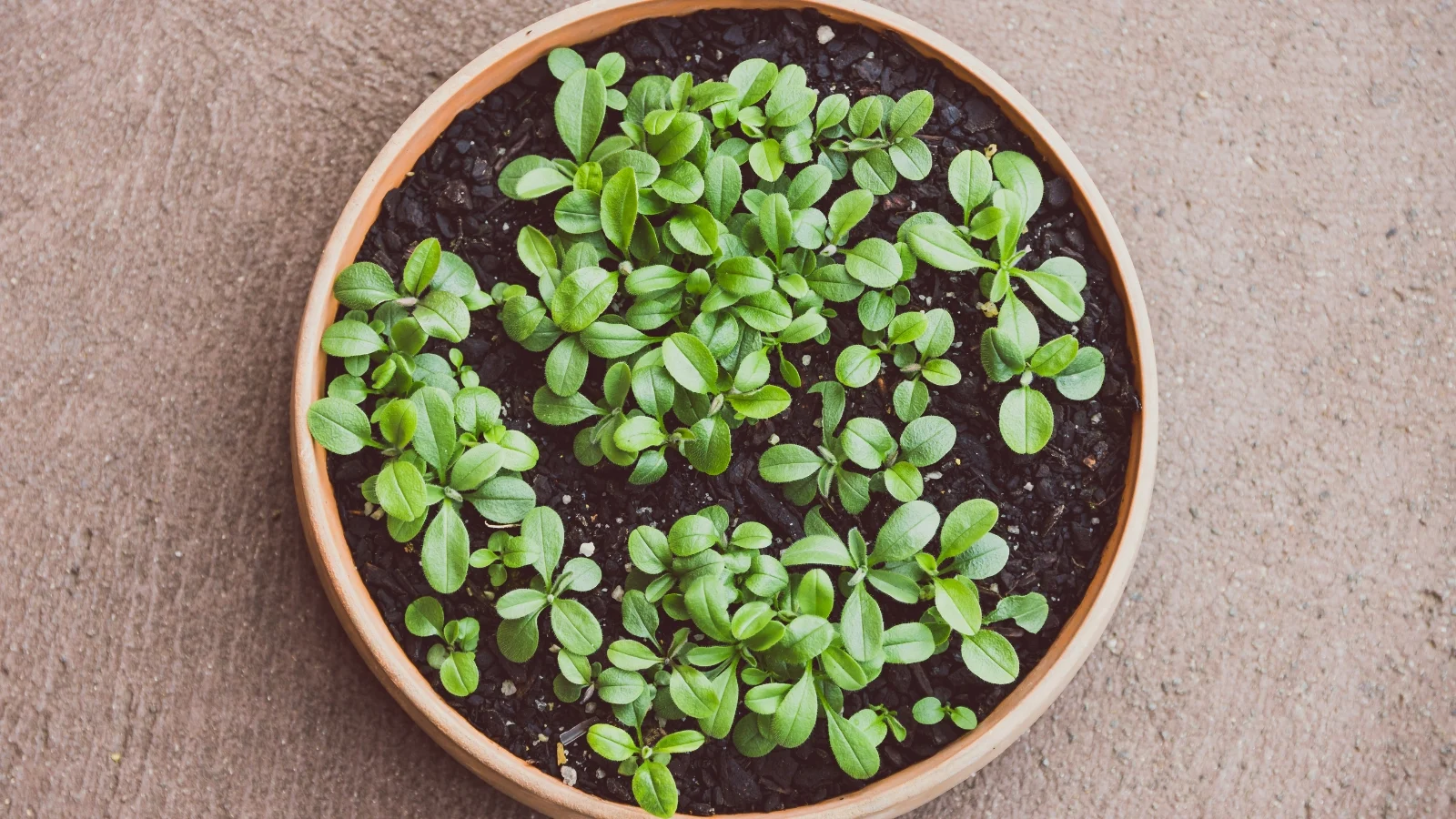 Inadequate soil will damage microgreen roots.
The growing medium you use has a bigger impact on microgreen health than you may think. Even though you’re growing for a short period, problems with the soil can cause issues quickly.
The first mistake is using garden soil. This is usually too heavy for microgreens and often contains pathogens that cause damping off. Even if it looks clean and healthy, outdoor soil harbors organisms that thrive when brought into the warm, moist environment of a microgreen tray. Even commercial mixes can be problematic if they’re too dense.
Instead, switch to specialized microgreen growing mats or coconut coir rather than soil-based mixes. These alternatives don’t have the same disease risks as soil and are usually easier to use too. They’re worth trying if you’ve had recurring problems with soil-based growing.
Water Less
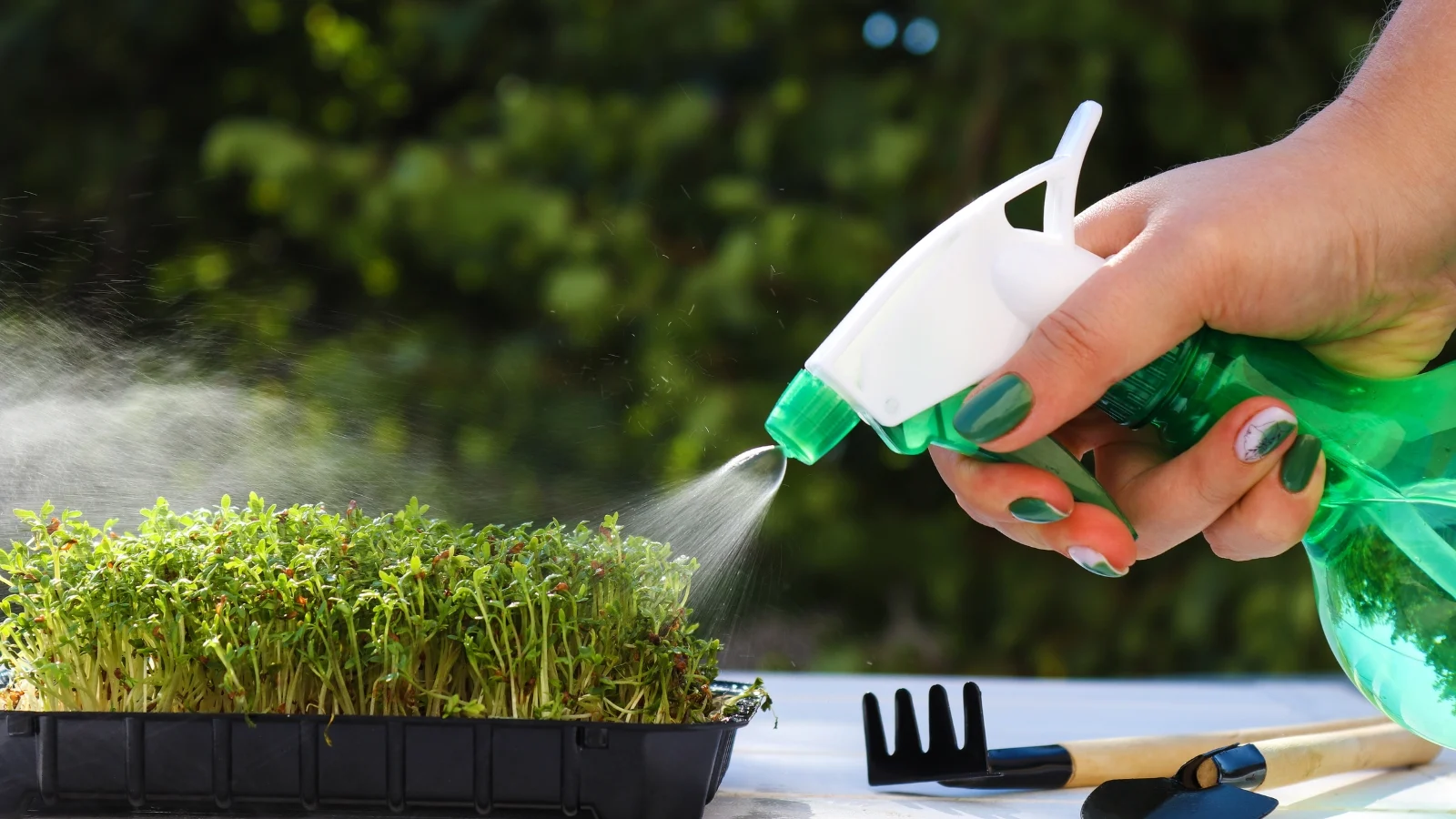 Overwatering is a common microgreen mistake to avoid.
Overwatering causes multiple problems in plants, including yellow, floppy microgreens. Too much moisture essentially drowns roots, encouraging fungal growth and suffocating the roots.
Microgreens do need consistent moisture to germinate and grow quickly. But because of this fact, it’s easy to accidentally overdo it, resulting in soggy soil and yellow, floppy microgreens.
After the initial watering when you plant seeds, let the soil surface start to dry slightly before watering again. The top should feel just damp rather than wet. For most microgreens, this means watering once daily (or even less frequently, depending on your growing conditions and tray size).
Bottom watering works better than watering from above once seeds have germinated. Set your growing tray in a shallow tray of water and let the soil wick up moisture from below. This ensures roots get water without keeping the soil surface constantly wet.
Fungus gnats appearing around your microgreens also suggest overwatering. These pests breed in damp soil, and their presence usually means conditions are wetter than they should be. Letting the soil dry out more between waterings eliminates their breeding habitat.
Harvest Sooner
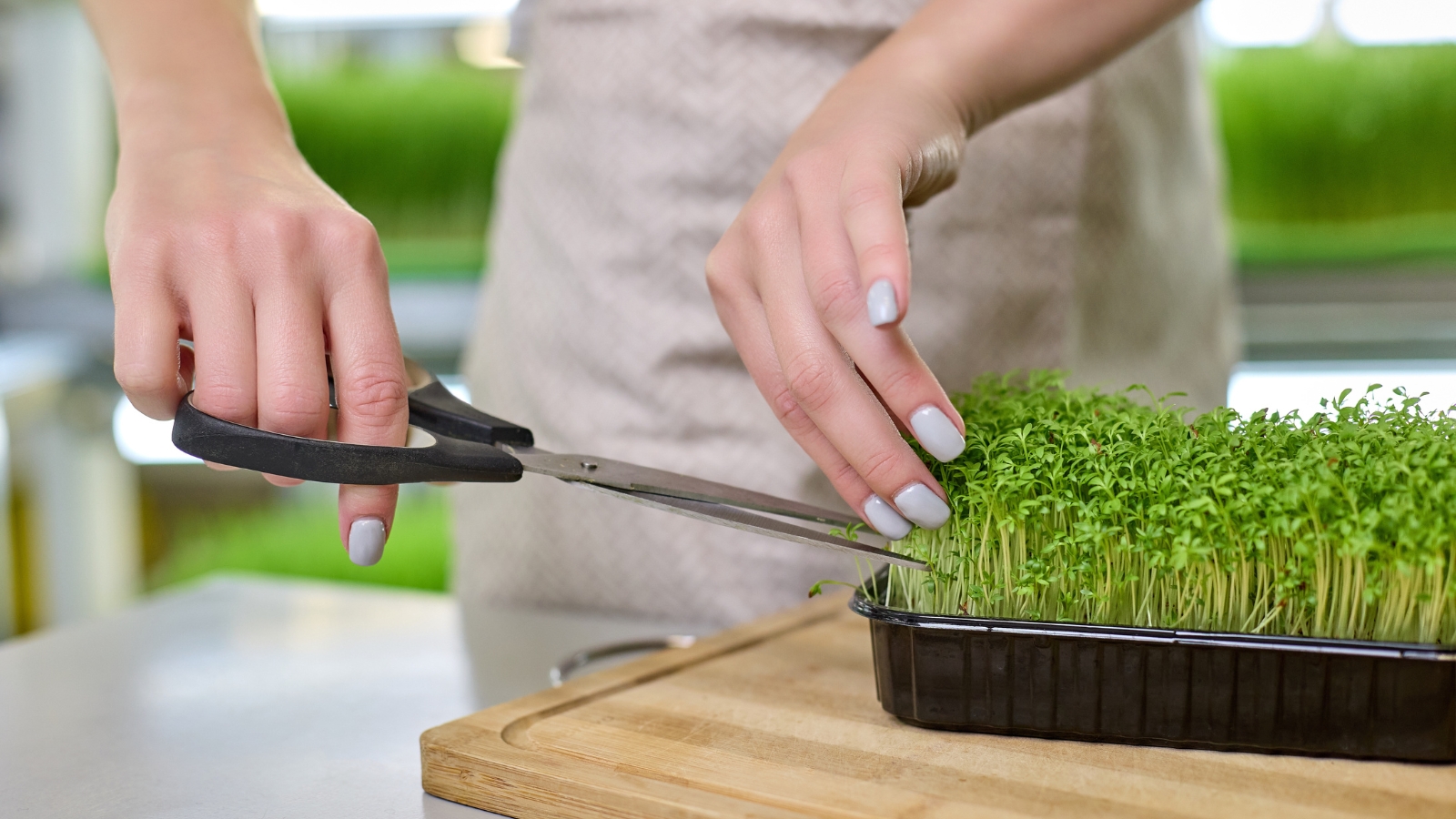 Don’t wait too long to trim your microgreens.
Sometimes, yellow, floppy microgreens aren’t sick. They’re just past their prime. Microgreens are densely sown on purpose to maximize your harvest, but seedlings don’t like being so closely packed for long periods of time.
If you leave them too long, you’ll start to notice issues like yellow, floppy microgreens.
Most microgreens are ready to harvest within two weeks after sowing, depending on variety and growing conditions. The ideal stage is often when the first true leaves (the second set that develops after the initial cotyledon leaves) are just emerging.
If you’re consistently seeing yellowing in mature microgreens rather than young seedlings, the fix is simple: harvest earlier. Check your trays daily as microgreens approach the typical harvest stage for their variety. When you see that first set of true leaves beginning to unfold, cut your crop and start fresh.
Earlier harvesting actually gives you better quality microgreens, too. They’re more tender, have more intense flavor, and that vibrant color you’re looking for.
Yellow floppy microgreens comes up here to connect ideas for clarity.
We reference Yellow floppy microgreens briefly to keep the thread coherent.
















Also: I adore the colors here; feels really cozy. Great share.
Also — So pretty — the details are delightful. Great share.