
Cool garden palette — a quick note to anchor this piece for readers.
Cool garden palette: Quick notes
Gardens dominated by warm colors usually get a lot of attention. Reds, oranges, and yellows do energize a space and catch your eye immediately. But cool-toned gardens built around blues, whites, silvers, and soft purples create a completely different experience.
A cool garden palette feels calming rather than stimulating. The colors create a natural harmony (as opposed to a strong contrast), and they really come alive in evening light. If you want your garden to feel like a breath of fresh air, this is the way to do it.
There is some nuance to building a cool garden palette that doesn’t end up looking washed out. You need deliberate variety in textures, heights, and bloom times to keep things visually interesting, especially if you’re predominantly using one color. These thirteen plants give you some color range in this palette, but without the monotony.
Blue Victory Salvia
Blue Victory Salvia Seeds
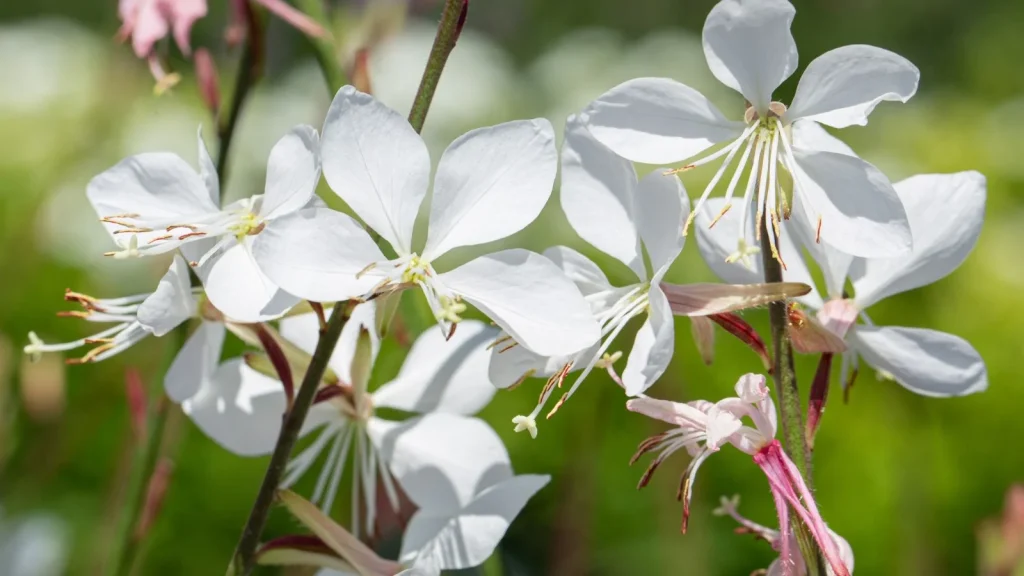
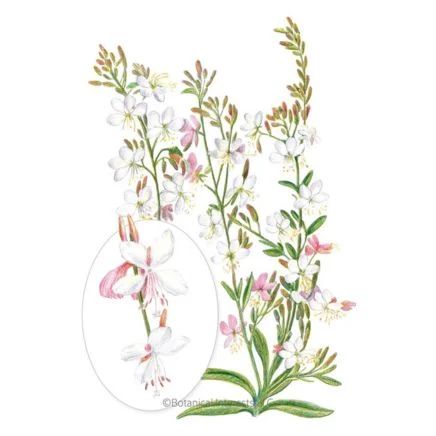
White Gaura
Silverdust Dusty Miller
Silverdust Dusty Miller Seeds
‘White Swan’ Echinacea
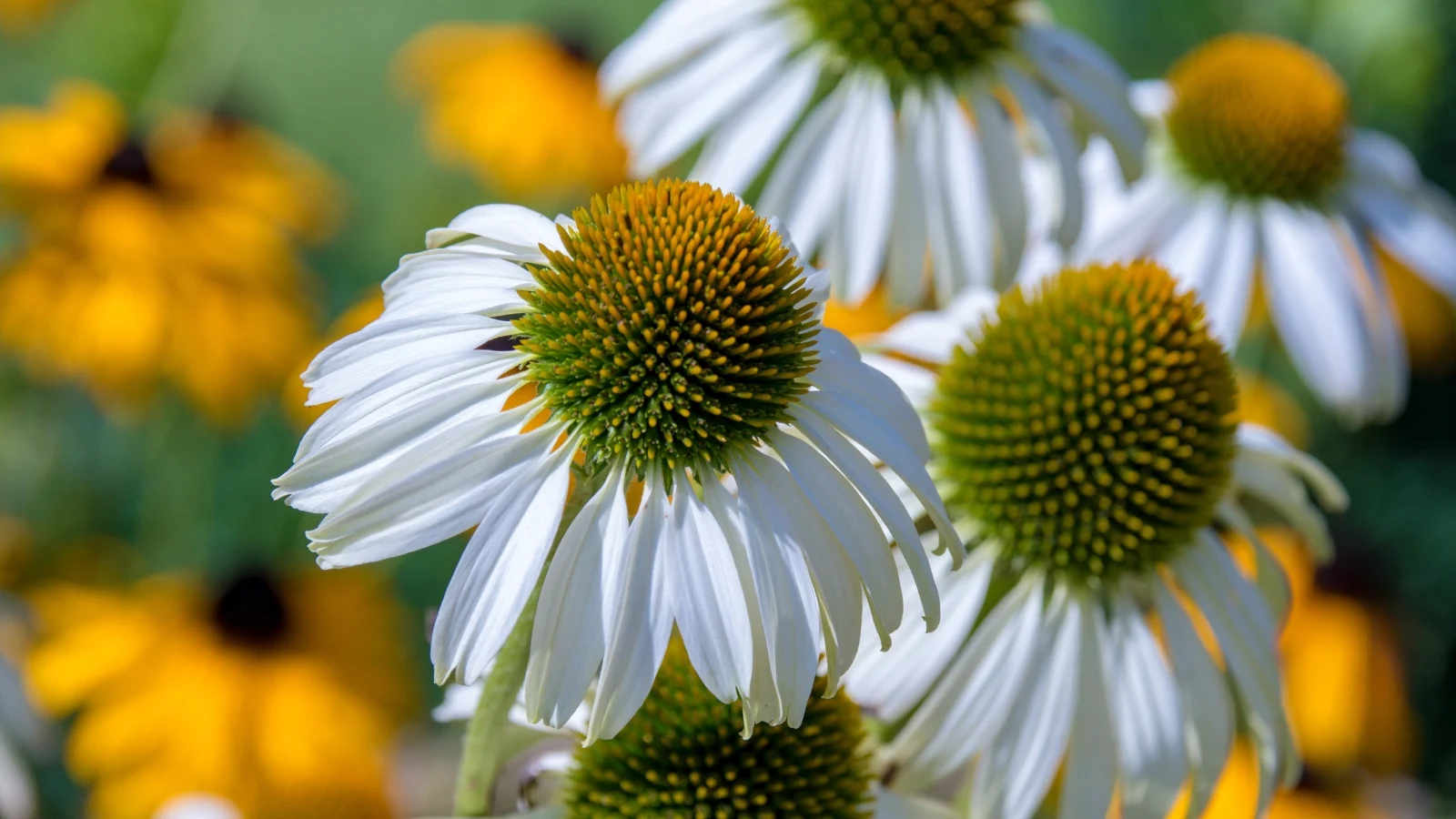 White coneflowers add wonderful texture to the garden.

botanical name
Echinacea purpurea

sun requirements
Full sun

height
24″

hardiness zones
3-8
Purple coneflowers are probably the most popular, but they’re not the only color to grow. Swap those bright pink-purple petals for a cooling white by choosing the cultivar ‘White Swan‘. The petals are still eye-catching but much more muted, and the orange-brown cone center keeps it from disappearing against other white flowers.
Blooming runs from early summer through fall if you deadhead spent flowers (but leave a couple to go to seed for the birds in your garden). Once established, these perennials tolerate drought well and don’t need much attention. The cone structure adds enough dimension to prevent all-white sections from looking flat.
‘Blue Victory’ Salvia
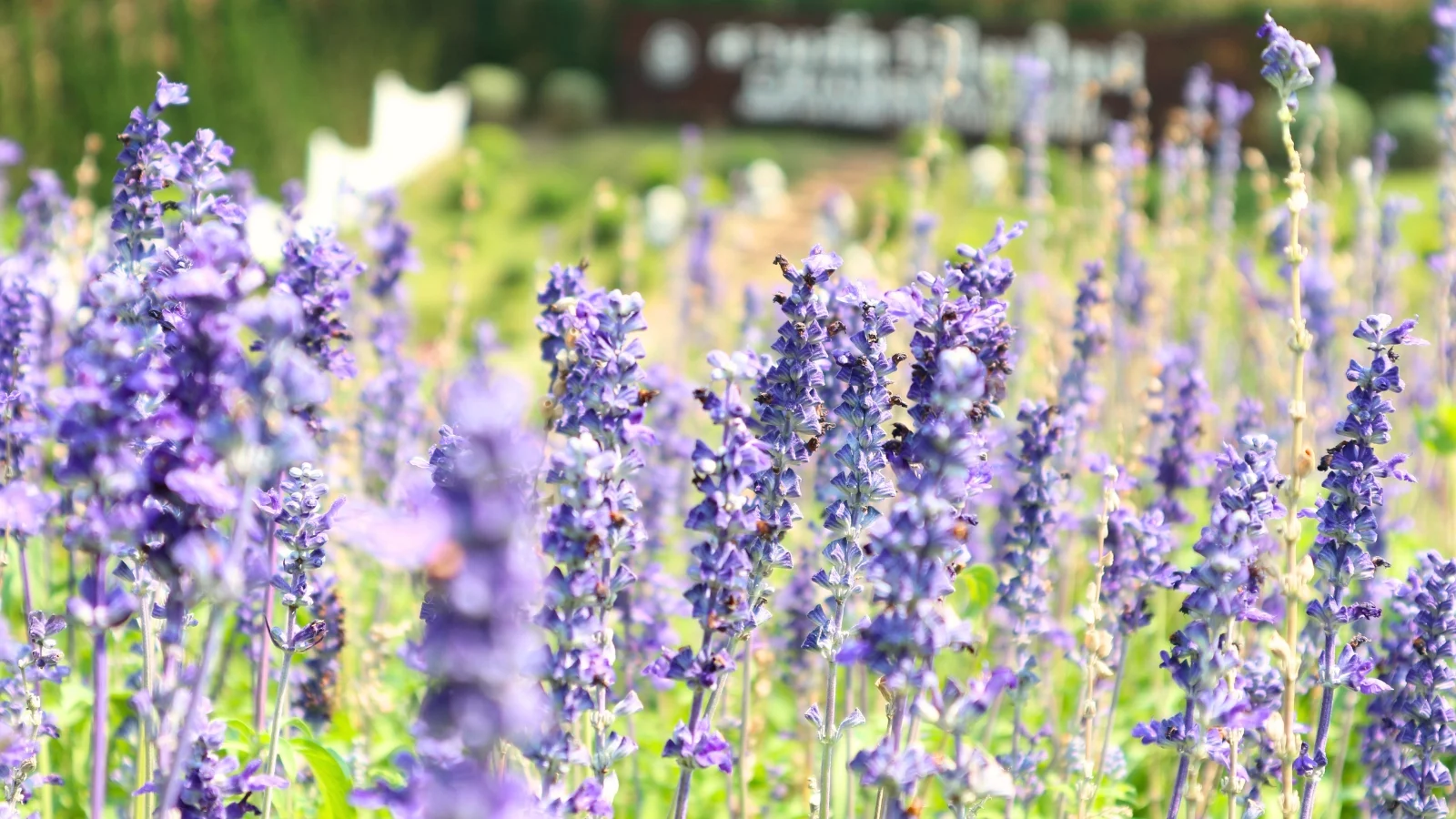 Tall flower spikes add vertical interest in the garden.
botanical name
Salvia farinacea
sun requirements
Full sun
height
20″
hardiness zones
8-10
This salvia produces deep blue-purple spikes that work well in cool garden palettes. The color is rich without being over the top, and the vertical form adds height variation in garden beds. It’s a great backdrop for shorter perennials or annuals.
These plants are wonderfully low-maintenance, handling heat well once established. Like coneflowers, they also don’t mind drying out between waterings. Cutting back spent spikes encourages additional flowering and keeps plants from looking messy by late summer.
‘Shades of Blue’ Larkspur
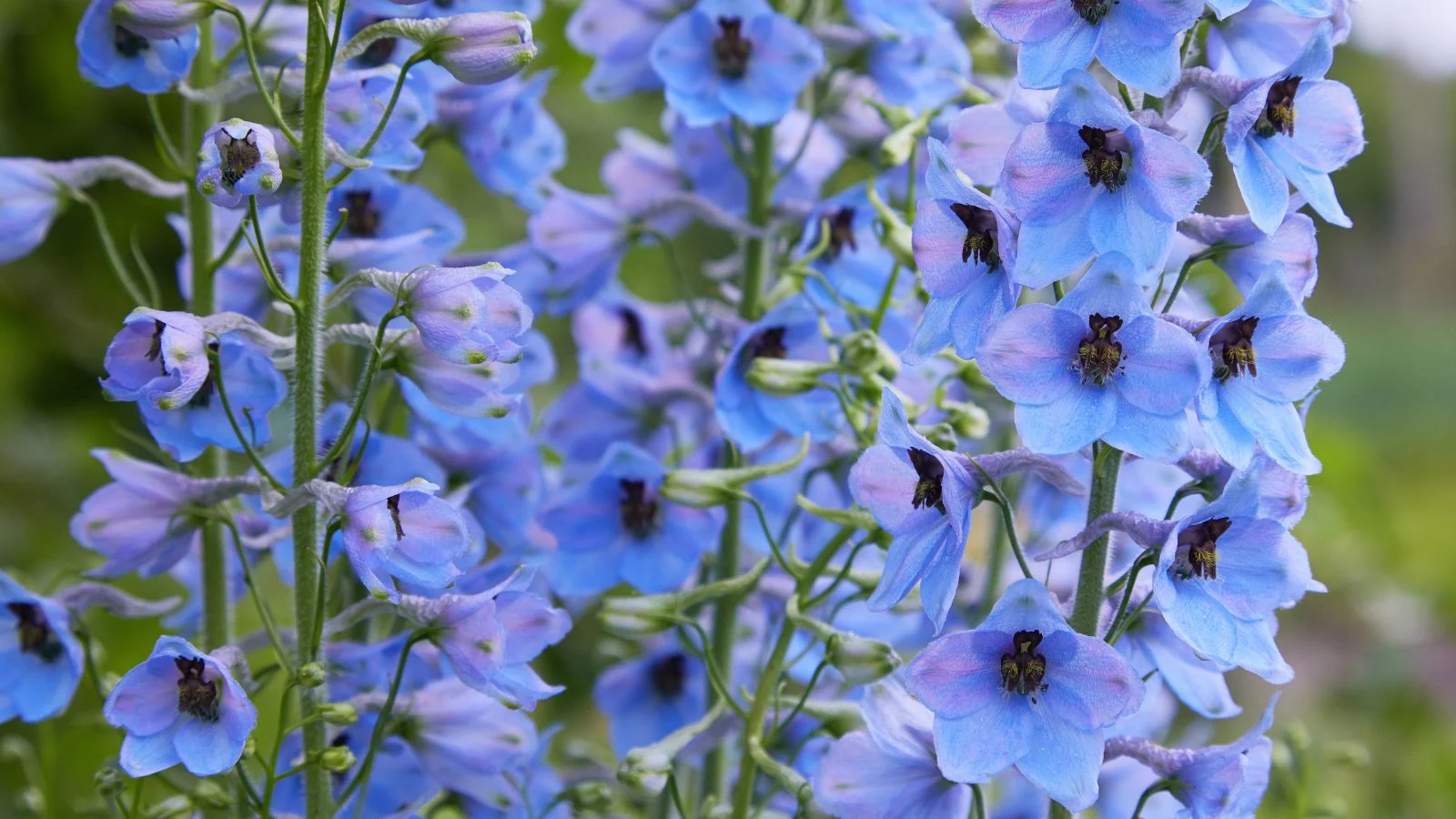 Look forward to mixes of purple and blue each spring.
botanical name
Consolida regalis
sun requirements
Full sun
height
4′
hardiness zones
3-7
Larkspur has that old-fashioned cottage garden look that really complements a cool garden palette. The tall flower spikes range from pale sky blue to deep purple-blue, with multiple shades on the same plant.
These annuals can reach several feet tall, making them useful for back-of-border height. Blooming happens in late spring and early summer before most summer perennials start.
Larkspur prefers cool weather and struggles when temperatures climb, so direct sow in fall or very early spring. They don’t transplant well (and cold stratification improves germination anyway).
White Gaura
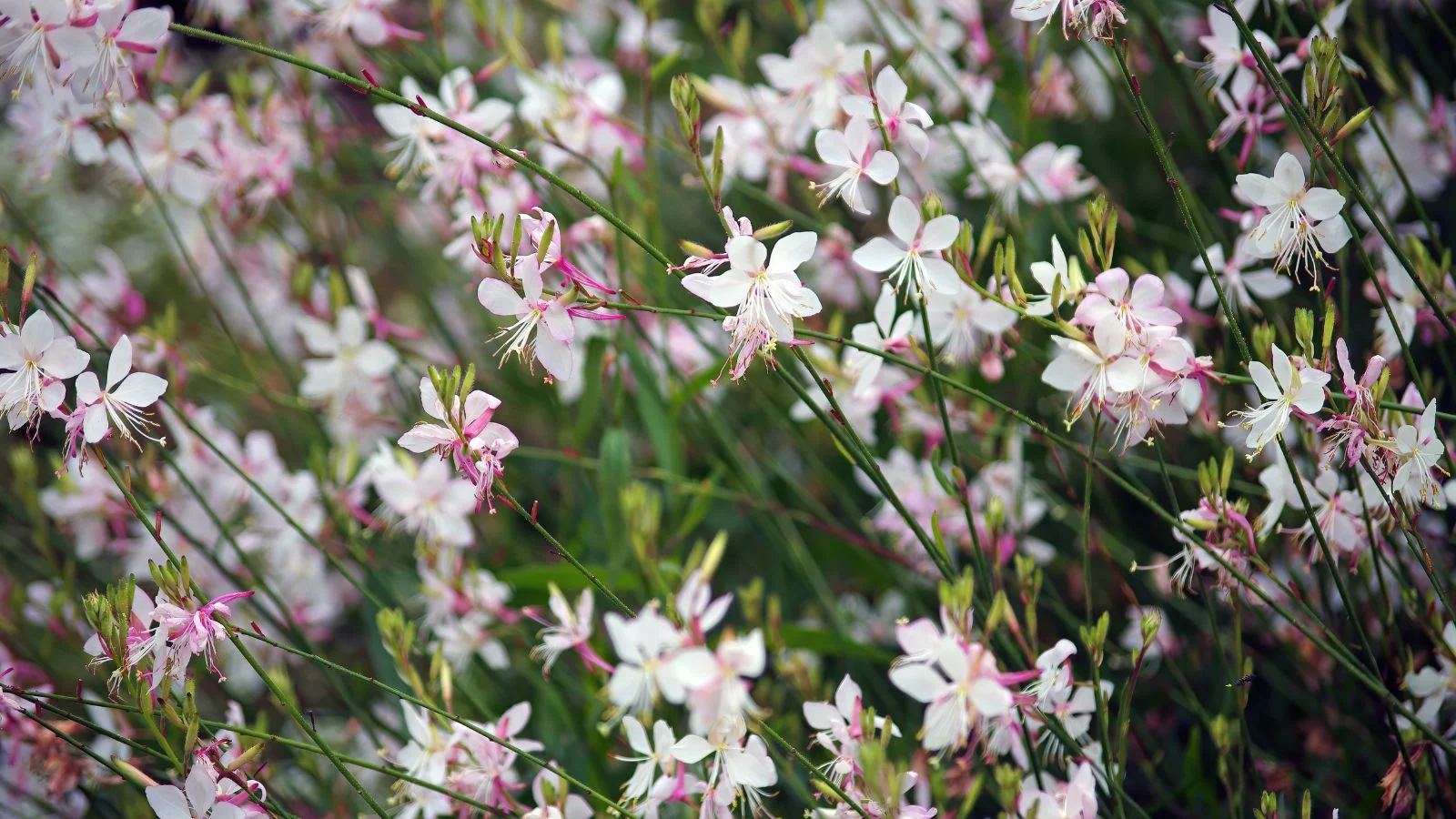 Small white flowers sway in the wind.
botanical name
Gaura lindheimeri
sun requirements
Full sun
height
48″
hardiness zones
5-9
Gaura adds soft movement to the garden, but without any bulk. The white flowers sit on thin stems that sway with the slightest breeze, creating an airy effect that’s hard to get from other plants. I have several paired with ornamental grasses that look stunning in a breeze.
Individual flowers open in succession along the stems over months, giving you plenty of blooms to enjoy. Plants grow a few feet tall and tolerate heat, drought, and poor soil once they’ve settled in. The open growth habit lets you layer gaura in front of taller plants without blocking them, and it fills that middle height between structured taller plants and ground covers.
‘Snowmaiden’ Scabiosa
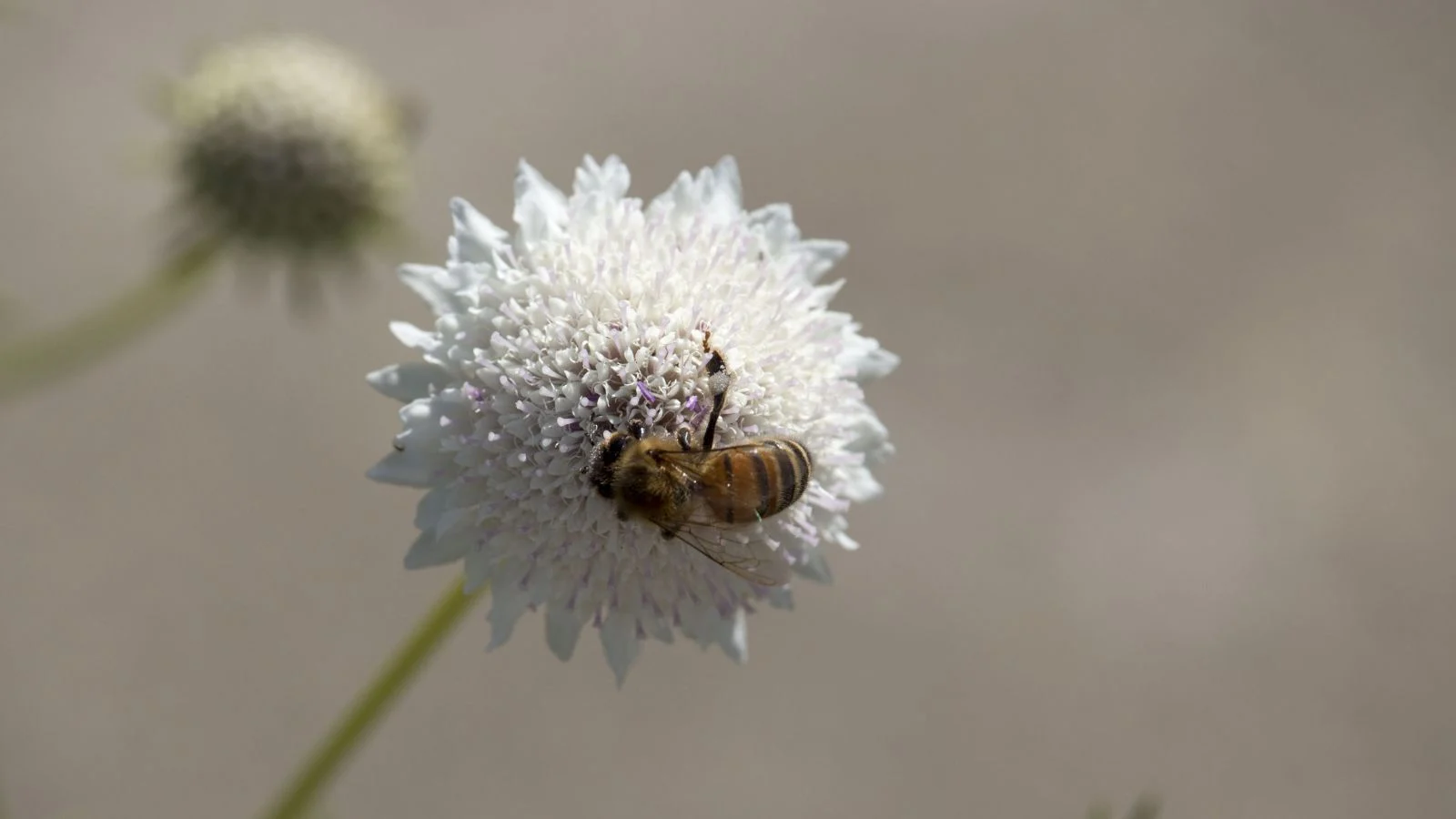 Pollinators love these soft flowers.
botanical name
Scabiosa atropurpurea
sun requirements
Full sun to partial shade
height
36″
hardiness zones
3-7
This scabiosa (pincushion flower) produces white blooms with those characteristic cushion-like centers above low mounds of foliage. The long stems make them excellent for cutting, which is useful if you want to bring your cool garden palette indoors.
These perennials bloom from late spring through summer and attract butterflies and bees consistently. Regular deadheading keeps blooms coming throughout the season. Scabiosa needs well-drained soil and full sun. It tolerates some drought but flowers more heavily with consistent moisture.
‘High Scent’ Sweet Pea
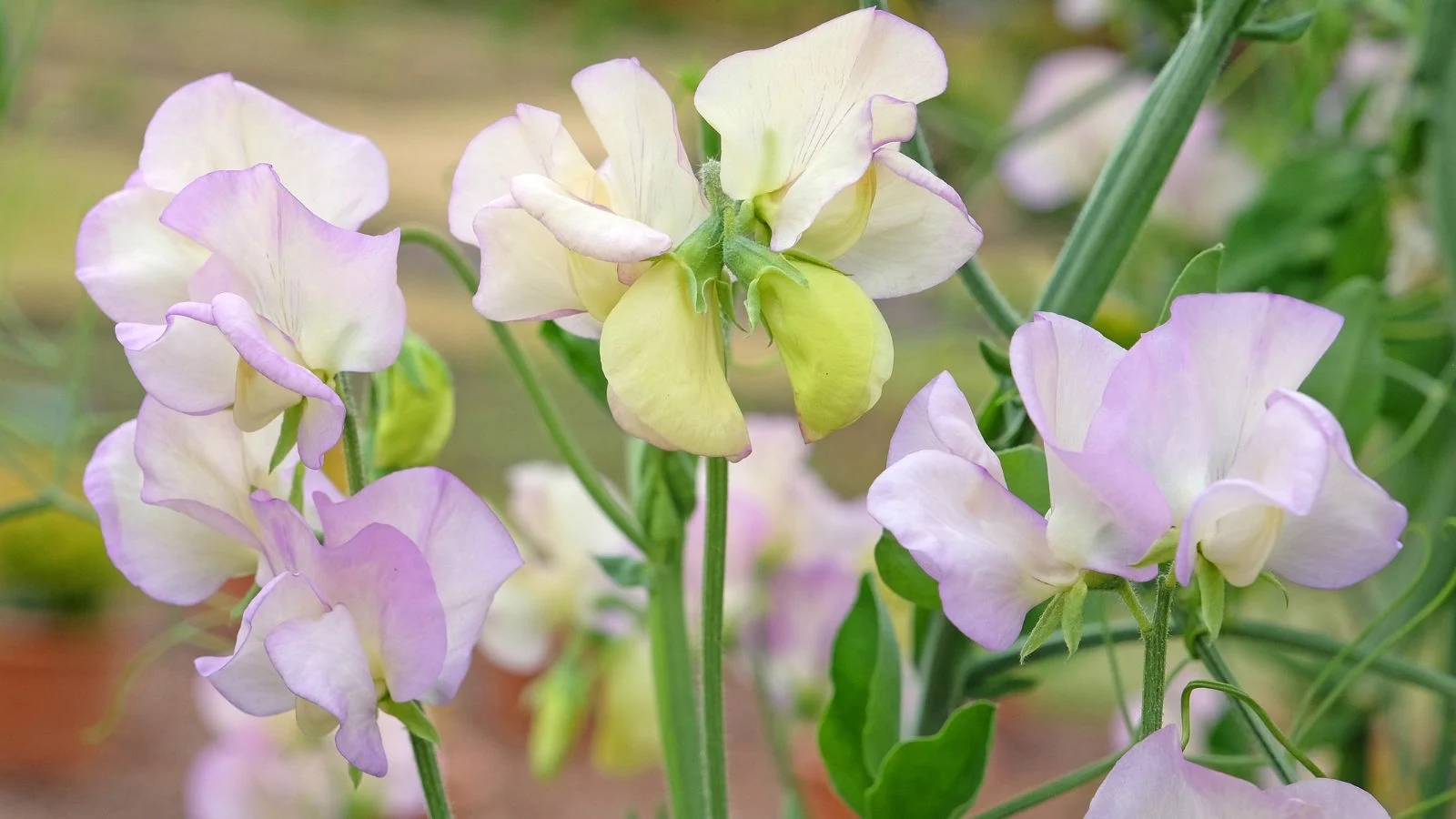 Plant them where you can enjoy their scent most.
botanical name
Lathyrus odoratus
sun requirements
Full sun to partial shade
height
5′
hardiness zones
2-11
The fragrance on these cool-toned sweet peas is strong, hence the name. You’ll enjoy it most in the evening, so they’re great for placing close to seating or entertaining areas. While they are still beautiful at the back of a bed, their scent is much harder to enjoy from there.
Vines climb up to five feet on supports. They perform much better in cooler temperatures and won’t flower much once summer heat kicks in. That being said, cooler regions can keep them flowering into summer with mild temperatures and regular deadheading.
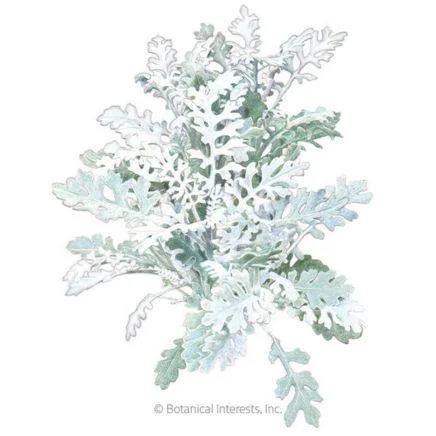
‘Silverdust’ Dusty Miller
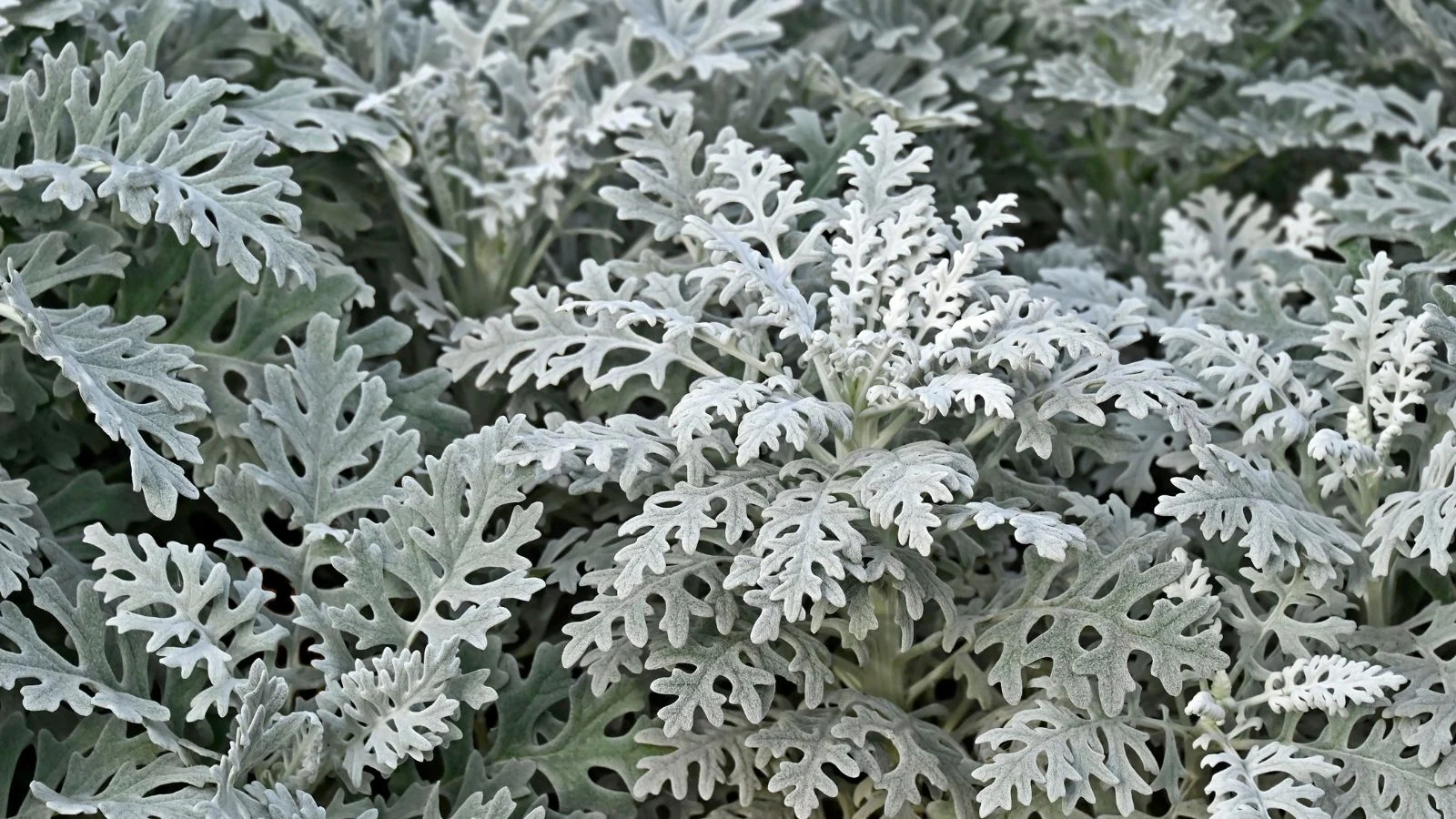 Silvery leaves shine in cool garden beds.
botanical name
Jacobaea maritima
sun requirements
Full sun to partial shade
height
12″
hardiness zones
8-11
For a popular foliage filler that isn’t a bright green, dusty miller is the perfect solution. The silvery-gray foliage connects different blues, purples, and whites in a cool garden palette without competing for attention the way other plants do.
The finely cut leaves look almost frosted and provide textural contrast among flowers. It’s technically a perennial in warm climates (zones 8 to 11), but most gardeners treat it as an annual where winters are tough. Besides the temperature requirements, it’s not a fussy plant.
‘Tiny Tim’ Sweet Alyssum
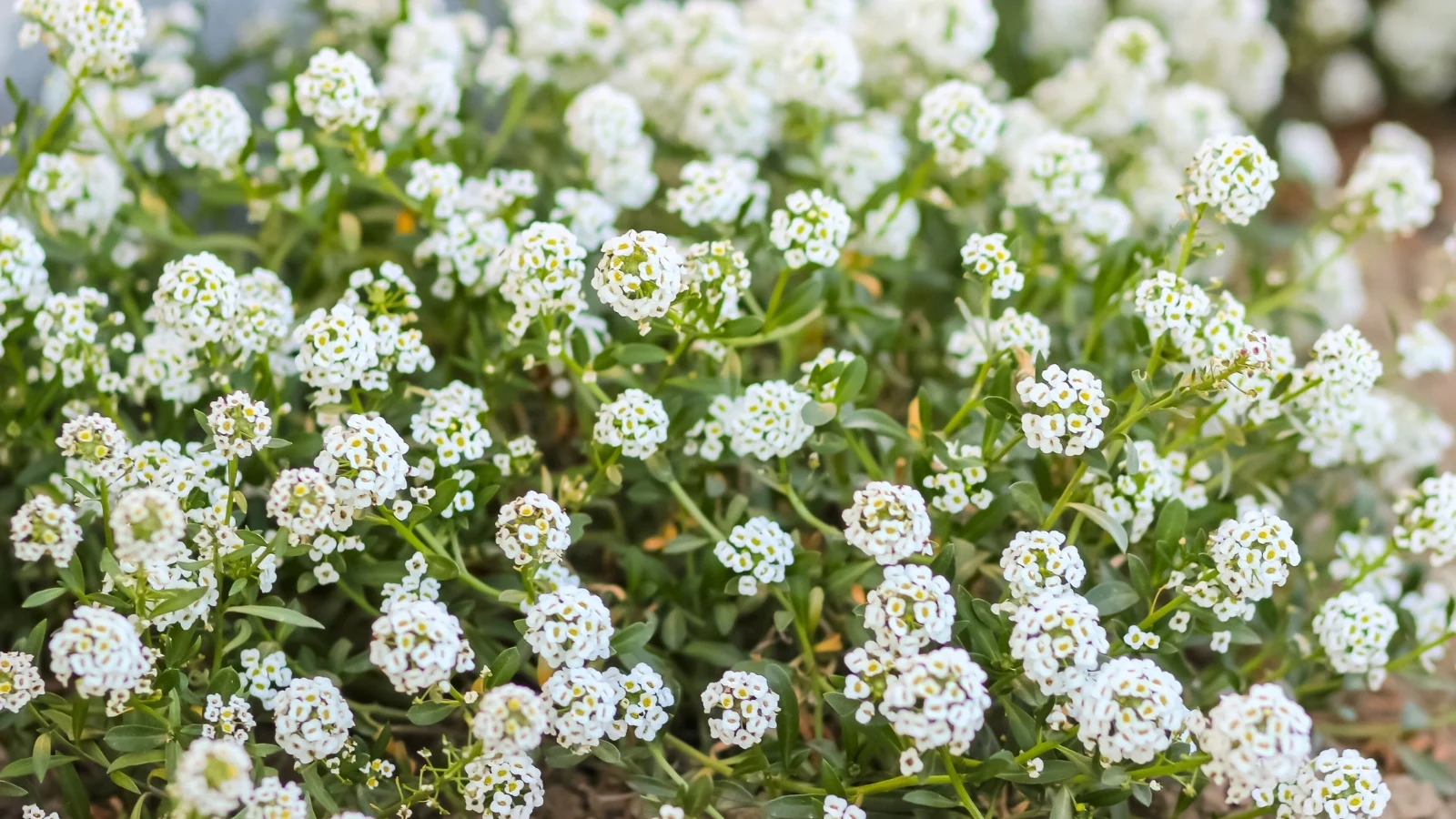 Plant along borders or pathways.
botanical name
Lobularia maritima
sun requirements
Full sun
height
4″
hardiness zones
5-11
Sweet alyssum is much more compact than other plants on this list. The adorable clusters of white blooms create a cloud-like effect along edges or cascading over container edges. They bloom continuously from spring through fall with minimal care.
Plants stay low under six inches tall, perfect for layering. Sweet alyssum self-seeds readily and often returns without replanting. The low, spreading growth softens hard edges along paths or between beds and lawn, contributing to that soothing look.
Anise Hyssop
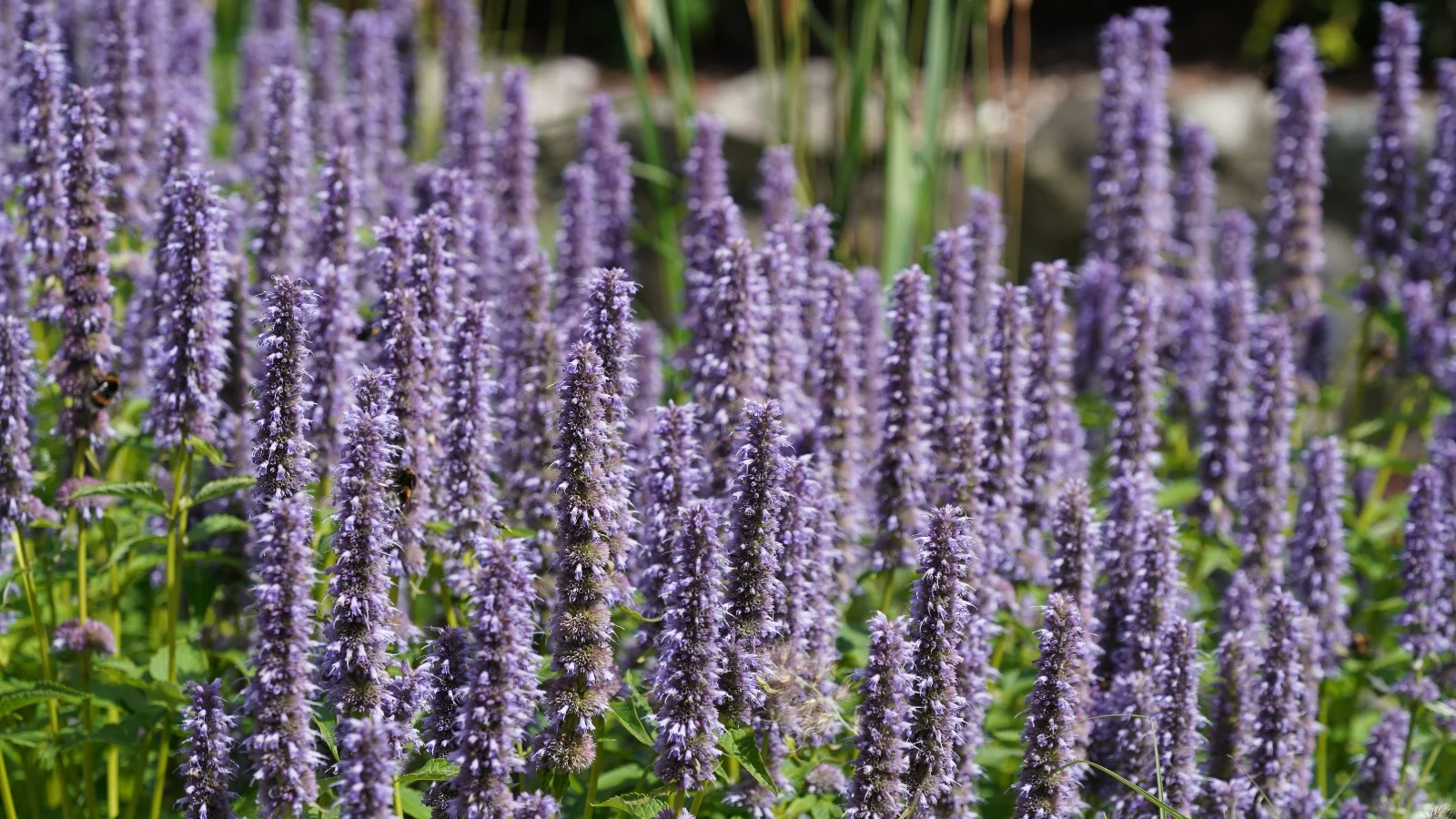 The tall flowers attract bees and butterflies.
botanical name
Agastache foeniculum
sun requirements
Full sun to partial shade
height
48″
hardiness zones
3-8
For soothing sights, you can’t go wrong with this perennial garden staple. Lavender-blue flower spikes appear from midsummer through fall, and the foliage smells like licorice when you brush against it or crush the leaves.
These perennials grow around three feet tall and pull in bees, butterflies, and hummingbirds throughout their long bloom period. The flower spikes keep their structure after blooming ends, adding winter interest if you leave them standing.
‘Vera’ Lavender
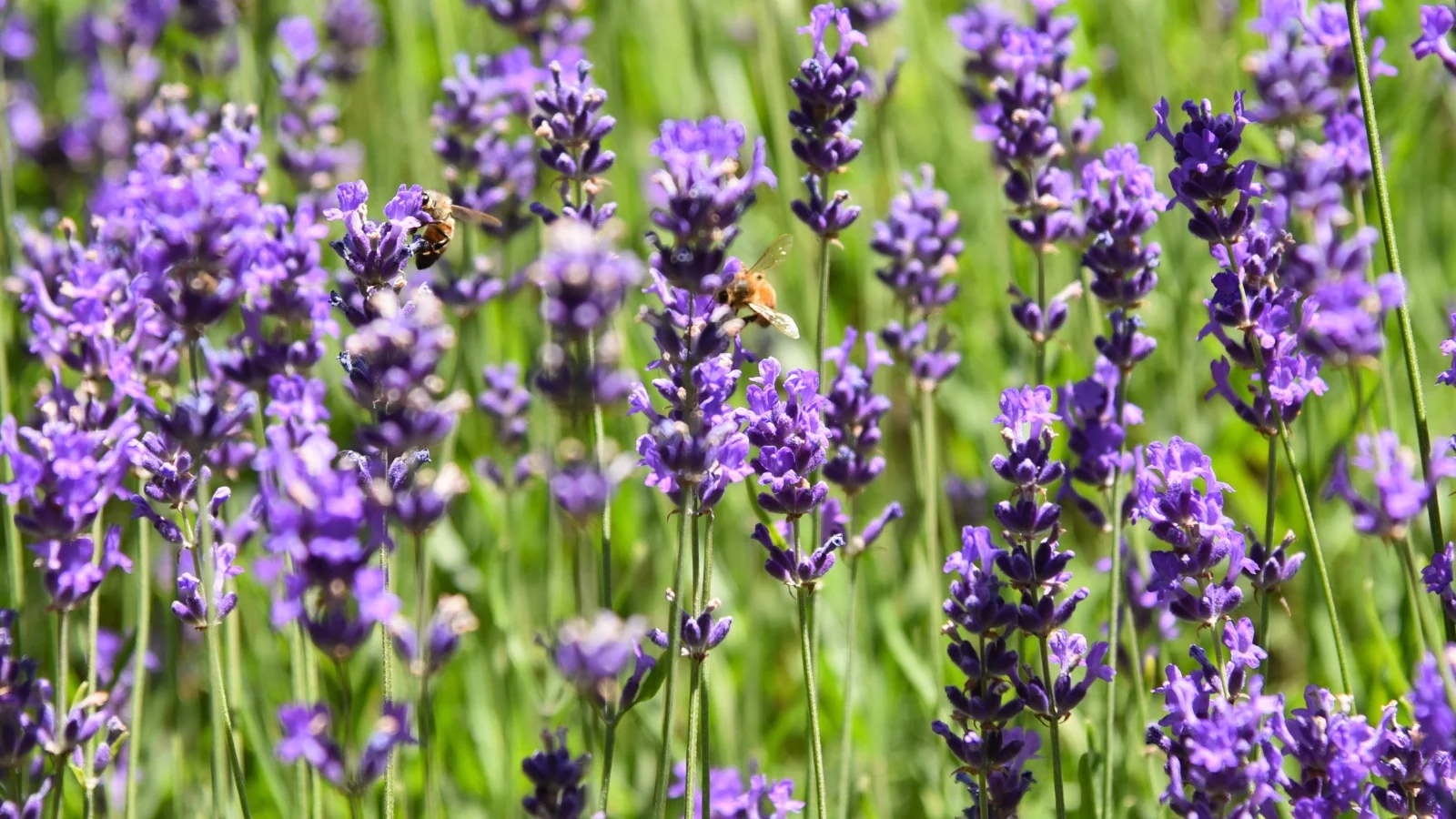 The classic purple flowers have a soothing scent.
botanical name
Lavandula angustifolia
sun requirements
Full sun
height
36″
hardiness zones
5-11
If you want a cool garden palette that also brings a soothing scent, English lavender is the answer. It produces the classic purple-blue spikes above gray-green foliage (that’s a great match with the dusty miller we looked at earlier). Both flowers and leaves contribute to the cool palette, and the scent is particularly strong on warm days.
‘Vera’ is one of the hardier lavenders and tolerates colder winters than most varieties. Plants bloom in early to midsummer, and cutting back spent flowers sometimes triggers a second flush. Lavender struggles in heavy soils that hold moisture, so amend with compost or gravel if your soil stays wet.
‘Amazing Grey’ Corn Poppy
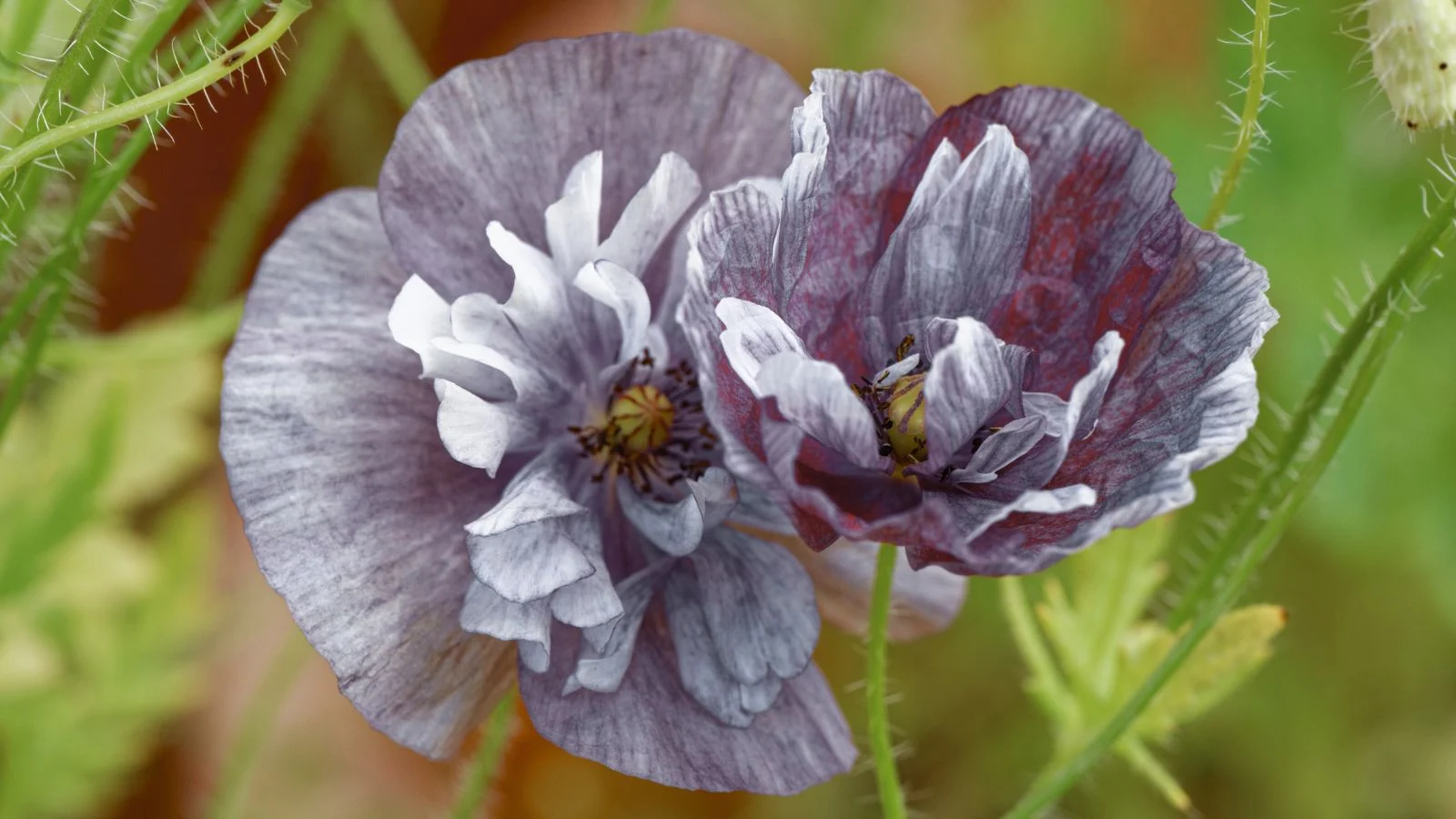 The unique poppies have a color you won’t find in other blooms.
botanical name
Papaver rhoeas
sun requirements
Full sun
height
27″
hardiness zones
3-9
The soft blue-gray flowers of this unique cultivar are quite unusual for poppies, but they do make them ideal for a cool garden palette. The papery petals are translucent and particularly striking when backlit by morning or evening sun.
These annuals bloom in spring before heat-loving plants take over, and again in fall. They prefer direct sowing, since they don’t transplant well. Corn poppies bloom for a few weeks and then finish, but they self-seed reliably if you let some flowers set seed.













PS — I appreciate the point about “11 Stunning Plants for a Soothing, Cool” — very helpful 😊