
Transplanting 3 new tomato plants in basins for watering directly into the root zones. The artichoke at the back was already established.
Seeding and transplanting appears here to highlight key ideas for readers.
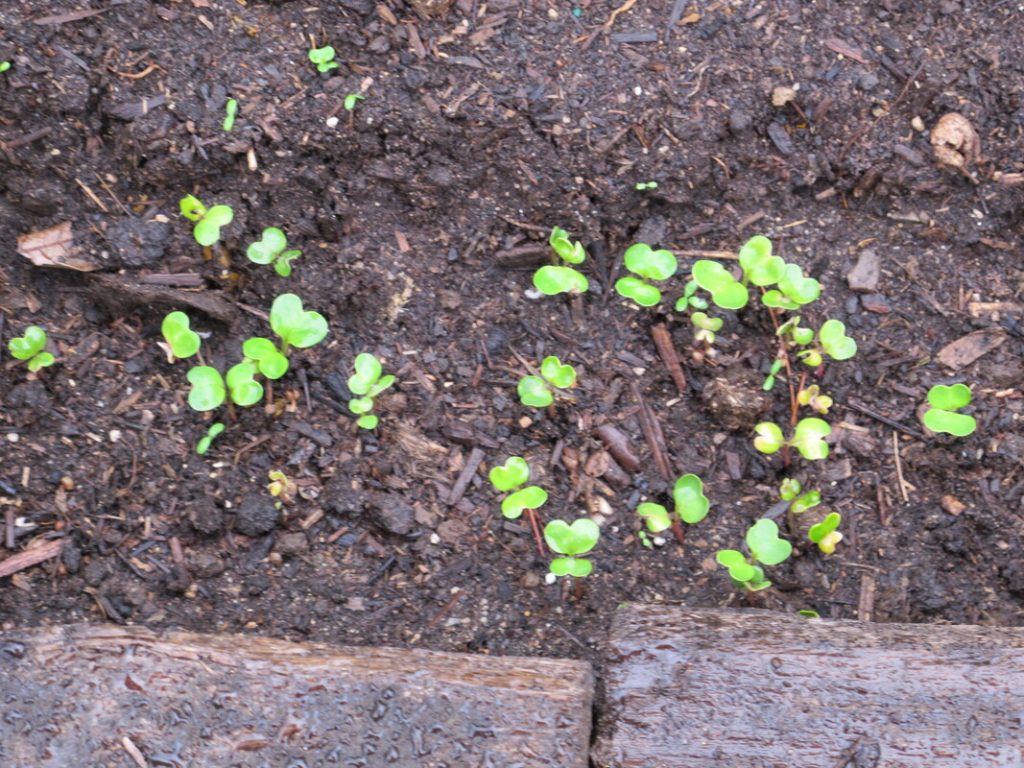
Our continuing cool July weather provides more opportunities for gardening than is usual for mid-July. Whereas the “normal” hot summer gardening activities usually concentrate on watering and harvesting, this year we can continue seeding and transplanting more heat-loving vegetables and flowers and vines, as long as the air temperature falls within the range of 65 to 95.
Here are some tips when seeding in soil or a container:
Here are some tips when seeding in soil or a container:
- Best to use for vegetables like beans, cucumbers, and squash. They will germinate quickly and grow strongly, whereas vegetable transplants will struggle reacclimating after being pampered in a greenhouse. The exception is tomatoes, which will do fine.
- Incorporate compost into soil to a depth of about six inches and one foot in diameter to aid in absorbing and draining irrigation water. This benefits all kinds of soils, from sandy (it helps absorption) to clay (it helps drainage).
- Create a planting hole about four inches deep and wide.
- Fill basin with water several times to thoroughly wet soil.
- Tuck seeds about an inch deep around the edges of the hole.
- Water in three times to assure that the entire area of loosened soil is saturated.
- Water every other day for a week, and then once a week while air temperatures are above 80 degrees.
- Place cage or trellis to enable vines to climb and keep their fruit off of the soil.
Here are some tips when transplanting into soil or container:
- Best to use for flowers, not vegetables (see above).
- Incorporate compost into soil to a depth of about six inches and one foot in diameter to aid in absorbing and draining irrigation water. This benefits all kinds of soils, from sandy (it helps absorption) to clay (it helps drainage).
- Create a planting hole about four inches deep and wide.
- Massage the plant’s rootball, loosening established roots so they can easily spread out into the new soil mix. Cut off any circling roots. If this is not done, the existing roots may continue circling and ultimately girdle the plant, killing it.
- Place plant into the bottom of the hole and press soil gently around rootball.
- Water in three times to assure that the entire area of loosened soil is saturated.
- Water every other day for a week, and then once a week while air temperatures are above 80 degrees.
- Place cage or trellis to enable vines to climb and keep their fruit off of the soil.