Devil’s Trumpet, Datura
Devil s trumpet — a short introduction to this piece.
Devil s trumpet: Quick Notes
Some of the last flowers to bloom as the growing season draws to a close are Halloween-ready: the headily scented trumpets of Datura are as ethereal as they are toxic. Until a neighbor began growing them in his city tree bed every summer, I paid the plants little mind. Sidewalks are very rough on any living thing, and the flourishing forms of these resilient annual shrubs won me over. Despite complete neglect—receiving no supplemental water, no food, and a lot of unwanted liquid attention from passing dogs—buds keep forming, blooms keep opening every night, and passersby keep being enchanted by the combination of perfume and near-artificial flower perfection, and, later, by the prickly seed capsules. The fact that Datura is strongly associated with toxic, hallucinogenic, and medicinal effects adds to its intrigue.
Here’s more about alluring Datura, also known as devil’s trumpet.
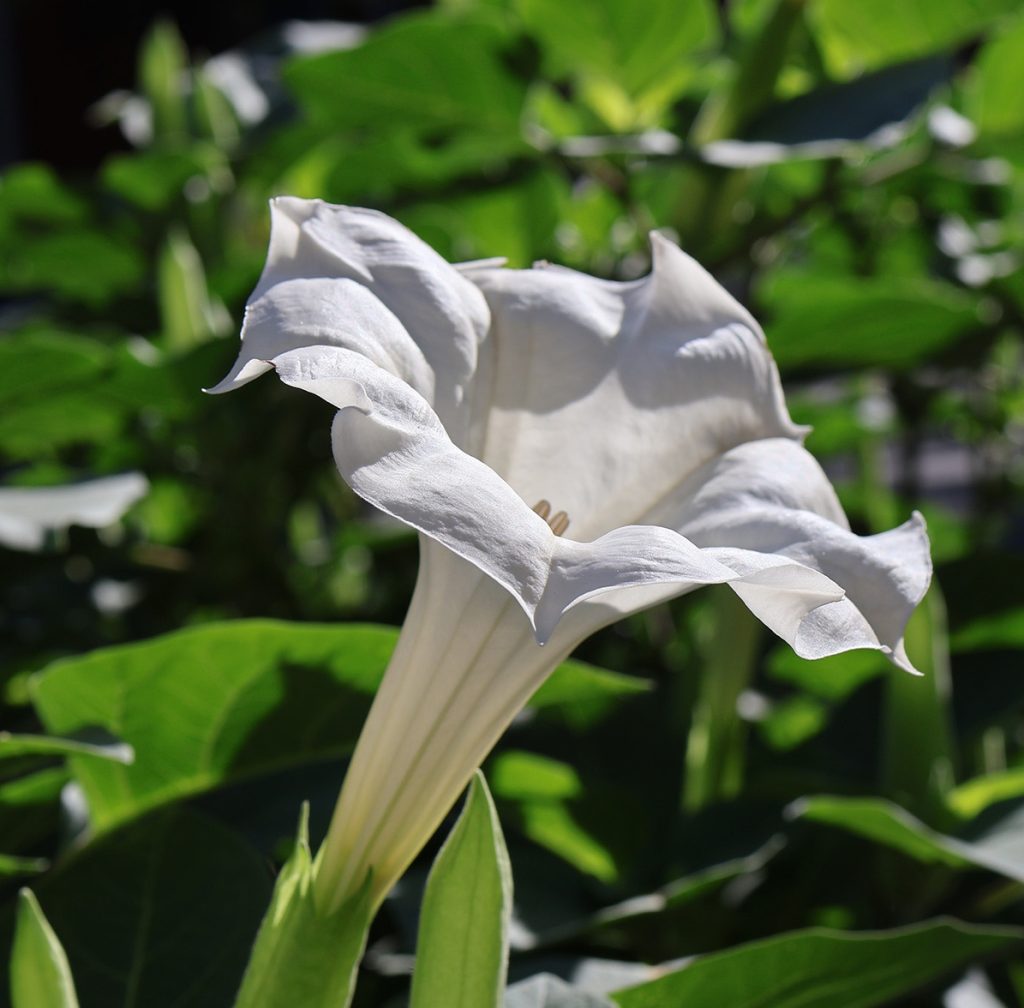
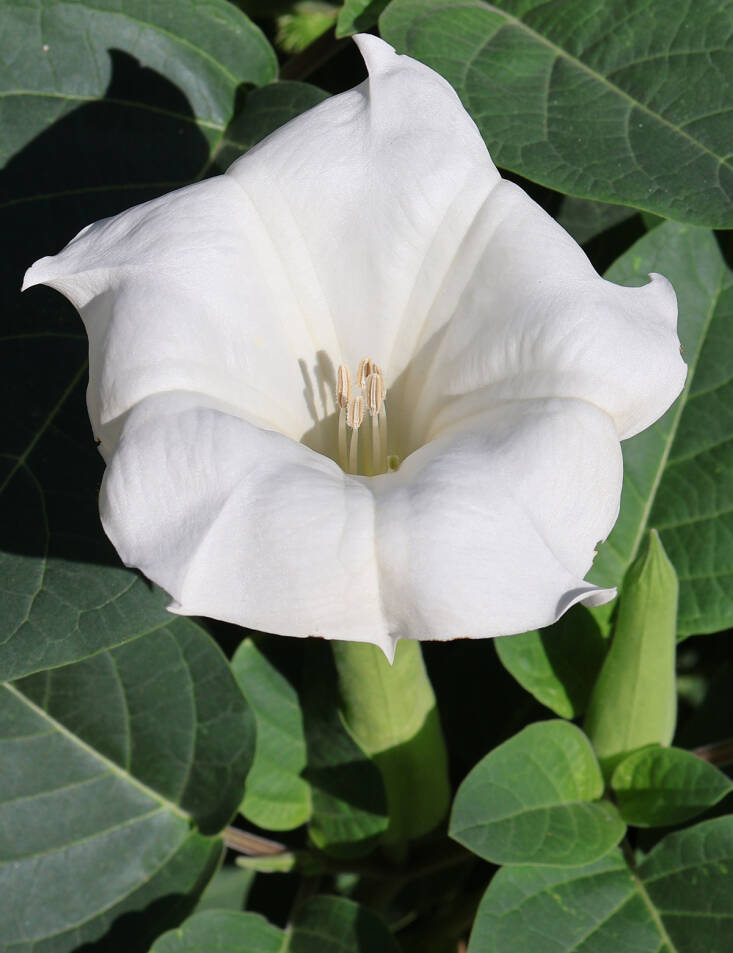
The flowers of Datura are vespertine, unfurling at night, and lasting until the middle of the following day. The strongly scented flowers attract sphinx moths, which are their primary pollinators.
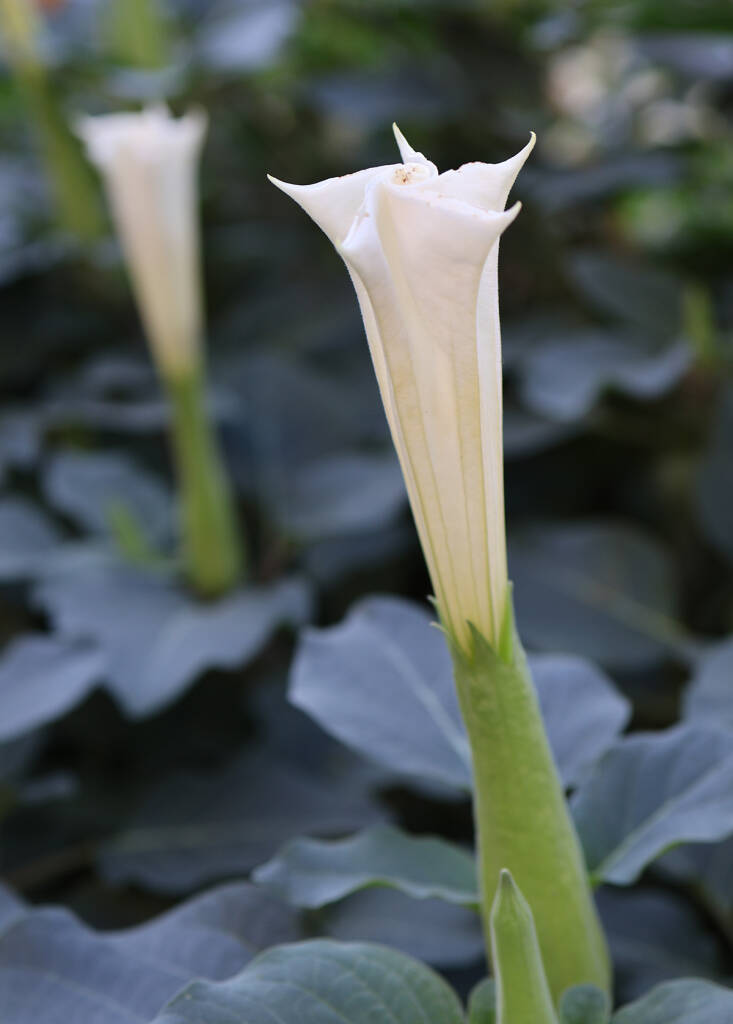
Various Datura species share a long list of common names that include devil’s trumpet, moonflower, thorn-apple, and jimsonweed. The name angel’s trumpet refers to species of Brugmansia, whose flowers are pendant rather than upright, growing on woodier, taller shrubs.
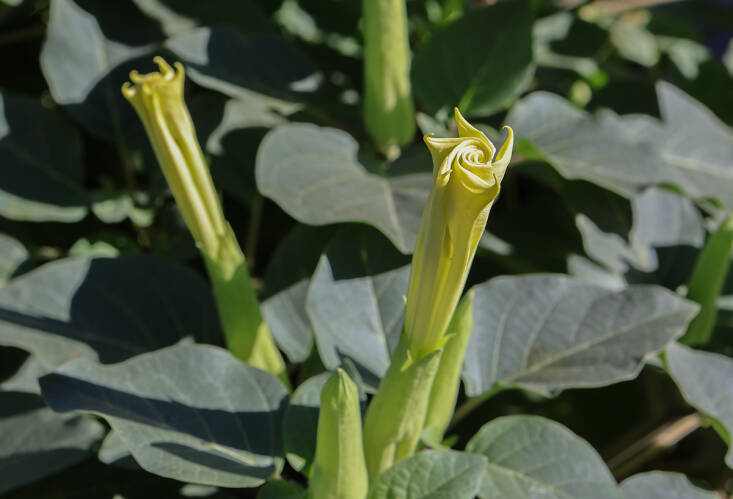

Despite the flowers’ sweet scent, the crushed leaves have an unpleasant odor. While not absolutely deer-proof, Datura is not top of the list for the browsing herbivores. Cases of poisoning usually affect humans, not animals, since the animals may know better.
Toxic alkaloids are found in all parts of Datura but are concentrated in the seeds. The level of toxicity can vary very widely depending on the specific plant, which is why humans looking to experience a botanical high may instead became extremely ill, or (rarely) slightly dead.
Before anyone panics, bear in mind that we feel comfortable around highly toxic plants like yew, foxglove, hellebore and oleander; we barely consider their complex properties.
For more about these such plants consider Amy Stewart’s classic spooky-season book Wicked Plants: The Weed That Killed Lincoln’s Mother and Other Botanical Atrocities.

Cheat Sheet
- Datura belongs to the nightshade family (Solanaceae), which includes well known edible plants like tomatoes, eggplants, peppers and black nightshade.
- Daturas’ origins may be American, although there is evidence of their sacred and medicinal use in Asia for millennia.
- In South America Datura stromium leaves were (and may still be) used to treat asthma.
- All parts of Datura contain toxic, psychoactive alkaloids.
- Flowers open at night and last into the next day.
Keep It Alive
- Datura is hardy from USDA growing zones 9 to 11, where it is a short-lived perennial.
- Most gardeners grow it as an annual.
- Plant in beds as a focal point, or in a large pots (16 inches diameter, minimum).
- Grow in full sun for the most flowers.
- Plants will self seed even where in cold winters, but you can collect seed when the spiny capsules split to release them.
- Seeds germinate only when nights are above 55°F and days are warm.
- Give the plants room to spread, since they can reach three to four feet in circumference.
- Once established, they are very tolerant of dry periods.
See also:
(Visited 1,108 times, 3 visits today)
Devil s trumpet appears here to highlight key ideas for readers.
<!–
–>