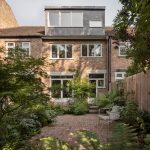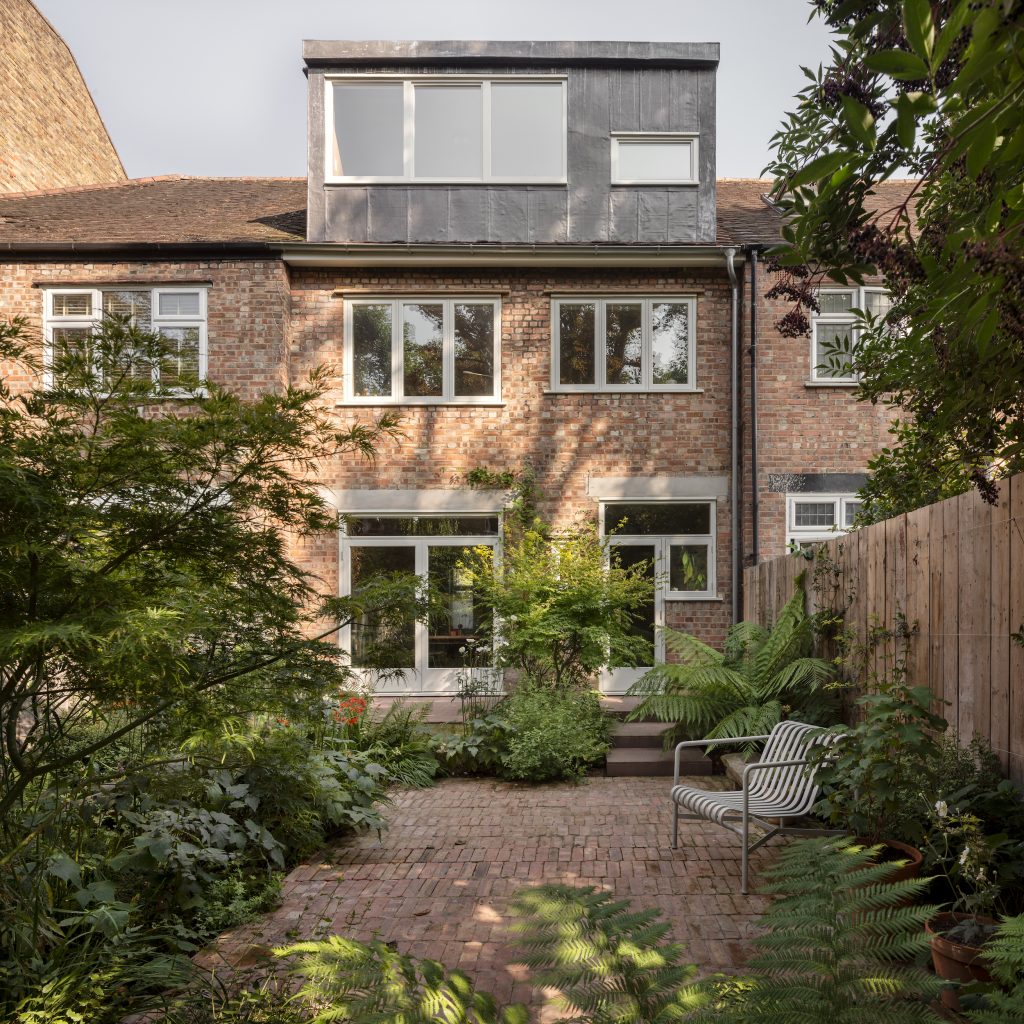
After years of inhabiting a tall Victorian terraced house with lots of levels and stairs, architects Jody O’Sullivan and Amalia Skoufoglou yearned for space to spread out. The couple, who founded O’Sullivan Skoufoglou Architects in 2016, didn’t have to go far to swap vertical living for horizontal—they found a 1930s Arts-and-Crafts-style home just around the corner. Set on a tree-lined street in London’s Canonbury neighborhood, the pebbledash-clad home was refreshingly wide and just two floors. Perhaps more importantly, it was unusually preserved.
“The man that lived here was born here and then died here as well,” Amalia says. “He had kept it in a very rudimentary state where there was no central heating, the windows were completely rotten, and the cooking and bathing facilities were very basic. But what was amazing was that all the original features—like cornicing and picture rails and fireplaces and layouts and door handles—hadn’t been tinkered with at all.”
The duo maintained as many historic elements as possible in the existing living areas, which they furnished with their collection of vintage treasures that make sense with the century-old surrounds. Then, they pivoted to a modern aesthetic for the conversion of the unfinished attic into an architecture studio and primary suite, using Okoume plywood and Troldtekt cement-bonded wood wool panels for a raw, minimalist effect. Let’s take a tour.
Photography by Ståle Eriksen.
Above: Between the spacious floor plan and intact details, Jody and Amalia didn’t need more convincing to purchase their nearly 100-year-old home—the lush greenery in the area was just icing on the cake. 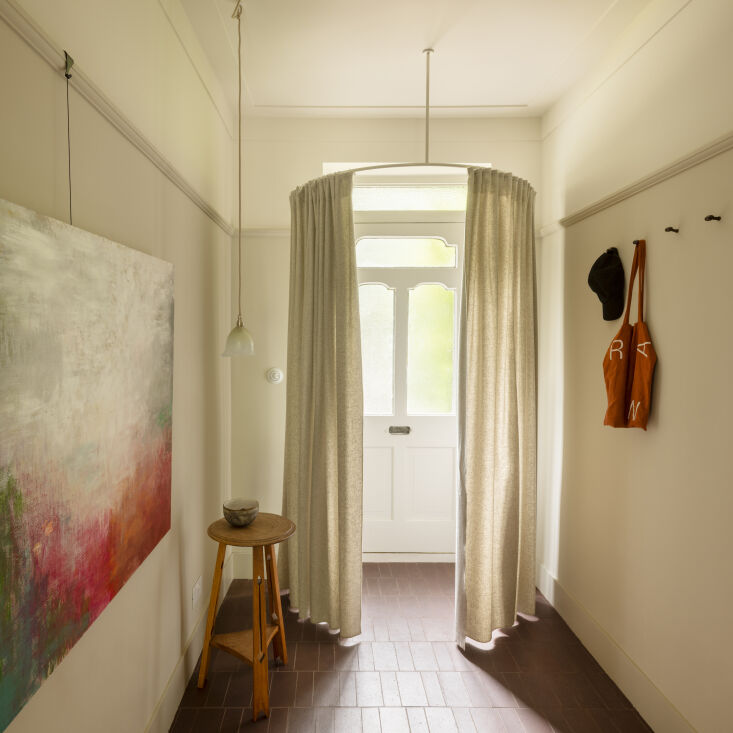 Above: Despite Jody’s protesting, Amalia insisted on keeping the original door, which isn’t totally airtight. To prevent cold air from seeping inside, they fashioned a semicircular hanging rod with long Scottish felt curtains. “We added this antechamber as you come in, in the hope that it’ll mitigate the draft a little bit,” she explains. “It forms a thermal envelope, and it also gives this layer of entrance, especially in the winter when we draw the curtain.”