IF WE’RE shopping for native plants with the most ecological impact—ones with the most pollinator appeal, for example—then simply choosing by the prettiest picture on a label or by a catalog photo won’t get you to your goal.
It helps to understand the vocabulary of natives words like straight species and ecotype and selection and cultivar. Especially with cultivars—the cultivated named varieties of, say, Echinacea or Phlox or Aster of which there are now so many to choose from—we need to learn to read between the lines on those plant labels, because not all cultivars are created equal.
Sam Hoadley, the manager of horticultural research at Mt. Cuba Center in Delaware, helped me understand how to do just that.
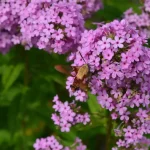
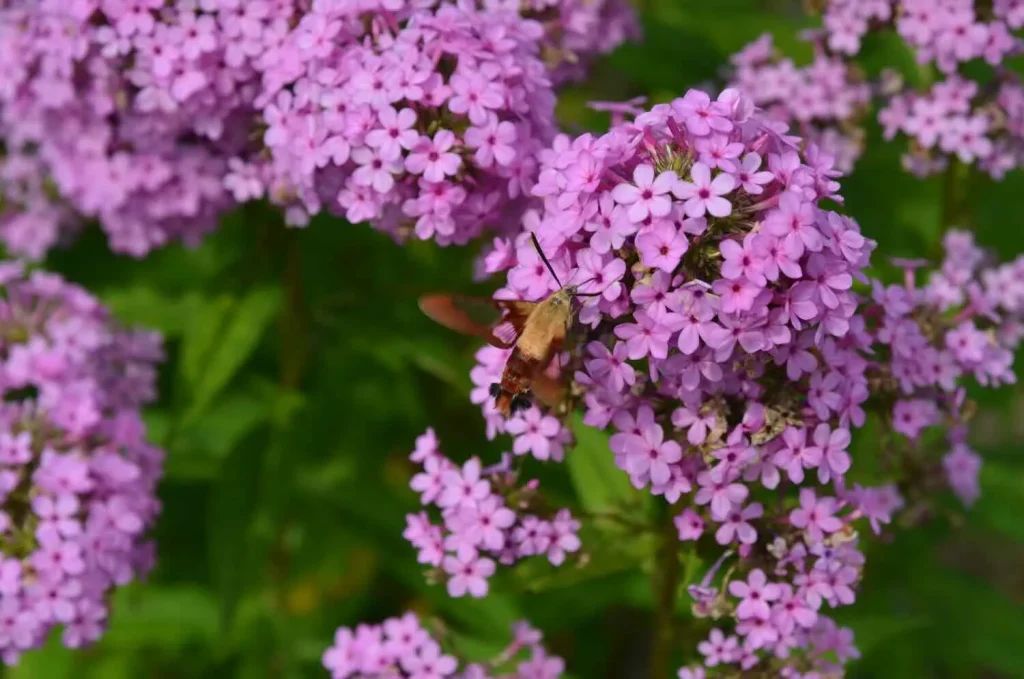
Since 2002, the gardeners at Mt. Cuba Center in Delaware have been studying native plants and their cultivars for their garden-worthiness and ecological value, and since 2019 Sam Hoadley has been heading up that effort, conducting multi-year trials that compare different species and varieties of a genus. (Above, Phlox paniculata ‘Jeana,’ a top performer in their Phlox trial.)
Read along as you listen to the April 27, 2026 edition of my public-radio show and podcast using the player below. You can subscribe to all future editions on Apple Podcasts (iTunes) or Spotify (and browse my archive of podcasts here).
cultivars, selections and more, with sam hoadley
Download file | Play in new window | Duration: 00:28:02
Subscribe: Apple Podcasts | Spotify
Margaret Roach: Welcome back, Sam. Usually we’re talking about the results of a trial you’ve just completed [laughter].
Sam Hoadley: That’s right. That’s right.
Margaret: And this is a little different because I had been noticing with reader comments on my “New York Times” columns and on my blog posts and so forth, that people were confused about cultivars and had a lot of opinions.
Sam: Sure.
Margaret: And there was a lot of blowback sometimes [laughter] and so forth. And so I had reached out to you and you said, “Oh yeah, yeah, absolutely. We see that, too.” And we decided to do this “New York Times” garden column together recently. So I wanted to do that sort of here again. That’s the background. And so I guess we’ve got to start with some definitions [laughter]. Shall we start where it all begins, with the straight species?
Sam: Yeah. So straight species is kind of your wild plant. When you go out for a walk in the woods, you’re seeing wild, non-cultivated plants, and you’re seeing a lot of genetic diversity amongst plant populations. So just like people, in most plant species, each individual is an individual. Some of them may look very similar, but they are genetically diverse. And that’s what people often mean when they’re talking about wild type or straight species.
But even in cultivation, when you’re talking about a wild type or straight species, you’re only, in many cases, getting a small slice of the diversity that exists out there in the wild, whether that’s maybe from one seed collection, from one population in one place at one time. Even your wild type or straight species can be more limited than what exists in the wild, in many cases.
Margaret: Right. Because I mean, the diversity is a survival strategy, all that genetic diversity within a population. And then there’s populations in so many different places, and they have different traits as well because they’ve survived in that particular location, and oh my goodness. And that’s why of course we hear about, “Oh, I want a local … ” And so then we get to what, ecotype? Is that what we get to or what do we get to?
Sam: Yeah. So an ecotype is basically genetics of a species that are adapted to a particular place. And often we just kind of use ecotype a little bit loosely at Mt. Cuba Center in terms of, we just kind of use that to point to where that plant came from, where it originated from. And we use ecotype to compare basically genetic differences in garden performances within a species across sometimes a relatively large range. We’re trying to show differences that you can see in cultivation amongst that species, based on where it was collected, where those genetics came from, where they were adapted to.
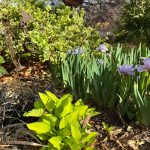
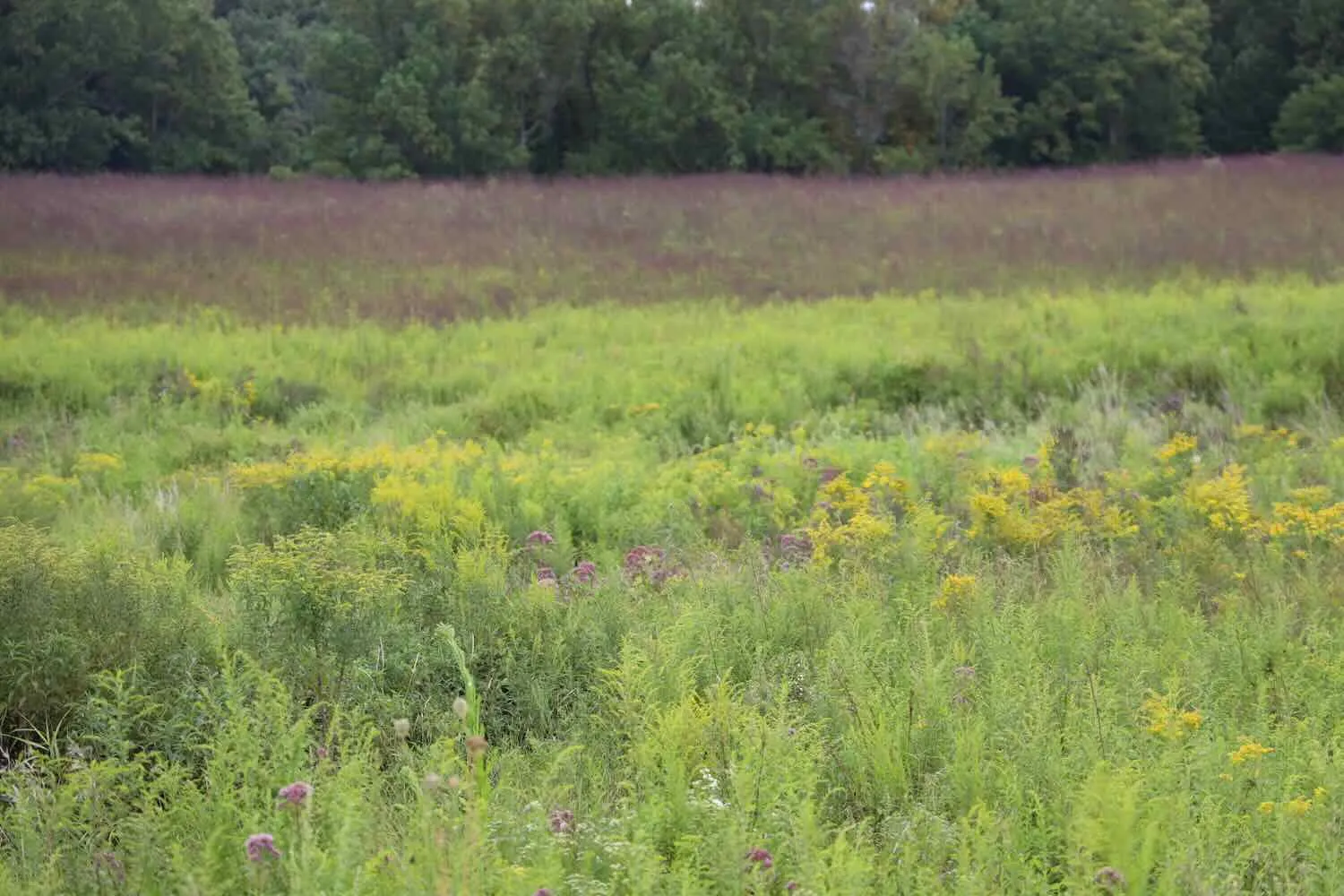
But ecotypes and locally native plants can be really important, especially for restoration projects, I think. And there are specific instances where having local genetics can be particularly valuable. [Below, some of the natural areas at Mt. Cuba, populated by wild type or straight species plants.]
 Margaret: Right. And sometimes they’re the hardest thing to find. I mean, that’s the other thing. And that’s been … And I know there’s a big change underway in the nursery industry to try to meet the rising demand and change that. But boy, that’s been a hard thing. Because up till now, if I wanted little blue stem, which is something that’s native where I garden and I have some on my property, but if I wanted to create a larger area of it and I didn’t want to collect my own seed and do it that way, probably it would have come from the Midwest.
Sam: Yeah.
Margaret: So things like that.
Sam: Absolutely. It can be really difficult to sometimes track down where these wild type straight species plants have come from. Your seed might have been grown somewhere in the Midwest and maybe that seed was sent to a nursery in Oregon, those seeds were germinated, and then those seedlings were sent to a nursery in the Mid-Atlantic, and then those plants were then sent to a nursery in New England. Some of these plants are very, very well-traveled.
Margaret: [Laughter.] I was going to say, yeah.
Sam: Yeah. And it can be very difficult to understand or to know where they came from. And I think what we can demand as consumers is a little more transparency from nurseries. And we’re seeing more availability of locally native plants and locally collected seed from some of these smaller, more specialty native plant nurseries, which is a really encouraging and great trend to see.
Margaret: Right. So then, so we have our straight species, our wild type, and then we talked a little bit about ecotype, a sort of local version. But then there’s the word , and everybody right away ricochets—at least this is what I was seeing in the comments and why I called you up that day not long ago—I was like, “Is everybody really angry at you, too?” [Laughter.]
Sam: Oh, yes.
Margaret: Every time you say that? And so this is one where, I think as you said to me when we were doing the Times story, it’s like people visualize people in white lab coats inventing things, so to speak, and that there’s nothing natural about it. And like I said, in the introduction, all cultivars are not created equal. So what’s a cultivar, and what’s the range of cultivars? [Laughter.]
Sam: Yeah. So in the broadest of terms or broadest of definitions, a cultivar is a cultivated plant, but most of the time when we’re talking about cultivars, we are talking about a plant that has some English name attached to its Latin name. So you have your genus name, your specific epithet. So let’s say, I don’t know, Acer rubrum, and then you have a cultivar name, which would be an English name and single quotes.
So often it’s that English name and single quotes that I would say elicits the reaction and makes people think that that plant’s been manipulated; it’s not the wild type plant, genetic diversity is low. And I would say sometimes those things are true and sometimes they’re not. And unfortunately, when we use the word cultivar, it is such a huge umbrella term that it is capturing plants that basically are wild type plants, often with less genetic diversity than the straight species, if you will.
And then on the other end of that spectrum, you have plants that have been heavily manipulated, have been part of breeding programs for generations that are very, very different from wild type plants, sometimes not recognizable, at least when you compare those plants to a wild type form of that species or to that plant’s parent species.
So you have a wild-type plant that often is associated with a plant that’s so different, and calling those the same things or assuming that those can provide equal and generally what is assumed to be lesser value to pollinators, that’s where it gets a little bit messy, because it is just so complicated. There’s so much nuance because of this really broad term.
Margaret: So a cultivar, it would remain, it also has traits that they stay stable-
Sam: That’s right.
Margaret: Like if you keep propagating it again and again and again… and with commercial cultivars, they’re usually cloned, I think. So they’re done asexual reproduction, they’re done by tissue culture or cuttings or whatever, sometimes by seed, but more often not.
Sam: Yes. The majority would be through clonal means like exactly tissue cultures or cutting. Tissue culture, cuttings, divisions. I would say divisions probably less so just because you’re not able to produce nearly the numbers. There are some seed strains, especially if that seed strain will provide a really consistent seed set, or that progeny will be very similar to the parents.
There are some seed-grown cultivars out there, but they’re in the minority. And that’s one of the arguments against cultivars in general is that there’s not a lot of genetic diversity and they’re not able to cope with issues like pressures like climate change, where if something were to affect that one cultivar, it would wipe all of them out because there’s not that genetic insurance that there would be in a straight species.
Margaret: If you planted a mass of only that, you might lose them all.
Sam: Right, exactly.
Margaret: O.K. And then when we did the Times story, what I found out even more clearly—what I sort of thought was true and what you explained to me was really true—is that not all cultivars have been so eviscerated of all of their resilience and so forth at all. I mean, some are quite close to how nature made them. [Laughter.]
Sam: Yes, exactly. I mean, and that’s why we’ve been trying to use the word selections a lot more.
Margaret: And that was the biggest aha thing for the readers of the story. And also for me, as we talked about it more deeply, is that many of these plants that we have known as cultivars—and again, some people disdain that, put that word down—are selections: They were found; nature made them and someone said, “Oh, look at that’s a little different. That’s beautiful. I wonder if we could propagate that.” It wasn’t that it was made in a lab.
Sam: Right, exactly. And in many senses, it is the wild type plant, but again, the genetic diversity is low, but you have a wild representative of that species, and it’s probably going to behave in a very similar way to the wild type plants in many cases. As long as the flower type isn’t dramatically changed or the foliage form and color isn’t dramatically changed, it’s likely going to hold a lot of that same value.
Margaret: Right. And so some examples, for instance, like of plants that were found; selections were made. So the only human intervention was that a human saw it and said, “Oh, huh,” and selected it. And then of course it’s been propagated since, but it was not altered in some way. So what are some examples that people might recognize of selections?
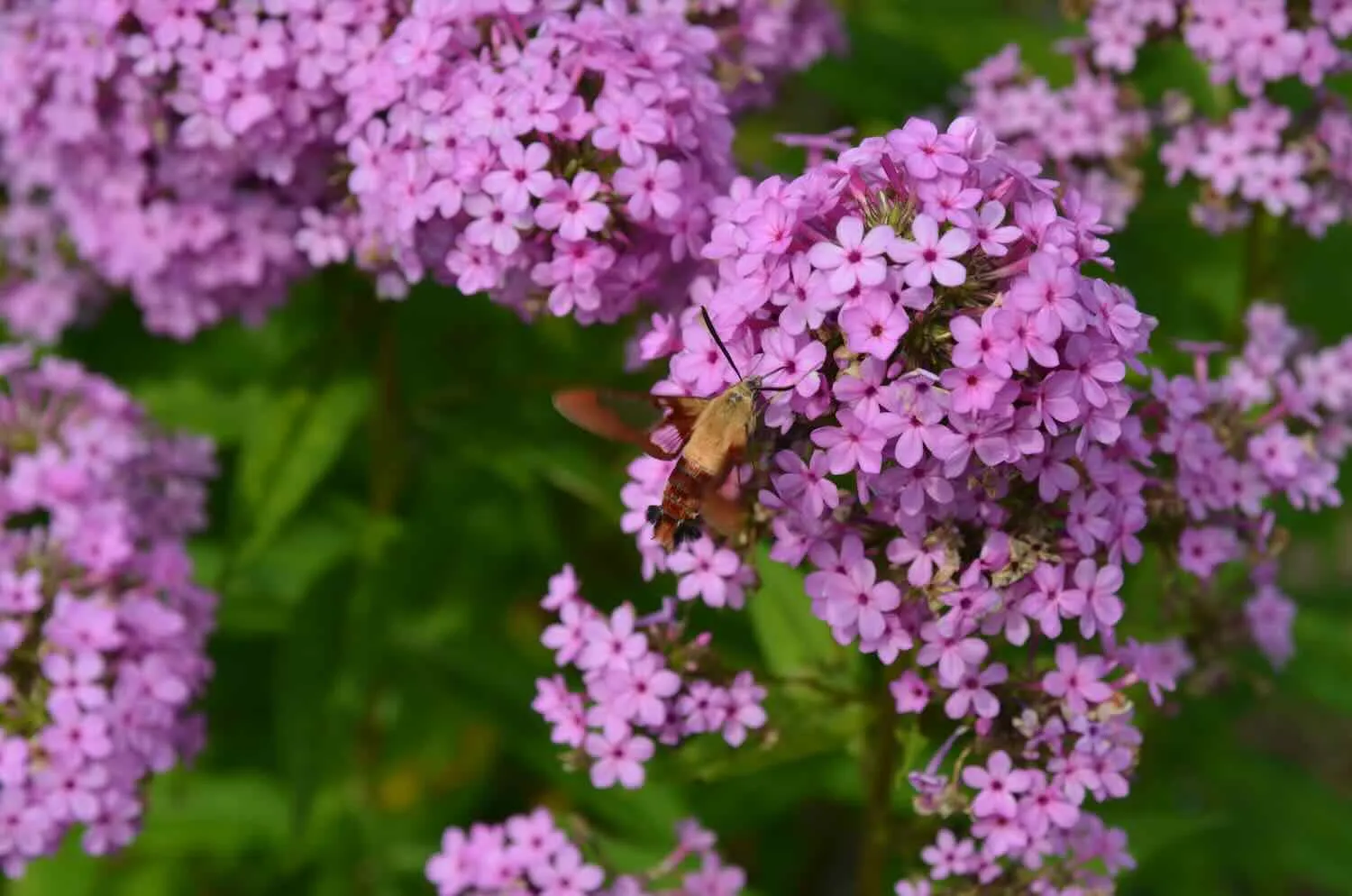
Sam: I think the one that comes to mind right away is Phlox paniculata ‘Jeana’ [above, and top of page]. And this is an incredible selection of Phlox paniculata. It was found in Tennessee by Jeana Prewitt, which is also one of the really cool things about cultivars. Sometimes you get this story that goes along with these plants, with that name comes from history and a little bit of a clue to its background. We know that those genetics came from Tennessee, and that is actually sometimes more information than you get from some of these wild type plants or straight species that you’re buying at a garden center where you know nothing about where that plant came from.
But yeah, Phlox paniculata ‘Jeana,’ it’s an incredible selection of Phlox paniculata. It’s a really strong grower in the garden, produces lots of flowers, has sturdy stems, disease resistant foliage. But those flowers on that plant are just a little bit different from typical Phlox paniculata, probably why the selection was made. [The Trial Garden report on Phlox.]
Margaret: They’re smaller.
Sam: Exactly. Yeah. They’re smaller and they’re more numerous per inflorescence and butterflies love it. Yeah, it’s incredible.
Margaret: Yeah, it’s a great plant. It was gifted to me years ago and it’s wonderful. It’s really wonderful, really powerful. But there’s many such examples.
O.K., so rather than jump to the conclusion as a consumer that cultivar is bad or again, something from a lab, are there places that I can look for clues? Whether by looking at the plant or whether by looking at the label or what, how do I figure it out a little bit?
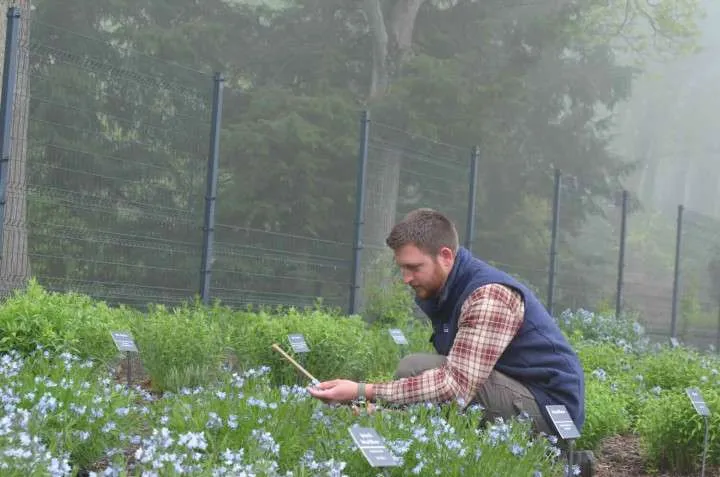
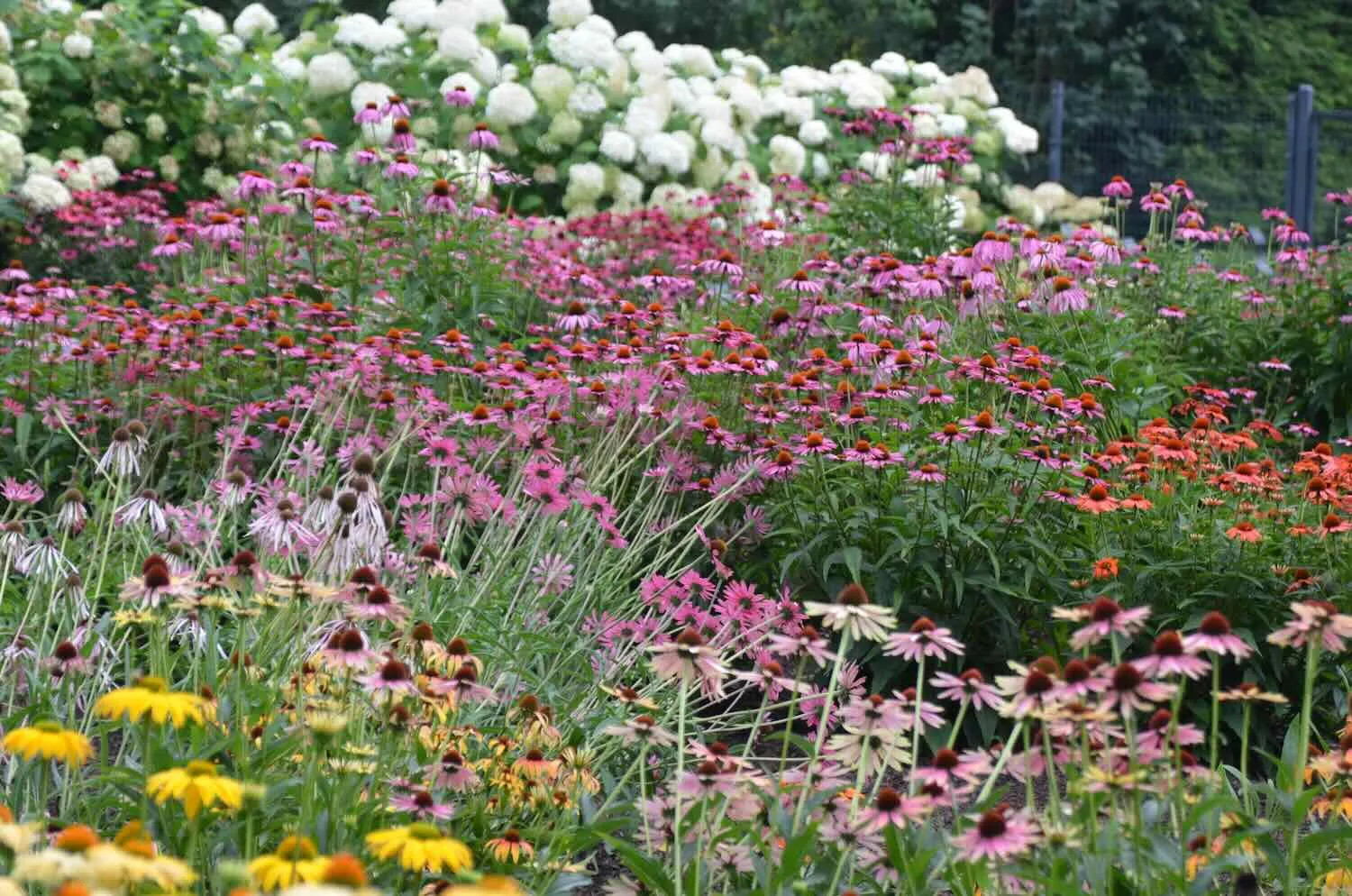
And one thing would be, of course, I should say, to look at your trials, a place like Mt. Cuba and these extensive trials, read the trial reports, which are all online. You explain what’s what in those, and also the performance of each plant. [Below, a section of the Trial Garden.] But beyond that, other ways?
Sam: Yeah, that’s right. I mean, you do have to do your due diligence, but there are some clues that are offered on plant tags, even before you do that first Google of the plant name. [Laughter.]
If you see the full binomial nomenclature, the genus specific epithet, if you see both of those names present, that means that that plant is probably similar to the straight species or it’s possible it’s similar to the straight species. If you see that Latin name attached to it and that plant doesn’t look too different from a wild type plant, it’s probably not that far removed.
You’d probably have to do a little bit more Googling and understand where that plant came from initially, who bred it if there was any breeding or if this was just a wild type selection.
If you generally just see a genus name, though, that first name, that first Latin name with a cultivar name next to it, not always, but sometimes that plant will be a hybrid. So we’re starting to talk about plants that are farther removed from a wild type plant, more manipulation, more change, and that can generally mean, or it can sometimes mean, less wildlife value associated with that plant.
Margaret: Right. And sometimes there’s all kinds of gobbledygook on the label [laughter].
Sam: Yes. We have trade names. There are patent names-
Margaret: Names I can’t pronounce, Sam.
Sam: I know. Some of them are literal code. And if you learn how to read the code from wherever that plant was bred from, you can kind of gain a little bit of insight into that plant. But sometimes, or my general rule of thumb is if I start to see weird combinations of letters and numbers and words that don’t really make sense, that’s a plant that’s probably been manipulated a little bit more than others.
Margaret: And it’s probably patented also, isn’t it?
Sam: Very likely, yes. .
Margaret: And sometimes you see on the label, you’ll see, what is it, PP for plant patent or patent applied for or something like that. Don’t you sometimes see that on a label?
Sam: You absolutely can. And you can actually look up those patent applications, and that is some of the ways that we’ve learned about maybe what those hybrid parents were, where it was found, what makes that plant different.
Basically when a plant breeder or a plant introduction outfit wants to patent something, they have to justify why it’s different and give a little bit of information about that plant before the patent is granted. So that can give you some good information, at least I would say a starting point.
But generally, when I’m shopping for plants, shopping for cultivars, and I’m really more concerned about supporting wildlife in my home landscape, I’m either looking for wild type plants or I’m looking for plants that are simple selections of wild type species.
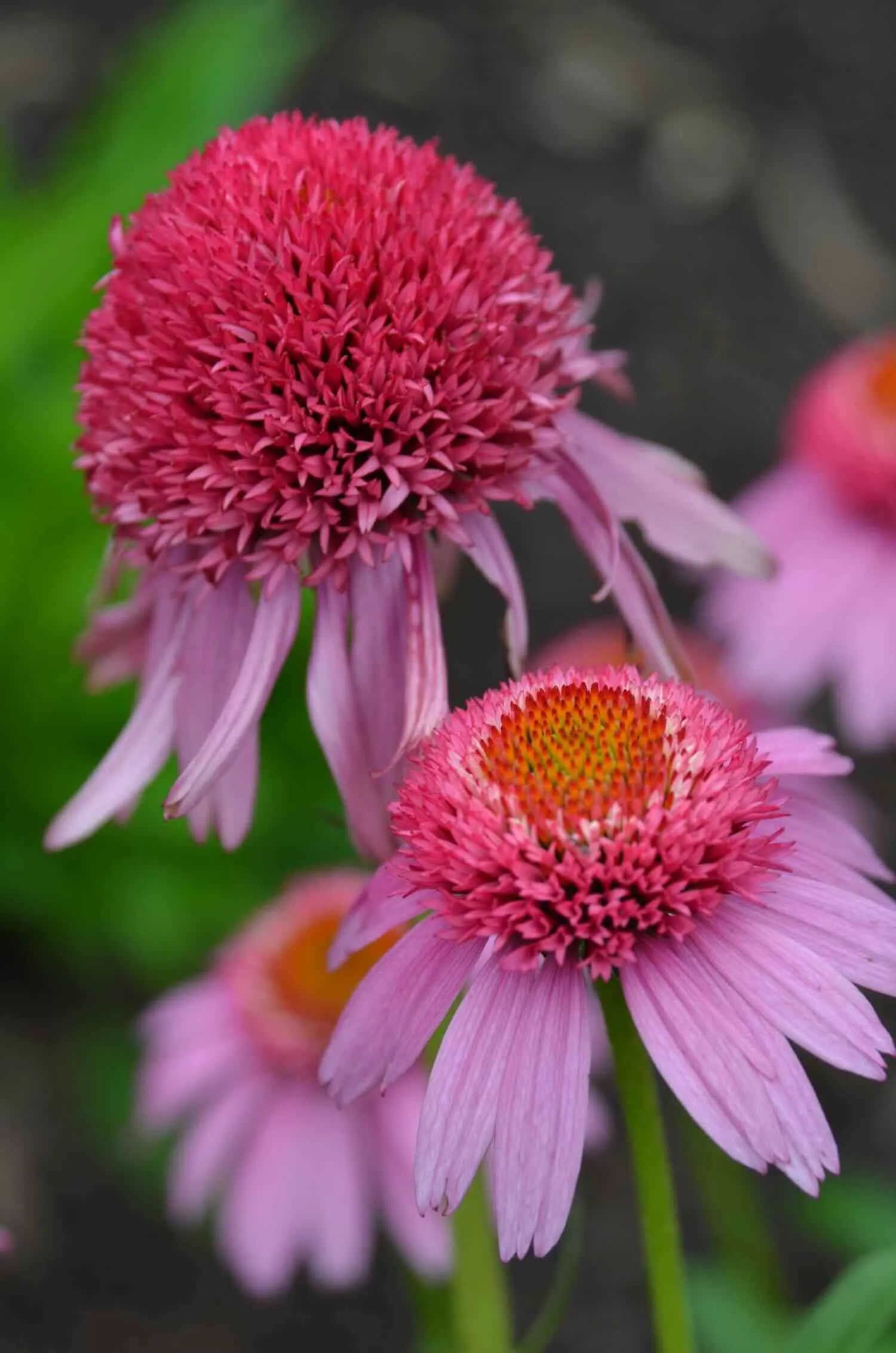
Margaret: So visually, I see the plant or I see a picture of the plant. I say, “Oh, it’s really beautiful, whatever.” What are the traits that are the most sort of hazardous to have been tinkered with in terms of yielding a plant that might not be pleasing to the insect population, for example? What is the stuff? If you change a Phlox from 4 feet to 3 feet, or I don’t know how many feet, I don’t know if that makes a big deal. But if you double the flowers, is that especially costly? Isn’t that one of the most costly things that are done? I mean, double them and make them potentially have inaccessible resources. [Above, a double-flowered Echinacea cultivar, ‘Double Scoop Bubblegum.’ The Trial Garden report on Echinacea.]
Sam: Yes. I think any number of things could change some small piece of that plant and make it less accessible to a specific type of insect. But in general, the biggest changes that we see that make the biggest difference in the number of insects that are interacting with the various flowers in the Trial Garden, it’s often when those flowers are doubled, or there’s a mutation where fertile flowers or fertile parts of that inflorescence are replaced with sterile parts or parts that are more similar to petals.
Now these doubling mutations often do happen in the wild, and then plant breeders get a hold of those genetics and then continue to use those to make new and novel flower forms, maybe breeding different colors. But that’s when we see a real shift. It’s this kind of floral mutations that when you compare those flowers to the flowers of a wild population-
Wild Hydrangea is a great example, If you have those big mophead inflorescences that when I think of hydrangea, that’s the image that goes into my head—these big mophead billowy inflorescences. But there’s been a tradeoff of style over substance with those plants. A lot of those fertile flowers, which is where the insects are gaining that value, that pollen, that nectar, a lot of those fertile flowers have been replaced with sterile flowers, which looks good to us, but there’s less value for those insects to gain from that inflorescence. So if you see something that’s really departed and really changed from the wild type plant, especially when we’re talking about the flower, generally that comes with a cost.
Margaret: So that would be a great one then to look up. I mean, again, after we talked the last time for the Times column, I looked up the patent pending—as PP is patent pending, not plant patent [laughter], but sometimes I can’t think of anything. Plant names lately are escaping me, Sam, should I be concerned?
Sam: No, I’ve been the same [laughter].
Margaret: I know. Sometimes I just look at it and I think, “Who are you? ” That’s right. But if there’s one where it looks different or it has the gibberish on the label, I mean, I did some searches and I would just put in the cultivar name and then I would put patent application or something like that into a Google search. And it was fascinating to learn about how some of them have been created.
Whereas with others, I guess you as you say, a selection, all you got was an anecdote. There was no patent application. All you got, if you looked up the source of them or the history of them or who introduced, that’s the other thing I sometimes do in Google is who introduced. And then you see it’s this beautiful anecdote about someone found it on a walk in the woods.
Sam: Yeah. I love the history and the stories behind some of these plants. And you do have to be careful sometimes with selections as well. Sometimes those selections were selected for ornamental qualities and for differences amongst a population, especially in flowers, like Hydrangea arborescens ‘Annabelle.’ It’s a very famous Hydrangea arborescens. It’s been around forever. It’s what I think of as kind of an heirloom plant. That was found in the wild. That was a wild plant that was found in Anna, Illinois, in the early 1900s. I think it was 1903, 1904. And I think these two sisters found it in the woods and recognized that it was different and brought it into cultivation.
Now, this was a plant that was kind of, I would say, an evolutionary dead end. It was producing a lot less flowers, fertile flowers. It was not reproducing as well as its companion plants out in the wild that had those lacecap inflorescences with all those fertile flowers. But it was different and people thought it was beautiful. So that’s the reason it was selected.
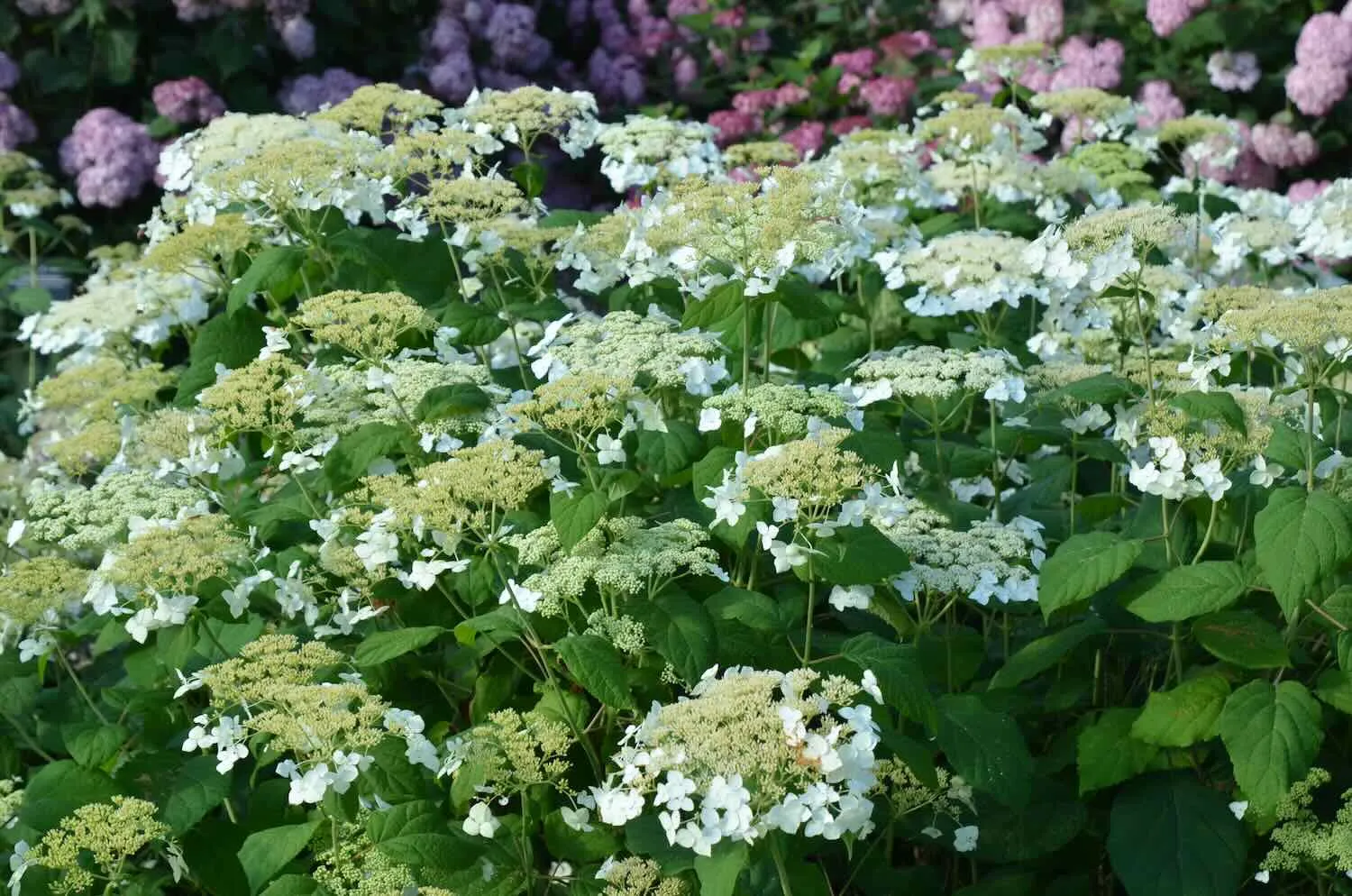
But many selections do retain a lot of the same value, especially if those flowers are very similar or not that far removed from other flowers of the wild population. [Below, a lacecap Hydrangea arborescens with lots of fertile flowers, top-performing ‘Haas’ Halo.’]
Margaret: Right, right. So the other thing that we talked about that I want to bring up here is that whether a cultivar, a cultivated variety, is more appropriate in a given setting or a wild type straight species is more appropriate. Are there moments when, because again, a lot of times we get the feedback of like, “Never use this or never use that,” but it’s not quite that black and white.
However, there are some times, and you hinted at this in the beginning of our conversation today, that in restoration work and conservation work, it would be most important to go as far in the direction of wild type and especially local and so forth as we can.
Sam: Yes, absolutely.
Margaret: And so that’s where that’s really important to go. And in terms of cultivars, do you feel like they have a place that’s more their place?
Sam: I do. I think there’s a time and a place for all these plants. And like wild type seed-grown plants that are collected or the seed is collected from local populations, ethically, of course, is most applicable to a restoration site. That’s not to say that it couldn’t be used in any home garden as well.
And it’s really cool that we’re starting to see this void between ecological restoration and home horticulture starting to narrow. And a lot of the lessons that are used from our natural lands management are starting to be used in home landscapes as well. And I think that’s wonderful, but you don’t see a whole lot of cultivars being used out natural lands. That’s not something we would ever recommend. You want that genetic diversity, you want those local genes to be able to support those local insect populations, especially specialist insects.
But I do think cultivars can really make sense, especially in suburban or in city home gardens, where maybe you don’t have a lot of space where maybe your neighbors are not indoctrinated into the world of native plants. Maybe you live in an HOA, and maybe you or your neighbors or both are more used to this traditional horticulture aesthetic that has been around for centuries. I think cultivars aesthetically, they make a lot of sense in that setting.
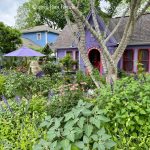
And it’s something we do at Mt. Cuba Center quite a bit. The formal gardens around the Copeland house [below] are actually largely made up of plantings of cultivars. Bright colors; the plants are very well defined. You know how they’re going to work with each other, again, in a very traditional border-style planting, which I think in a lot of cases, native plants have not really been considered for that type of use, but I think cultivars allow for that kind of use and they allow for native plants to be used in more settings. And even though those cultivars may not be as good as a wild type plant, it’s still some value.
And it’s a way for people who don’t have a lot of room or really are kind of forced to garden in this more traditional aesthetic. It’s a way for them to be part of this native plant conversation. It’s a way for them to support some wildlife at home. And in our opinion, it’s a way to just pitch a bigger tent, get more people get their feet in the door, get them involved, and maybe they’ll continue their journey and start growing more wild type seed-grown plants. But a cultivar, I don’t think is a bad place to start at all.
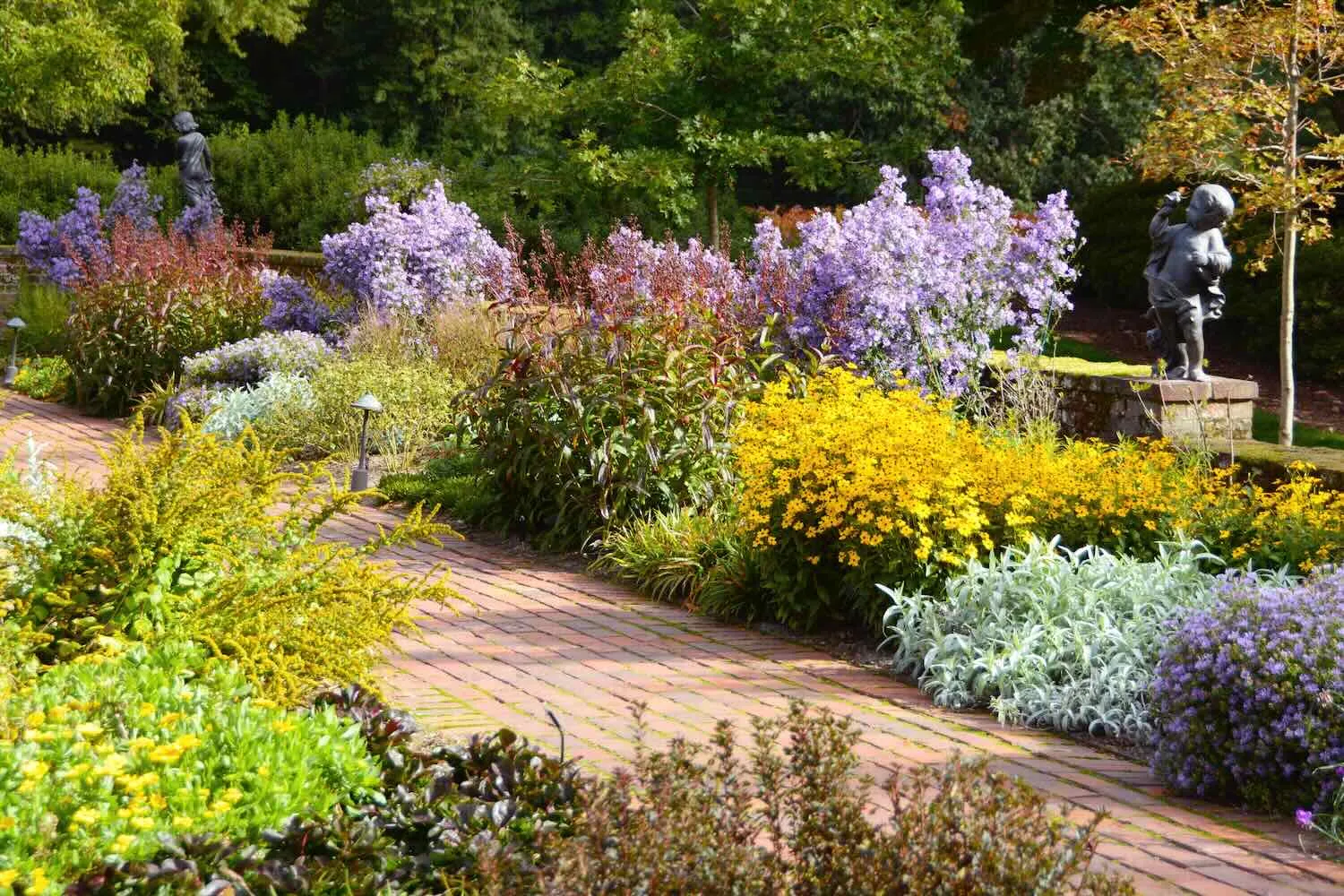 Margaret: And as you pointed out earlier, I mean, we’re about to run out of time, but as you pointed out earlier, some like ‘Jeana,’ the Phlox that was a selection and is a cultivar, I guess, yes? But it’s a powerhouse. It was the top performer for you and so on and so forth. And there’s many such examples and they are cultivars, but they are not heavily altered, so to speak.
Sam: That’s right.
Margaret: So it’s kind of like, again, we need to do our homework. Absolutely.
Sam, I’m always glad to talk to you and I hope I’ll talk to you soon again, and keep up the good work. What are you trialing right now? What’s the latest?
Sam: Oh my gosh. We are about to start our season. We’ve got a lot of things coming up that I’m quite excited about. Pycnanthemum Year 2 is about to begin, which last year was incredible. The amount of insects we saw was just off the charts, a great group of plants if you’re trying to bring in insects to your garden. We’re starting a trial on bluestems. We have our trial on oakleaf hydrangeas and ferns and Tiarella and milkweeds are all under way. So come see us. There’s so much happening in the trial garden.
Margaret: Thank you. I’ll give all the links for how people can come visit. And thanks for making time today.
Sam: Thanks so much for having me, Margaret.
(All photos courtesy of Mt. Cuba Center; used with permission.)
prefer the podcast version of the show?
 MY WEEKLY public-radio show, rated a “top-5 garden podcast” by “The Guardian” newspaper in the UK, began its 17th year in March 2026. It’s produced at Robin Hood Radio, the smallest NPR station in the nation. Listen locally in the Hudson Valley (NY)-Berkshires (MA)-Litchfield Hills (CT) Mondays at 8:30 AM Eastern, rerun at 8:30 Saturdays. Or play the April 27, 2026 show using the player near the top of this transcript. You can subscribe to all future editions on iTunes/Apple Podcasts or Spotify (and browse my archive of podcasts here).