
Catkins and cones are the blooms of trees and shrubs whose flowers are sorted in a binary fashion—male and female. They are the quiet pleasure of those who notice botanical details, and they reward close attention. Many catkins and cones appear weeks, even months, before the loud shouts of forsythia, the effusion of cherry blossom, and the waxy confectionary of magnolia. Some catkins are as familiar as spring itself (hello, pussy willow), while others require pause to identify (sweetfern catkins, swamp cypress cones).
Catkins and cones: Quick notes
Here are some of our favorite catkins and cones, to grow or to contemplate on a spring walk.
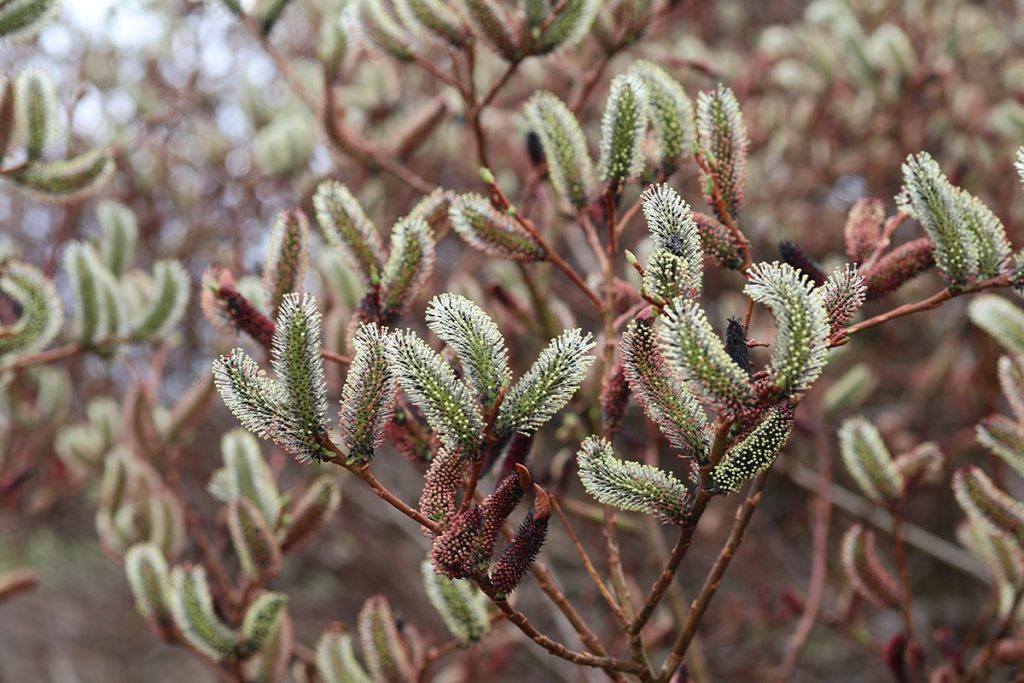
Above: Golden-tipped stamens of native Salix discolor are a valuable resource for early pollinators.
Pussy willows belong to the Salix, or willow genus. (Salicylic acid, from which aspirin is derived, takes its name from the genus, where it was first identified.) Male and female flowers appear on different plants, and it is the males that produce the showiest pussy willow catkins.
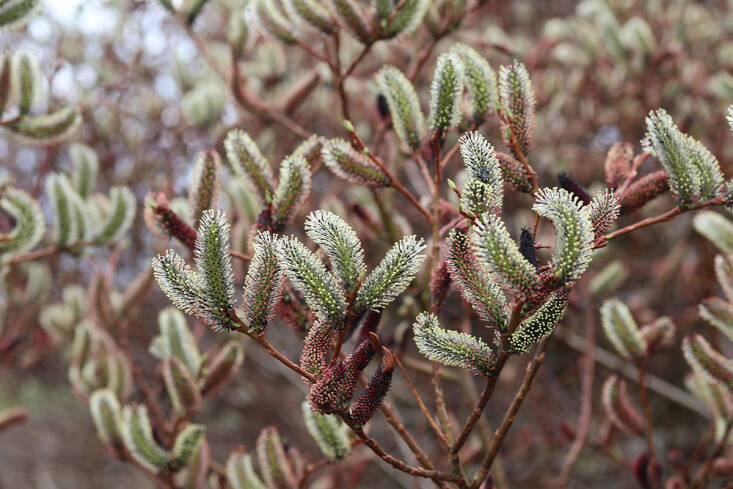 Above: Handsome black pussy willow buds emerge in midnight and burgundy hues.
A dramatic iteration is a cultivar of an East Asian pussy willow, Salix gracilistyla ‘Melanostachys’, whose catkin buds are black, then an intermediate burgundy, before their anthers ripen and lighten with pollen against a rich green background within each structure. The effect, with thousands, is dizzyingly mesmerizing.
Tip: Do not plant pussy willows where their shallow and very dense roots can creep into and disrupt septic fields, foundations, water lines and paving. Give ’em room.
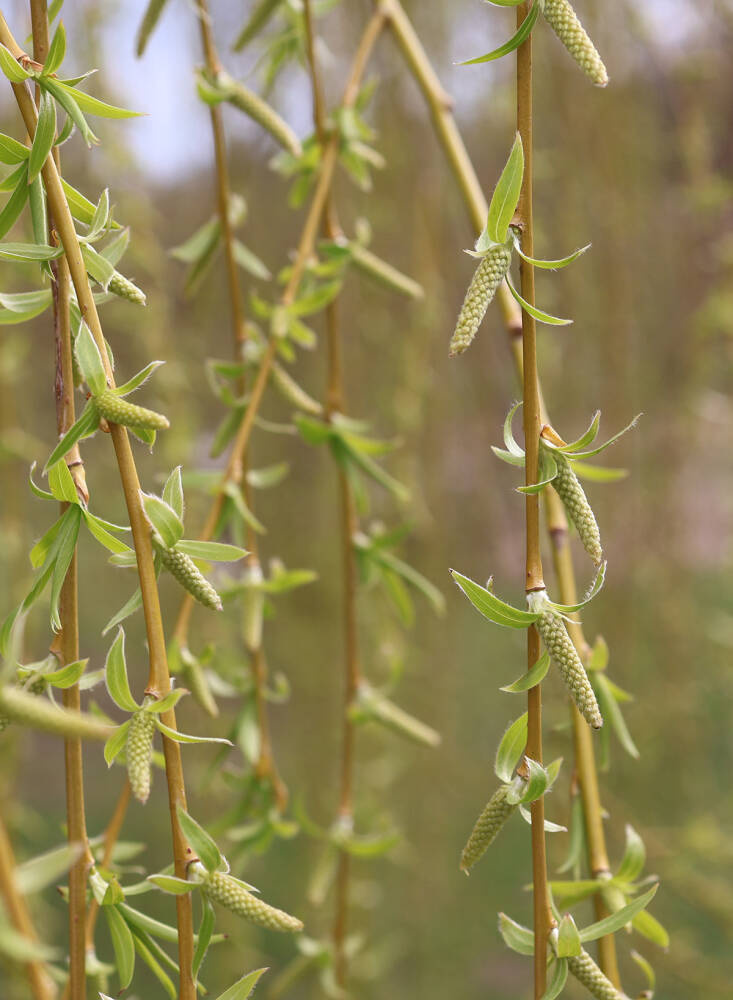 Above: Weeping willows’s catkins in early spring.
While the flowers of weeping willow, Salix babylonica, are usually described as “nondescript” their catkins are vividly pretty in early spring, their lime hue a shade brighter matching the tree’s whippy branches and a shade lighter than its new leaves.
Like pussy willow, non-native weeping willow roots will head towards water, which is fine if that is a pond or stream, but destructive when it is sewer or water line.
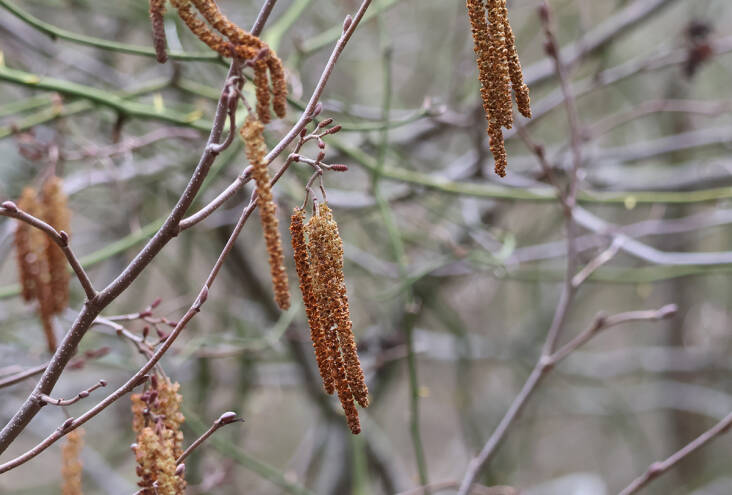 Above: Male and female alder catkins appear on the same plant.
If your habit is to walk in cold-climate wetlands, you may have met clonal thickets of alder (Alnus species), crowding stream and pool edges. Before the native landscape has woken into green, alder catkins are a coordinated ballet in the lightest breeze. The long catkins are male, while the petite, redder catkins are female, on the same plant.
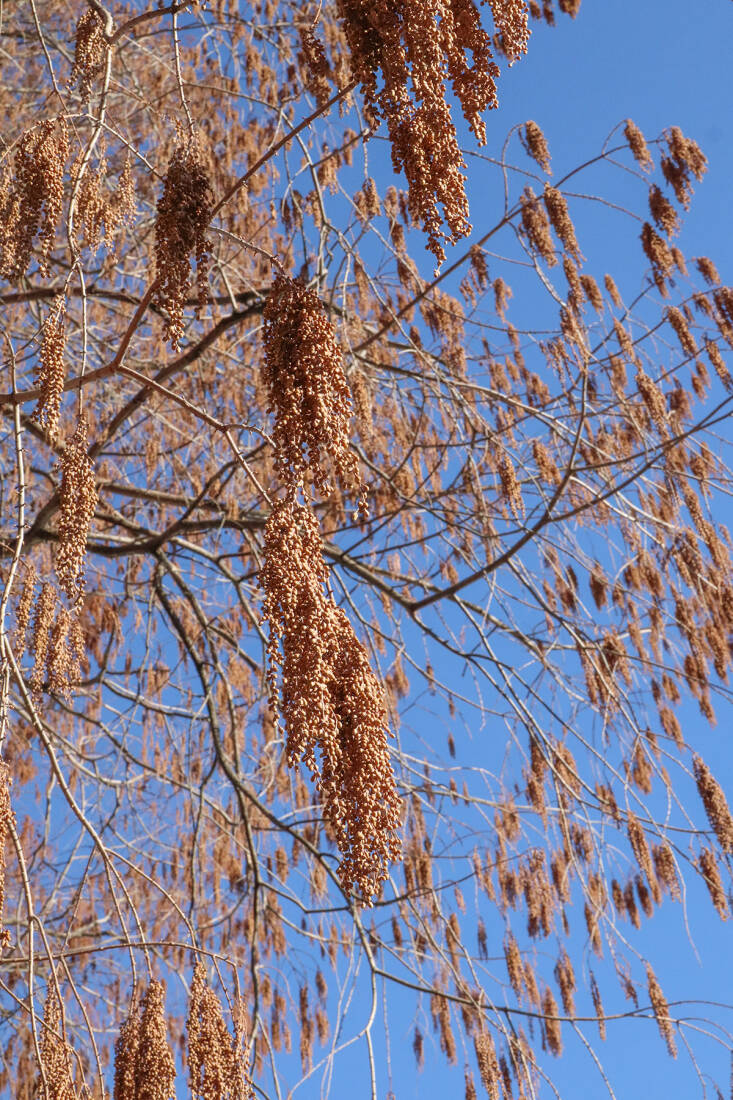 Above: The male cones of Dawn redwood resemble catkins.
In a light breeze, pendulous catkins and cones flow in unison, as male flower clusters slowly ripen to shed pollen, which is usually wind-dispersed.
Towering Dawn redwoods (Metasequoia glyptostroboides) are festooned with male pollen cones from late winter through late spring. The tasseled clusters are packed with pollen that ripens as the weather warms, to be released and dispersed by the wind. By late summer the green female cones appear on the same tree, and mature the same season, releasing their seeds when their cones dry and split in late autumn or the following spring.
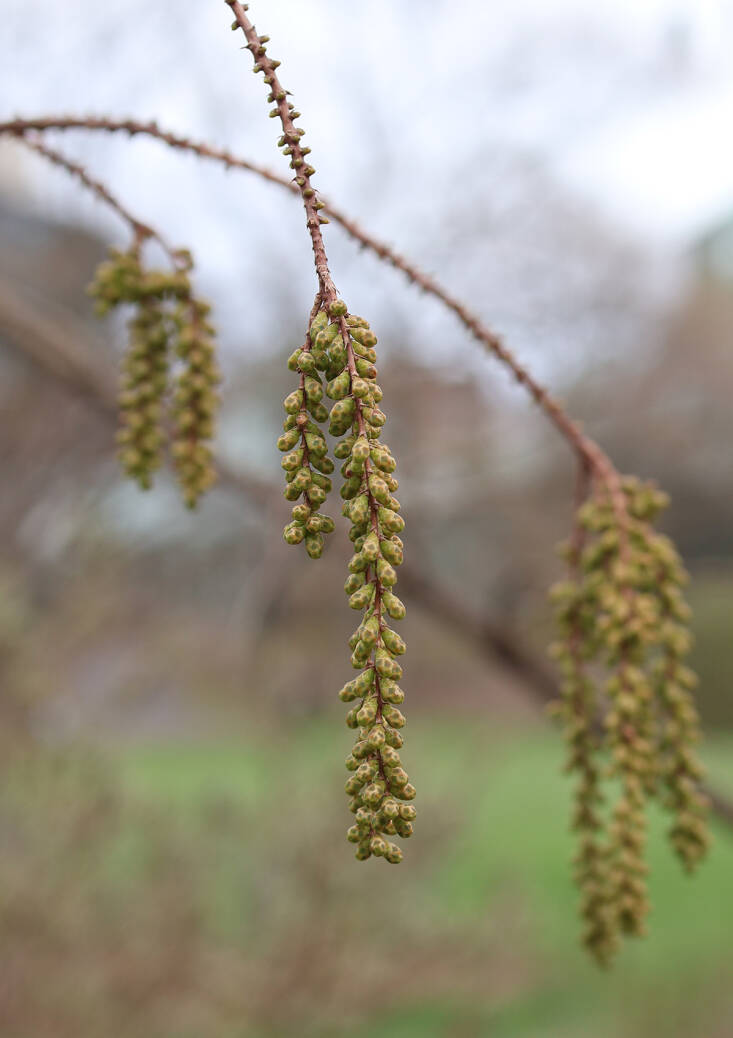 Above: Like Dawn redwood, pond cypress’s male cones are pendant.







Heads up · Such a warm note about “Catkins and cones are the flowers of som” — lovely. Love this!
FYI: Such a warm note about “Catkins and cones are the flowers of som” — nice. Great share.
FYI: Such a warm note about “Catkins and cones are the flowers of som” — nice. Great share.
lovely take on “Catkins and cones are the flowers of som” — I’ll try that soon. Love this!
This is a keeper — saving for later. So comfortable.
FYI- Nice timing — I’ve been thinking about something like this. Saving it ✨
Small note – Nice follow-up — that adds clarity. Love this!
On a similar note – This tip on “Catkins and cones are the flowers of som” is so useful — thanks for sharing. Thanks for this!
Quick thought — Such a warm note about “Catkins and cones are the flowers of som” — lovely. Saving it.
Quick thought — Such a warm note about “Catkins and cones are the flowers of som” — lovely. Saving it.
Quick thought — Such a warm note about “Catkins and cones are the flowers of som” — lovely. Saving it.