
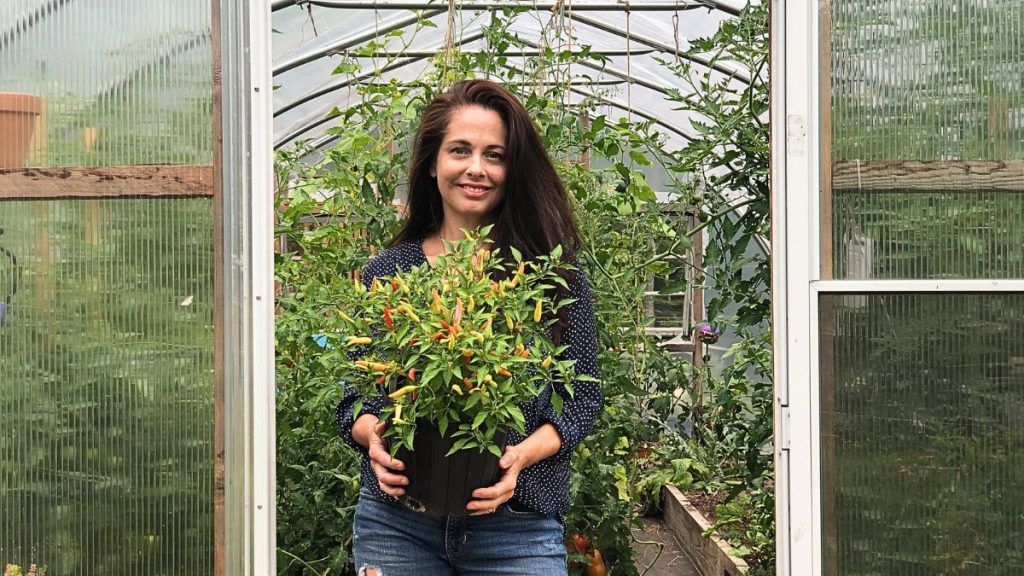
This post may contain affiliate links. If you make a purchase through links on our site, we may earn a commission.
Growing peppers isn’t difficult with the vigorous plants producing a heavy crop of sweet or spicy fruits. However, pepper plants take time to size up, flower, form fruits, and then mature those fruits for harvesting. And sometimes that process is interrupted by weather, pest, or disease issues. If you’re having trouble with your pepper crop, I’ve got solutions. In this article you’ll learn 7 common reasons for pepper plants not producing and what to do about it.
Reasons for pepper plants not producing: 7 common issues and solutions
Understanding what pepper plants need to grow and produce well is the best way to ensure plenty of sweet or hot peppers. Here are 7 reasons and solutions for pepper plants not producing:
Reason 1: The plants are not mature enough
There are several stages in the life of a pepper plant. The first four weeks are the seedling stage when the just-sprouted plants start to produce leaves and branches. This is followed by the vegetative growth stage, which lasts from about 4 to 8 weeks. After this, the plants enter the flowering stage where flowers form along the stem. The flowers are self-fertile, which means they don’t need to be pollinated to produce their fruits. Although bees can boost pollination, a lack of pollinators isn’t to blame for pepper plants not producing.
The next stage is the fruiting stage, where fruits form and start to size up, followed by the final stage; ripening. Most sweet and hot peppers are green, but ripen to mature hues of red, orange, yellow, or purple.
Every pepper variety has a ‘days to maturity’, which dictates how long the plants need to go from seed or transplant to harvest. For example, the fruits of early maturing varieties, like Pot-a-Peno jalapeno, are ready to pick just 50 days from transplanting. Late maturing peppers, like Carolina Reaper, Armageddon, or Ghost take up to 150 days to ripen their fruits.
Read the days to maturity information listed in seed catalogs and on seed packets to discover how long your peppers need to mature. You need to select those that have a days to maturity that allows them to grow in your gardening zone. If you’re not getting much fruit from your pepper plants, perhaps you’re growing a variety that matures too late for your region.
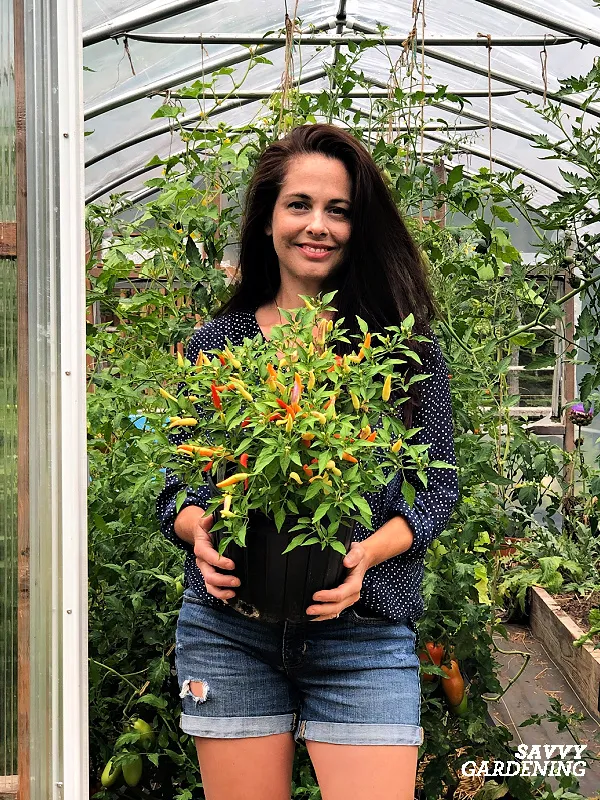 Living in a northern climate, I grow early maturing pepper varieties to ensure a good harvest.
Reason 2: Planting in the wrong spot
I’m not going to lie, peppers are a bit fussy. For the healthiest plants and largest harvests you need to find the best possible site. That means full sun – at least eight hours of direct light daily – for this heat-loving vegetable. A lack of sufficient sunlight is the main reason for pepper plants not producing.
I’ve grown peppers in an in-ground garden, raised beds, and containers and it’s always my raised bed and container plants that yield the best. This is because the soil is well draining and warmer than an in-ground bed. If you’ve had trouble with pepper plants not producing and are growing in an in-ground garden, consider planting in pots this year. Plastic or fabric planters work great! Fill them with a blend of potting mix and compost and add an organic granular tomato fertilizer to the growing medium. Peppers and tomatoes have very similar nutrient requirements. Also, the soil pH should be in the 6.5 to 7.0 range.
Other considerations when picking a site for growing peppers include avoiding very windy or exposed areas, planting near a water source to make irrigation easy, and growing in pots or raised beds if the natural soil is clay-based or very rocky.
Reason 3: Low soil fertility
Peppers require moderate fertility for balanced plant growth, flower formation, and maturing fruits. Too few nutrients and the seedlings will struggle and not grow into vigorous plants. As I mentioned above, the easiest fertilizer program is to add a granular organic tomato fertilizer to the planting hole when you transplant your pepper seedlings in spring.
Follow up 6 to 8 weeks later with another application of the fertilizer to the soil surface around the base of the plants. I like to do this just before watering and scratch it into the soil surface with a cultivator or hoe. This fertilizer program provides months of consistent nutrients needed by the pepper plants.
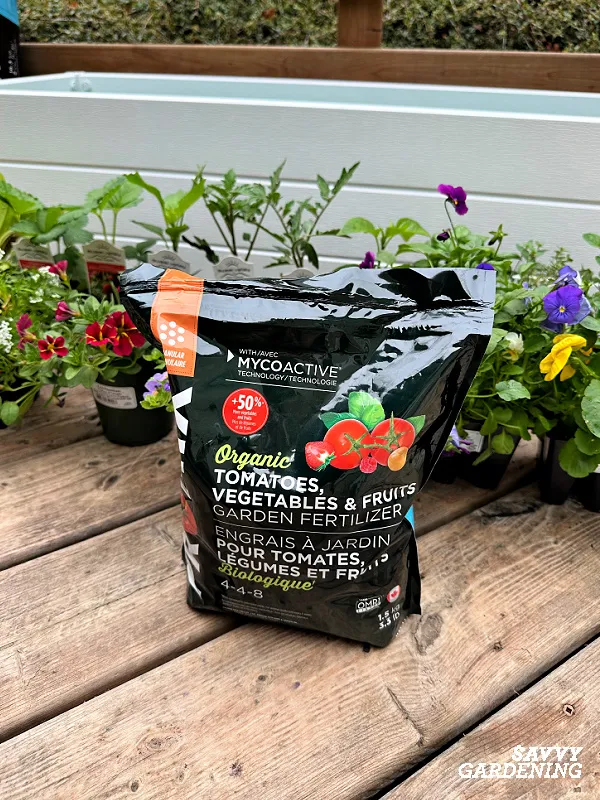 Peppers have moderate fertility needs. I add an organic tomato fertilizer to the soil at planting time and again in mid-summer to provide a steady supply of nutrients.
Reason 4: Too much nitrogen (This was my issue with pepper plants not producing!)
A couple of years ago I prepped by pepper (and eggplant beds) by adding a few inches of rotted manure to the soil. I had just gotten a truckload of manure delivered to my house and spent a few hours moving wheelbarrow after wheelbarrow to my garden beds.
After planting the seedlings, it didn’t take long for them to size up. In fact, the plants grew far larger than the variety descriptions and I had to add sturdy stakes and supports. However, no flowers formed and therefore I had no fruits on both my peppers and eggplants. Why? The manure wasn’t sufficiently aged and was still high in nitrogen. Nitrogen promotes leaf and shoot growth, and the excess nitrogen encouraged an explosion of green growth, but no flower development. Oops!
The moral of the story is; consider your nutrient sources (and make sure your organic material is well aged). If you’re adding manure to your garden, it should be composted for at least 6 months old, sometimes up to 12 months. And if you’re adding fertilizer to your pepper beds, choose a balanced fertilizer that contains nitrogen, phosphorous, and potassium, not just a nitrogen-rich produce like blood meal. We want healthy plant growth, but not at the expense of the flowers. Again, I generally use a fertilizer for tomato plants, as the nutrient needs of these related crops are similar.
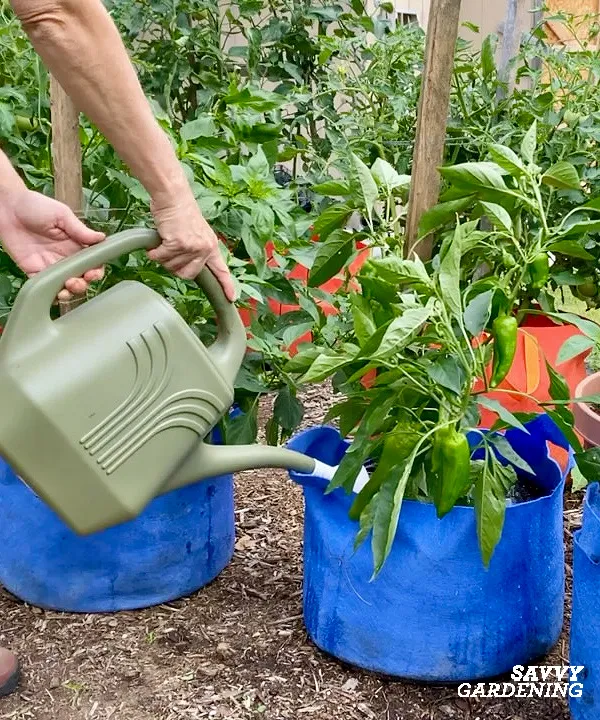 Peppers don’t want to sit in wet soil, but they do need consistent moisture. Water the soil when it’s dry about one to two inches down.
Reason 5: Improper watering
Peppers need a consistent supply of moisture. Too little water can cause wilting, flower drop, or blossom end rot. Too much water prompts yellowing foliage, root rot, or disease issues. I water my raised bed pepper plants deeply each week if there has been no rain using a long-handled watering wand. Potted plants get a deep watering every few days if the weather has been hot.
That said, this is a rough guide to watering. It’s best not to water on a schedule. Instead, pay attention to soil moisture and water when the top one to two inches of the soil is dry. To reduce watering, mulch the soil surface with 2 to 3 inches of straw or shredded leaves. I even mulch the soil of my container peppers as it also impacts how quickly the soil dries out.
Reason 6: High temperatures (Becoming a common reason for pepper plants not producing)
We all love the summer sun, and so do peppers, but when temperatures are greater than 90 degrees F (32 degrees C) pepper plants start to drop their blossoms. That means fewer fruits! If you’ve got pepper plants not producing, little to no flowers, and the weather has been very hot and dry, the issue is likely blossom drop.
This is where shade cloth comes in handy. I set up simple mini hoop tunnels using PVC conduit hoops and float a piece of 30 to 40% shade cloth on top. Shadecloth blocks a portion of the light, reducing the ambient temperature around the plants. It also slows water evaporation from the soil, which helps keep the plants cool. Ideally I would use shade cloth for the hottest three to four hours of the day and then let the plants enjoy the morning and later afternoon sun. But unless you are retired or work from home, this can be challenging so just do your best.
Low temperatures can also be an issue. Pepper plants drop flowers when the temperature is below 59 degrees F (15 degrees C). If there is a summer set back in terms of temperatures, use row cover or cover beds with mini hoop tunnels to protect plants.
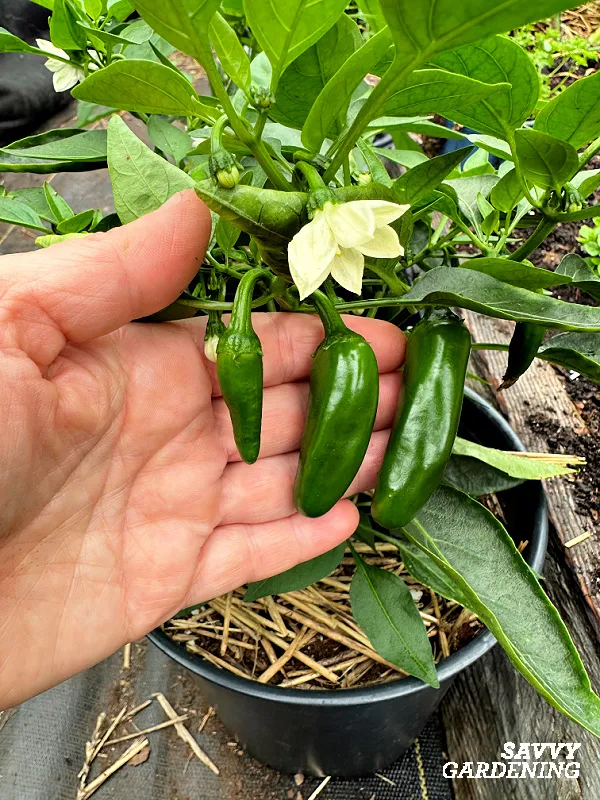 Pepper flowers are self-fertile and don’t require insect pollination to yield fruits.
Reason 7: Pepper pests and diseases
Whether they’re under siege from pests or affected by a pepper disease, ailing plants will be slow to flower and produce fruits. Common pepper pests include aphids, slugs and snails, cutworms, earwigs, and hornworms. And let’s not forget about fungal, bacterial, and viral diseases like bacterial leaf spot, verticillium wilt, and anthracnose.
Reduce the occurrence of pests and diseases in your vegetables by following good garden practices. These include following a 3 to 4 year crop rotation, planting pepper companion plants, using insect netting at planting time, watering the soil (not the foliage), planting peppers at the right spacing, and mulching with straw.
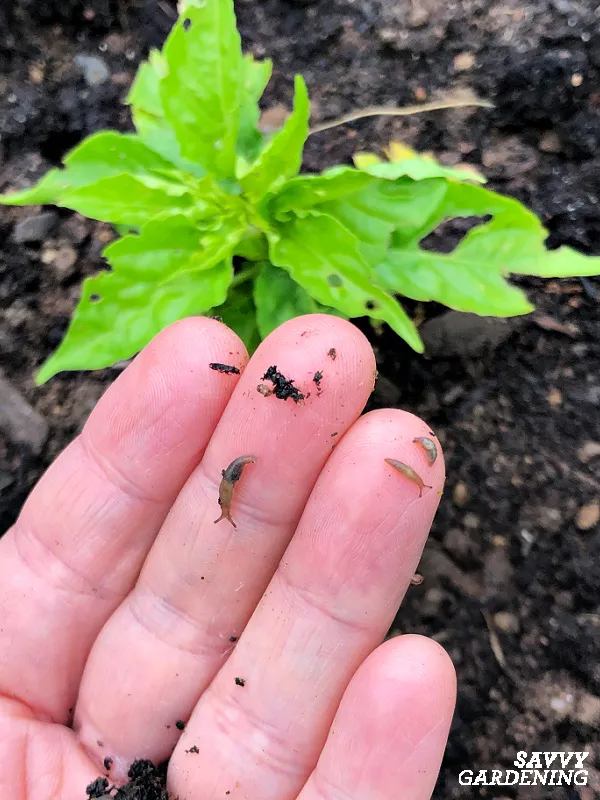 I wondered why this young pepper plants wasn’t growing and noticed it was covered in small slugs!! Keep an eye for pests as they can impact healthy plant growth.
For more helpful articles on growing great peppers, read these articles:







Small note · Loved this about “Pepper Plants Not Producing? 7 Reasons a” — such a great idea. Will try it 🌸
Quick thought · This is a keeper — saving for later. Saving it 💡
Heads up – A lovely idea for the season — perfect timing. Love this!
Tiny tip — So helpful — thanks for pointing it out. Love this!
😊 Also • Looks inviting — I want to try it out. Thanks for this!
PS — Great addition — thanks for pointing it out. Love this! 👍
PS — Great addition — thanks for pointing it out. Love this! 👍