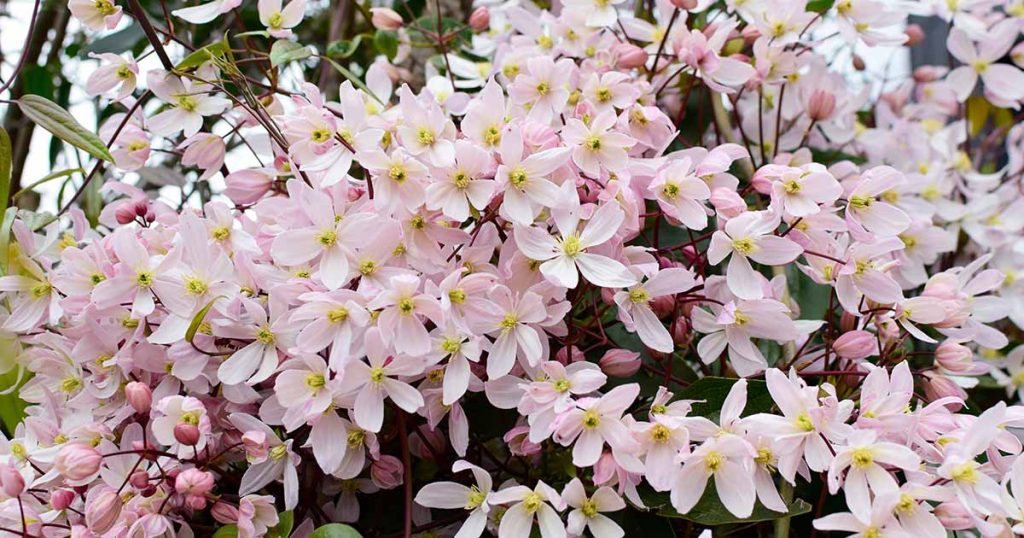
Grow evergreen clematis: a concise orientation before we get practical.
Grow evergreen clematis: Quick notes
Poor drainage is one of the fastest ways to invite root rot and decline.
The soil should be slightly acidic to neutral, with a pH of 6.0 to 7.0.
Cultivars to Select
As mentioned, there are a few evergreen clematis cultivars available and new ones emerging all the time. Here are just a few excellent options:
Avalanche
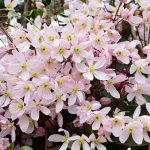
‘Avalanche’ is a beautiful hybrid cross between C. paniculata and C. marmoraria. It produces large panicles of snow-white blossoms with yellow stamens.
The vines climb to about nine feet long and are covered in deep green, leathery leaves that remain attractive even when the flowers have faded.
In early spring, when the plant is in bloom, it’s so floriferous that you might not even notice the leaves.
‘Avalanche’ was bred in 1998 by Robin White, who owns Blackthorn Nursery outside of London, England. You’ll sometimes see it sold as C. x cartmanii ‘Blaaval.’
This vine is suitable for cultivation in Zones 7 to 9.
Freckles
Most evergreen clematis have solid-colored flowers, most frequently with a white hue. ‘Freckles’ is a C. cirrhosa cultivar with distinctly patterned blooms.
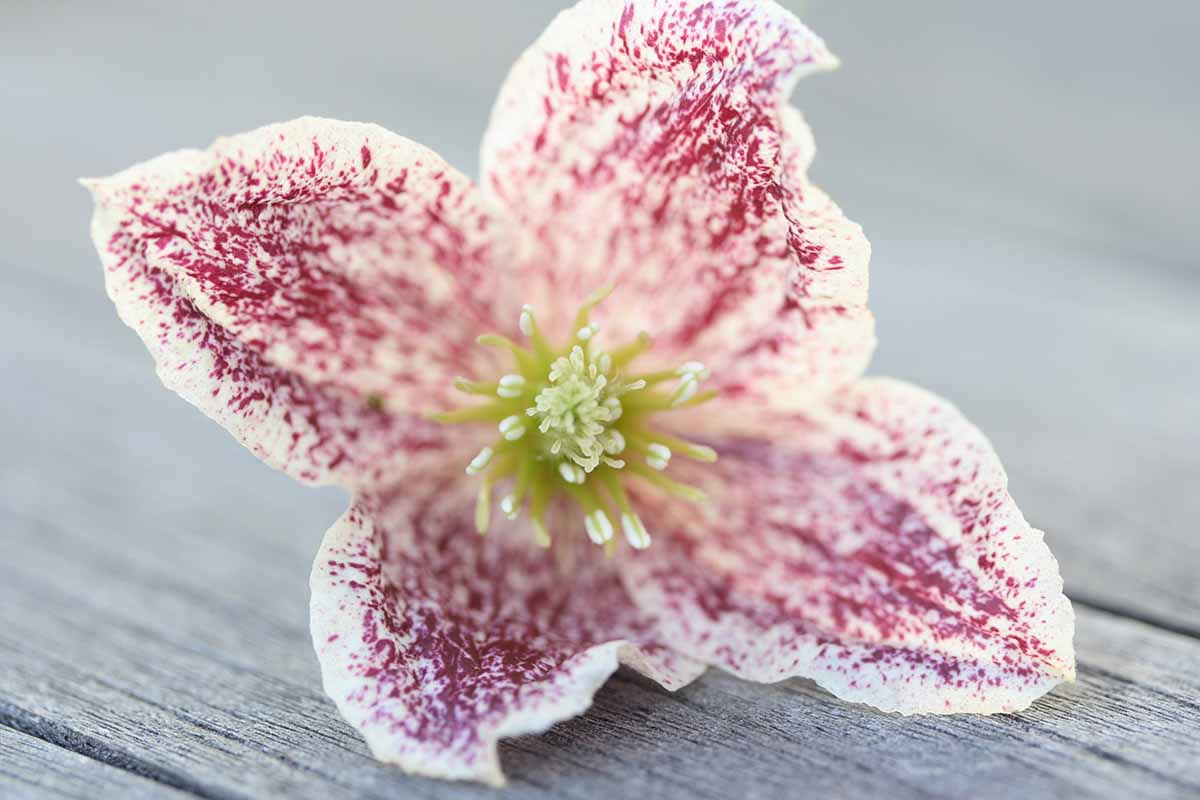
The petals are white on the exterior, but inside are reddish-purple spots and streaks.
The blossoms open in late winter and after they fade in early spring, they leave behind large, fluffy seedheads. Grow this beauty in Zones 7 to 9.
Snowdrift
C. armandii ‘Snowdrift’ features leathery, dark green leaves highlighted with masses of pure white flowers with a heady almond scent.
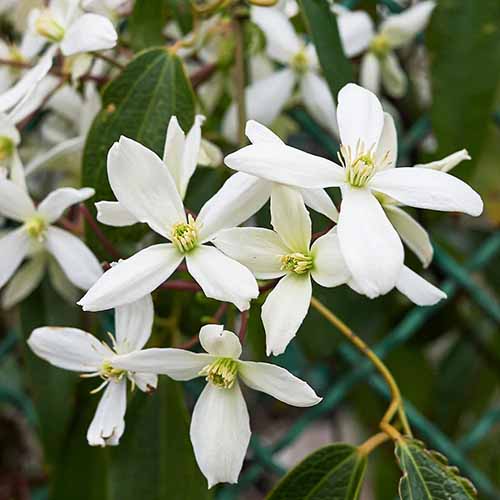
‘Snowdrift’
Hardy in Zones 7 to 9, ‘Snowdrift’ is drought-tolerant and resistant to rabbits and snails, blooming in late winter to early spring.
You can find ‘Snowdrift’ plants available at Fast Growing Trees.
Maintenance
Evergreen clematis generally fall into pruning Group 1, which means they flower on old wood and require minimal pruning to maintain their shape.
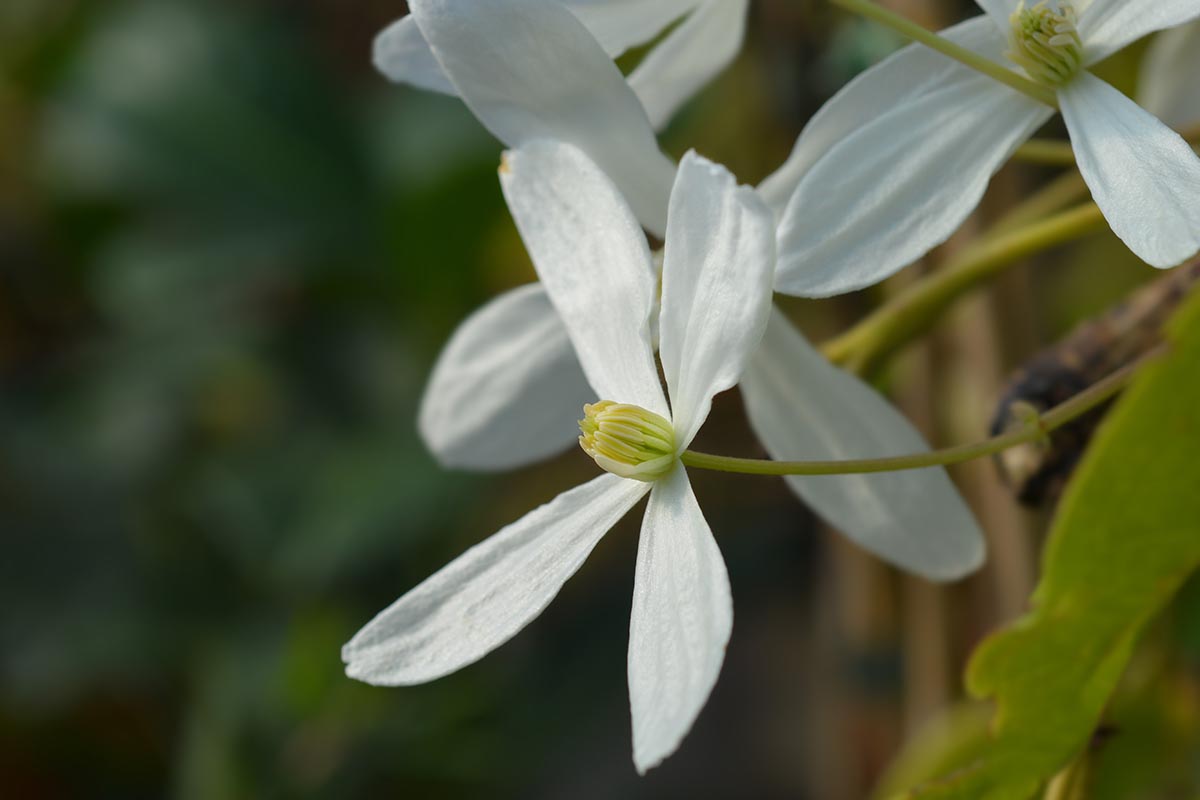
Right after the blooms and seed heads fade, you can prune the plant to encourage bushy, vigorous growth and remove dead, diseased, or weak stems.
Any branches that are yellowing, dropping leaves, or otherwise unhealthy should be pruned back to a healthy junction.
Learn more about pruning clematis here.
Propagation
Don’t bother trying to grow evergreen clematis from seed. It takes a long time, is unreliable, and won’t always produce a plant that is true to the parent.
You can propagate via layering or by taking cuttings.
From Layering
Layering is one of the easiest and most reliable ways to propagate clematis.
Select a flexible stem growing close to the ground and remove the leaves along a six-inch section near the middle or toward the tip of the vine.
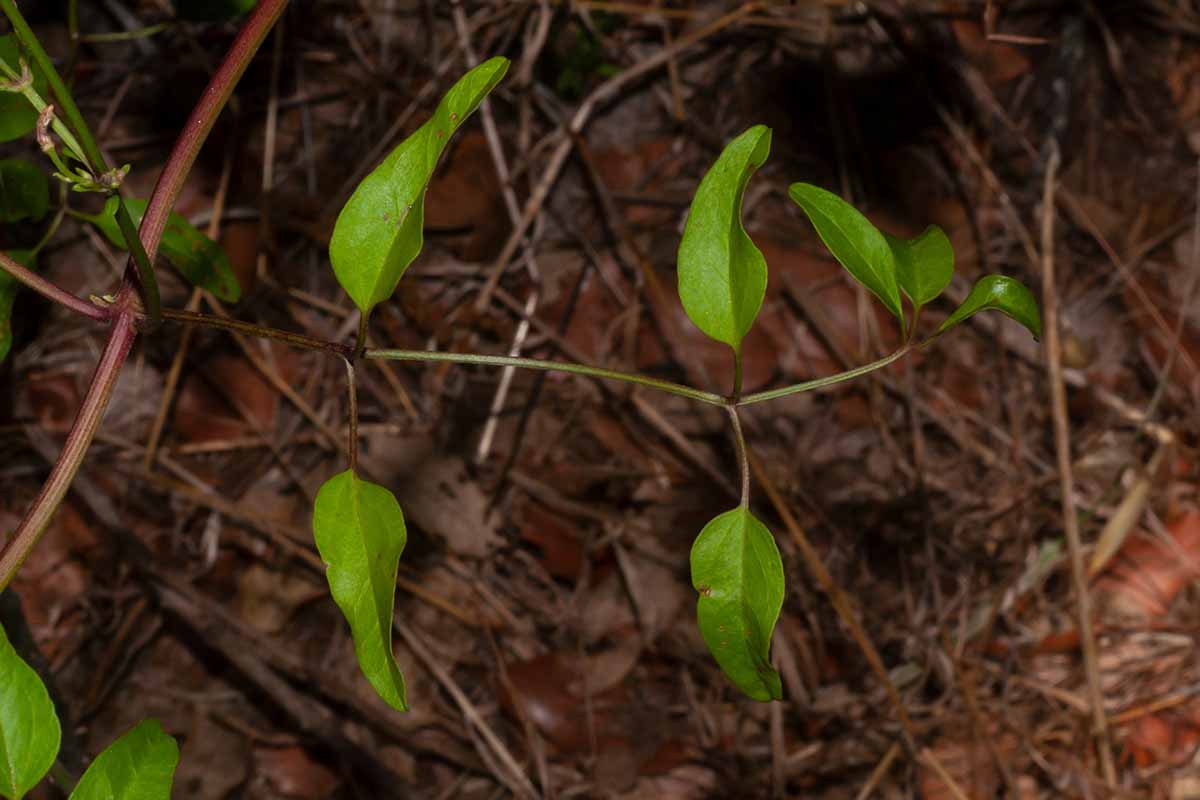
Clematis develops roots between the leaf nodes, so this is the part that must be buried under the soil.
Use a clean knife or razor and make a shallow two-inch slice on the underside of the vine. You only want to score the surface, not deep into the vine.
Position the scored section against the soil and secure it in place with a rock, landscape pin, or bent wire.
You can lightly bury the stem or simply hold it firmly against the ground. Alternatively, anchor the section into a six-inch pot filled with potting soil, which makes transplanting easier later.
We reference Grow evergreen clematis briefly to keep the thread coherent.
Grow evergreen clematis comes up here to connect ideas for clarity.