Spring lawn care — a quick note to anchor this piece for readers.
Spring lawn care: Quick notes
Most brown patches that show up in your lawn in June when you’re excited to see green grass didn’t start in June. They started with something that happened (or didn’t happen) in March, April, or May.
Spring lawn mistakes don’t always make an impact right away. You might not see the consequences of a bad mowing habit or a heavy-handed fertilizer application until the heat and stress of summer expose the weakness.
Luckily, every mistake on this list is preventable once you know what to avoid. If you’ve been dealing with the same patchy, brown lawn every summer and can’t figure out why, there’s a decent chance the answer is somewhere in these spring lawn mistakes.
Going Extreme on the First Mow
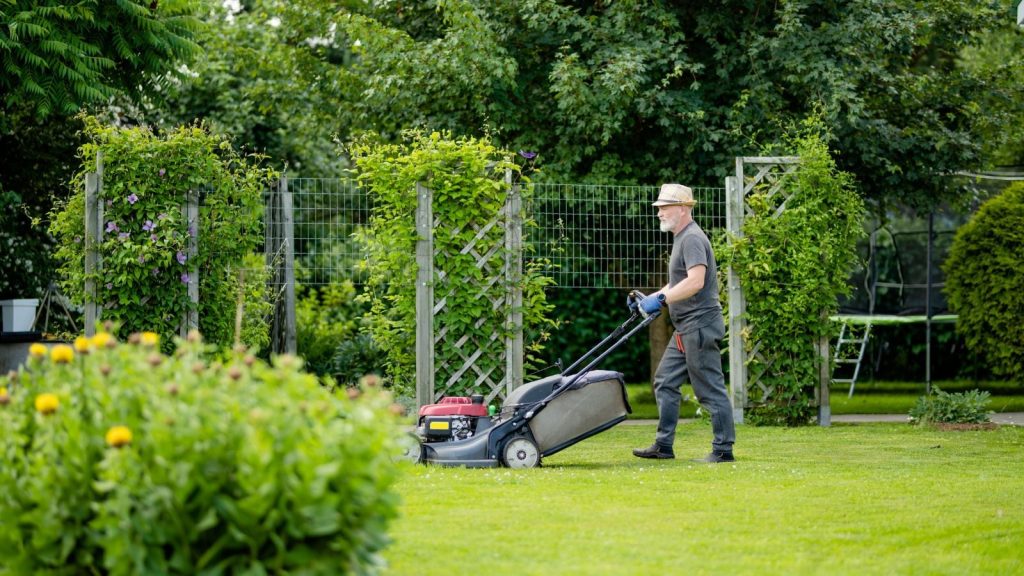
Never cut more than one third of the lawn at one time.
After a long winter, the temptation to give the lawn a short cut and reset everything is strong. But dropping the mower to its lowest setting and shearing the grass down is one of the fastest spring lawn mistakes that will set you up for a rough summer.
Extreme cutting exposes the soil and grass crowns to direct sun, which dries them out and puts the plants under stress before they’ve fully woken up after winter. It also removes most of the leaf area the grass needs to photosynthesize and rebuild after winter. Those stressed, weakened areas are the ones that brown out when temperatures climb in summer.
The one-third cutting rule applies year-round, and it especially matters at the first mow of the season. Never cut more than a third of the grass blade in a single session. If the lawn is slightly overgrown after winter, bring it down gradually rather than all at once.
Mowing With Dull Blades
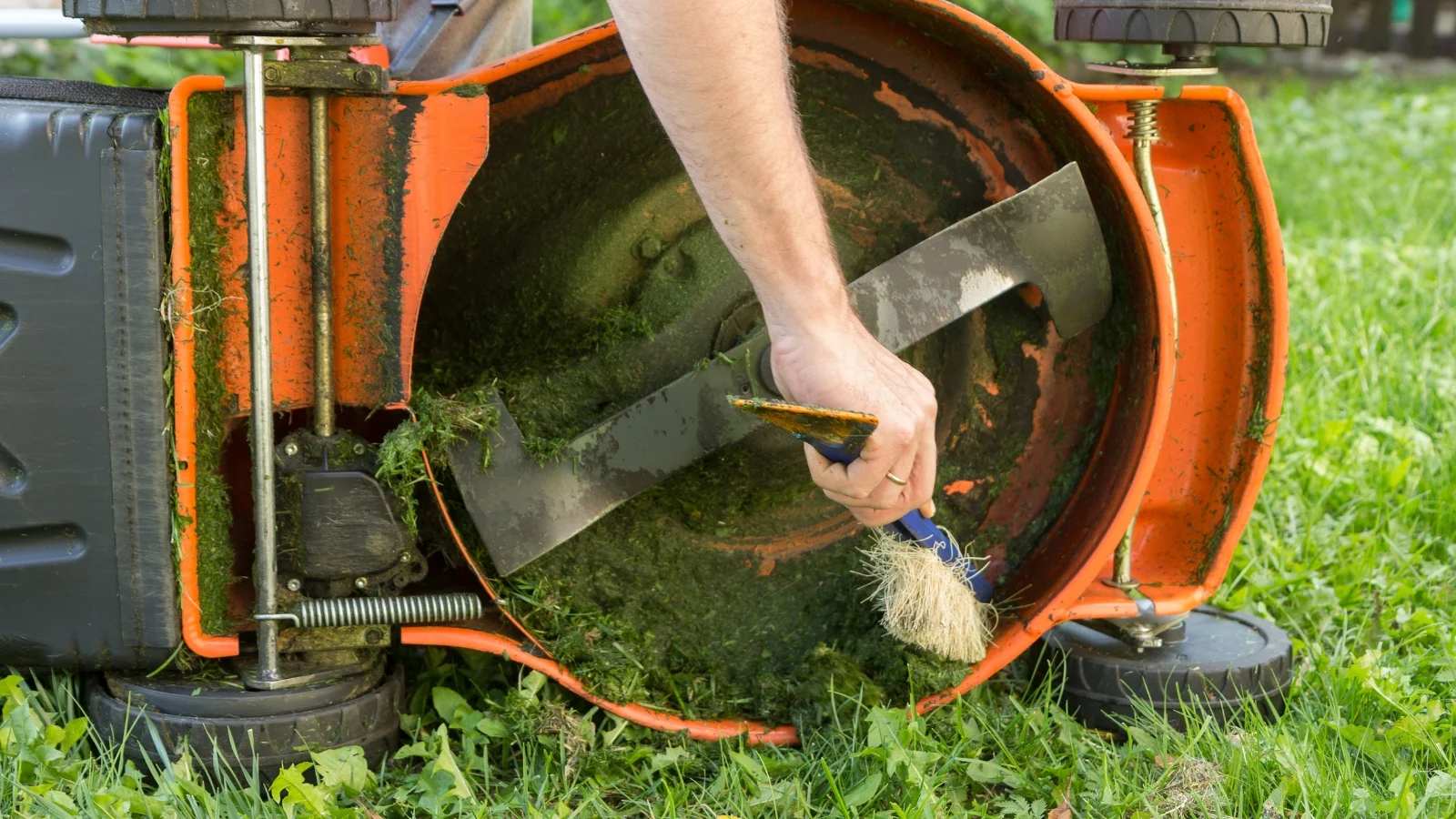 Always sharpen your blades in winter or early spring.
Mowing with a dull blade isn’t always an easy spring lawn mistake to spot, because the grass will still get cut, just not very efficiently. Instead of a clean cut, dull blades tear and shred the tips of the grass. You can actually see the difference if you look closely, as the grass will have ragged, whitish tips instead of a clean edge.
Torn grass loses moisture faster and is significantly more vulnerable to fungal infection. In warm, humid conditions, they become entry points for disease. If your lawn develops brown patches in a random pattern that doesn’t seem related to watering or fertilizing, this is worth checking before anything else. Sharpen your mower blades at the start of the season and again midway through.
Fertilizing Too Early
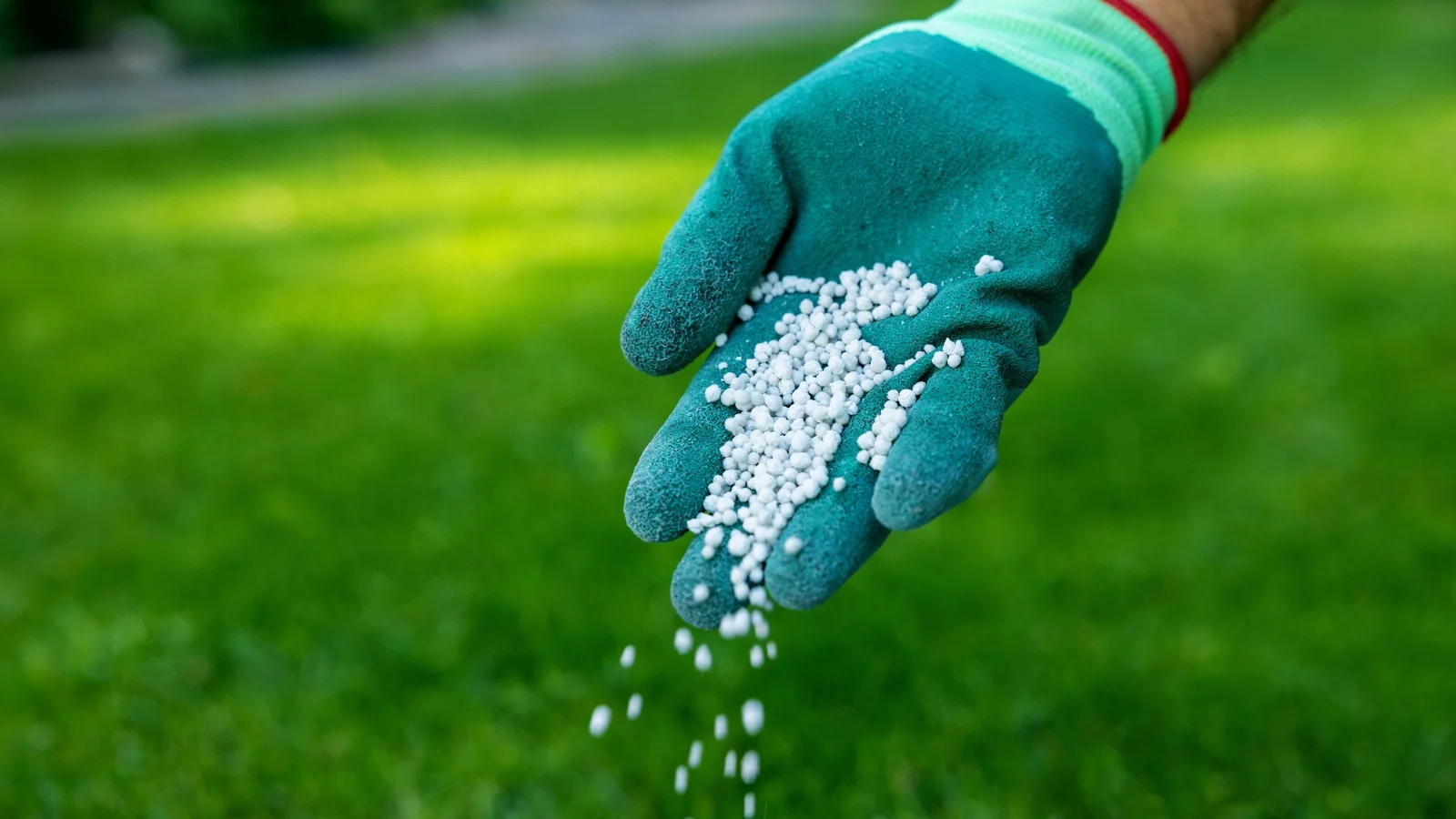 Wait until the right time for your grass type to feed.
The instinct to feed the lawn as soon as it starts greening up in spring is strong. But applying too much fertilizer before the grass is actively growing is a waste at best and damaging at worst.
Cool-season grasses should ideally receive their main spring feeding after they’ve been actively growing for a few weeks, not at the first sign of green. This spring lawn mistake leads to lush-looking grass with shallow roots that can’t handle summer heat.
For warm-season grasses, the timing shifts even later. Wait until the grass is fully green and growing before feeding. Soil temperature is a better guide than the calendar. Most warm-season grasses don’t need fertilizer until soil temps are consistently above 65°F.
Overfertilizing
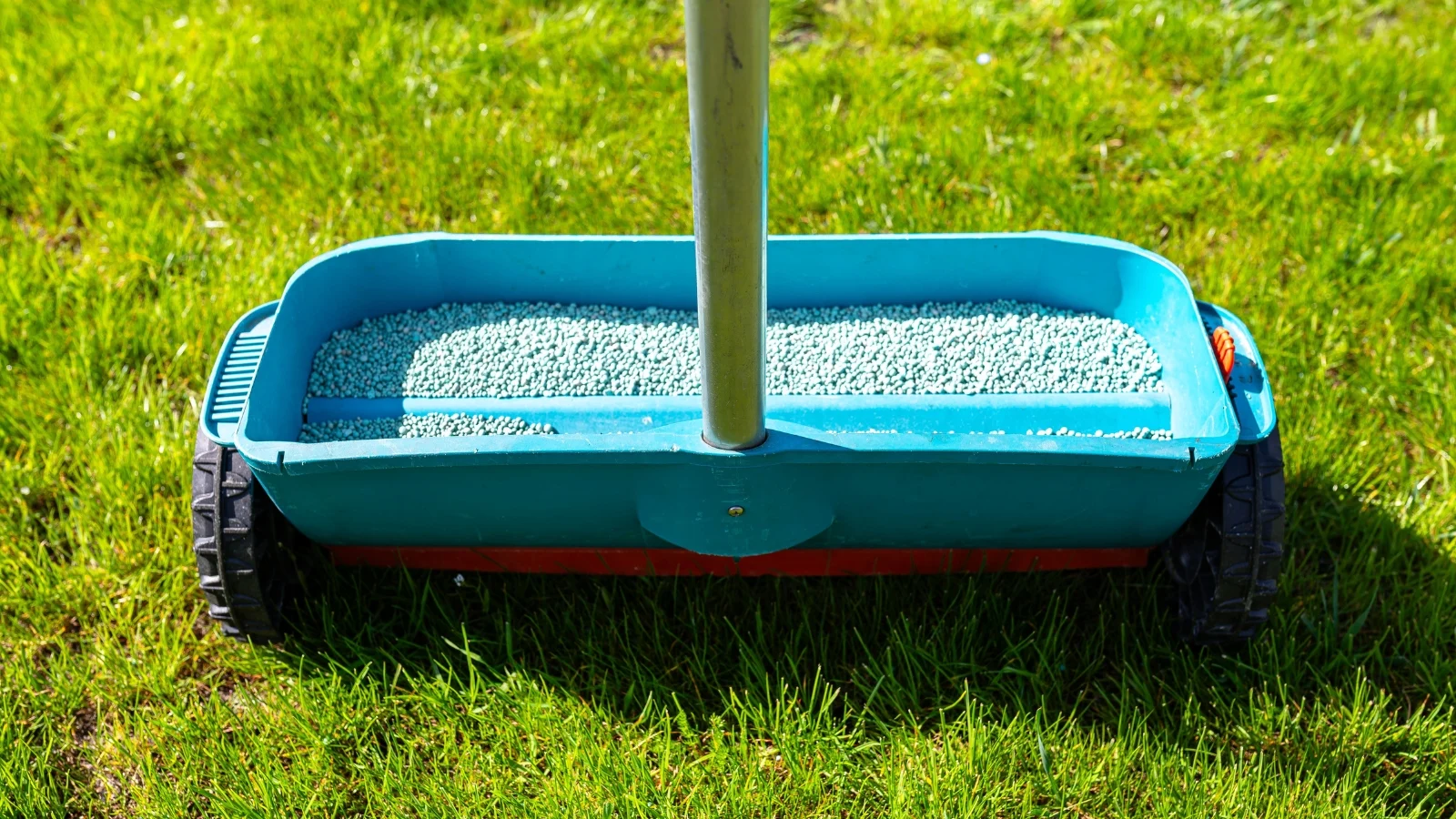 Excess fertilizer does not equal better growth.
Even with the right timing, too much fertilizer creates its own set of problems. Excess nitrogen, especially from quick-release products, can burn the grass outright. The risk goes up when you overlap your rows (easy to do if you lose track of where you’ve been) or use a hand-held spreader that distributes unevenly. Slow-release or organic fertilizers are more forgiving because they release nutrients gradually rather than dumping a concentrated dose all at once.
If you’ve already overdone it, water the area deeply. Some of the damage may recover on its own, but severely burned patches often need overseeding in fall.
Watering Incorrectly
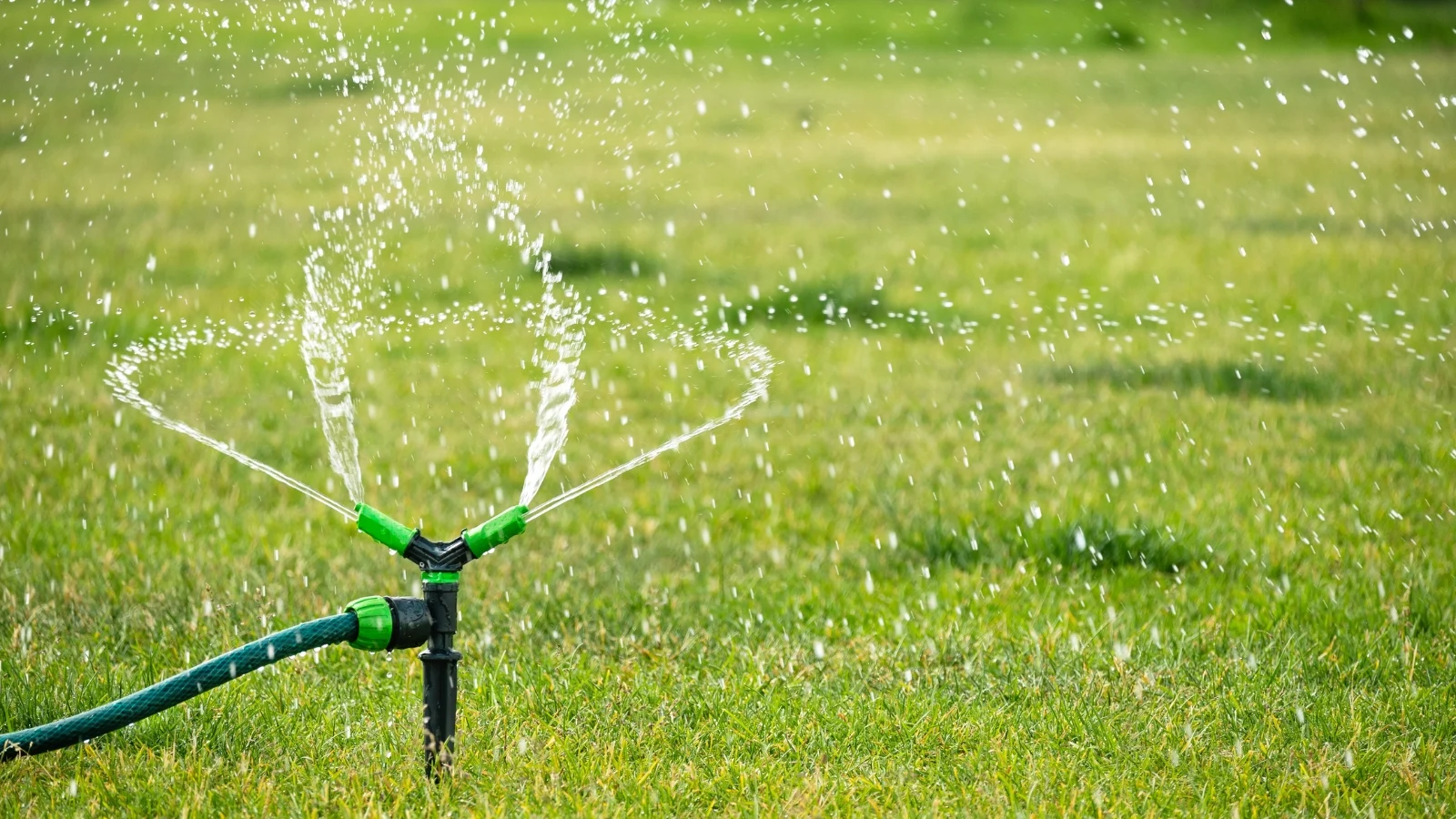 Deep watering produces better results than shallow watering.
Spring lawn watering mistakes tend to fall in one of two directions. The first is watering too frequently and too shallowly. Those shallow patches are the first to suffer when summer heat dries out the top few inches of soil.
The second is watering in the evening, which leaves the grass soggy overnight. Fungal diseases like brown patch thrive in warm, moist conditions, and wet grass sitting in the dark for hours is exactly what they need.
When you do water, water deeply and less often. The goal is to encourage roots to grow deeply, chasing the moisture. One inch of water per week (including rainfall) is a reasonable baseline for most lawns, applied in one or two sessions rather than a little every day.
Ignoring Soil Compaction
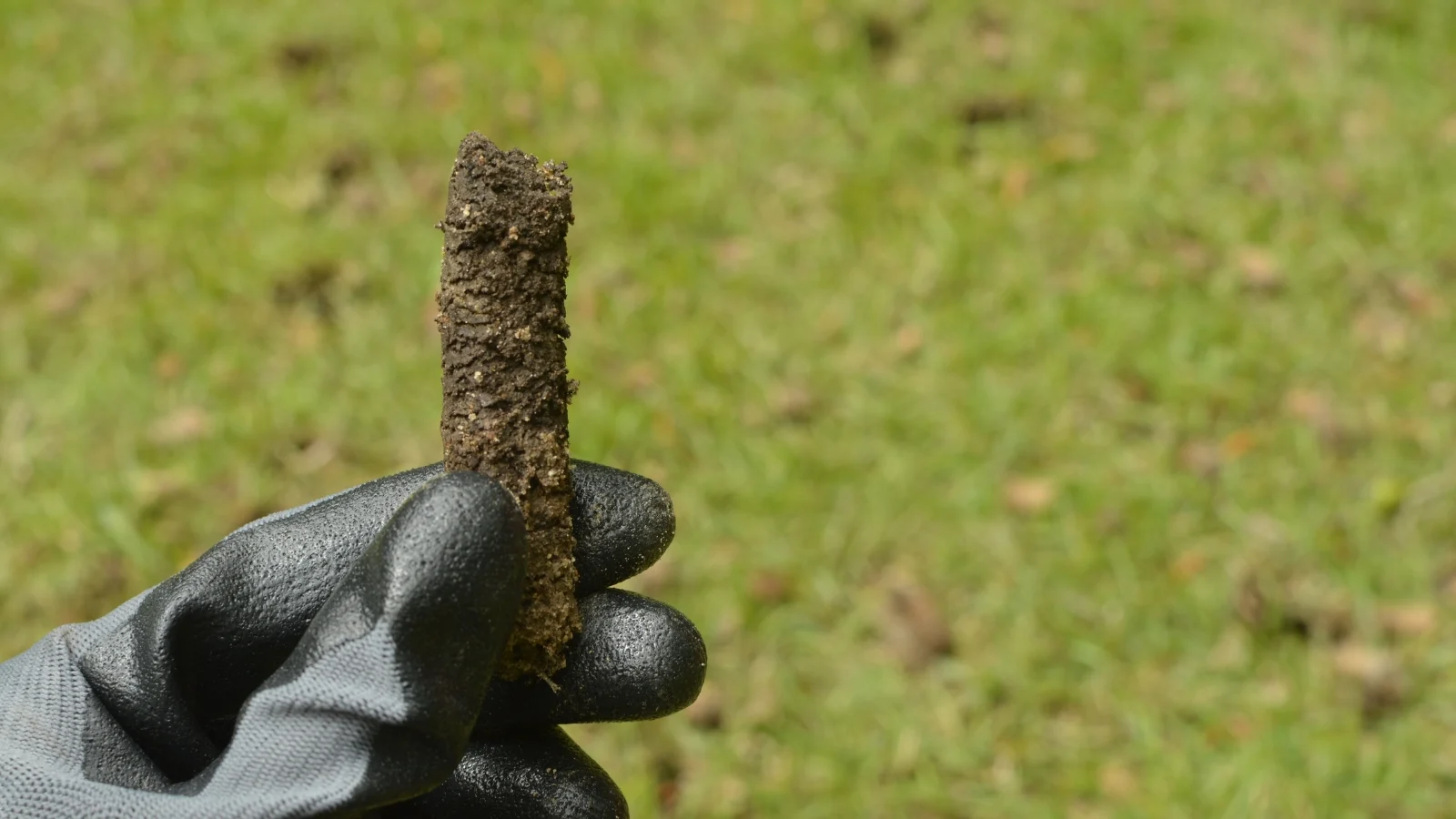 Compacted soil leads to brown patches in summer.
Compacted soil doesn’t absorb water well, doesn’t allow air to reach the roots, and makes it harder for grass to spread and fill in. Over time, the lawn thins in compacted areas and those thin spots brown out in summer.
If you have heavy foot traffic patterns, clay soil, or areas where water pools after rain, compaction is likely part of the problem. Core aeration in early spring (for cool-season grasses) or late spring (for warm-season types) relieves compaction by pulling small plugs of soil and leaving channels for water and air to penetrate.
Letting Thatch Build Up
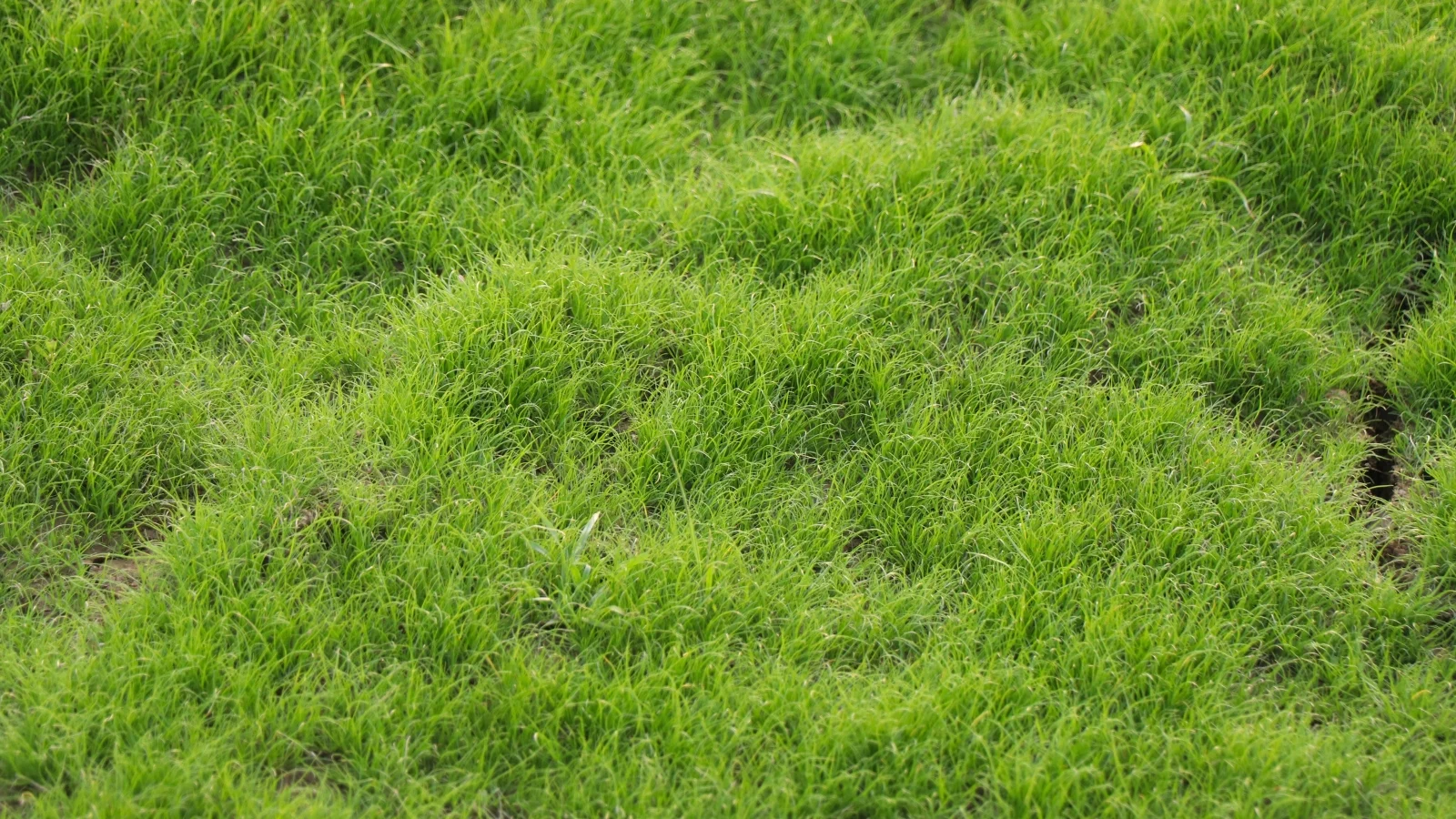 Thatch builds up in grass lawns over time.
A thin layer of thatch is normal and even beneficial for grass. But when it gets thicker than about half an inch, it starts to cause problems.
Thick thatch acts like a barrier. It prevents water and fertilizer from reaching the roots, it traps moisture against the crowns of the grass (encouraging disease), and it harbors insects like grubs that feed on roots from below. A lawn with a serious thatch problem may look healthy in spring, then develop brown patches as summer heat increases and the already-compromised root system can’t keep up. Dethatching in spring gives the lawn time to recover before the stress of summer.
We reference Spring lawn care briefly to keep the thread coherent.
Spring lawn care comes up here to connect ideas for clarity.