On a hillside in Sant’Agata Feltria, in rural Italy, the ancient hamlet of Scavolo has been brought back into use. Once a papal property, later a military fortress, a ducal residence, and a family home, it was restored by Matteo Carraturo and Ambra Felten and launched in 2021 as Scavolo Borgo—an ensemble of four rooms and a handful of historic buildings reworked with care.
Working with architect Lorenzo Giordano, the team approached the project as a thoughtful rehabilitation. An aluminum rooftop sits lightly on old masonry; new terrazzo floors by Cuor di Roccia meet terracotta tiles; steel stair housings pair with restored plaster and arched openings. The contrasts are deliberate, revealing each layer of the site rather than hiding it.
Locanda Scavolo, the first building in the hamlet, holds four 25-square-meter rooms overlooking the pool. On the ground level: a welcome room, a music room, a glass-walled veranda, and a communal kitchen. Nearby, the 13th-century Chiesa di Santa Maria Assunta stands open for gatherings and ceremonies, while an arch-shaped pool anchors the hillside garden. Scavolo today is less a hotel than a restored village—with places to stay, cook, and convene. Join us for a closer look.
Above: Entering Locanda Scavolo from the pool are two Coimbra 02 Benches from Ripa Design. 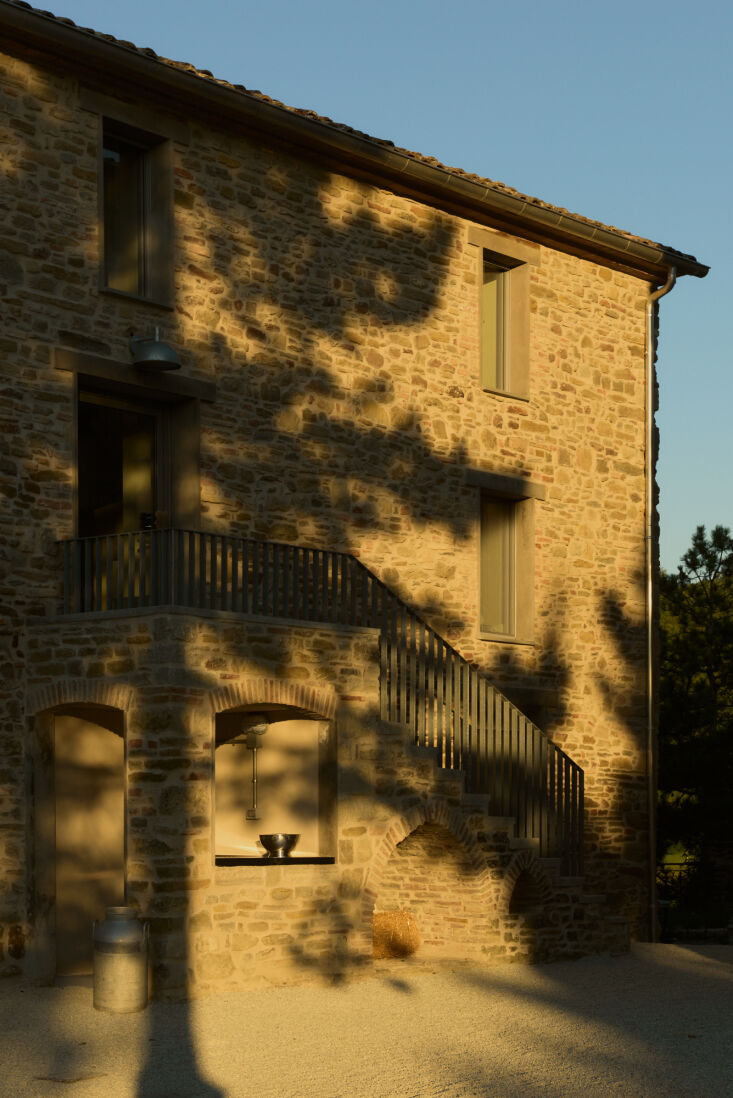 Above: Stairways, both exterior and interior, were restored along with windows and doors.
 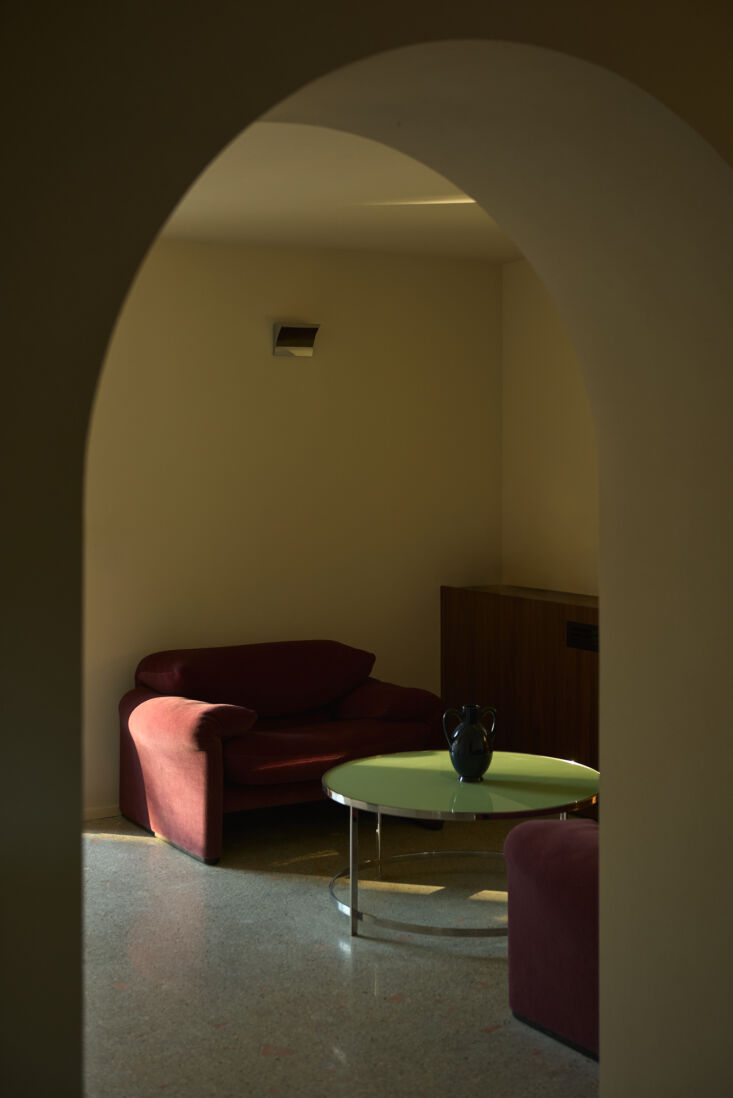 Above: The ground floor of the locanda includes a welcome room for guests.
 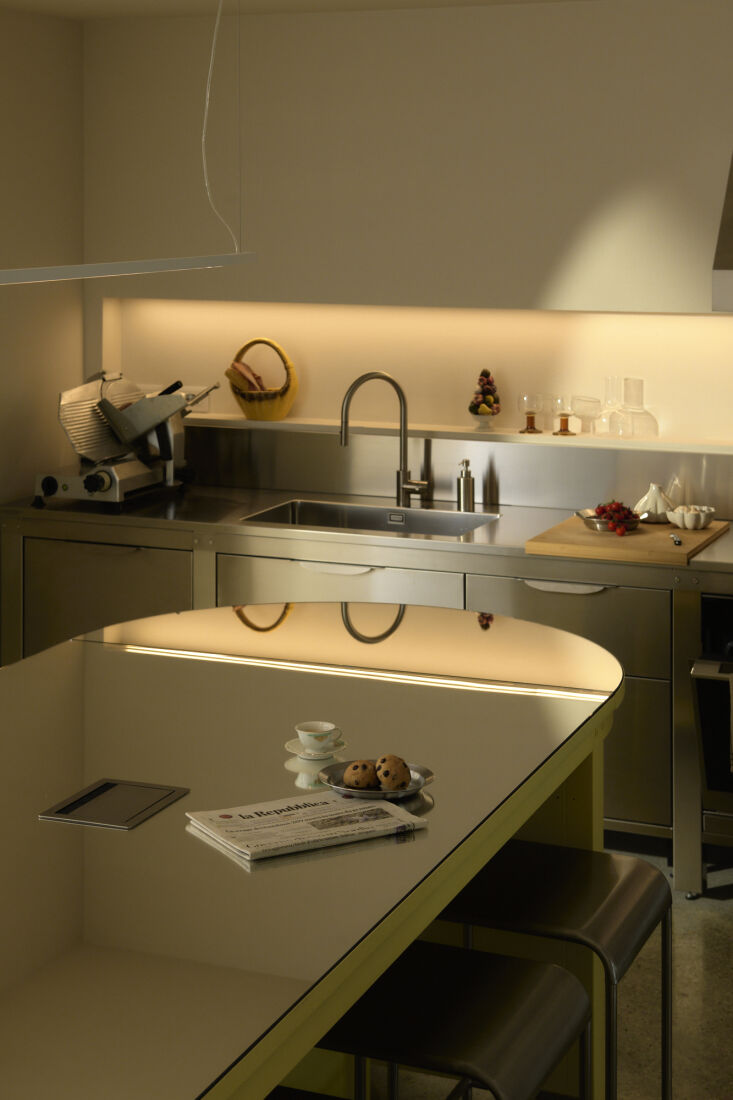 Above: The communal kitchen is designed by Very Simple Kitchen—stainless steel on one wall, a faded yellow island with mirrored top at the center.
 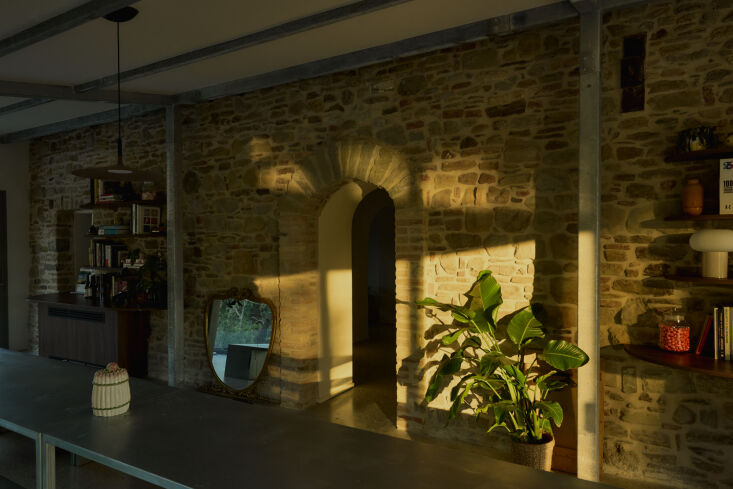 Above: An extension of the communal areas ont he ground floor.
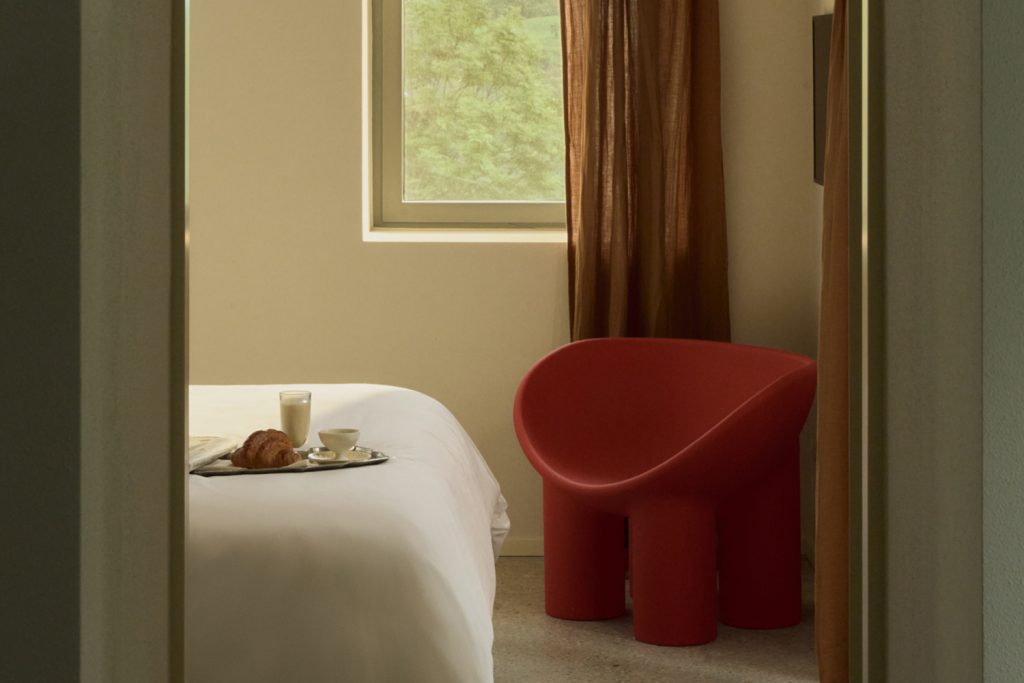
 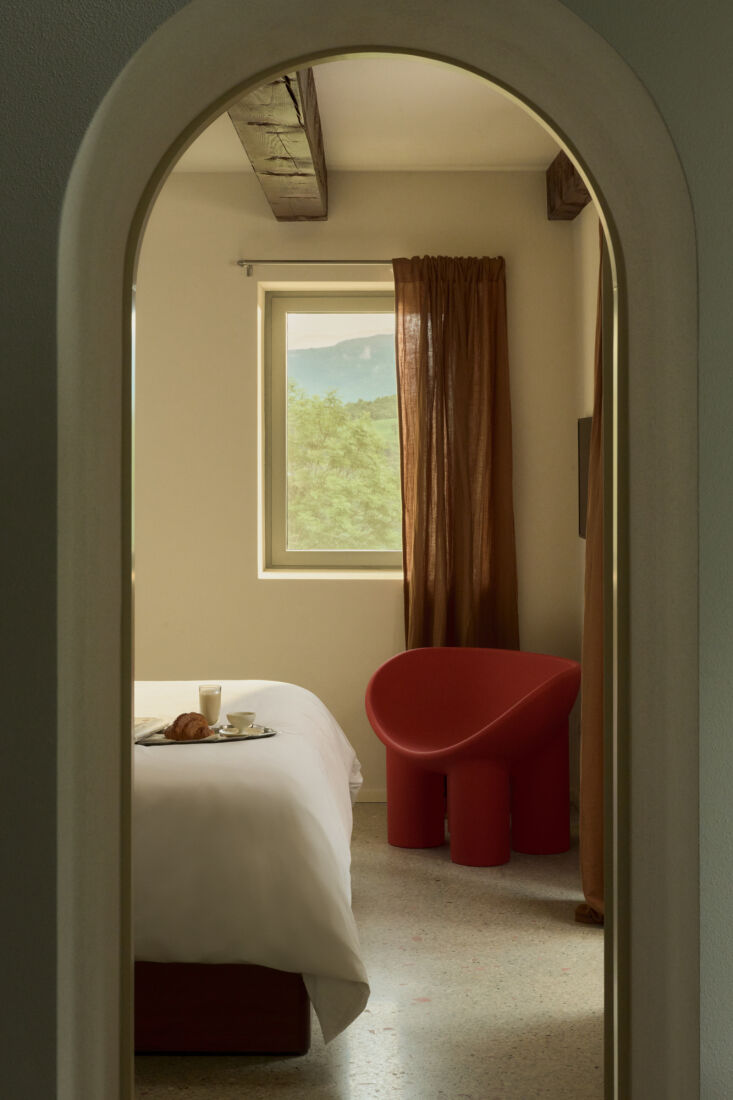 Above: A Faye Toogood-designed Roly Poly Chair in red poly for Driade brings a strong dose of color to one of the four bedrooms.
 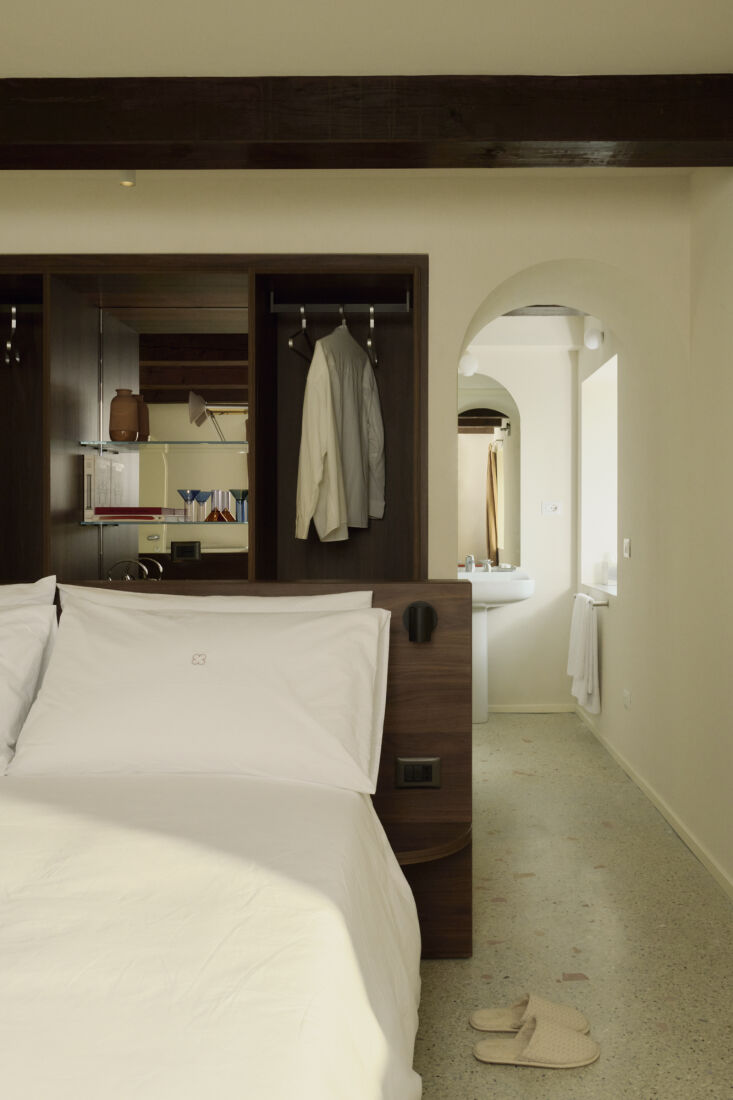 Above: The terrazzo floors throughout the building are new. The team designed bed frames and clothes closets in walnut.