Create a perfectly shaped hedge
If you’re shaping a hedge for the first time, getting the structure right is critical. In this video, horticulturist Kayla Robinson demonstrates how to perfectly shape a young inkberry (Ilex glabra, Zones 5–9) hedge at Stevens-Coolidge House & Gardens in North Andover.
Using a simple system of T-posts, string lines, and hand shears, she shows how to establish the correct hedge structure so it will grow dense, healthy, and maintain its shape for years to come. This method creates a tapered hedge (wider at the base than the top)—a key technique professional gardeners use to ensure sunlight reaches the entire plant.
How to Prune a Perfectly Shaped Hedge
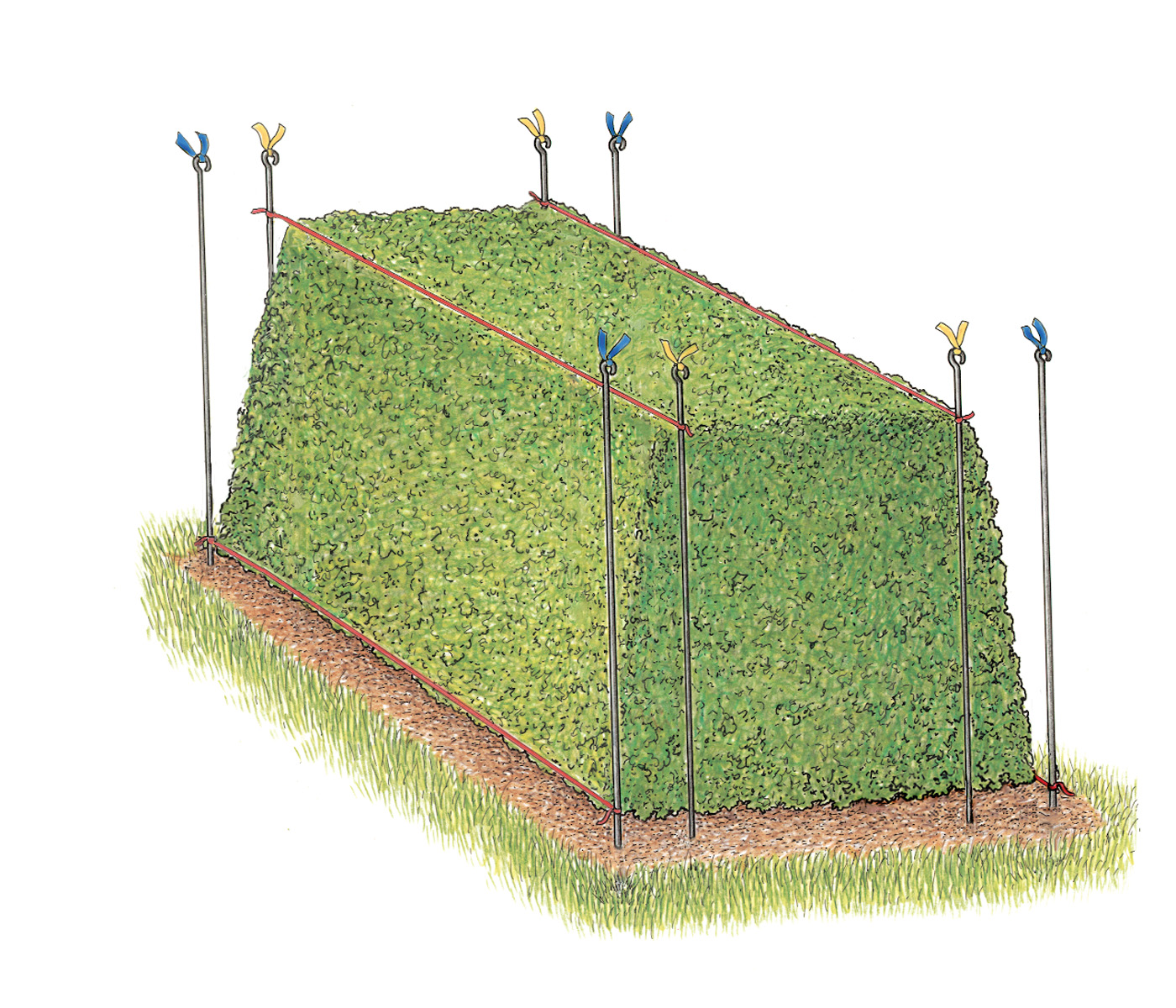
It is important to batter, or taper, the sides of a hedge, making it slightly narrower at the top and wider at the base. This increases the amount of sunlight that reaches the bottom portion of the hedge, which could otherwise grow thin and defoliate in the shade of the upper branches.
Strings help you see straight. To batter the sides of a hedge evenly, drive four stakes into the ground at either end of a straight section. Stretch level string lines between the inner stakes (marked with yellow ties in the diagram above) at the height where you’d like the top of the hedge to be. The lines between the outer stakes, shown with blue ties, will mark the width at the bottom of the hedge. Illustration by Dolores R. Santoliquido
To batter your hedge like a pro, set up some stakes, strings, and line levels to help you achieve crisp lines and a smooth taper (illustration above).
Items needed to shape a hedge:
- Tall stakes
- String
- Line level
- Hand pruners
- Hedge shears or power hedger
See some of our favorite pruning tools:
Battery-Powered Pruning Tools
Essential Tools for Pruning
Pruning Saws That Make Maintenance Easier
Steps to perfectly shape a long hedge
- Place four stakes at each end of a straight run. The two inner stakes will mark the narrower width at the top of the hedge, and the two outer stakes will mark the width at the base.
- Run a string between each pair of inner stakes, placing it at the desired height of the hedge.
- Use a line level to make sure the top of the hedge is truly level; measuring the height from the ground to the top of each plant will yield an uneven line if the ground is not flat.
- Run two more strings between the stakes that mark the bottom outer corners. Note: If you’re pruning a very long hedge, you can add intermediate stakes to break up the long run, double-checking the top string to ensure that it is level between stakes.
- Trim the sides and top of the hedge carefully using either a power tool or hedge shears, stepping back periodically to assess your progress.
- Prune in light layers, gently rather than aggressively. You can always prune a little more, but there’s no way to put back what you have cut off.
If you are pruning a more informal hedge, or if you intend to rejuvenate or reduce the hedge in the near future, it is a good practice to strategically make a few deeper cuts to permit more light into the center of the plants and stimulate interior growth.
Learn More:
The Essential Guide to Growing Hedges
How to Trim a Formal Hedge
20 Unique Hedging Plants: Small, Medium, and Large Varieties
Watch Videos on Our YouTube Channel!