
Luxury in the home has not always been associated with what feels familiar. For much of modern design history, unfamiliar forms and new material combinations were markers of progress and cultural relevance. Yet when people make long-term decisions about furniture, pieces meant to live with them for years, recognizable proportions, materials, and construction cues often provide confidence rather than constraint.
Looking at design history helps explain why. While innovation has often appeared unfamiliar, it has rarely been created in isolation. Most furniture designs that reshaped the industry were built by refining familiar standards rather than abandoning them entirely.
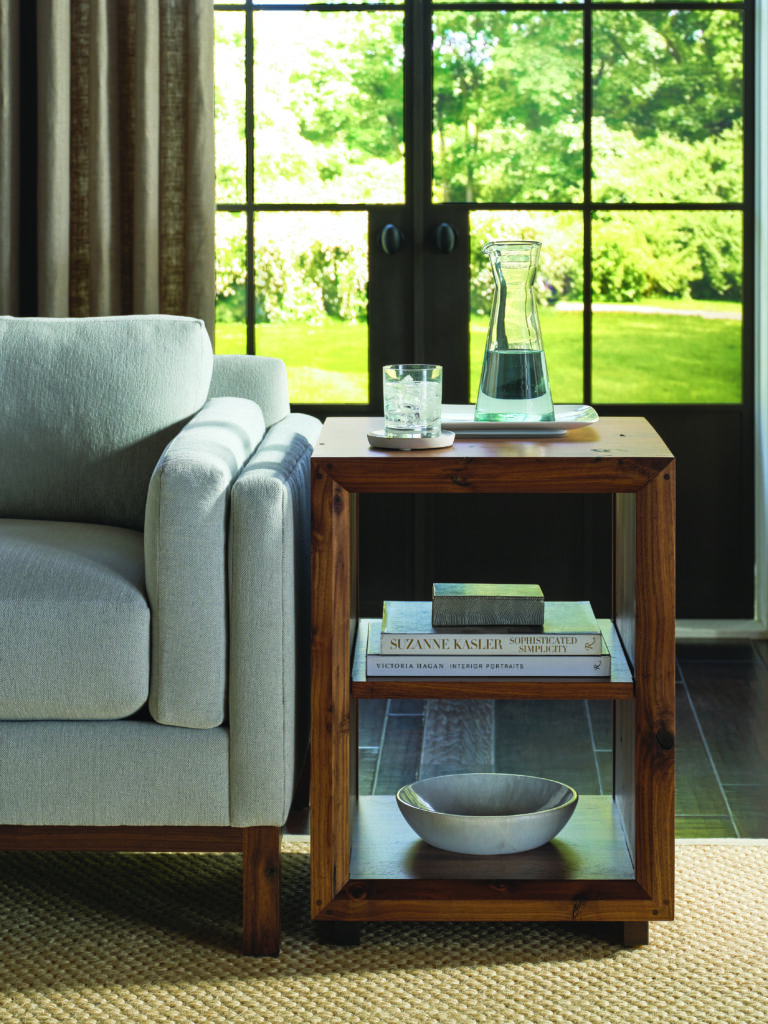
The sustainable, modern-rustic Saranac Collection is built to last with Stickley‘s time-honored construction features, including pinned mortise-and-tenon joinery, mitered corners, exposed spline joints, and side-hung, center-guided drawers with dovetailed boxes. (Photo courtesy of Stickley)
How furniture innovation historically took shape
Early cabinetmakers understood this instinctively. In the eighteenth century, English and American cabinetmakers such as Thomas Chippendale did not invent furniture forms from nothing. Chippendale’s published pattern books standardized chairs, tables and case pieces that blended earlier vernacular forms with refined proportion and ornament. These designs spread quickly because they were legible. They felt elevated, but still recognizable to the households using them.
That same pattern repeated itself centuries later. At the turn of the twentieth century, the American Arts and Crafts and Mission movements responded to industrial excess by returning to visible structure and honest materials. Gustav Stickley became a leading figure in translating these ideals into furniture that was both principled and approachable. His early Mission designs relied on rectilinear forms, exposed joinery, and solid oak construction. These pieces felt new in their restraint, yet familiar in their practicality. The furniture succeeded because people understood how it worked and why it existed.
Midcentury modern design followed a similar path. While its materials and silhouettes felt fresh, its success was rooted in proportion and function inherited from earlier furniture traditions. Chairs still supported the body in recognizable ways. Tables still respected balance and scale. Innovation appeared in simplification, manufacturing methods, and material exploration rather than in rejecting furniture logic altogether.
These examples do not suggest that innovation must always rely on the past, but they show how familiarity often helped new ideas gain acceptance and longevity.
Recognition versus replication
This distinction matters. Replicating historical styles freezes design in time. Recognition, by contrast, uses familiar design language as a foundation for improvement. Recognition allows design to evolve through proportion, comfort, materials and use, even when the overall form remains legible.
This approach directs innovation toward what truly advances furniture, including better ergonomics, improved durability and new materials applied within understandable forms. These changes are easier for people to evaluate because they have a reference point.
This is why familiarity continues to matter today. Rather than being a creative shortcut, it is a way to communicate function, intention and reliability quickly and clearly.
Familiarity in contemporary furniture
Stickley remains a strong example of how recognizable design language can evolve without losing clarity. The company’s Mission-inspired furniture stays rooted in principles of honest materials, visible construction and proportion. Over time, Stickley has refined comfort, finish options and functional details, but the underlying logic remains intact. The furniture feels trustworthy because its design language is consistent and easy to read.
Century Furniture demonstrates another approach. Founded in 1947, Century offers a broad range of traditional, transitional and contemporary designs that rely on proportion, balance and customization. By allowing designers and clients to select finishes, fabrics and configurations within familiar forms, Century supports innovation through adaptability. The furniture works because it respects how people actually live with it.
Both examples show that familiarity does not prevent innovation. It gives innovation structure.
What this means for brands and retailers
Understanding the relationship between design history and furniture innovation offers practical guidance.
Familiar forms help buyers assess risk. When proportions and silhouettes are readable, attention shifts to comfort, materials and construction quality.
Innovation benefits from a reference frame. New ideas are easier to accept when they are introduced within design logic people already understand.
History provides a working vocabulary. Studying cabinetmaking traditions and major design movements offers proven forms that can be refined rather than discarded. Familiarity opens the door to education because it gives people a reference point. Once a form is understood, its history, construction and evolution become easier to explain and more interesting to explore.
Education remains essential. Familiarity does not reduce the need for storytelling. It deepens it. When brands explain how a design evolved, why certain forms persist, and how innovation improves them, the value becomes clearer.
Looking ahead
Familiarity has not always defined luxury, but it plays a central role in how innovation is understood and adopted today. Many successful furniture designs tend to respect the standards that have already proven useful while improving them for contemporary life.
Design will continue to evolve. The ideas that resonate most widely will be those that feel understandable without being derivative and innovative without being confusing. Familiarity, viewed through the lens of design history, is not a retreat from progress. It is often the reason progress works.
Julia Reinert, The Lifestyle Historian
















Heads up – I adore the colors here; feels really cozy. Saving it.
Small note – Exactly what I needed to see today, thanks. Thanks for this!
Also — Nice take on “Why familiarity drives furniture innovat” — I’ll try that soon. Love this!