A couple of months ago, my friend Ryan told me about a wild pear tree he had found that looked like a Bradford but had much larger fruit.
He showed me this picture:
And a close-up of the fruit:
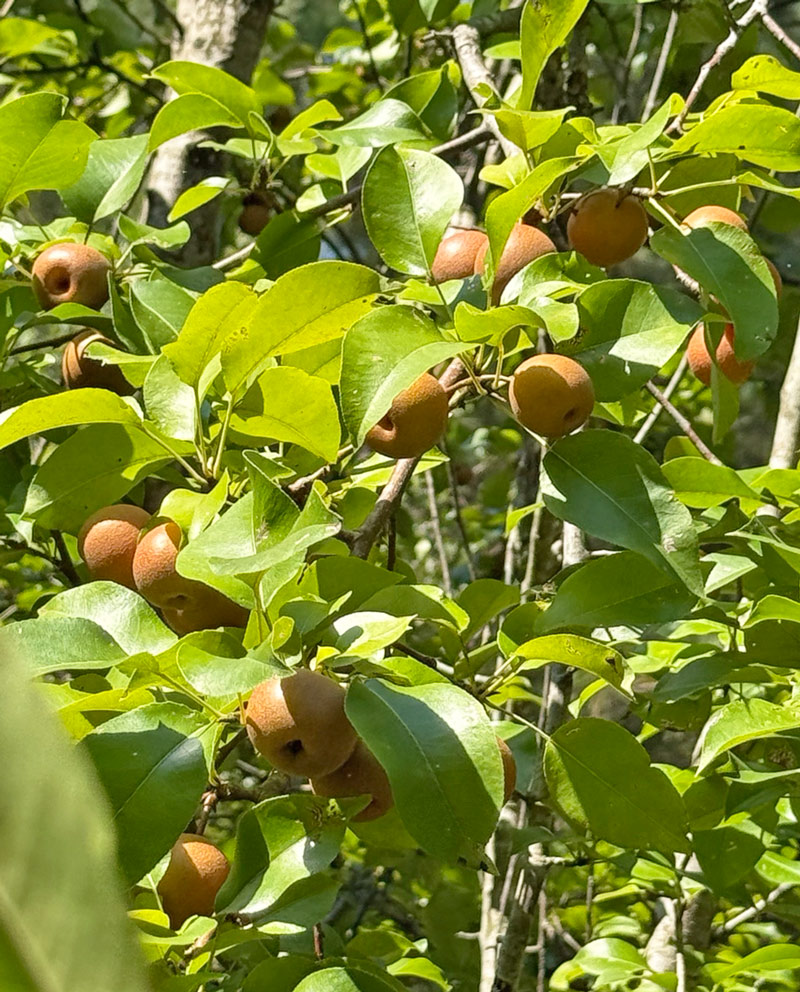
I asked him if he’d tried the fruit. He had, and said they were hard but sweet, with no Bradford astringency. He also told me that the fruit hung on into November.
Now I was intrigued. A seedling pear with edible fruit, that grew itself with no care whatsoever? If the fruit is really half-decent, this could be a good new variety for this area.
I asked him if he could get me some scion wood. A week or so later, he brought me a bundle of twigs. I stored them in the fridge at the shop until yesterday, then busted them out and grafted four scions onto two potted pear trees.
You can see how I did it in our latest video:
Later this year we plan to visit the original tree.
For now, we’ll let these grafts heal up and then plant a few on our property. Even if it doesn’t turn out to be the best of pears, it is still a locally adapted new variety we can share with the wildlife and perhaps use for breeding new pears.
If you come across an interesting seedling or an old, unknown tree, you can save it by taking cuttings or grafting.
Many of our favorite fruits were just “accidents” that someone found and duplicated. Or they’re the result of deliberate crosses and seed-saving. The genetic code is deep and rich and there are many discoveries left to make.
Look at Steven Edholm’s work with red-fleshed apples, for instance. Or the creation of the new “Bumper” and “Arctic Frost” Satsuma varieties by Mr. Ying Doon Moy and Dr. Jerry Parsons.
If you find a really nice blueberry bush in the woods, why not take cuttings? And if you find a tasty crabapple at the edge of an orchard, why not graft a few?
It’s genetic treasure hunting, like I write about in Free Plants for Everyone: The Good Guide to Plant Propagation.
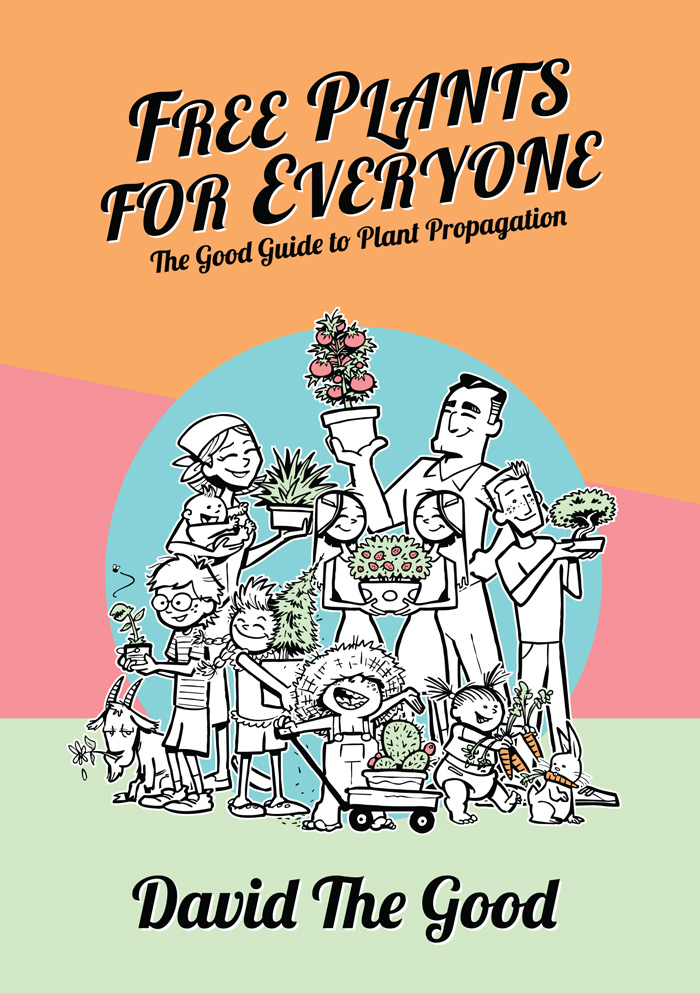
If you want to grow your own plants from seed, cuttings, grafting, air-layering, and more, that book is a good place to start.
And if you’re ever in the area, come and visit our plant nursery at Atmore Farm & Garden.