
The weather has warmed up after a deep freeze last week, and we look to be frost-free for at least the next ten days.
This morning we started moving some new plants over to the store, including some of the useful and interesting species we’ve collected over the years, like Gynura procumbens (longevity spinach):
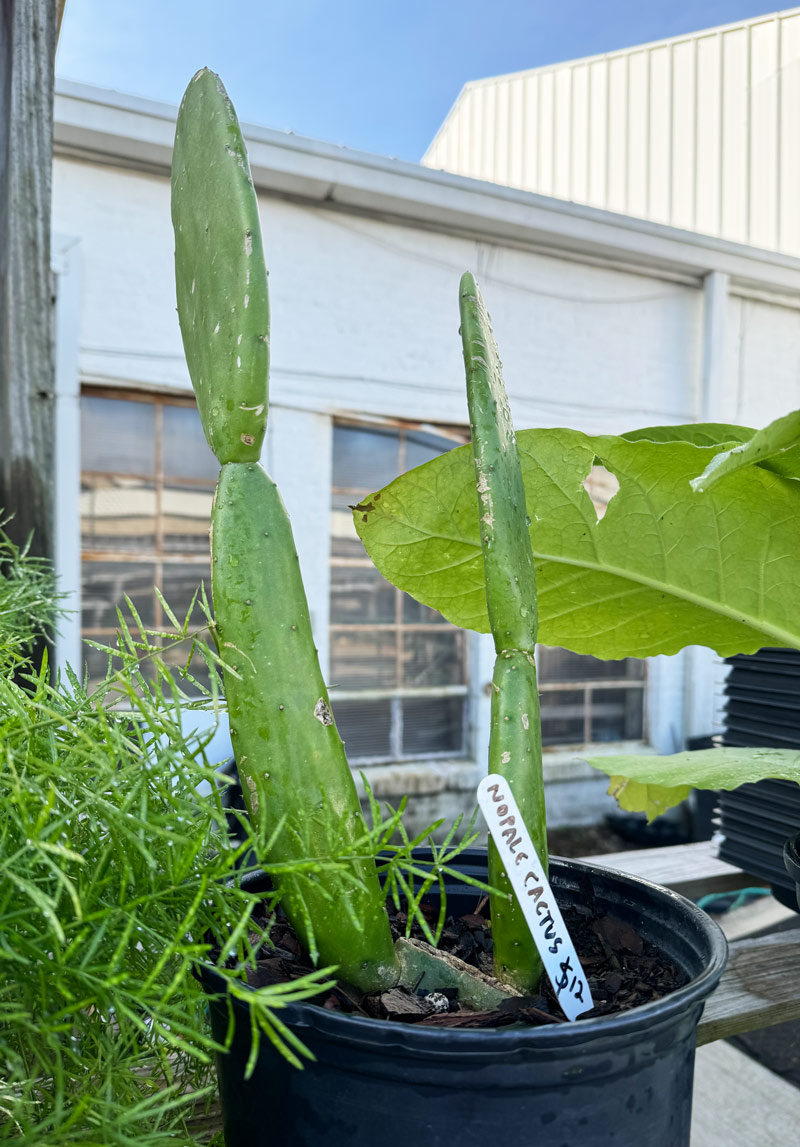
And this very good-tasting nopale cactus (Nopalea cochenillifera):
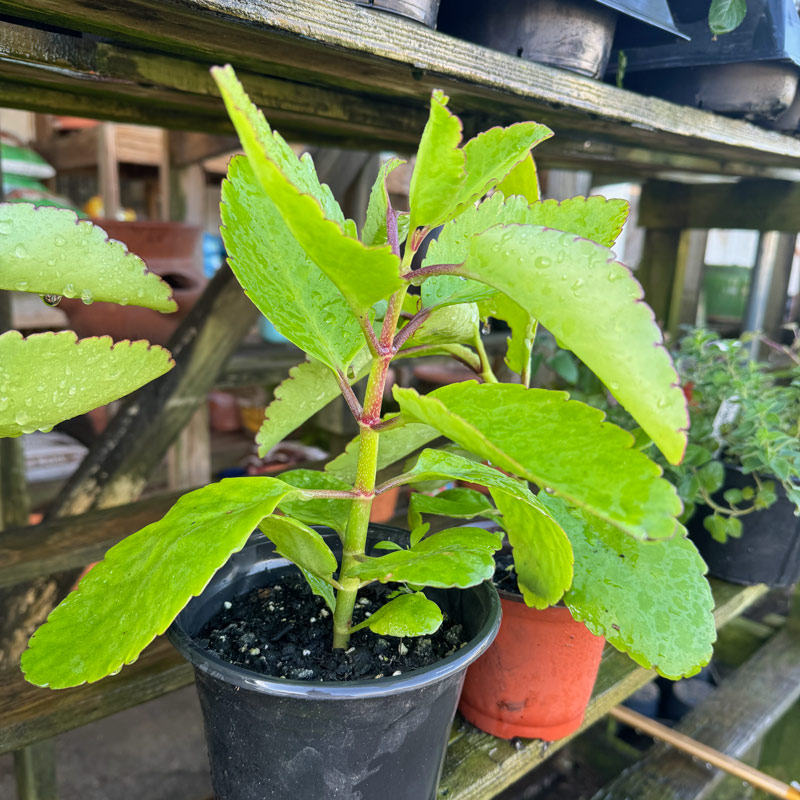
And “leaf of life,” AKA Kalanchoe pinnata:
And this beautiful “Rachel” mulberry tree, which I don’t think will last long:
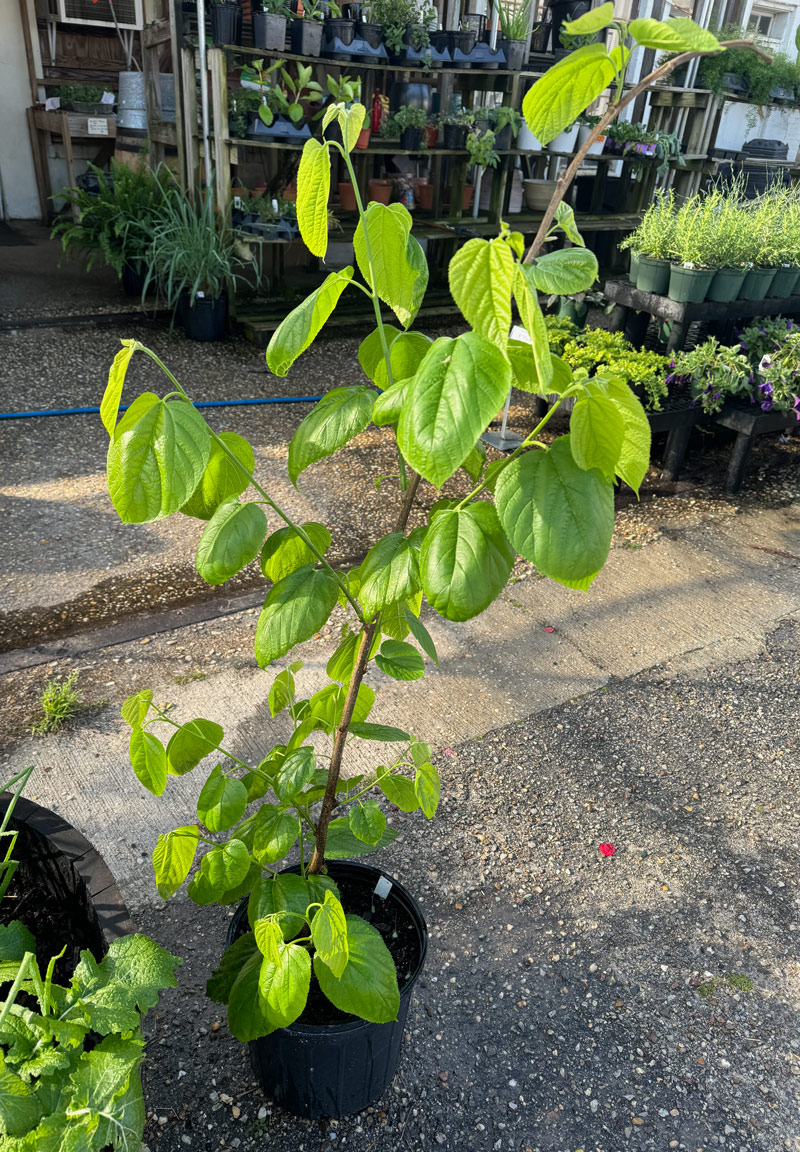
I have very few decent-sized “Rachel” mulberries. They are rather hard to start from cuttings, so last summer my son R and I started this one as an air-layer.
We also just put some Chain Mei 60 mulberries out on the lot. They are just one-gallon sized but they grow very fast. It’s a crazy productive variety.
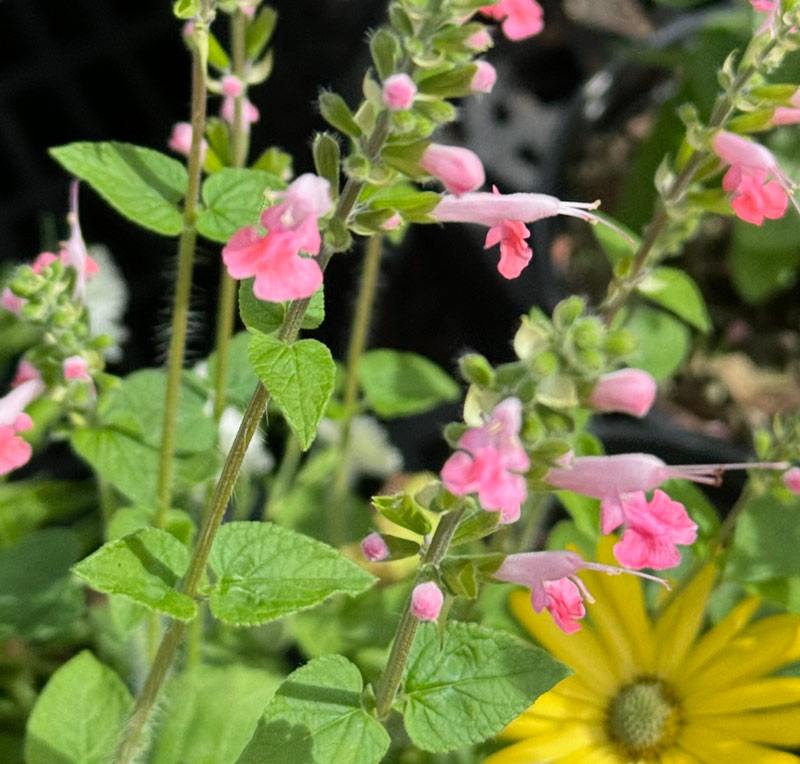
But the prettiest thing we added today was some Salvia coccinea:
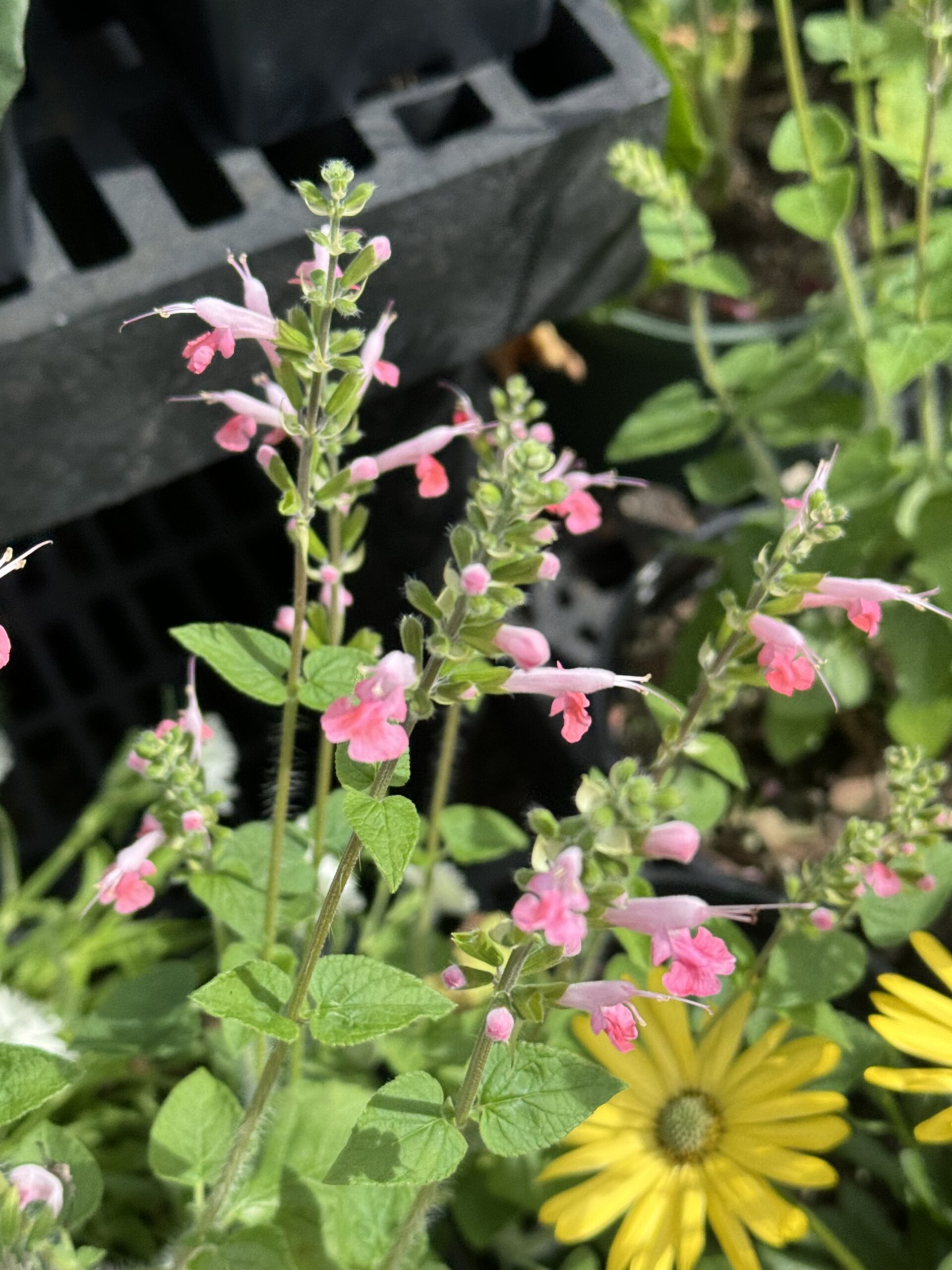
Salvia coccinea, also known as “tropical sage,” is a self-seeding perennial native. I started these from seeds this fall and overwintered them in the greenhouse so we could put them out in spring.
They are attractive to butterflies, hummingbirds and other pollinators, plus they are just pretty all around.
As the University of Madison-Wisconsin notes:
Each inch-long tubular flower has two parts: a colorful tube (corolla) protruding from the calyx. The showy flowers produce a lot of nectar so are highly attractive to hummingbirds, giving rise to yet another common name of hummingbird sage. They are also visited by butterflies and bees. In addition, salvias make great cut flowers, with S. coccinea bringing an airy appearance to arrangements.
They come in multiple colors, of which red is the most common. My variant is coral pink, and it seems to seed true to type. At least in the one generation we have grown it.
I can’t find any solid info on its edibility, but it’s definitely popular with the pollinators and that’s good enough for me.










Practical and pretty — bookmarking this. Great share.
FYI · I appreciate the point about “Tropical Sage and Other Delights” — very handy. Saving it.
Quick thought – Exactly — I was thinking the same thing. Love this!
Quick thought – Exactly — I was thinking the same thing. Love this!
😊 Quick thought — great timing — I’ve been thinking about something like this. Saving it.
Also – Such a warm post; this made me smile. Great share.
On a similar note • Loved this about “Tropical Sage and Other Delights” — such a nice idea. So cozy 🌿
✨ Also – Such a warm post; this made me smile. Love this!