
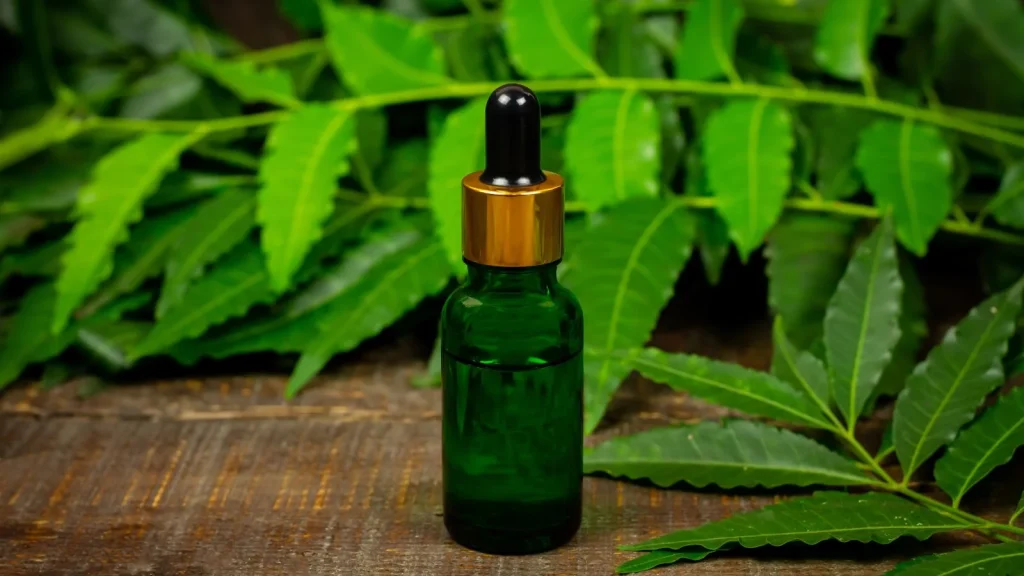
Neem oil mistakes — a quick note to anchor this piece for readers.
Neem oil mistakes: Quick notes
Neem oil is a product that gets recommended for almost every garden problem. Aphids, spider mites, whiteflies, powdery mildew, the list goes on. It’s affordable and quite effective when used correctly. That last part is important, because neem oil is also one of the easiest pest treatments to misuse.
While neem oil is relatively safe, it is still an oil. It coats plant foliage in a thin layer that can interfere with photosynthesis, block the tiny pores plants use to breathe and regulate moisture, and cause burns under the wrong conditions.
Used properly, that coating breaks down quickly and does its job without any lasting impact on the plant. But when it is used incorrectly, it becomes the thing causing damage rather than preventing it.
I’ve made most of these neem oil mistakes myself, and I’ve seen plenty of gardeners unknowingly do the same. If you want neem oil to not hurt plants and actually work for you, avoid these common errors.
Using Too Often
Neem oil shouldn’t be a daily-use product.
More is not necessarily better with neem oil. Each application leaves a thin oily residue on the foliage. Under normal circumstances, this residue breaks down within a few days as it’s exposed to sunlight and the elements. But if you reapply before that breakdown is complete, you end up layering fresh oil on top of residue that hasn’t fully degraded yet. Over time, this buildup blocks the stomata (the tiny pores on leaves responsible for gas exchange and transpiration), essentially suffocating the plant.
You might not notice the damage from these neem oil mistakes immediately. It often shows up as a general decline: leaves looking dull, yellowing foliage, or stunted growth that doesn’t seem to have an obvious cause. Because the symptoms mimic other problems like nutrient deficiencies or overwatering, it’s easy to miss the connection to neem oil entirely.
For most pest situations, applying once every seven to 14 days is enough. If you’re dealing with a serious infestation and feel the need to spray more frequently, every five days is about as aggressive as you should get. Give the oil time to do its work and break down between applications.
Not Repeating Applications
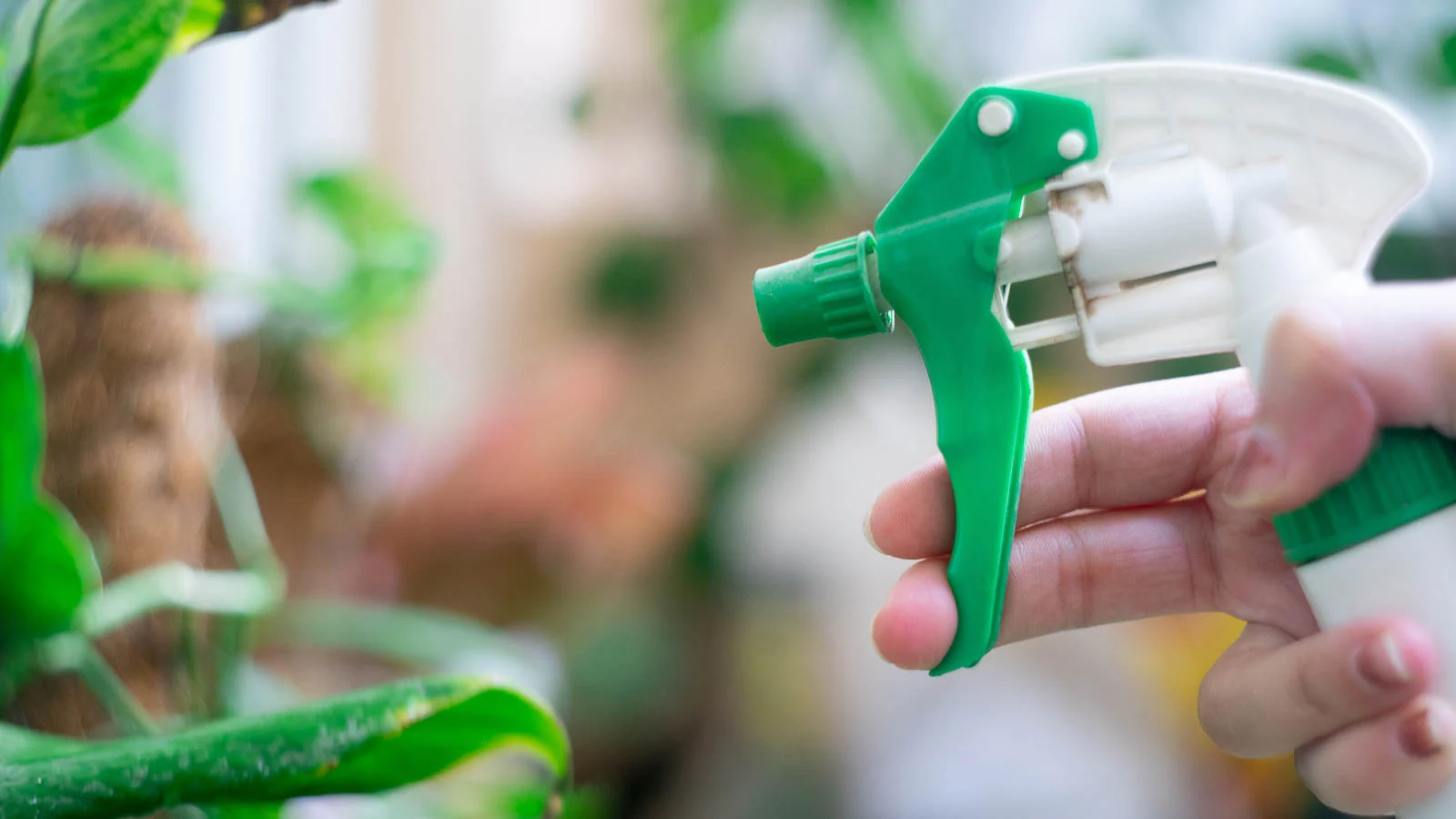 A single application usually isn’t enough.
On the other end of the spectrum, a single application of neem oil is rarely enough to solve a pest problem. This catches a lot of gardeners off guard, especially if they expect neem oil to work like a chemical pesticide that kills on contact.
Neem oil works differently. Its active compound, azadirachtin, disrupts insect feeding and reproductive cycles rather than killing everything outright. Insects that ingest it stop eating, struggle to develop, and fail to reproduce normally. This means the effects are gradual. You won’t spray today and find all your aphids gone tomorrow.
The azadirachtin also starts breaking down within a day or two of application, so a single spray only provides a short window of protection. If you spray once and walk away, the pest population recovers, and you’re back where you started. In this case, it’s not the neem oil that hurts plants, but the pests from incorrect use.
For active infestations, plan on applying neem once a week for at least two to three weeks, sometimes longer, depending on the severity. Even after the problem looks resolved, one or two follow-up applications help catch any remaining eggs or larvae you might have missed. As a preventive measure, spraying once every two to three weeks during the growing season is usually sufficient.
Using in the Middle of the Day
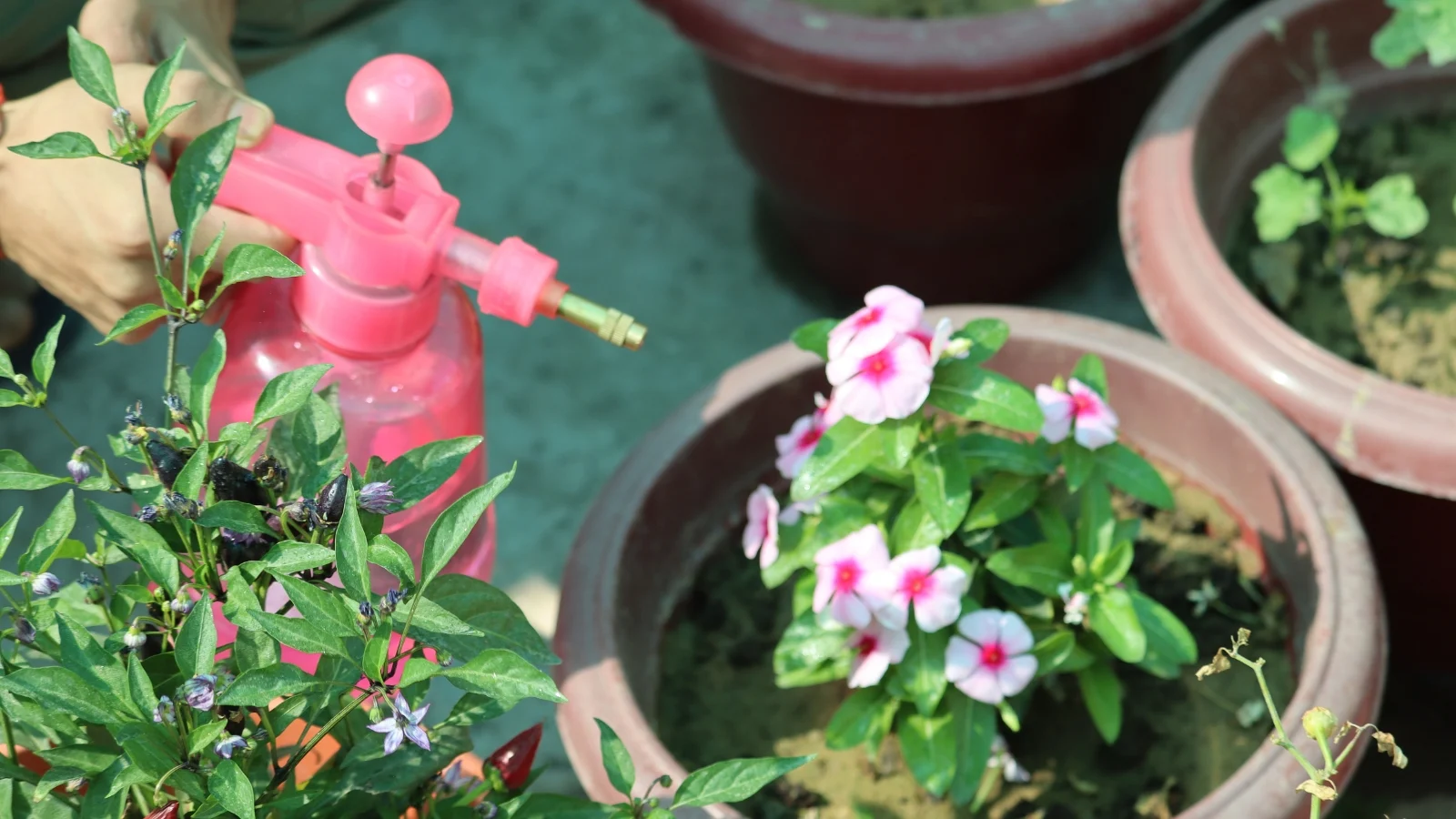 Applying neem oil at the wrong time of day can hurt your plants.
Spraying in full sun during the peak heat of the day is one of the fastest ways to damage your plants, and it’s a mistake many gardeners make, or don’t even consider.
Neem oil heats up when exposed to direct sunlight, just like any oil would. When that heated oil is sitting on leaf surfaces, it essentially cooks the foliage underneath. The damage shows up as burns that look like streaks, splotches, or brown patches, often concentrated where the oil pooled in leaf creases or along edges.
This usually only happens when sunlight is intense in the middle of the day, but considering the fix is simple, it’s one of the easiest neem oil mistakes to avoid.
Apply neem in the early morning or evening once the sun is low. This gives the oil time to dry and begin absorbing before the sun and heat arrive. For indoor plants near bright windows, move them out of direct light for a day after application.
Applying Before Rain
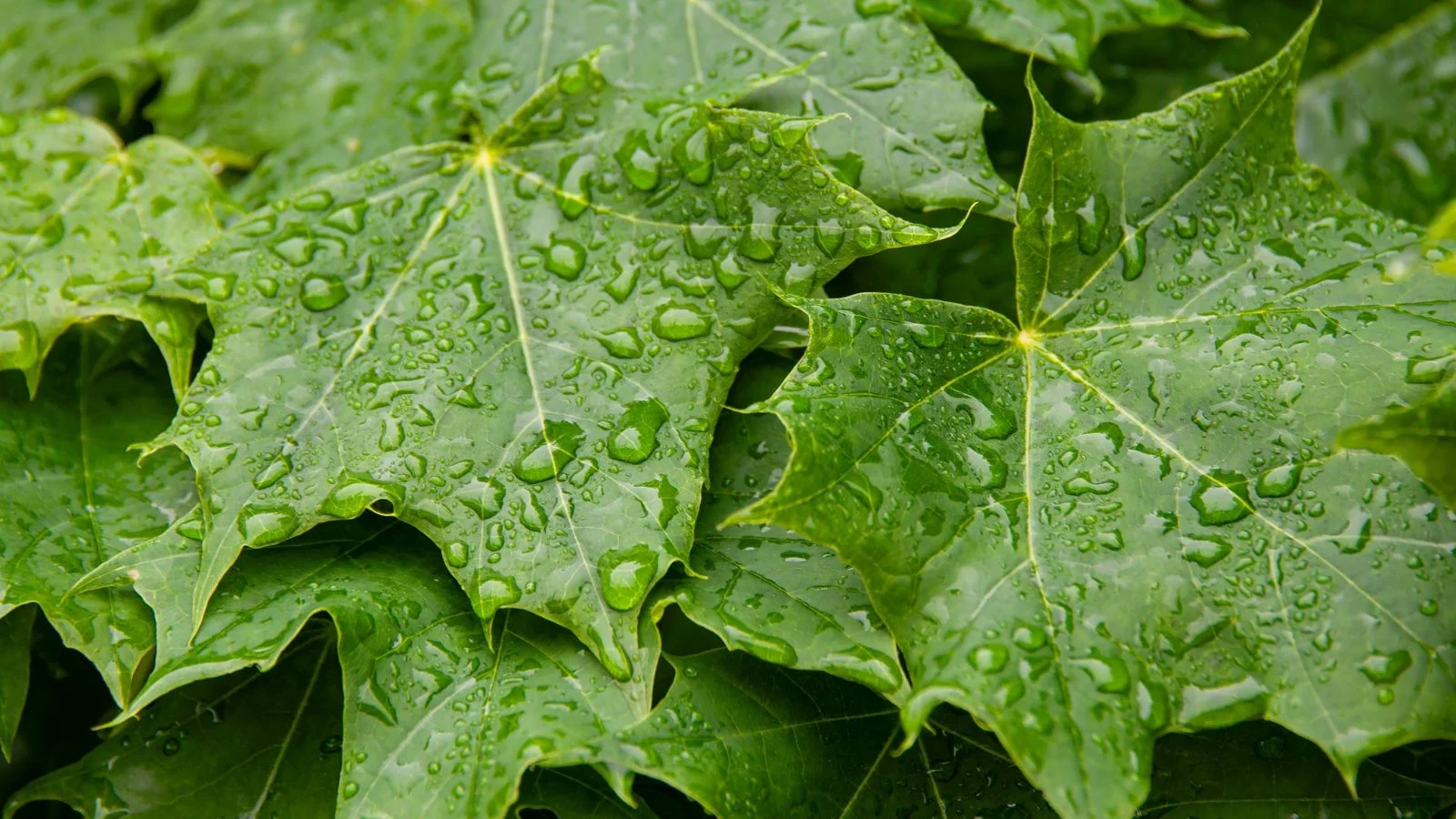 Neem oil washes away if sprayed right before rain.
Neem oil needs time on the plant to be effective. If rain washes it off before it’s had a chance to dry and absorb, you’ve wasted your time and product.
Freshly applied oil is especially vulnerable to being washed away. If it rains within a few hours of application, most of the oil will run off the leaves before the azadirachtin can do anything useful. Even after drying, heavy or prolonged rain degrades neem oil faster than normal, shortening the window of effectiveness.
Check the forecast before you spray. You want at least 24 hours of dry weather after application, ideally longer. If unexpected rain does arrive shortly after you’ve applied, you’ll need to reapply once the foliage has dried out completely. Spraying onto wet leaves after rain is also ineffective, since the water on the surface prevents the oil from making proper contact with the plant.
This applies to outdoor gardens specifically, but it’s worth mentioning for anyone who waters overhead as well. If you spray neem and then water your plants from above the next morning, you’re creating the same problem. Water from the bottom or wait until the oil has had time to break down naturally before overhead watering.
Not Testing on Sensitive Plants
 Be careful when using neem oil on sensitive plants.
Neem oil is safe for most plants, but not all of them handle it well. Spraying an entire plant without testing first is a gamble that sometimes ends badly, especially with thin-leaved or delicate species.
Plants with soft, tender foliage are the most vulnerable. Herbs like basil, dill, and parsley can burn easily even with properly diluted neem oil, which hurts plants. Ferns, some succulents, and young seedlings with immature leaves are also prone to damage. The oil overwhelms their delicate leaf surfaces in a way that hardier plants can shrug off without issue.
Before applying neem to any plant for the first time, spray a small section of a few leaves and wait 24 to 48 hours. If the treated area shows no signs of discoloration, wilting, or spotting, the plant can tolerate it, and you can go ahead with a full application. If you do see damage, the plant is telling you to find an alternative treatment.
Stressed plants also react poorly to neem oil regardless of species. If a plant is already struggling from drought, recent transplanting, or disease, neem oil can push it further into decline. To avoid these neem oil mistakes, treat the underlying stress first, then address pests once the plant has had a chance to stabilize.














PS · Beautifully done; the instructions are easy to follow. Will try it 🌸
FYI • Nice timing — I’ve been thinking about something like this. Great share 🌸
On a similar note • Loved this about “5 Neem Oil Mistakes That Hurt Your Plant” — such a nice idea. Love this!
On a similar note: Exactly what I needed to see today, thanks. Saving it.