
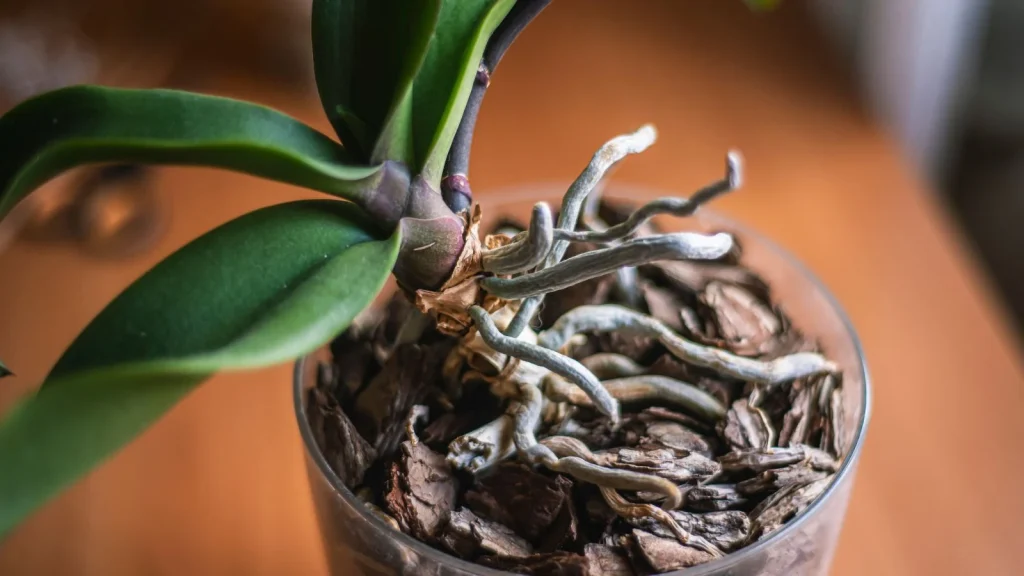
Healthy orchid roots: a concise orientation before we get practical.
Healthy orchid roots: Quick notes
If you’re new to orchids, healthy orchid roots may be a mystery to you. But there are plenty of ways to tell whether your orchid is doing well or whether it’s in decline. Sometimes roots look dead, but they’re actually dormant. Some subtle differences can confuse those who haven’t grown orchids for long.
It’s a good practice to check orchid roots, even during dormancy. This involves some knowledge about the timing of the dormant period and understanding general orchid care. Once you lock this info in, it’s a breeze!
There are different types of orchids, with varying root systems. It’s easier to inspect aerial orchid roots that would attach to rocks or trees in the wild, because you can see them. Thankfully, the species with aerial systems are most commonly grown indoors. But there are terrestrial orchids that form roots underground. In those cases, we’ll look at the parts above the soil line.
Epiphytic Orchid Root Systems
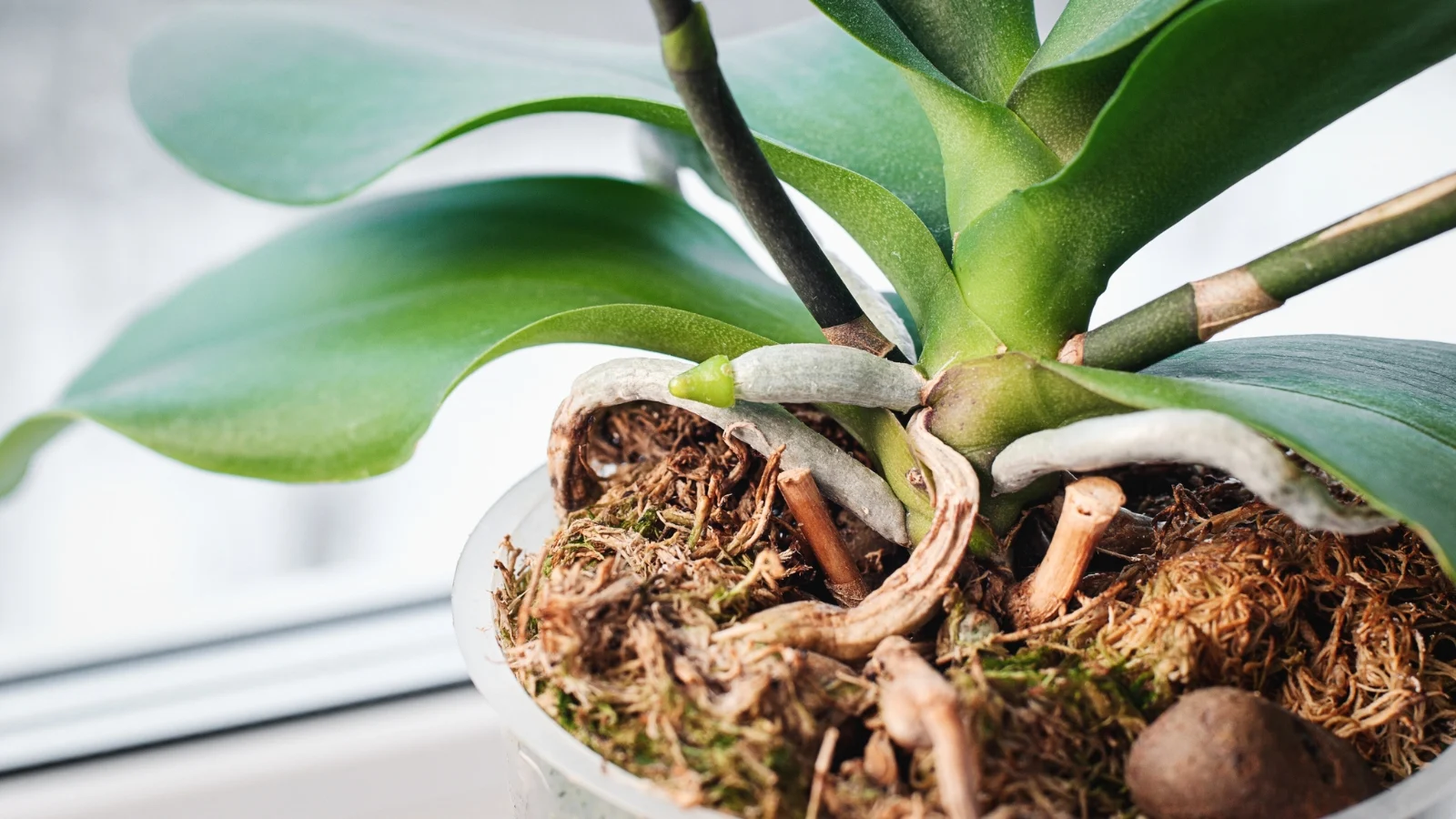 Most orchids are epiphytes that have aerial roots.
There are two parts to aerial orchid roots. These are the root tip and the velamen. The root tip is the nexus of active growth that tells you how an orchid is doing. The velamen is the result of a healthy root tip that has elongated and essentially died, but still has a function.
This function is essential to orchid health. The velamen absorbs water, stores it for dry periods, and hosts beneficial fungi that form relationships with healthy orchid roots. The velamen structure is spongy. Each orchid species has its own velamen formation, which is much like a human fingerprint.
Inside the velamen is a stringy root tip. If you break away the outer portion of an orchid root, you’ll reveal the inner root that is actively growing.
Aerial Roots
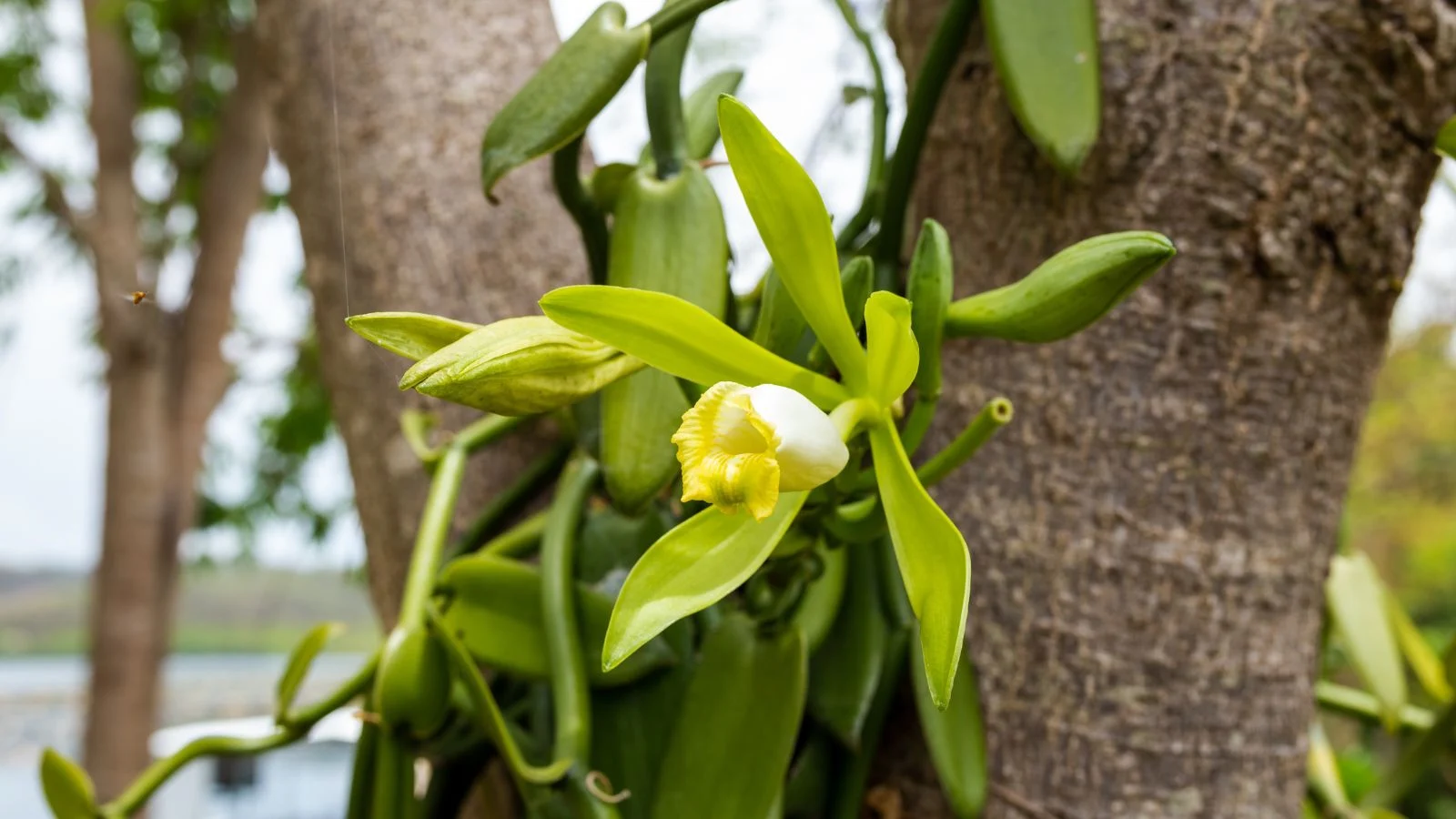 They use these roots to anchor themselves to trees.
Phalaenopsis species and other commonly sold orchids have what are called aerial roots, also known as air roots. In their natural habitats, orchids use these roots to anchor to rocks or trees and absorb nutrients and water from the air. Where they live, many of these orchid species don’t enter true dormancy like they would indoors. Here’s how to tell you’re looking at healthy orchid roots of the aerial type.
Wet Roots
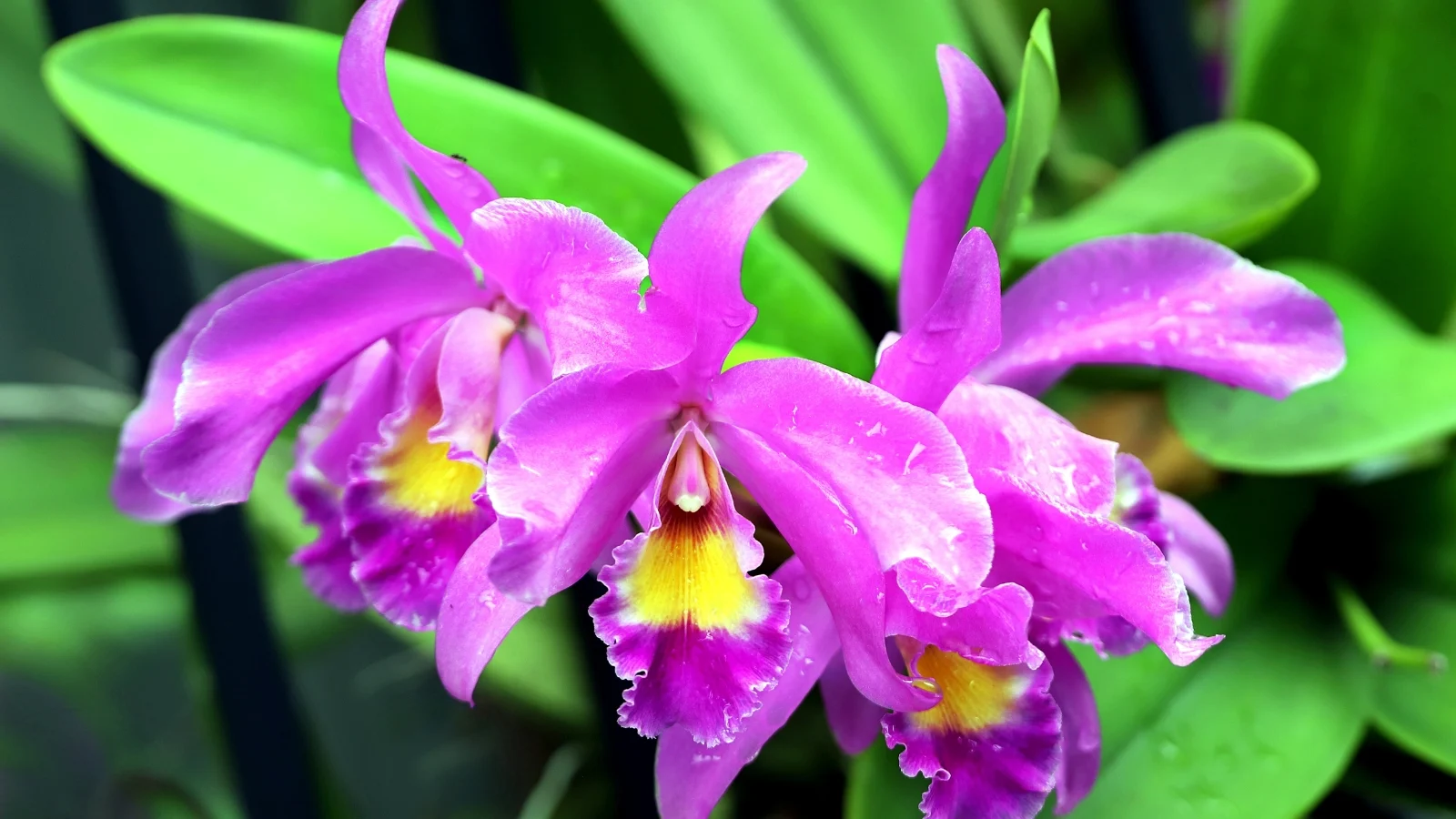 Roots that are healthy tend to branch out.
When your moth orchid or your cattleyas are actively growing, you’re consistently watering them. During these periods of active growth, aerial roots are often wet and have a bright green color.
Look for roots that have grown outside your orchid pot, and within the substrate in spring, summer, and early fall. This is when orchid roots take in the most moisture and nutrients, and tend to be moist.
Another great sign that your orchid is doing well is root branching. This indicates the roots have remained healthy and continue to grow.
Dry Roots
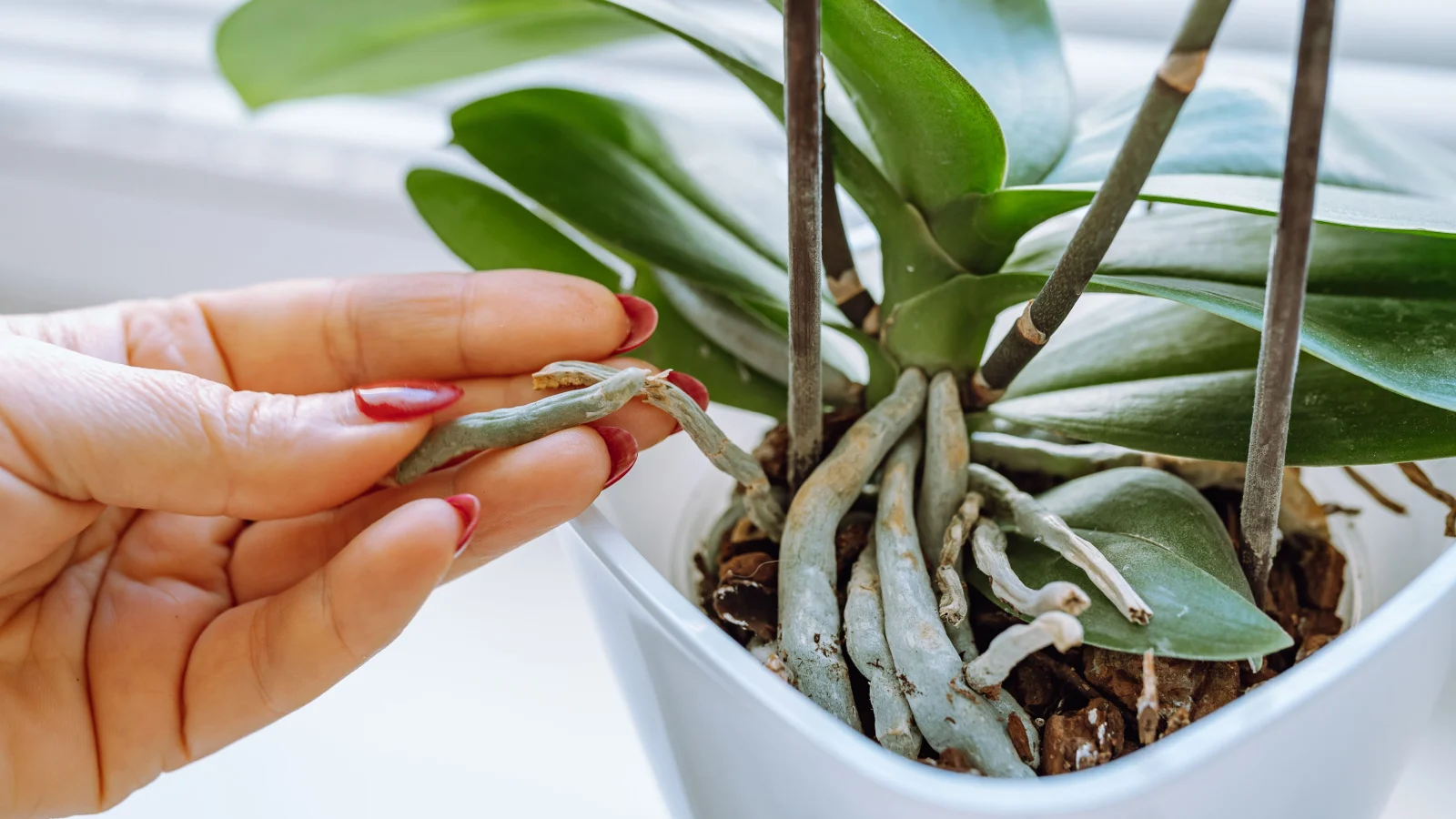 Hollow, silver roots should be removed.
In dormant and semi-dormant periods, orchids with aerial root structures turn silvery or whitish. This is a natural response to decreased daylength that comes with winter. At this time, orchids can’t take in as much water and nutrients, and tend to dry out.
In their native range, which is mostly close to the equator, there is less light change from winter to summer. Roots in their natural habitat tend to remain fresh and moist, though they will dry out in the dry season.
When you’re caring for your orchid, you can squeeze the roots to determine if they’re hollow. If they are, you can remove them. This isn’t completely necessary, but it will redirect growth to more active parts of your plant.
Terrestrial Roots
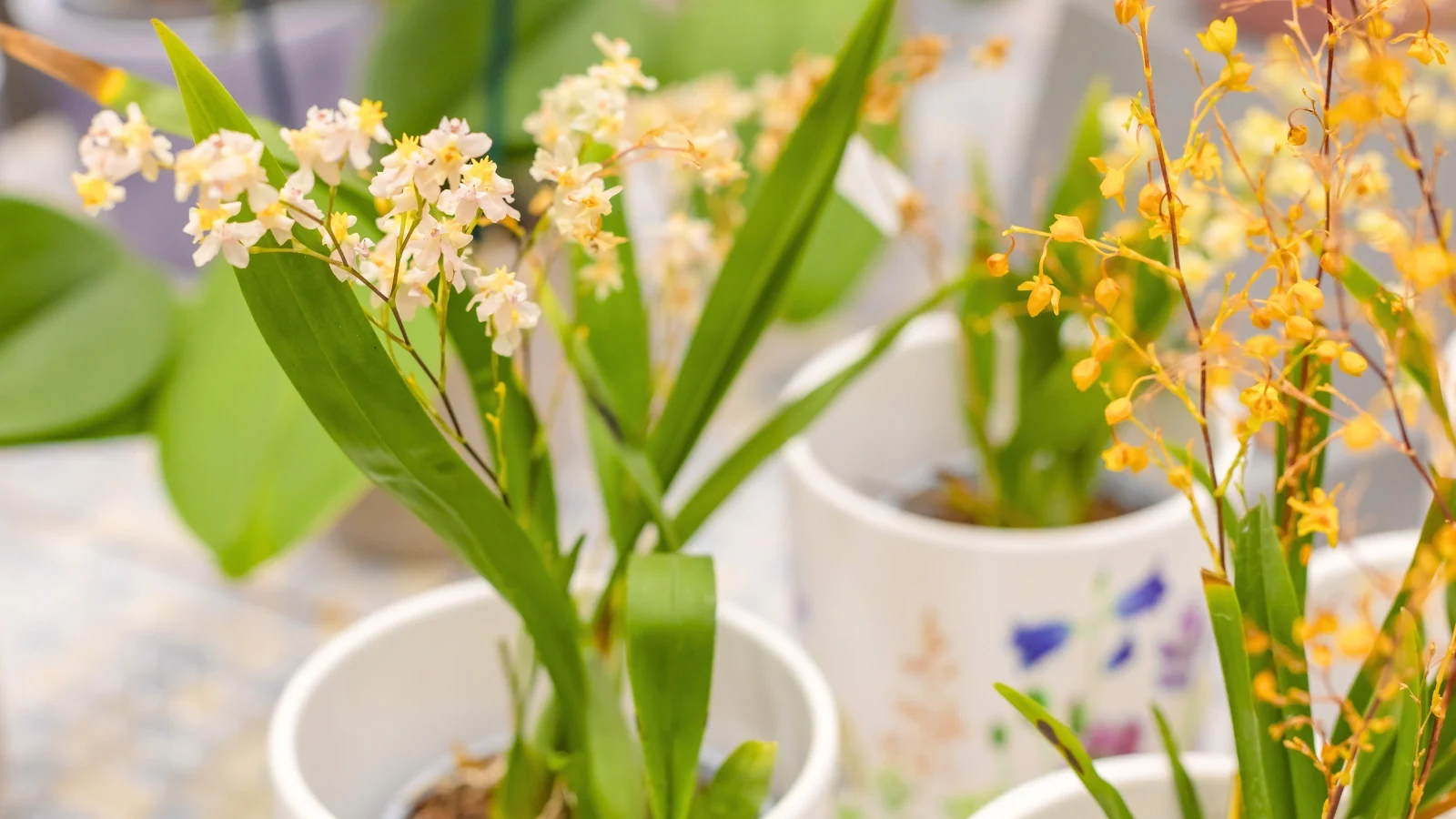 Healthy growth generally means the roots are happy.
Because roots aren’t readily visible for terrestrial orchids, or those that grow in the earth rather than attached to trees or rocks, it’s sometimes hard to see whether or not your orchid is healthy. In this case, simply use the aboveground plant parts to determine whether or not you have healthy orchid roots.
Healthy plants exhibit normal rates of flowering and consistent reproduction in the form of offsets. The rates at which these occur are dependent upon the species, your care regimen, and the medium you’re growing them in. Do some research to determine the best ways to water, feed, and maintain your terrestrial species.
Signs of Unhealthy Roots
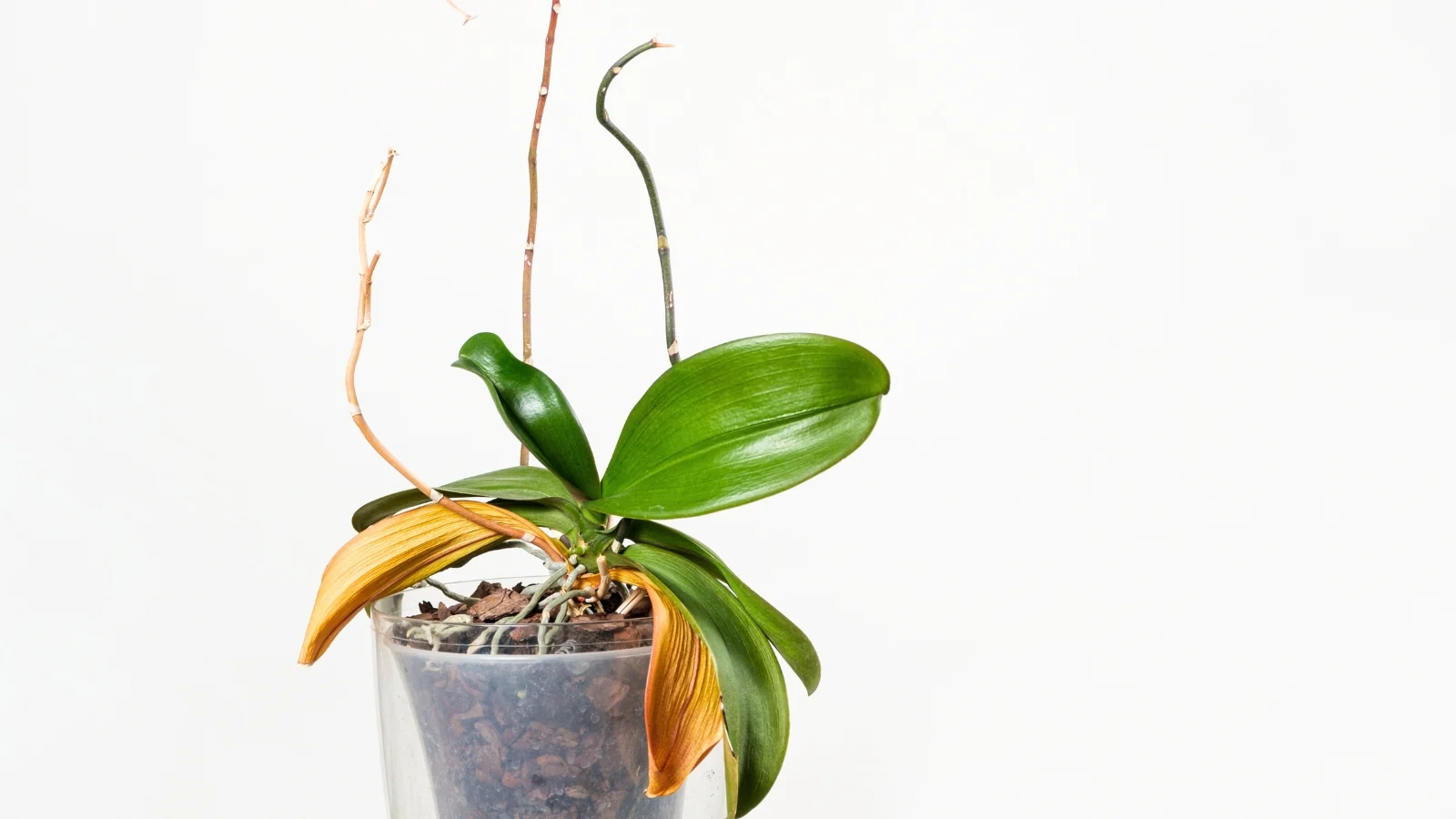 Remove any brown and mushy roots.
If you see any darkened root aerial masses or yellow coloring, snip these off. Similarly, brown and mushy stems and leaves indicate there could be a root issue. After you snip the roots, repot your orchid into an appropriate soil mix. For aerial roots that look discolored, use the squeeze test we mentioned above to see if the roots are actively growing before snipping them off. You want the roots to be spongy.
Edema is an indication of too much water and will present on both epiphytic and terrestrial orchids. It presents as scaly white or brown formations on the upper leaf surfaces. Flowers can also take on the blistering indicative of edema. If you notice this, repot your orchid, flushing it out between removing it from the current medium and transplanting.
If this condition isn’t addressed, orchids can take on root rot. Use the same methods for treating edema to treat root rot, but snip the unhealthy roots off before transplanting. As you repot terrestrial orchids to treat root rot, feel free to separate any offsets that have formed at the base.













What a charming tip — I’m motivated to try it. Saving it.
Heads up · Good call — that’s worth trying. Great share.
🌿 PS · This tip on “A Visual Guide to Healthy Orchid Roots” is so useful — thanks for sharing. Thanks for this!
FYI: This brightened my feed — lovely share. Great share.
Quick thought – I like how you phrased that — very natural. Love this!
Quick thought – I like how you phrased that — very natural. Love this!
Heads up • This is so satisfying to read — thank you.
I agree — that’s a helpful perspective. Thanks for this!
I agree — that’s a helpful perspective. Thanks for this!
Quick thought • This brightened my day — thank you for sharing. Great share.