
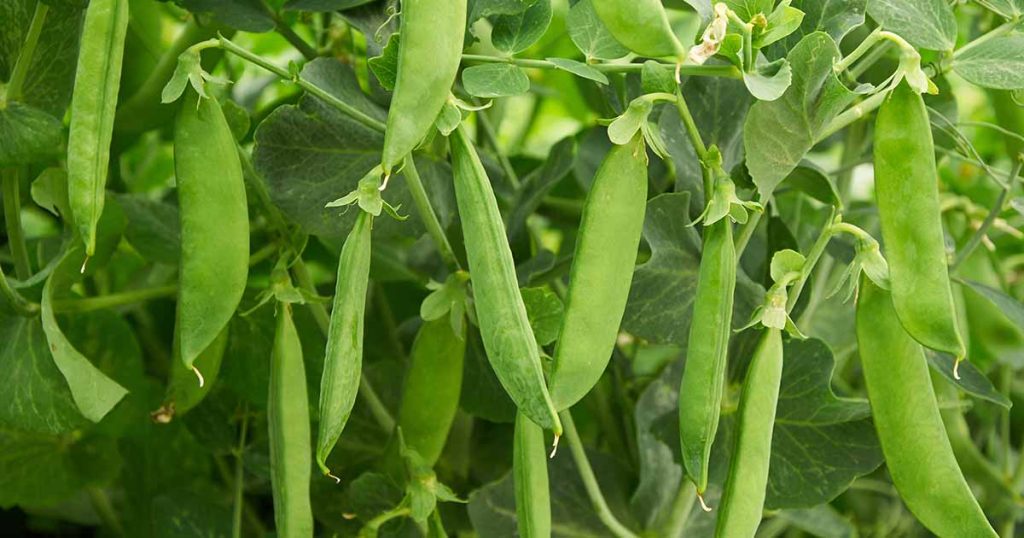
Common pea pests: a concise orientation before we get practical.
Common pea pests: Quick notes
A biopesticide that contains Beauveria bassiana, which is a beneficial fungus, is effective in killing the adults.
The fungus causes white muscardine disease beetles like cowpea curculios without harming beneficial insects like bees and butterflies.
The spray is harmless to plants, and treated produce is safe to eat right away, even on the day of application.
BioCeres WP
Arbico Organics carries a powder that can be mixed with water to create a spray called BioCeres WP. Pick it up in pound bags.
6. Cutworms
Cutworms are larvae of night flying moths in the Noctuidae family, the same ones that flap around your porch lights at night.
They exist on every continent in every area except Antarctica.
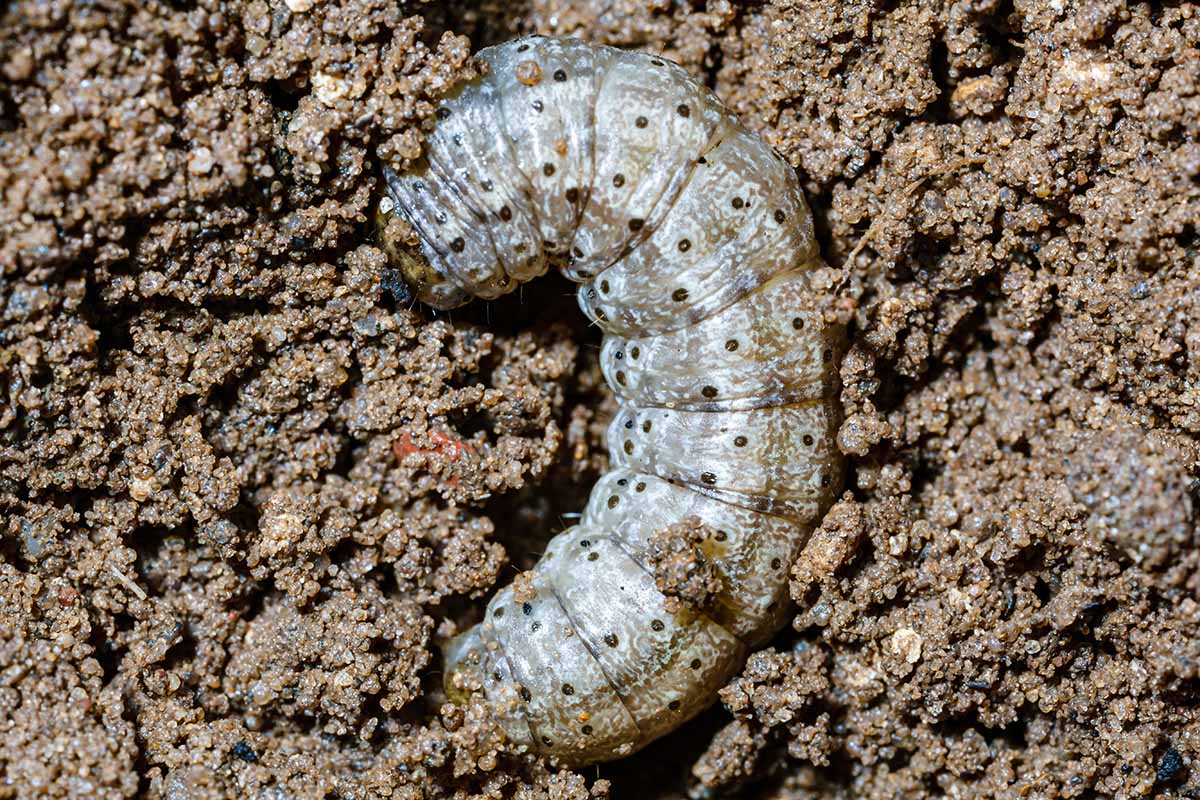
Adult moths lay eggs on plants, which hatch into grubs that can reach up to two inches long.
Since cutworms vary dramatically in appearance, the easiest way to identify one is to poke it gently – if it curls into a C shape, you’ve found your culprit.
These grubs emerge from the soil at night to chew through the herbaceous stems of young plants at ground level.
A healthy pea seedling in the evening can be toppled and dying by morning.
Learn more about cutworms here.
7. Herbivores
Deer, rabbits, voles, mice, and gophers all love the tender leaves, tendrils, flowers, and stems. I’ve watched deer devour an entire pea plant down to the ground.
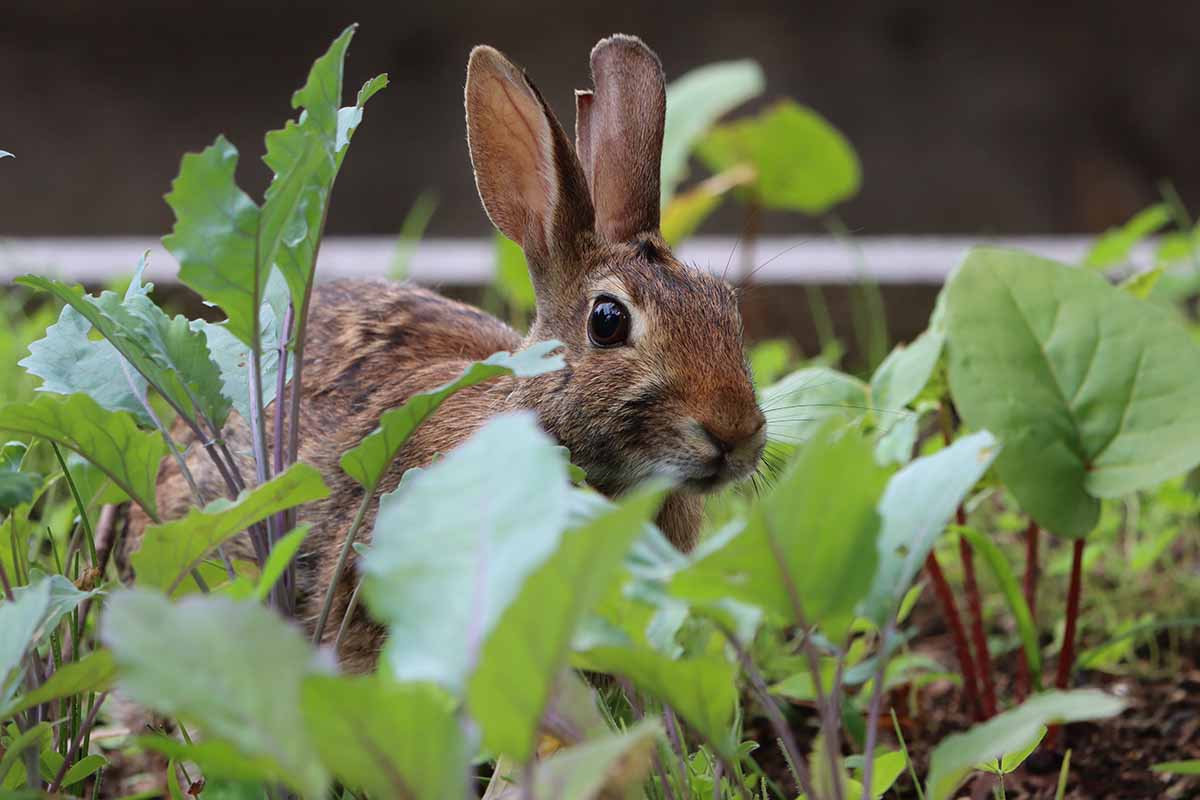
Growing in containers is the best defense against underground pests like gophers, while fencing or row covers works better for deer and rabbits.
We have an entire guide on effective methods for protecting your garden from deer and a separate one for dealing with rabbits.
8. Japanese Beetles
Japanese beetles (Popillia japonica) are serious pests, even if their jewel-like iridescent green, brown, and bronze bodies make them surprisingly attractive.
Don’t let the pretty exterior fool you – these beetles can devastate a garden.
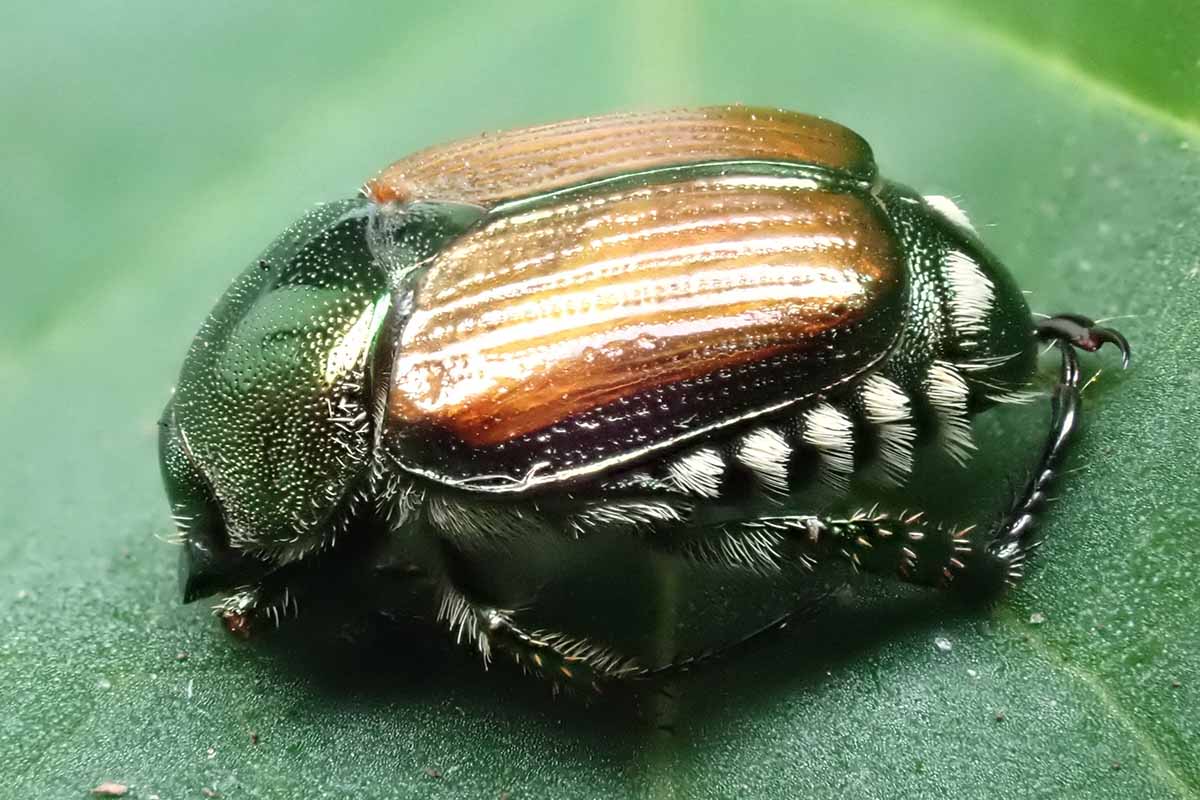
In large numbers, they’ll skeletonize entire plants, and they won’t stop at peas.
They’ll move on to roses, apples, cherries, hollyhocks, marigolds, basil, and soybeans. The grubs also feed on turfgrass roots.
It’s alarmingly easy to end up with huge populations because when one beetle finds food, it releases a pheromone that alerts every other beetle in the area.
They can quickly turn a healthy plant into a sickly, stunted, or dead one.
Learn about how to deal with Japanese beetles here.
9. Leaf Miners
Leafminers are small flies that lay eggs on pea plants.
When the eggs hatch and the larvae emerge, they tunnel through the leaves as they feed, leaving maze-like trails of dead tissue behind.
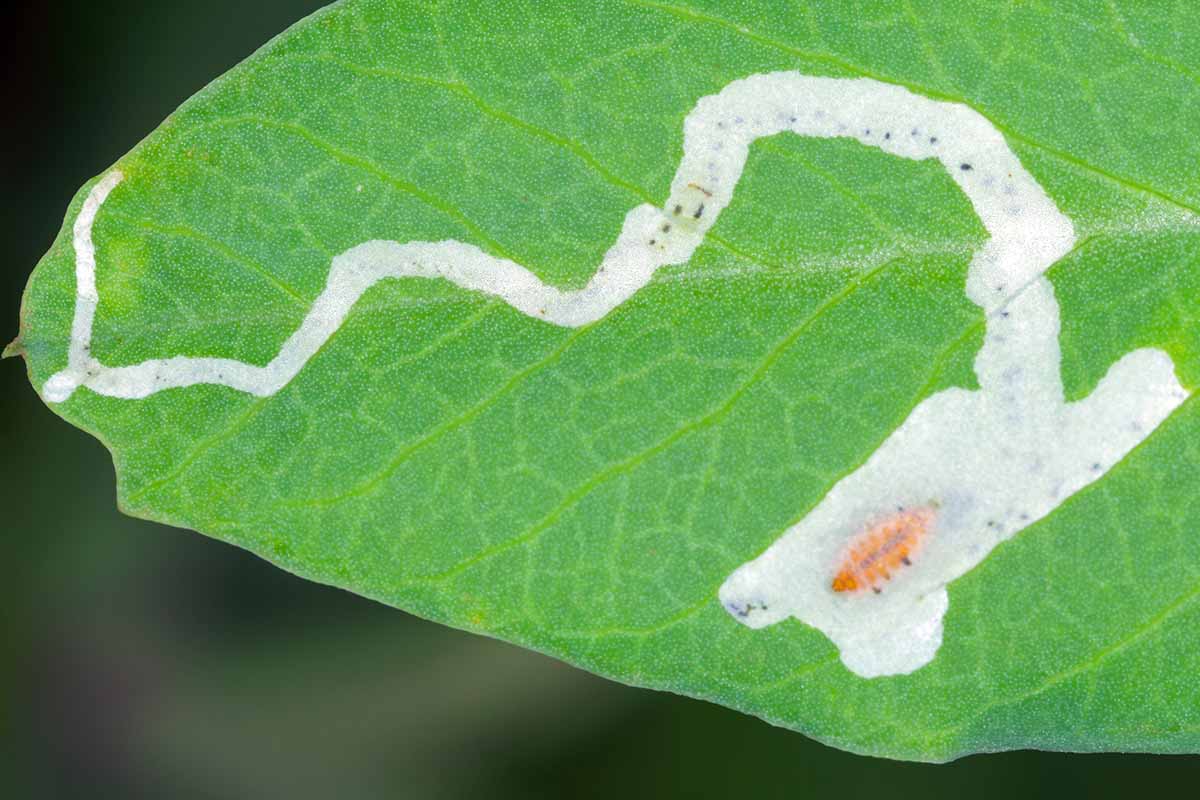
Pea leafminers (Liriomyza huidobrensis) originated in South America but have spread throughout the warmer parts of North America.
But there are other species that feed on peas and they appear in every part of North America except northern Canada.
It’s not just that the tunnels are unsightly. The feeding can lead to reduced yields.
Learn how to deal with leaf miners here.
10. Pea Moths
Pea moths (Cydia nigricana syn. Laspeyresia nigricana) aren’t widespread, but they’re particularly problematic because you won’t know they’re present until it’s too late.
The first sign is usually when you shell your peas or bite into a snap pea and discover half-inch white caterpillars wriggling inside, or evidence of their feeding – holes in the seeds and frass.
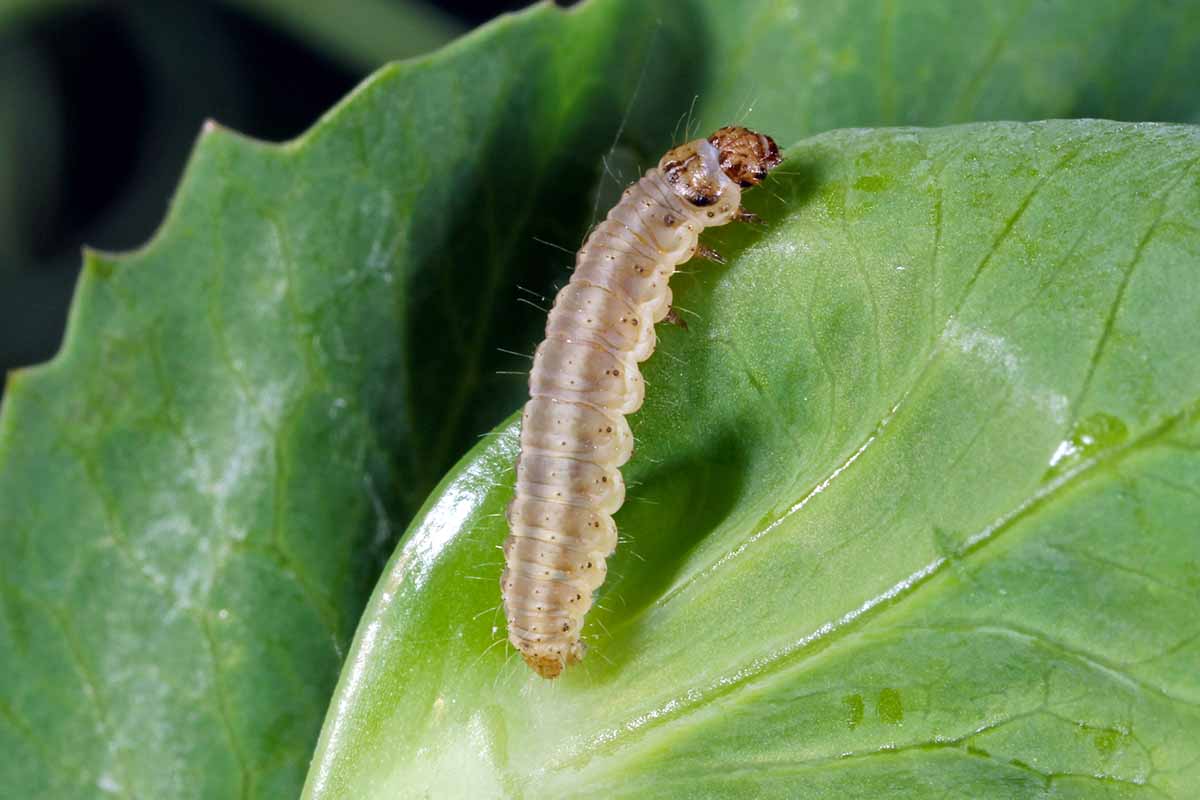
Left undisturbed, these caterpillars drop to the ground to overwinter. In spring, they pupate and emerge as half-inch grayish-brown moths.
The adults mate and lay eggs on pea plants, and when those eggs hatch, the larvae tunnel into developing pods to continue the cycle.
To control pea moths, start by removing any weeds in the legume family from around your garden. When the garden bed is fallow, till the top inch of soil to expose overwintering larvae.
You can’t effectively spray insecticides because the larvae are protected inside the pods, but you can apply kaolin clay to plants in spring as a deterrent to adult moths.
Surround WP Kaolin Clay
Snag 25 pounds at Arbico Organics and follow the manufacturer’s directions for spraying plants.
11. Pea Weevils
Pea weevils (Bruchus pisorum) are misnamed – they’re actually leaf beetles, not true weevils, though they certainly do feed on peas.
These beetles arrived in North America from Europe in the 1600s and now occur throughout the continent except northern Canada. They’re incredibly damaging and difficult to control.
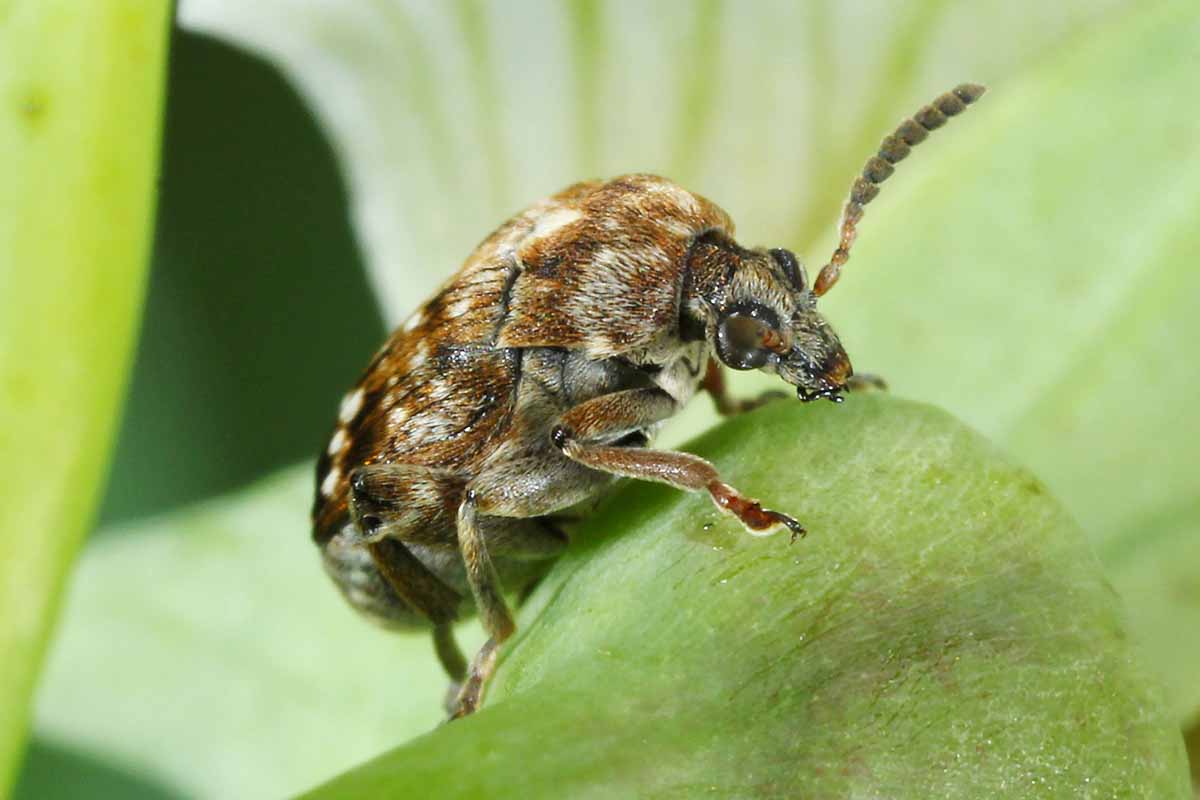
The adults are oval-shaped beetles up to seven millimeters long with mottled cream, brown, and black shells.
Females lay bright yellow, cigar-shaped eggs on developing pea pods.
When the eggs hatch, cream-colored, C-shaped larvae burrow into the pods and tunnel directly into individual seeds, where they feed and develop.
Unlike true weevils, the larvae lack a distinctive snout, though they do have brown heads and grow to about five millimeters long.
We reference Common pea pests briefly to keep the thread coherent.
Common pea pests comes up here to connect ideas for clarity.












PS – This brightened my day — thank you for sharing. Will try it.
FYI · Yes, that makes a lot of sense. So homey.
FYI · Yes, that makes a lot of sense. So homey.
FYI · Yes, that makes a lot of sense. So homey.
FYI · Yes, that makes a lot of sense. So homey.
FYI · Yes, that makes a lot of sense. So homey.
Loved this about “How to Identify and Control 15 Common Pe” — such a great idea. Will try it.
Quick thought: I appreciate the point about “How to Identify and Control 15 Common Pe” — very practical. Great share.
On a similar note • I appreciate the detail — very handy indeed.