
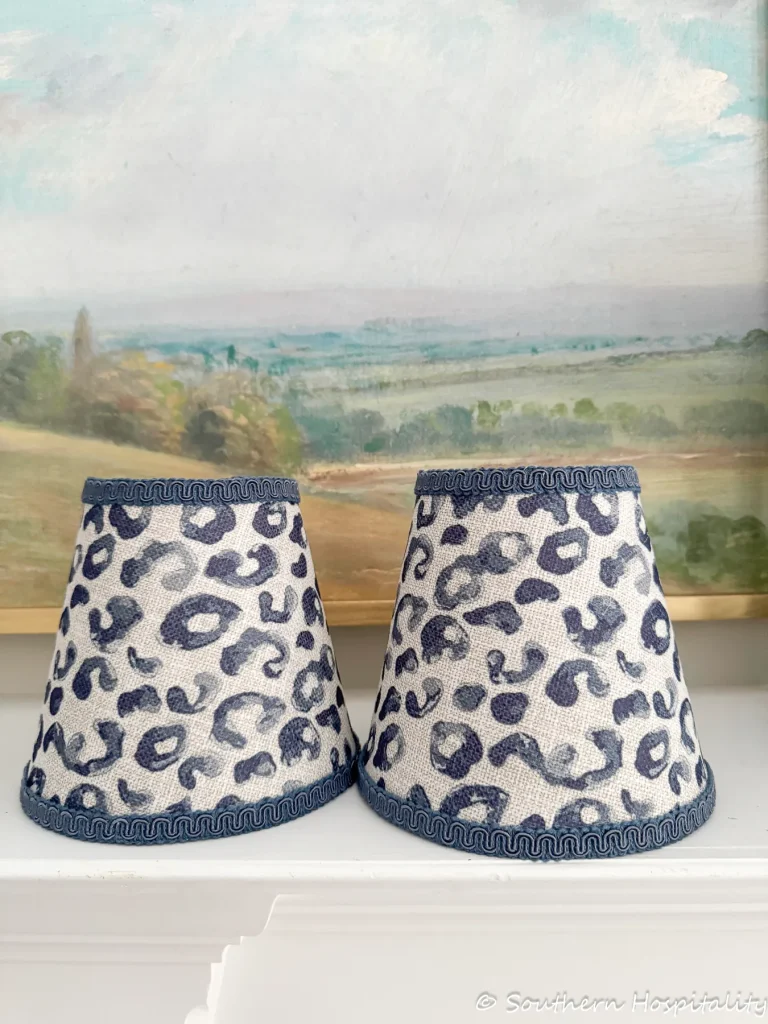
How cover lampshades: a concise orientation before we get practical.
How cover lampshades: Quick notes
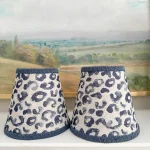
Covering lampshades with fabric has been around for a long time and this project really adds such a personal touch to lampshades and you can make them look exactly the way you want them. Designer shades are so expensive and doing it yourself is so easy and not that expensive to do. It’s been years since I shared how I cover lampshades and looking back, I was living in Birmingham when I did it the last time. Here’s a post on some of the shades I covered back then in 2007! Fabric and trims are really coming back around and I had these sconces that I added beside our fireplace a couple of years ago. The shades are stark white and I always wanted to do something with them, so covering them with the same fabric that I had my ottoman covered in was the trick. I had plenty of left over fabric and the blue leopard was perfect for the shades. Trims and tassels are also making a comeback, but I probably won’t jump into that as much as I did in previous years. Trims do make things really pretty though and it finished off these shades wonderfully. I’ll show you how easy it it to cover lampshades.
I love these sconces that I got from Amazon. They are rechargeable and have a cool or warm light setting (I like the warm the best!) and they are easy to install. No wiring at all! Just hang them where you want them and use the remote to turn them on and off. They add nice ambient lighting to your space. I’ve added so many nice things to my Amazon shop, so take a look at it all!
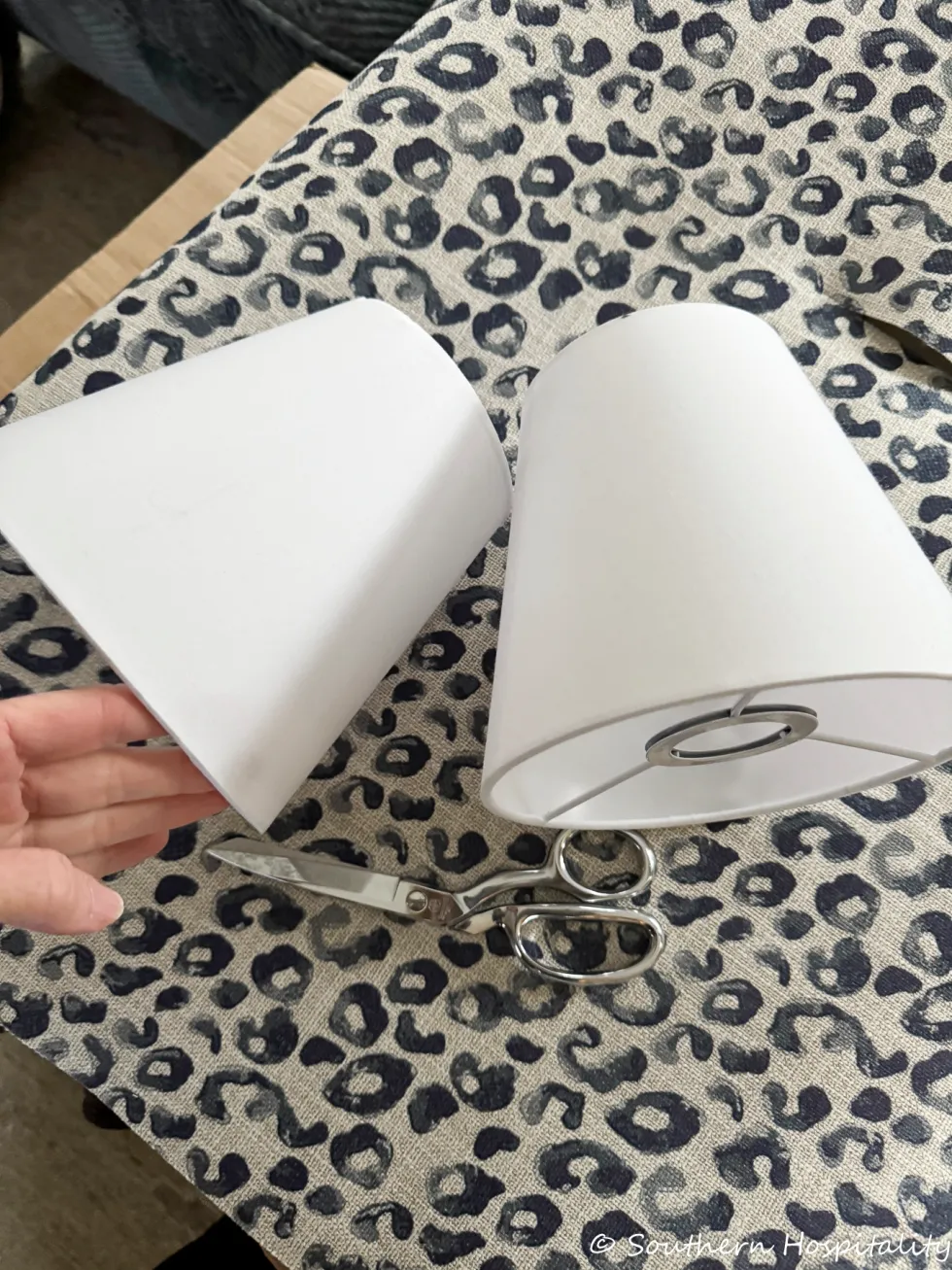
I took down both shades and got out my extra fabric. It doesn’t take much fabric to cover shades like this. My shades are 7″ tall, so they aren’t the really small sconce shades. You’ll need scissors, spray adhesive, and a glue gun for this project. I’ll also mention that if you decide to paint the inside of your shade, then you’ll want to do that before you cover. I thought about doing the inside of mine gold, but it was too much trouble after I covered them, so I just left them white inside. Plus, sometimes when you try to paint inside a lampshade, the splotchiness of the paint will show through and I didn’t want that either.
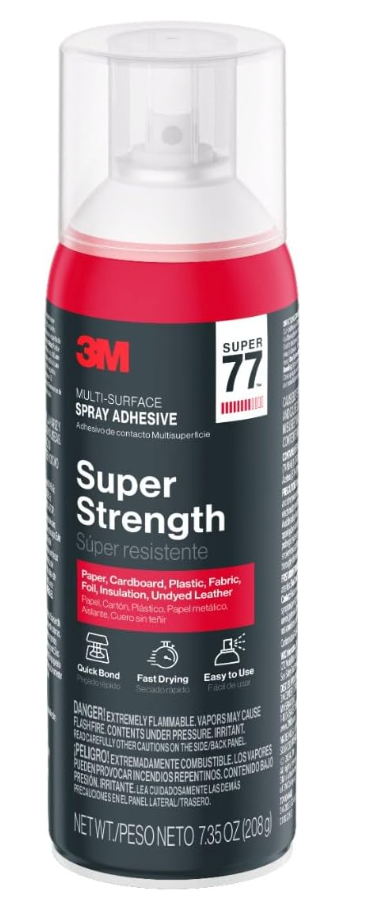
Here’s a good fabric spray adhesive. I used one similar that I already had. You may want to use the spray outside where it’s ventilated. It was freezing when I did mine, so I made do in the family room on a piece of cardboard.
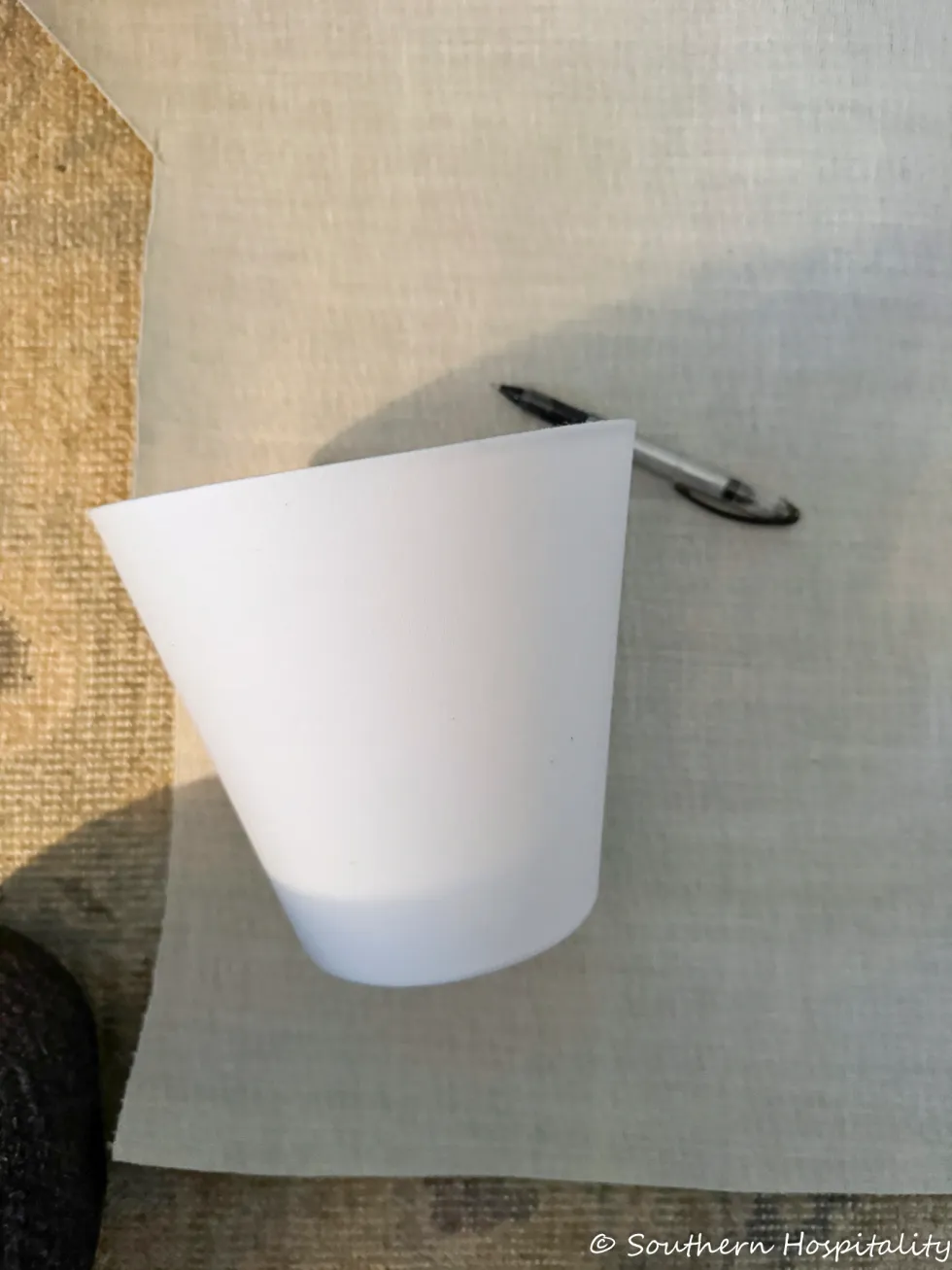
My fabric is upholstery weight and thicker than regular fabric, so I found the corner and laid down the shade.
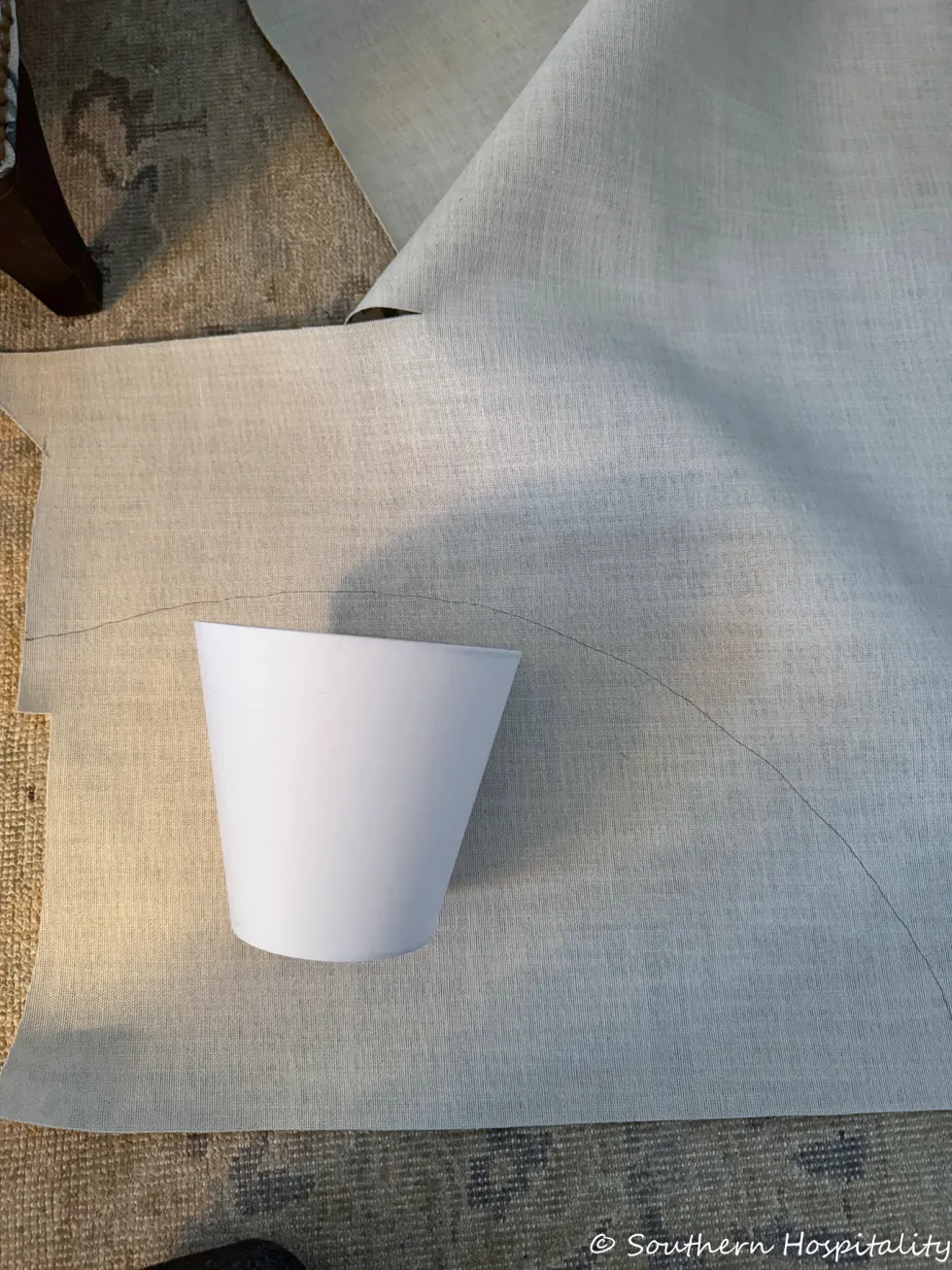
You want to leave plenty at the top so you can trim it off later. I simply used a sharpie and rolled the shade all along the fabric creating an arc that will cover the shade completely. I rolled the shade with one hand and followed the curve with my sharpie.
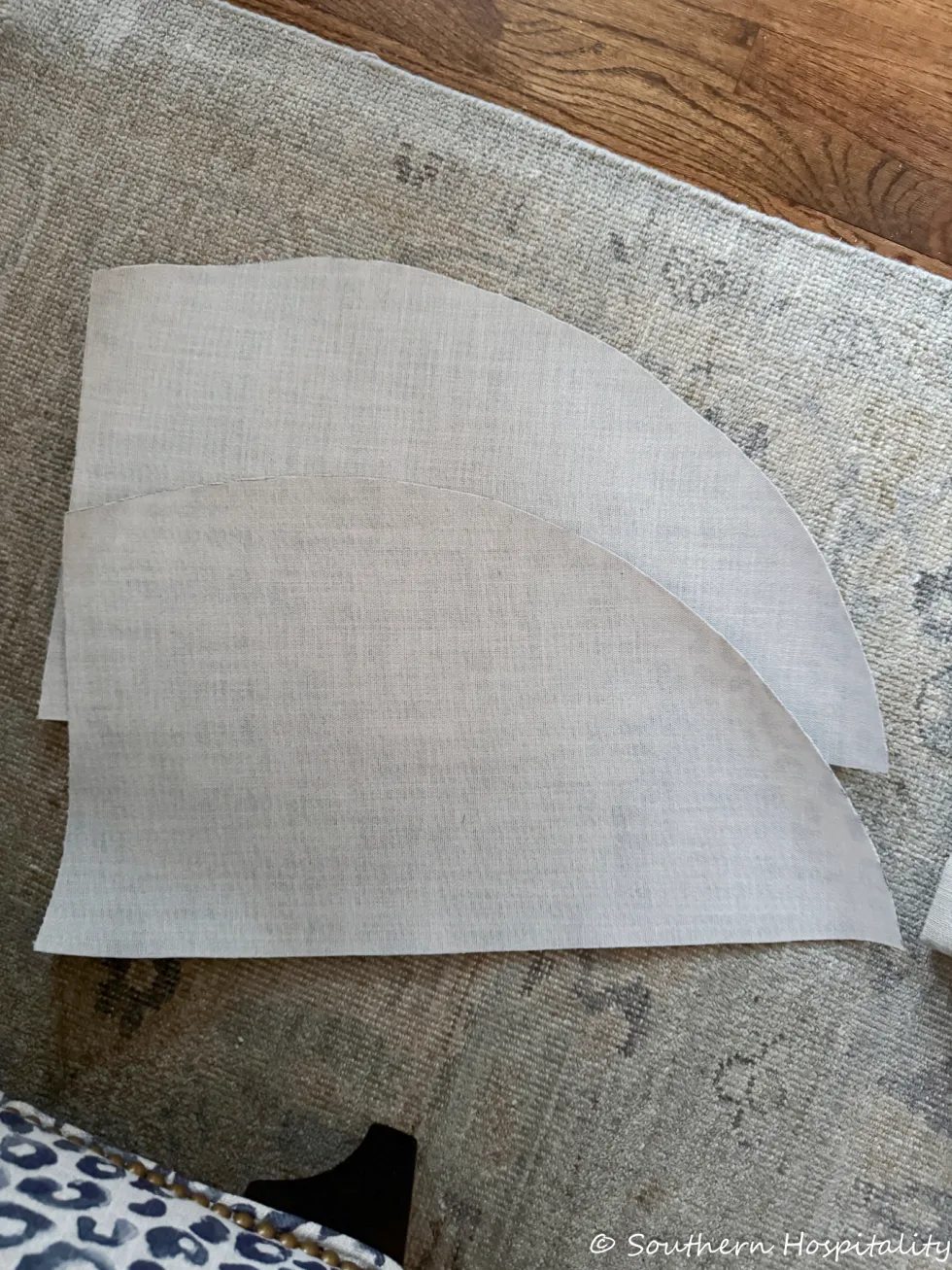
If you’re covering two shades, make a duplicate piece of fabric.
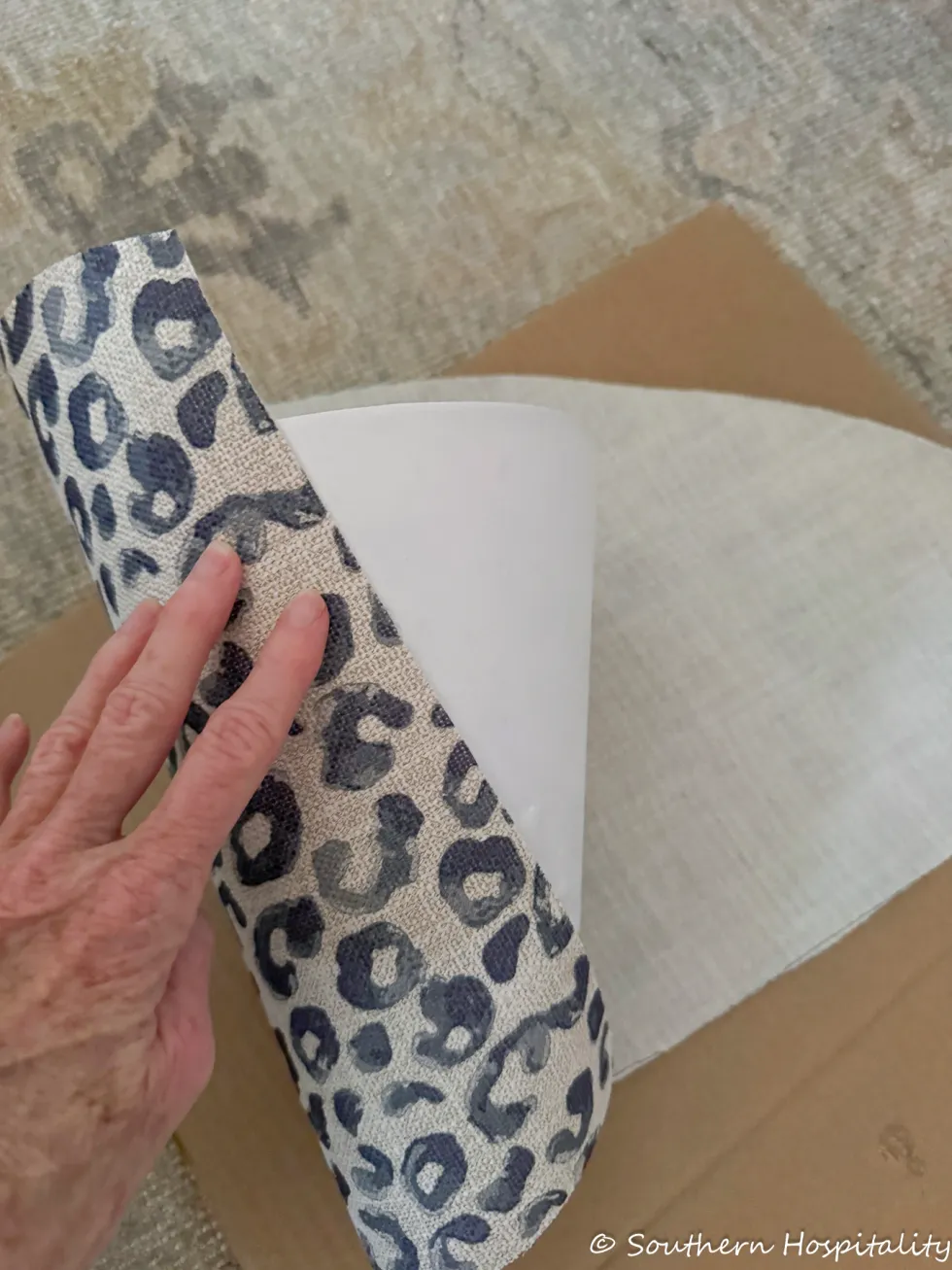
Set the shade in the middle and start rolling. It will meet on the back and you can decide before you cut it all out if you want a straight seam or a curved seam. I was fine with the curve, so I just let it fall where it would and overlapped it.
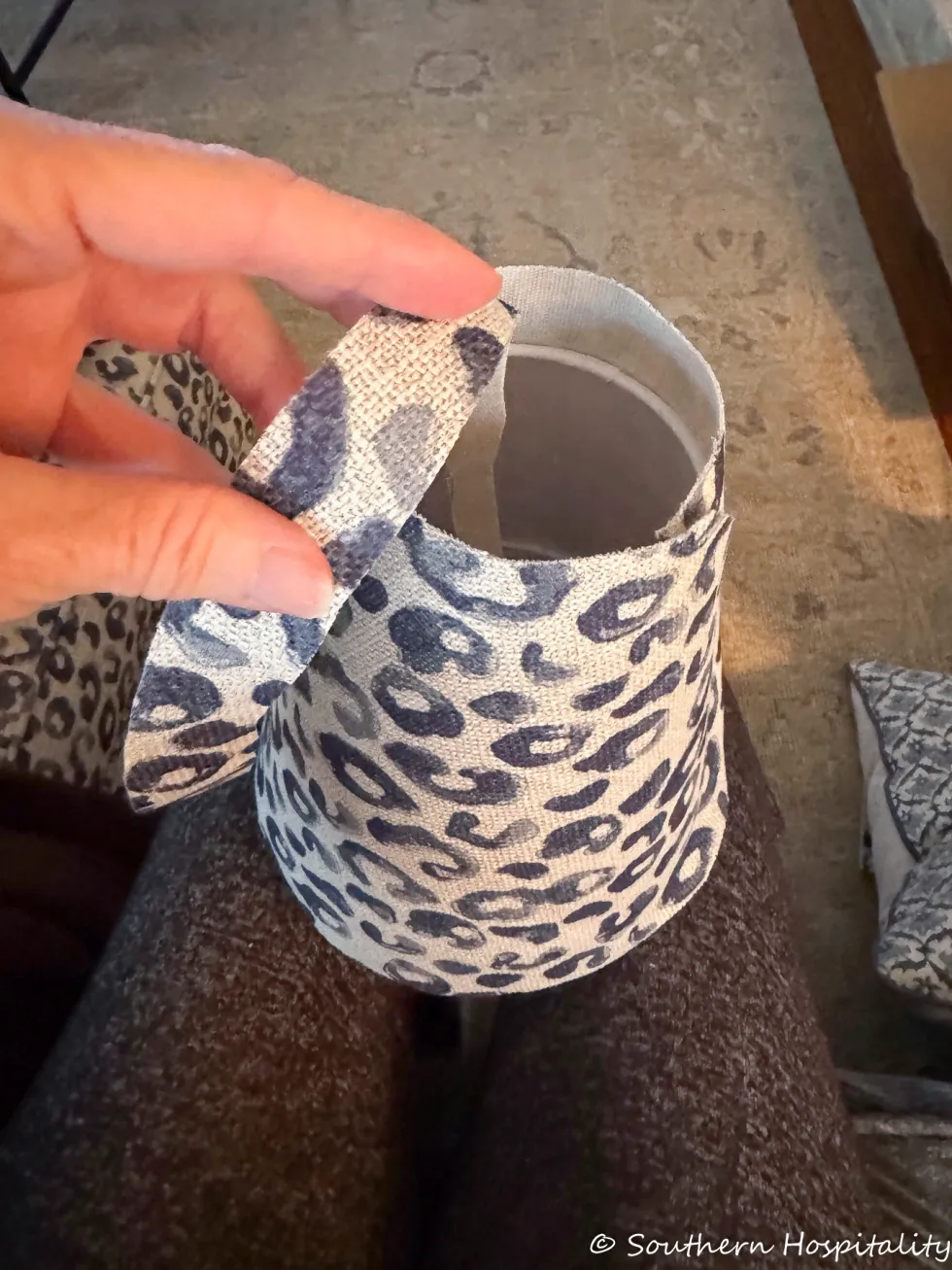
Spray the outside of the lampshade and lay it down on the fabric and start rolling it to the other side. The adhesive will stick the fabric to the shade and then you can start to smooth it all out and get it ready to finish.
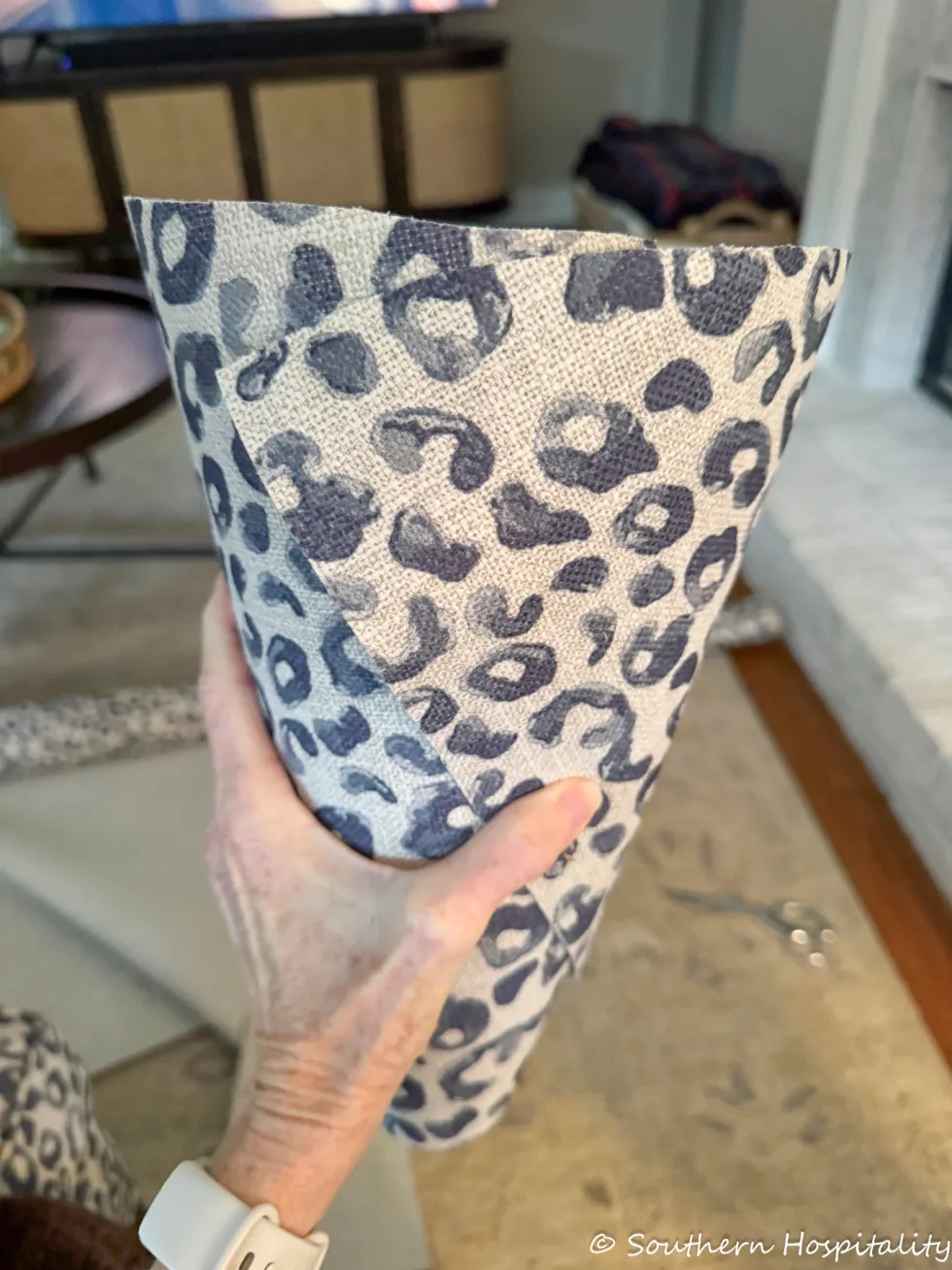
Here’s how it looks when covered and before I trimmed off the top and bottom of the fabric. You’ll want to leave about an inch of fabric top and bottom to turn under inside the lampshade. You’ll see the curve here where I just let the fabric curve and I used hot glue to hold this part down.
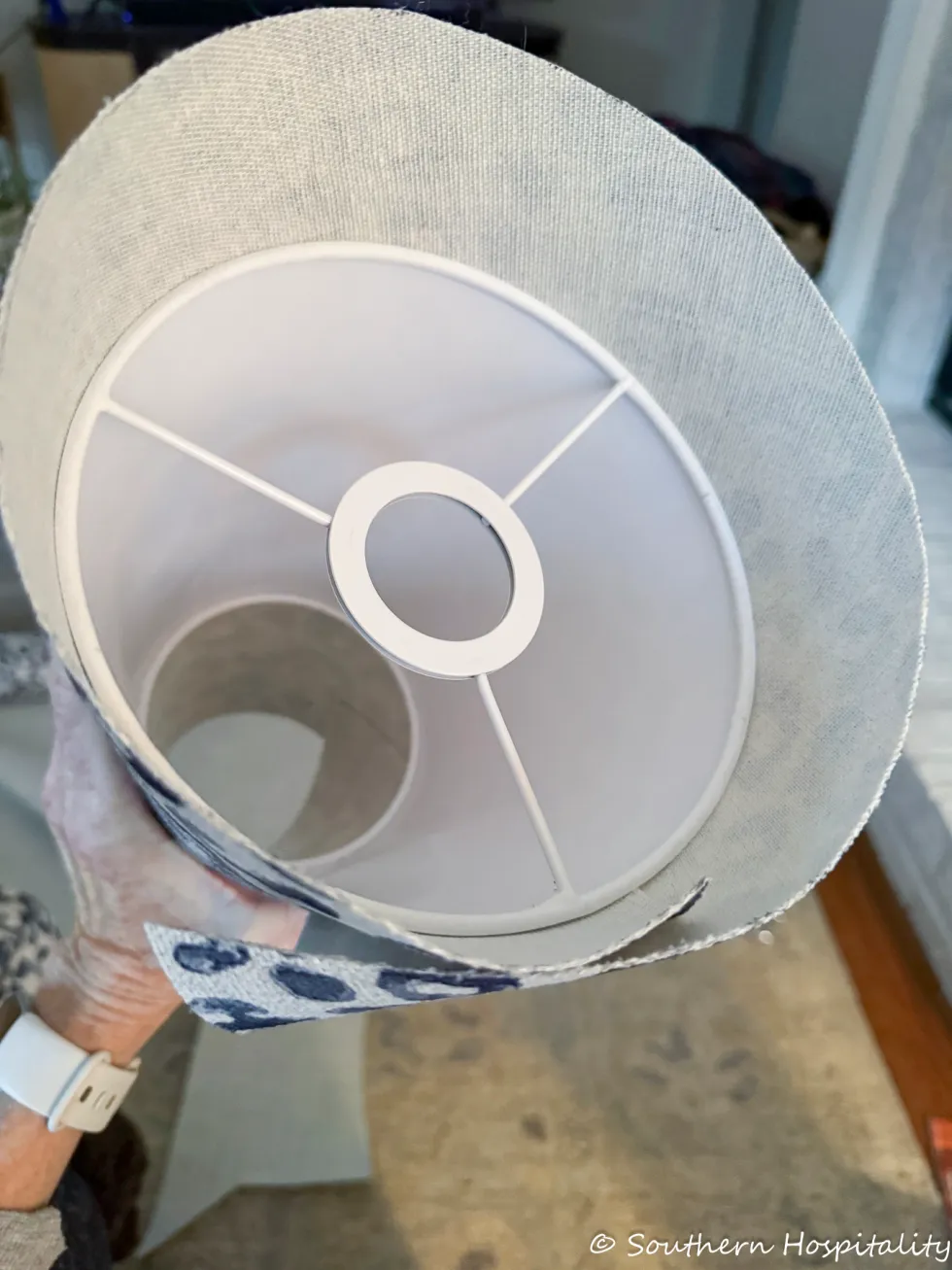
Trimming the bottom of the shade fabric. Make sure you try to trim it pretty evenly so it will be night an straight inside.
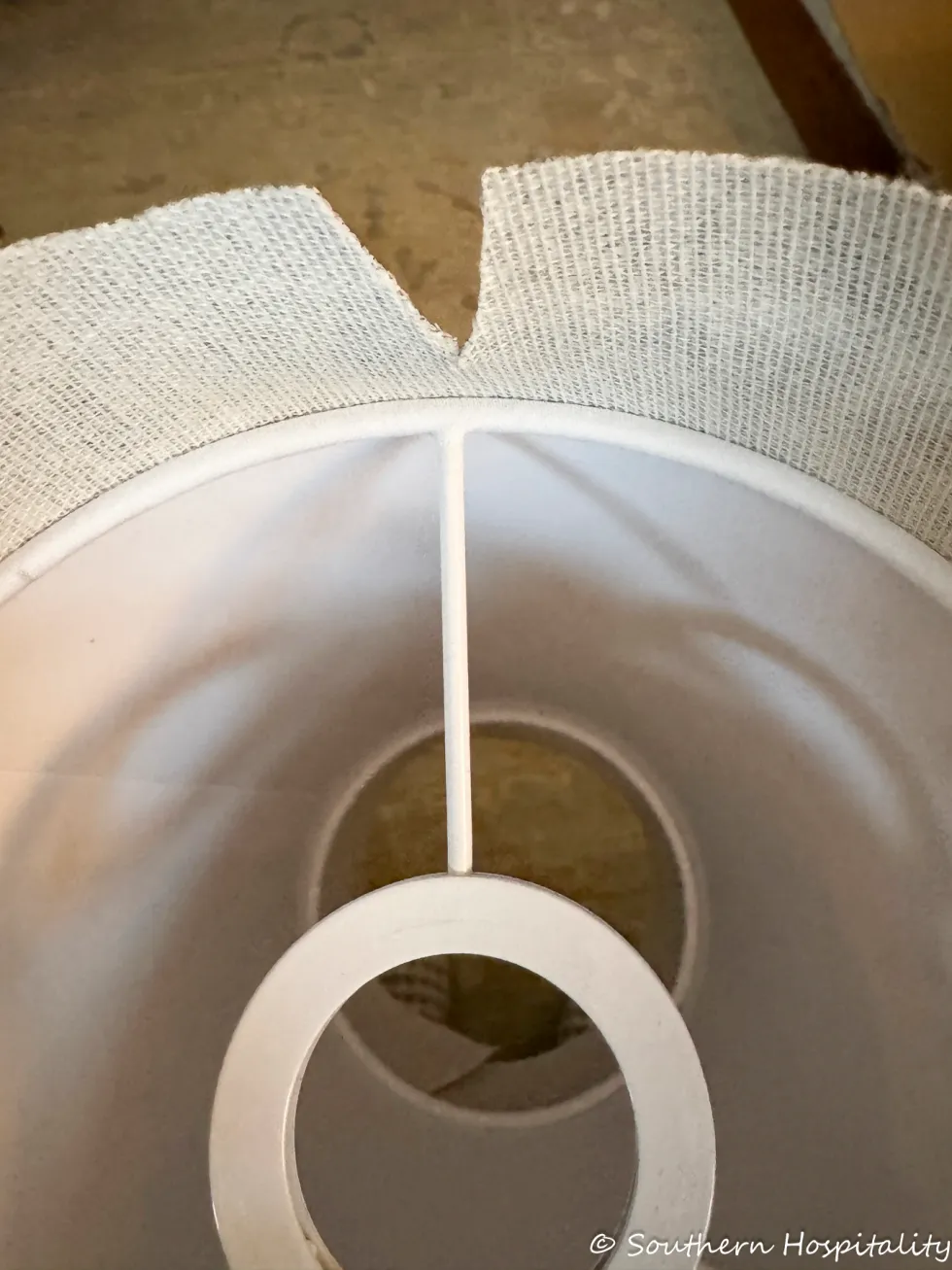
Once it’s all cut and even, you’re ready to start turning the fabric under and adhering it to the inside of the shade with a glue gun. I also cut little V’s inside where the 3 wires were.
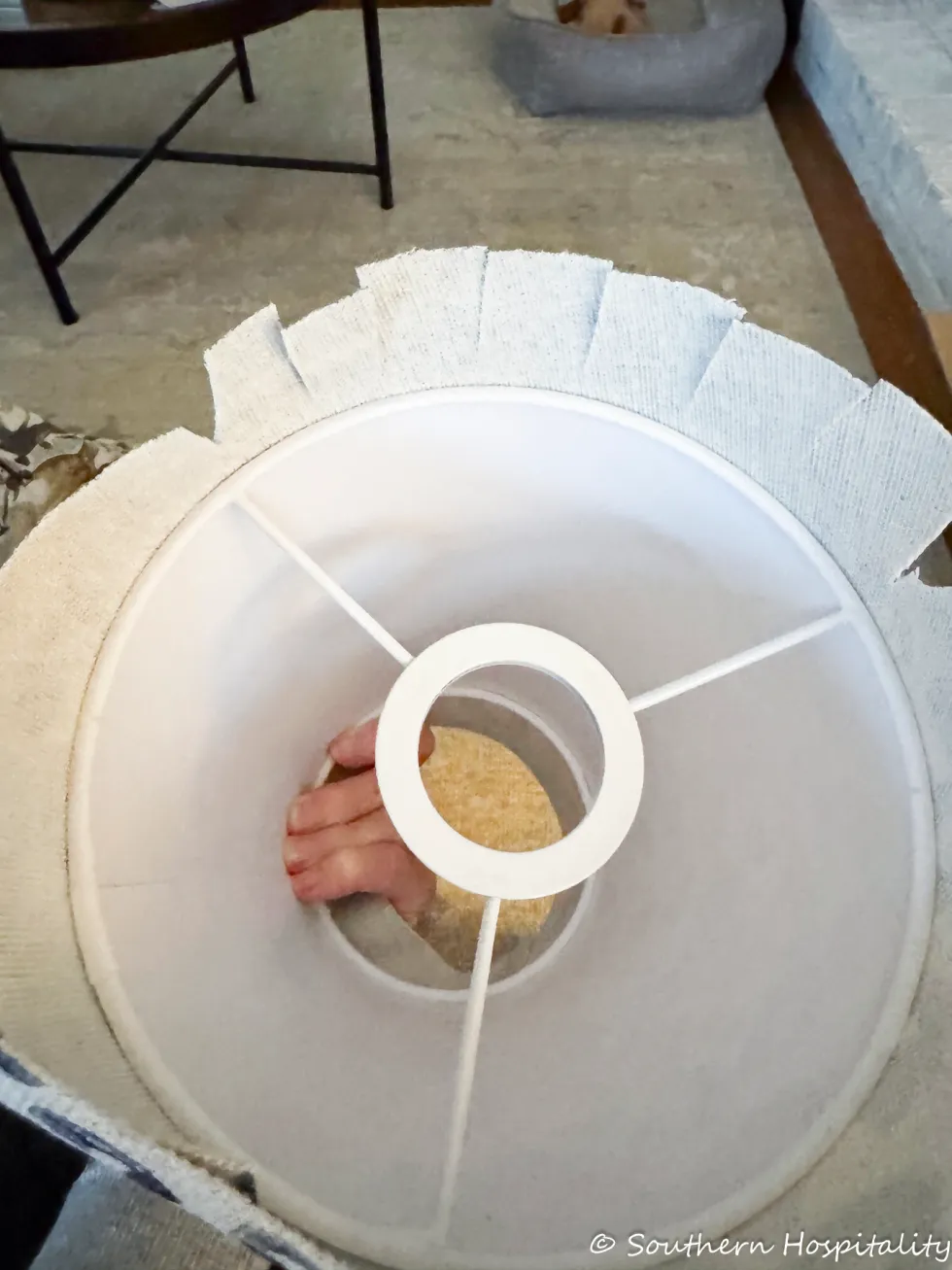
One trick I learned along the way is to cut slits in the fabric and that helps it all to lay down flat along a curve like this.
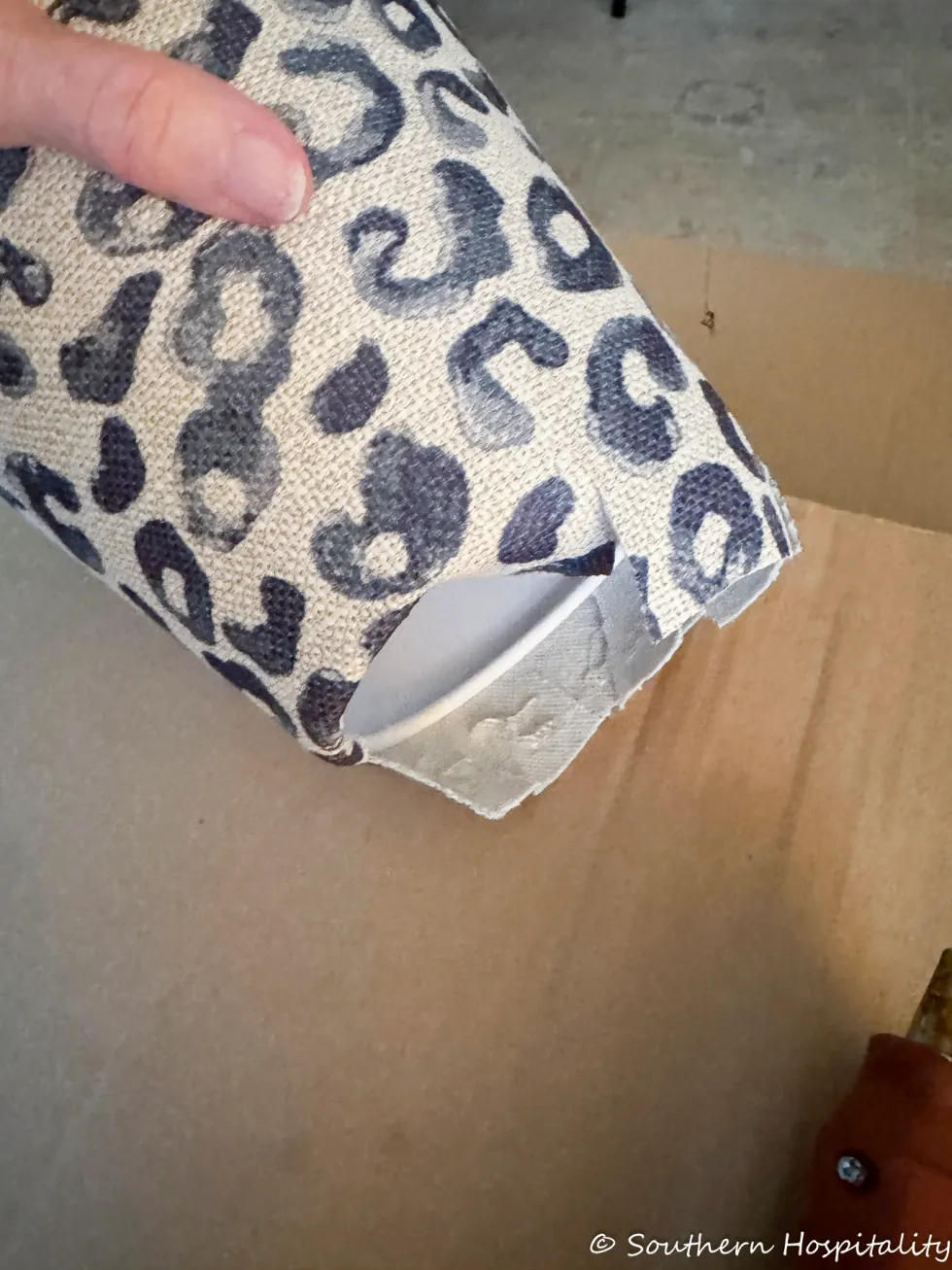
I used my glue gun and spread two or three inches at a time, letting the glue cool just a few seconds before you start pressing or you’ll burn your fingers. Using an extra piece of fabric over the newly glued area helps too to avoid burns on the fingers.
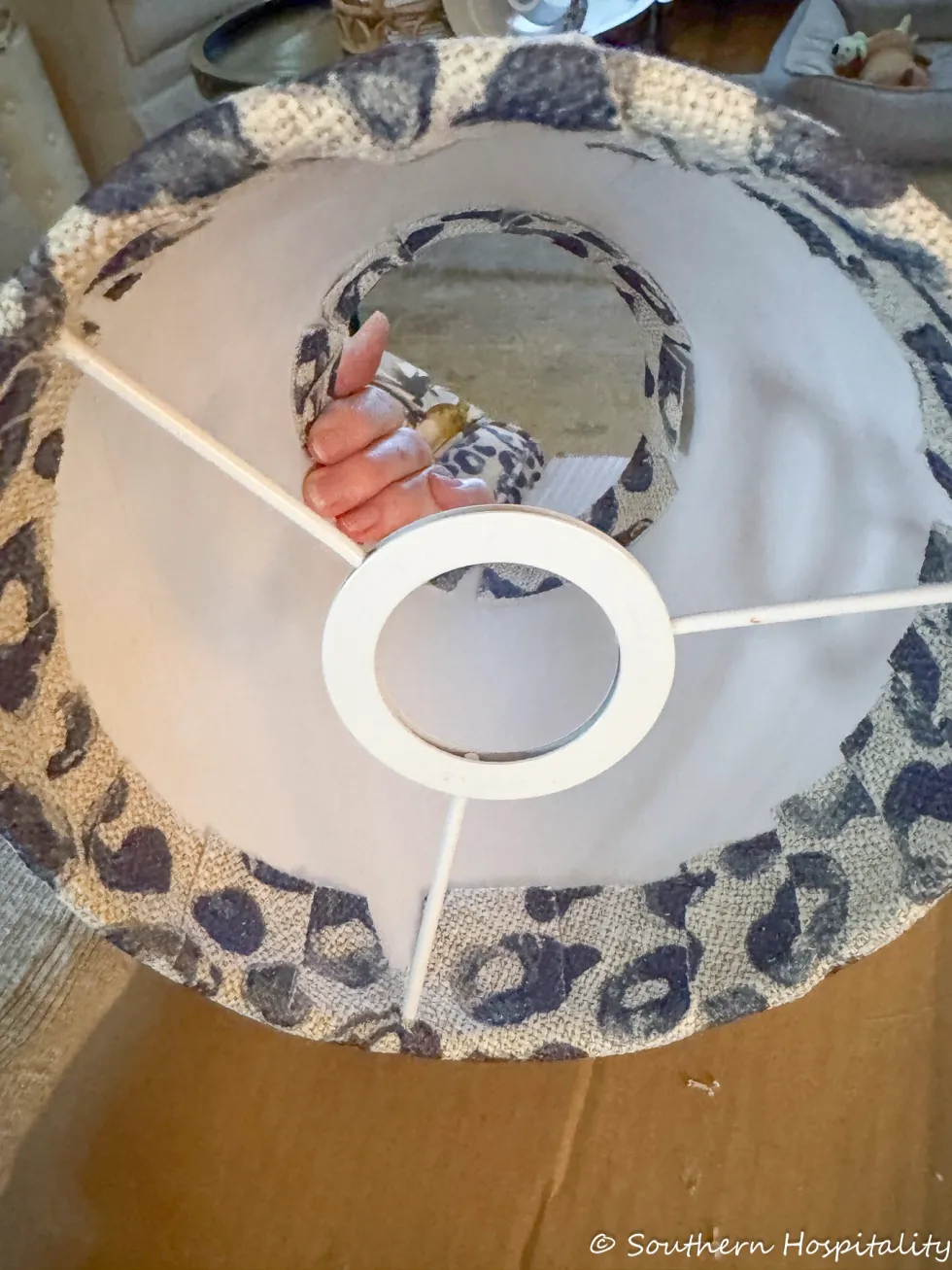
Work your way around the lampshade gluing down all the pieces, top and bottom.
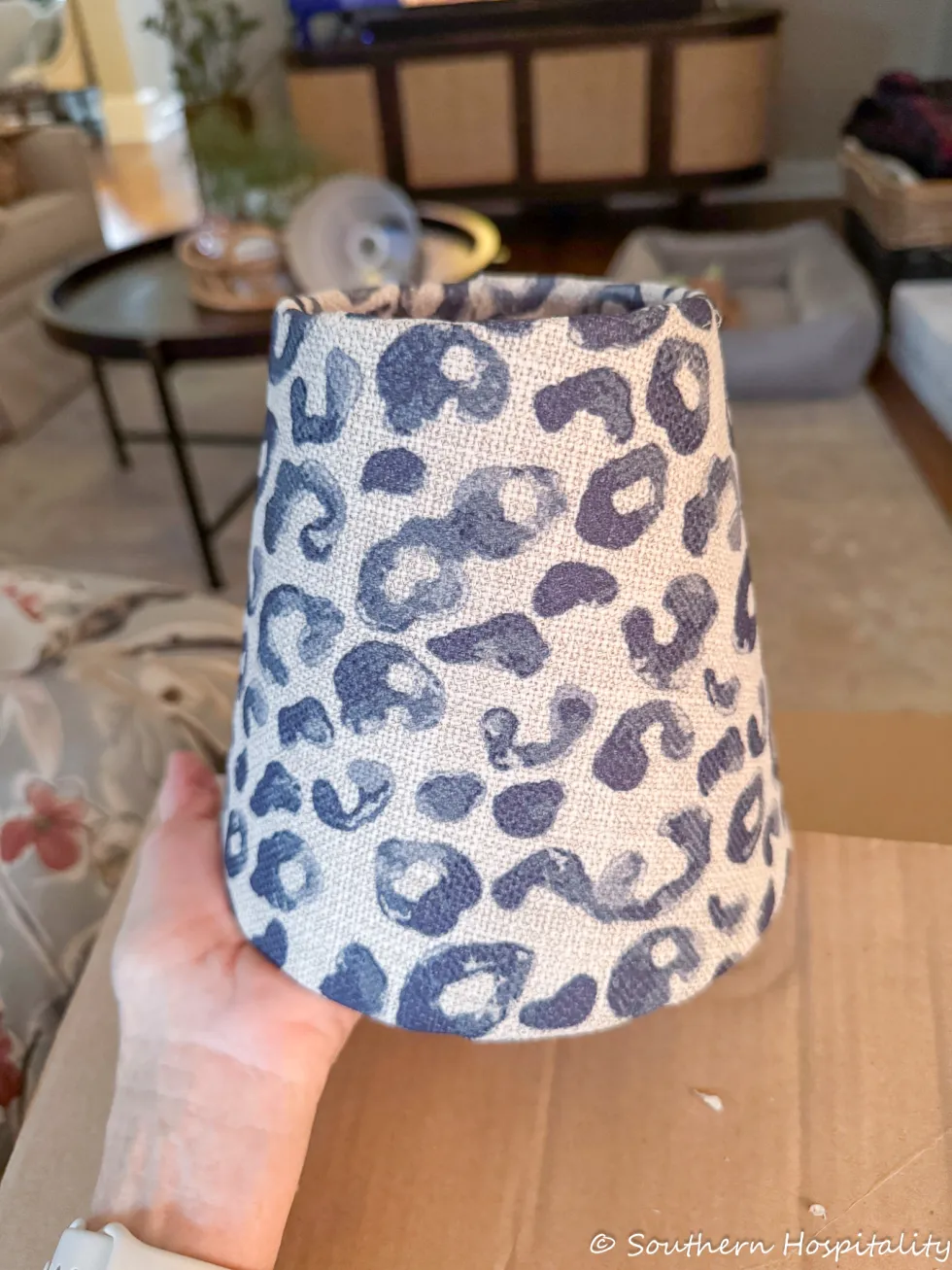
And you’ll end up with a pretty fabric covered lampshade.
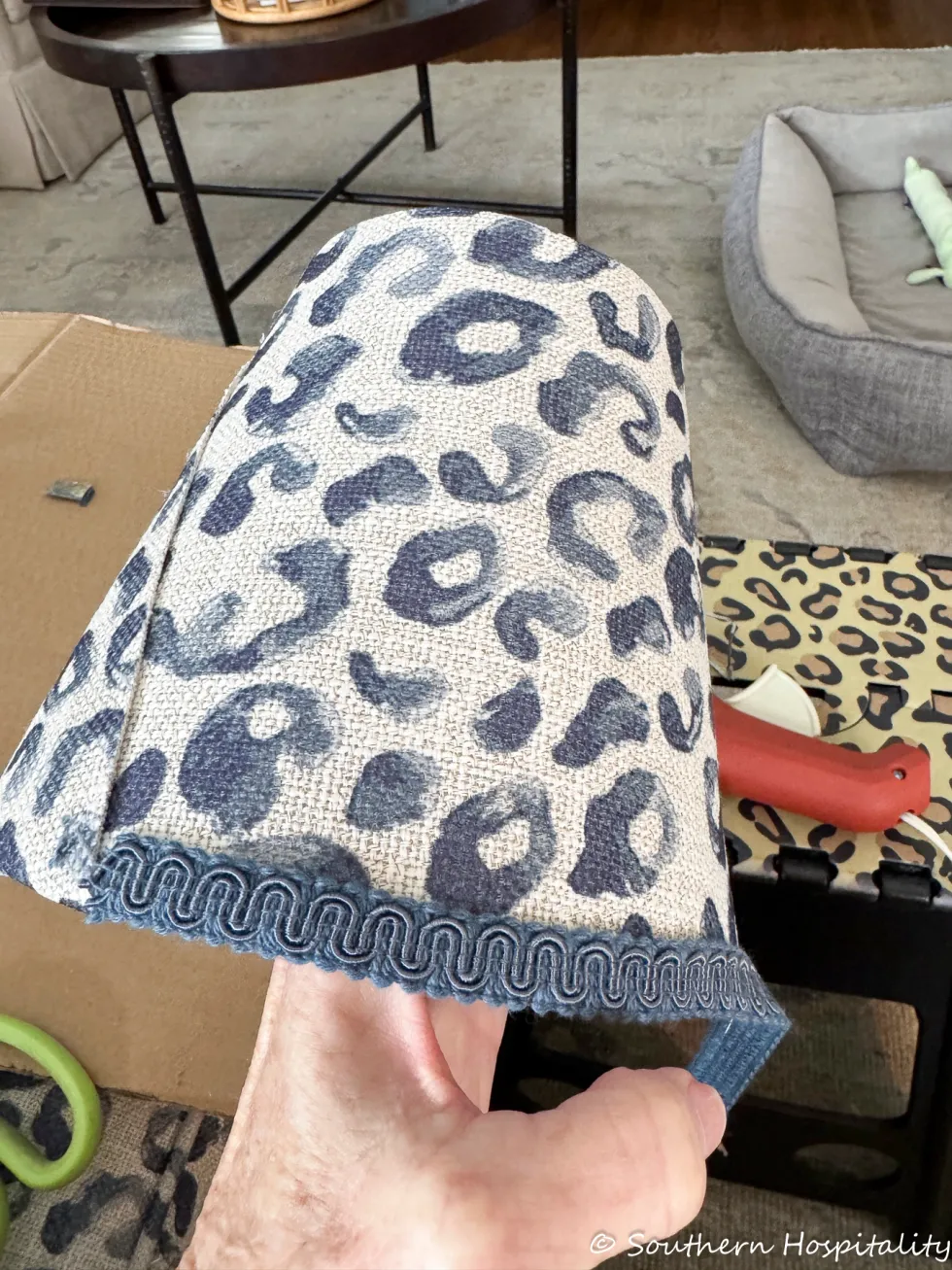
I wanted to jazz it up a bit so I got trim from my local fabric store that I love, Fabric & Fringe Warehouse in Marietta, and this is French gimp. Using the glue gun, add it all around the bottom and top of the lampshade. This is also where I bought the leopard fabric for my ottomon.
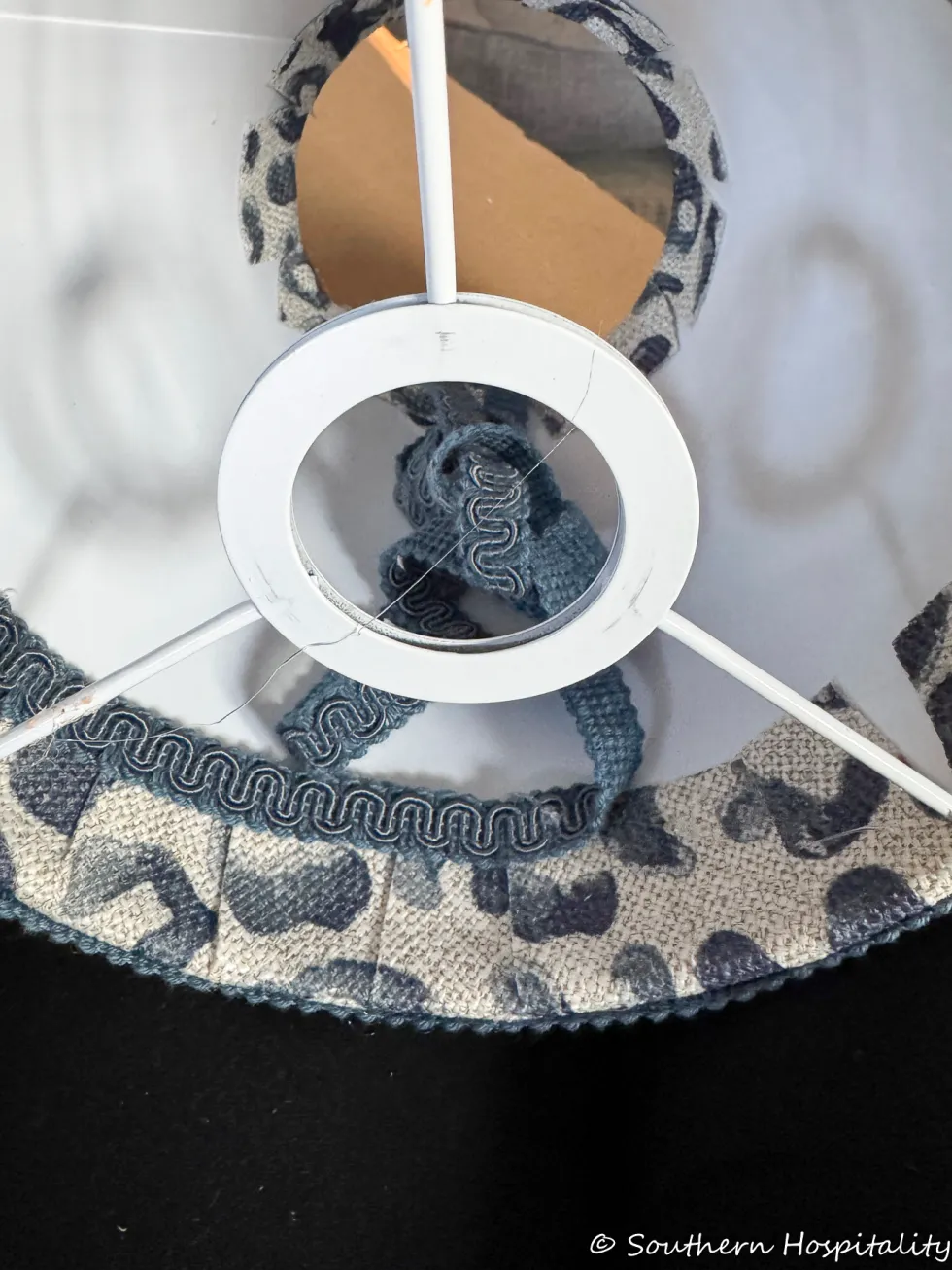
I also got enough to add trim on the inside since you do see the bottom of the lampshade when you look up at the sconces. This helps give it a nice finished look. This trim was $2.50 a yard and it took not quite 4 yards to do these.
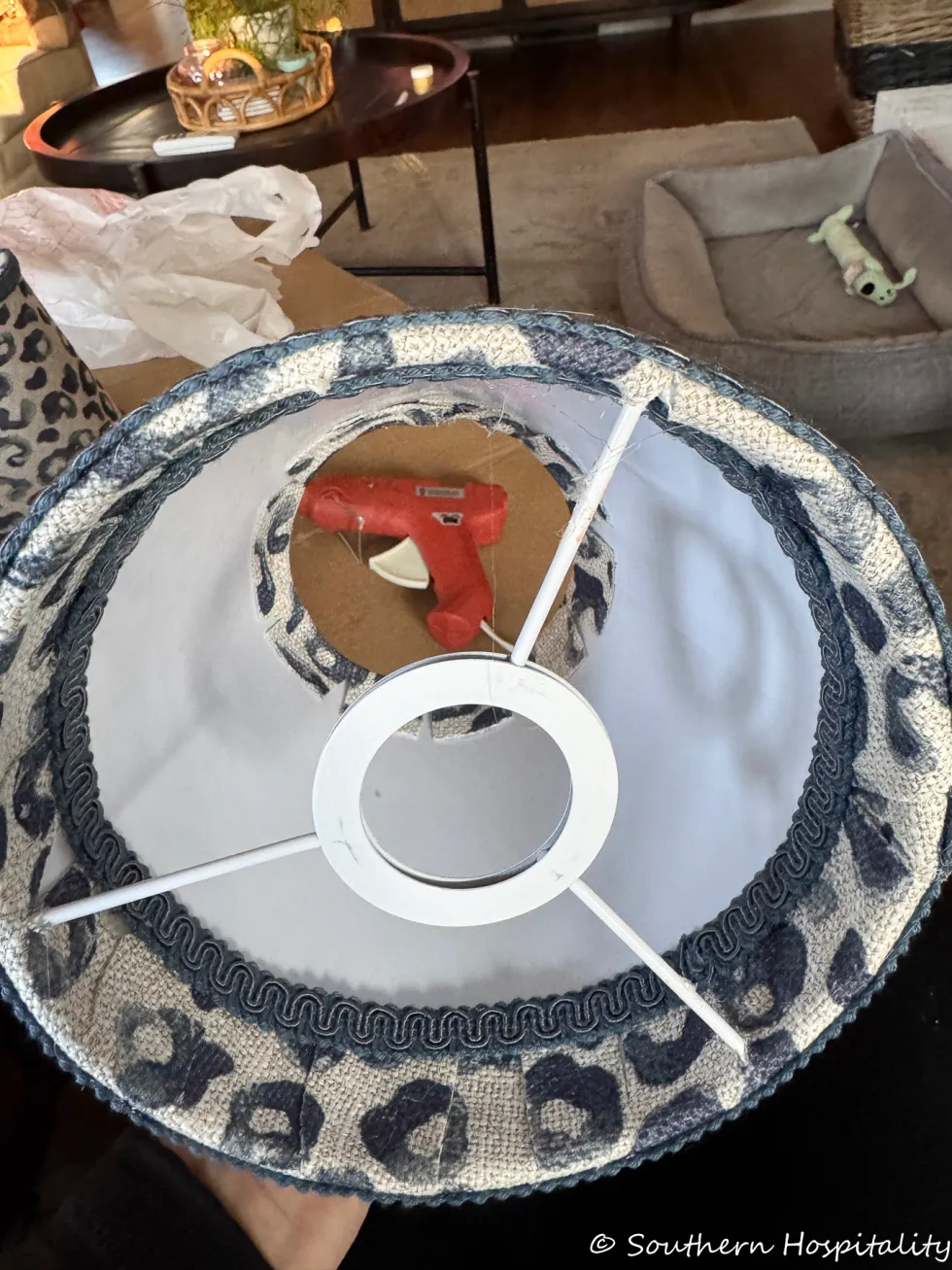
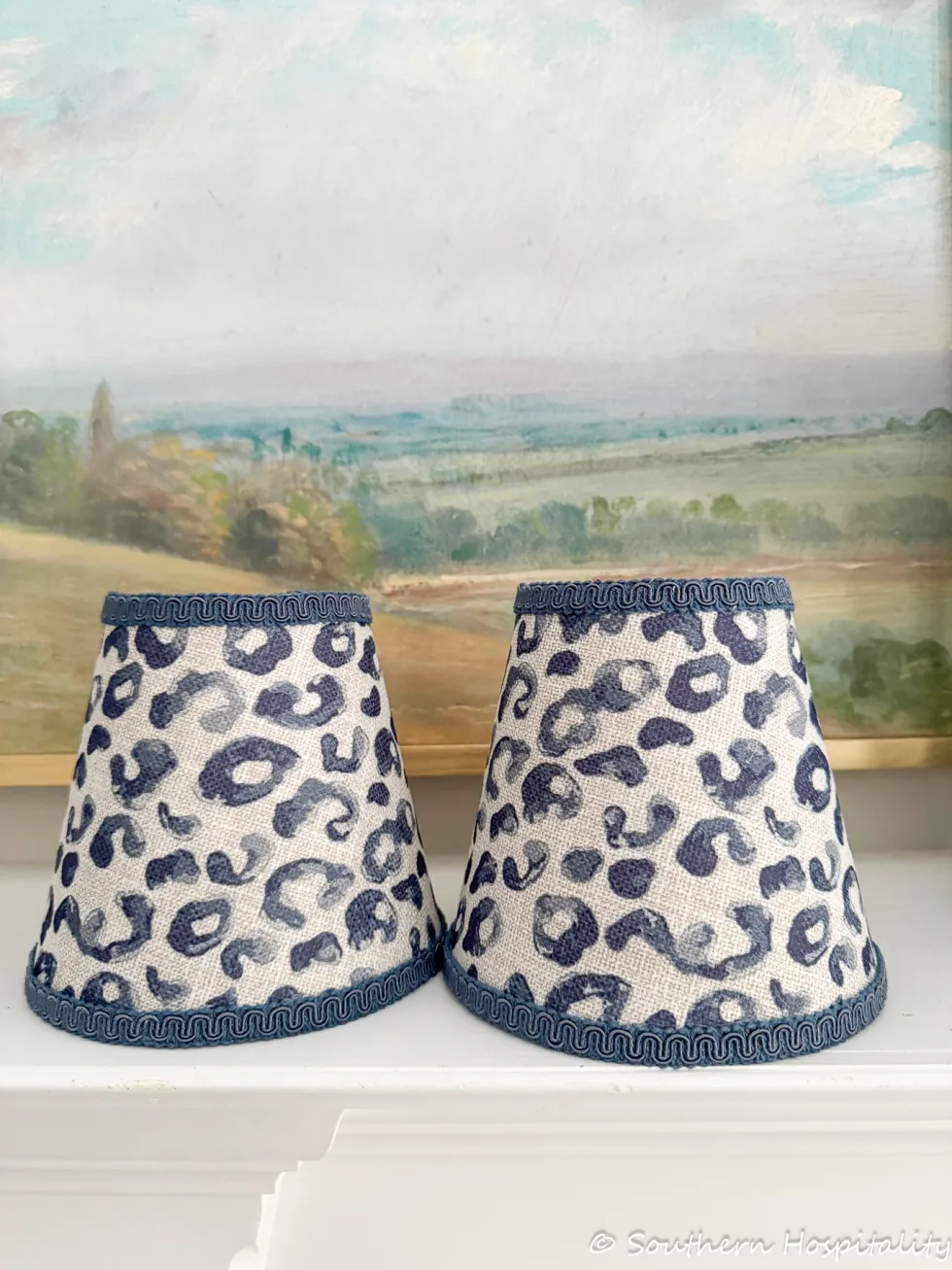
All finished with the trim!
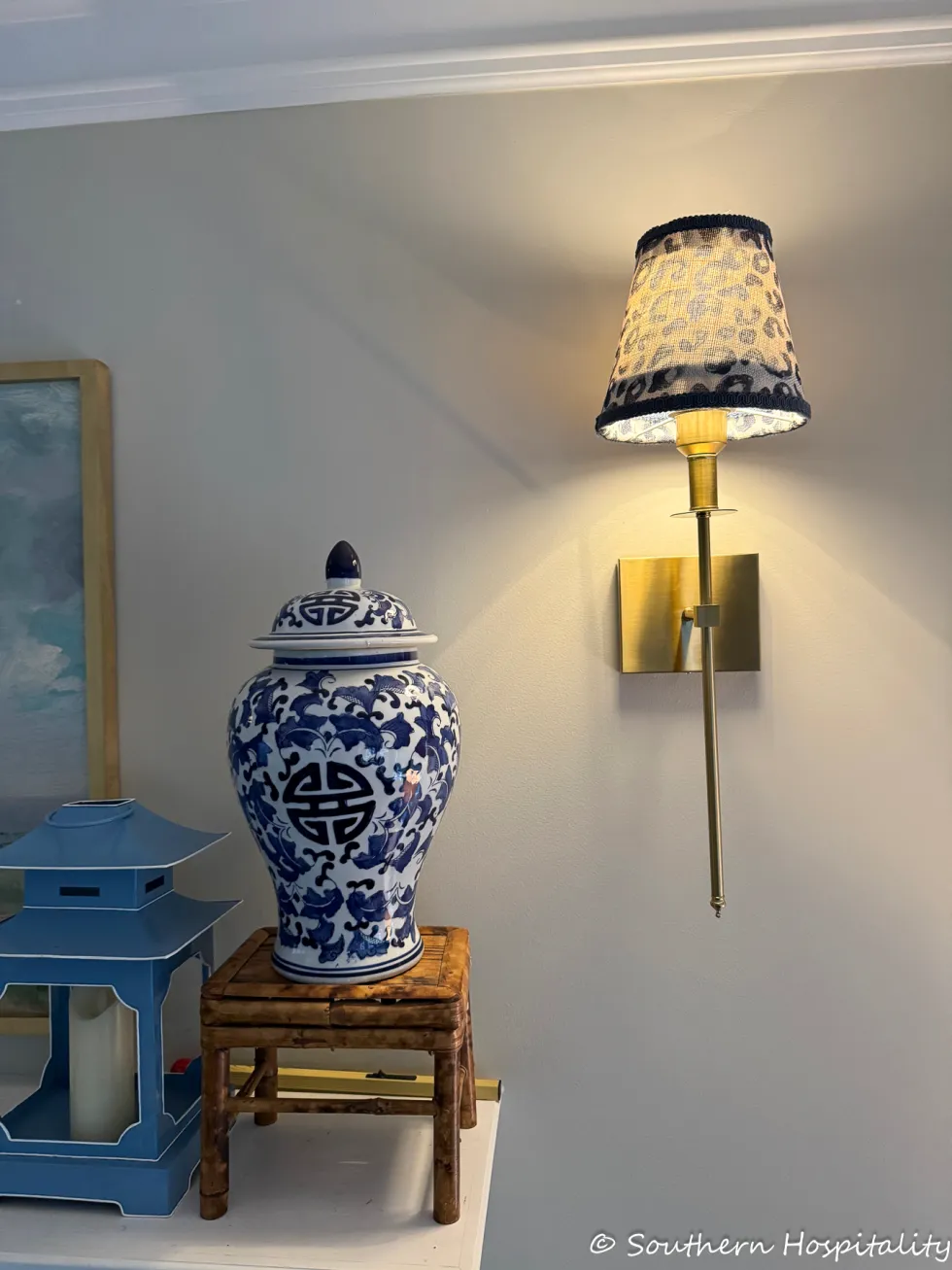
And here they are up and lit at night. Aren’t they pretty? I love how adding fabric and trim gives such a custom look to plain white lampshades.
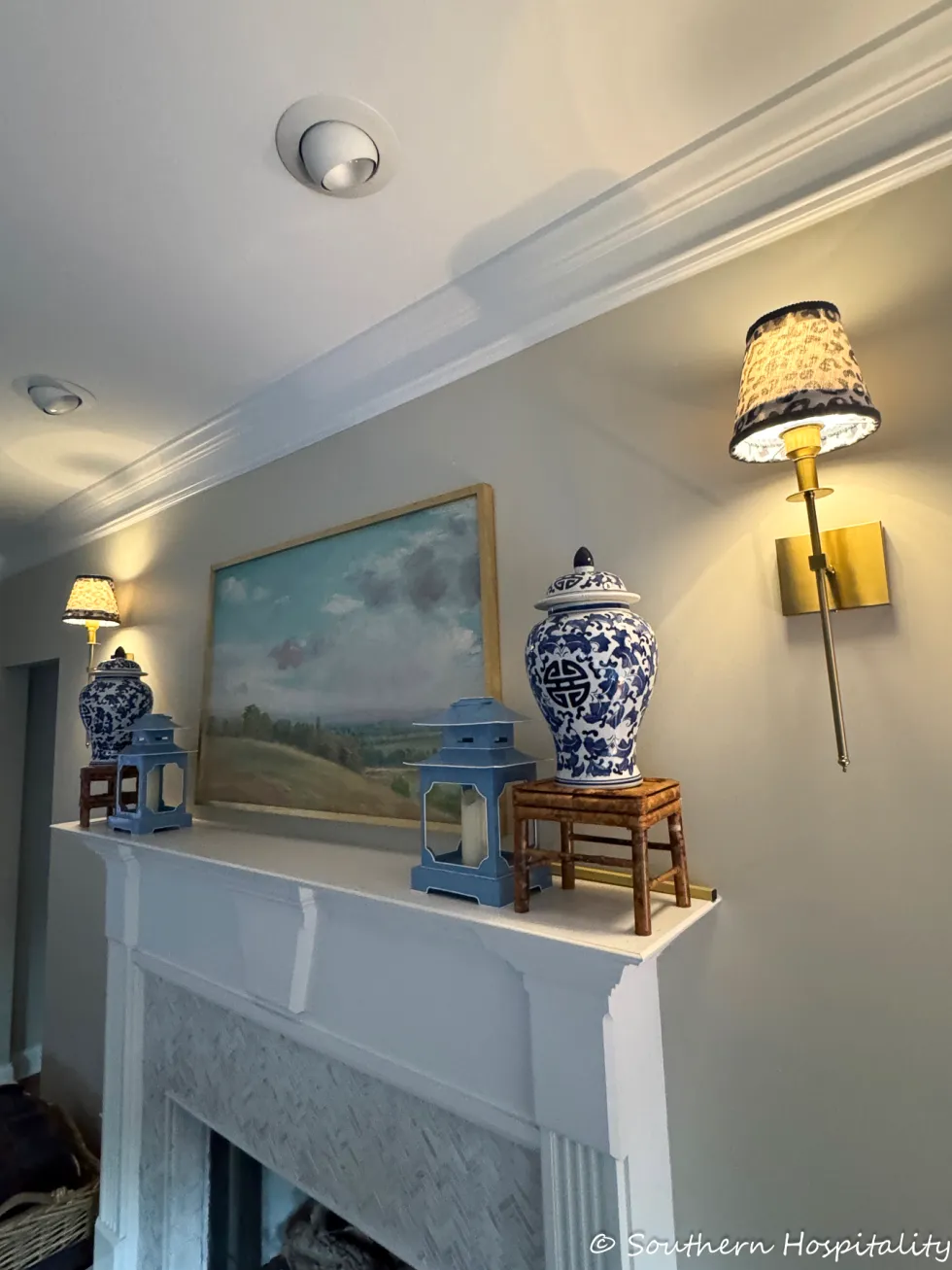
They add a soft warm glow at night.
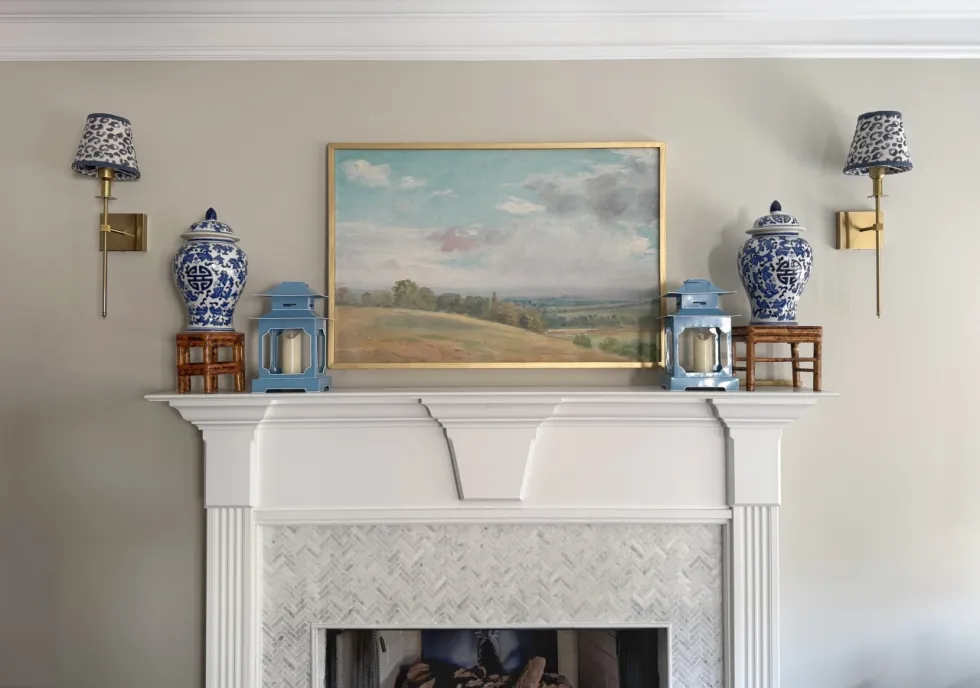
And they look so pretty in the daytime with my blue and white things. They will mix with all of my decor and I love how they turned out. If you want to try this project, it’s really easy and I hope you do!
Please pin for later!
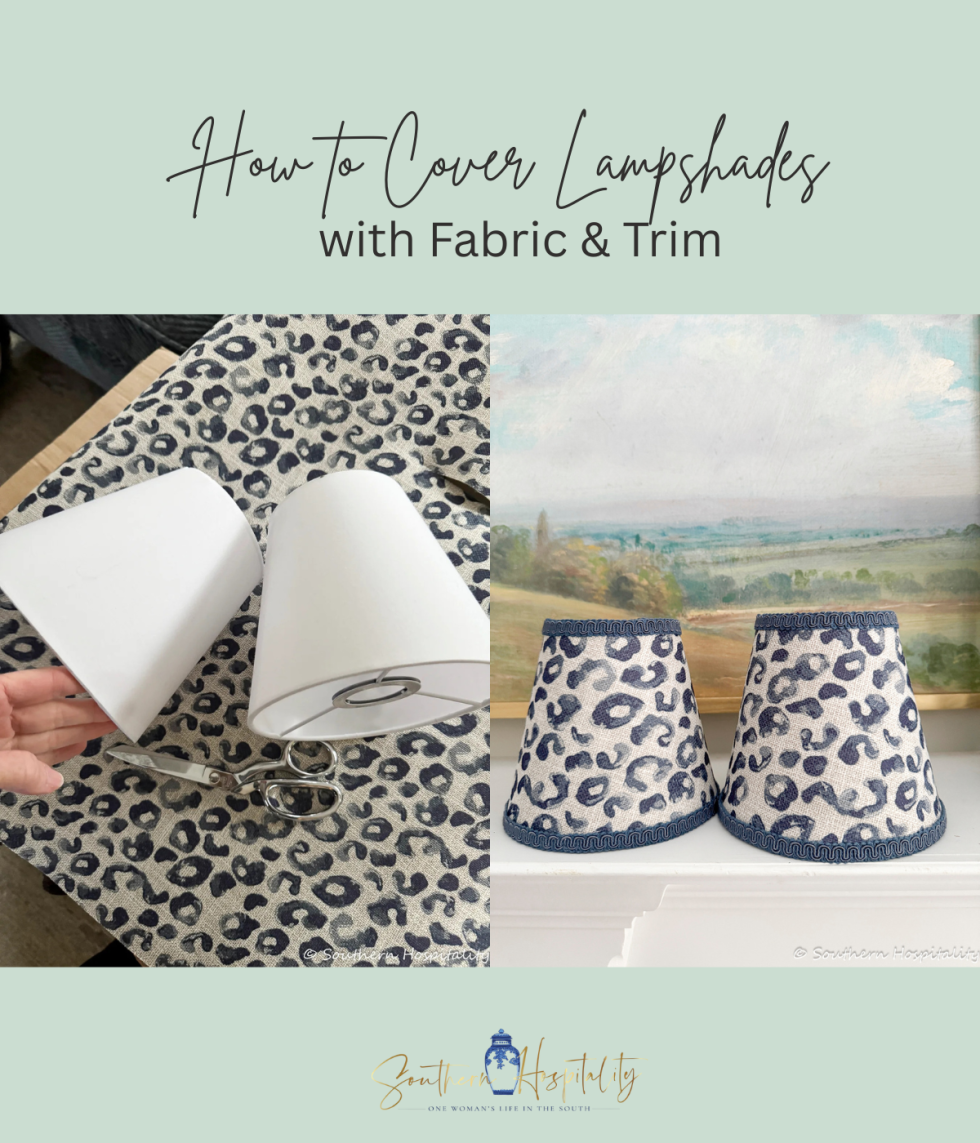
Related
Don’t Miss a Post, join my list!
A short mention of How cover lampshades helps readers follow the flow.
We reference How cover lampshades briefly to keep the thread coherent.











Small note · This brightened my day — thank you for sharing. Thanks for this!
Quick thought · Yes, that makes a lot of sense. Saving it.
FYI – Great step-by-step — I’ll give this a go this weekend.