
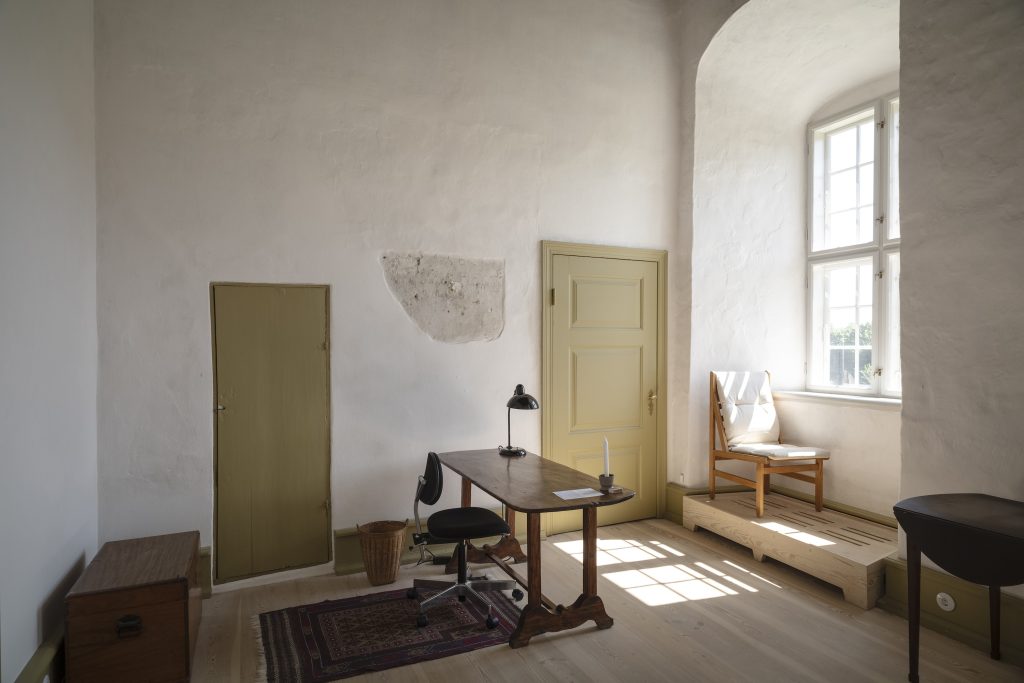
We first encountered the restoration work at Ørslev Monastery through finishes company Linolie & Pigment. Founded around 1200 as a Benedictine nunnery, reformed into a Baroque manor in the 18th century, and nearly lost to decay by the early 20th, the structure that stands today is the result of centuries of adaptation—and a devotion to stewardship. That stewardship began with Countess Olga Sponneck, who saved the monastery from collapse in 1934, restoring the building and, by the early 1960s, shifting its purpose into a work refuge. Today, under the direction of Janne Fruergaard Keyes, a medieval archaeologist dedicated to preservation and living use, the most recent restoration continues that tradition.
Rather than imposing a fresh surface, the work focuses on continuity: repairing what exists, revealing what has been obscured, and selecting finishes for integrity. Linseed oil paints and historical pigments were chosen for their compatibility—materials that breathe with centuries-old masonry, timber, and plaster, and that reinforce the monastery’s original character.
At present, Ørslev Monastery functions as a working house, inhabited by writers, artists, scholars, and musicians who come for long stretches of focused attention. That use feels natural to the architecture: shared spaces with monastic precedent and small rooms that encourage concentration. Bringing a historic building like this into the future requires a precise recipe: two parts respect for craftsmanship and one part innovation. Here, we walk through the halls and grounds of Ørslev Monastery for a closer look.
Photography by Helene Høyer Mikkelsen for Linolie & Pigment.
Above: The monastery sits within a historic landscape shaped by forest, meadow, and former agricultural land. 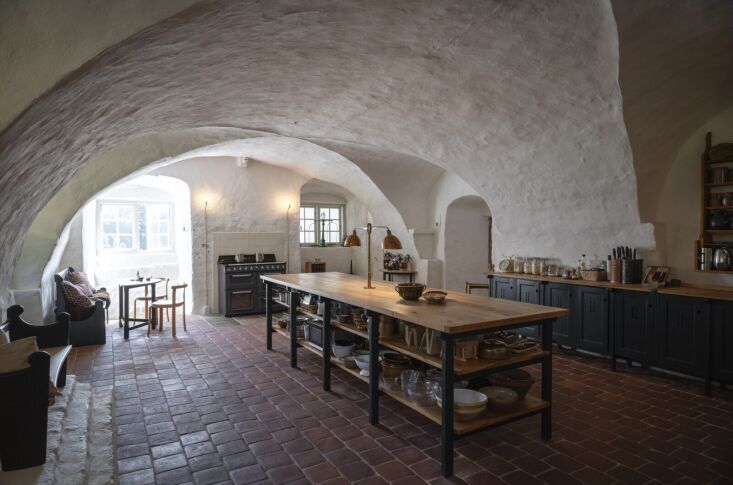 Above: Vaulted ceilings in the former service spaces date back to the medieval period and were carefully repaired rather than redone.
 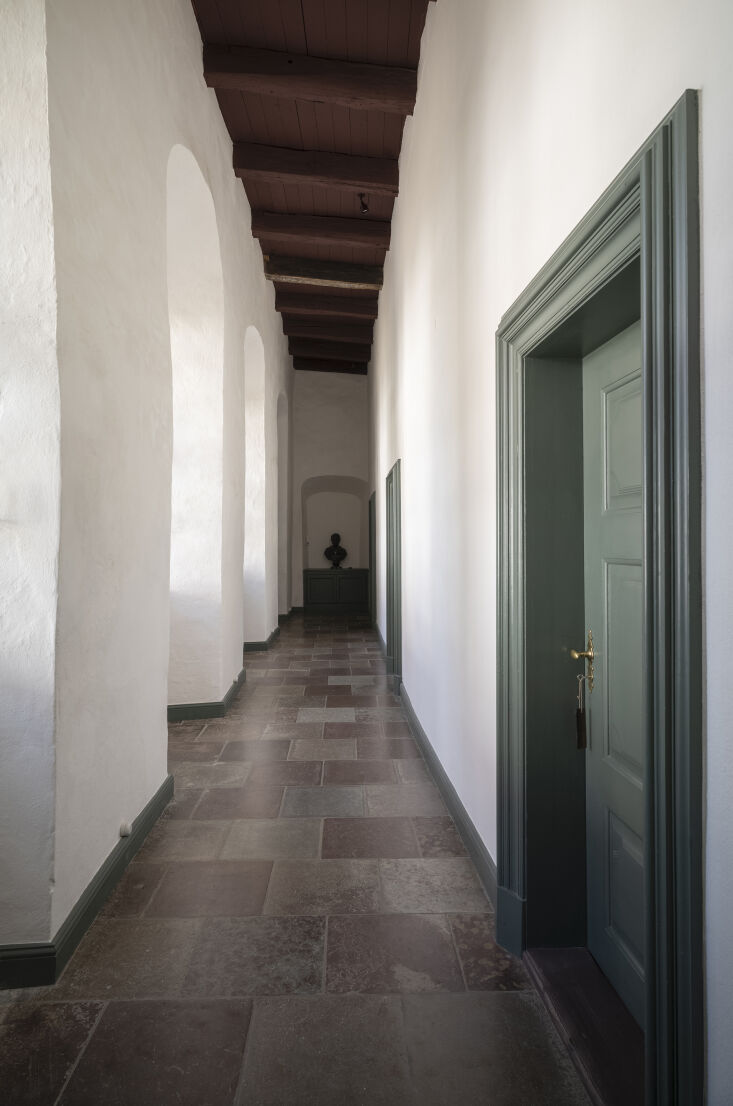 Above: Linolie & Pigment supplied custom-mixed linseed oil colors based on historic pigments coordinated with architects and conservators to find balance between preservation and renewal.
 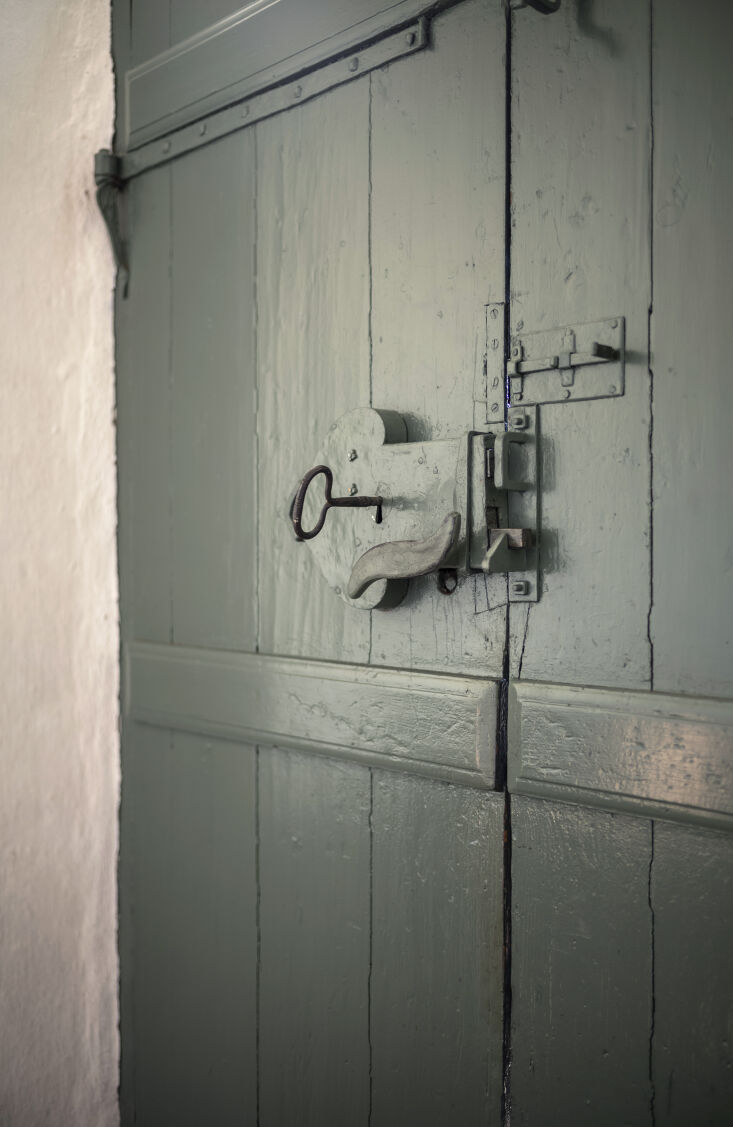 Above: While the paint colors are custom to the project, a similar shade to that seen here is Brobygger 23.
 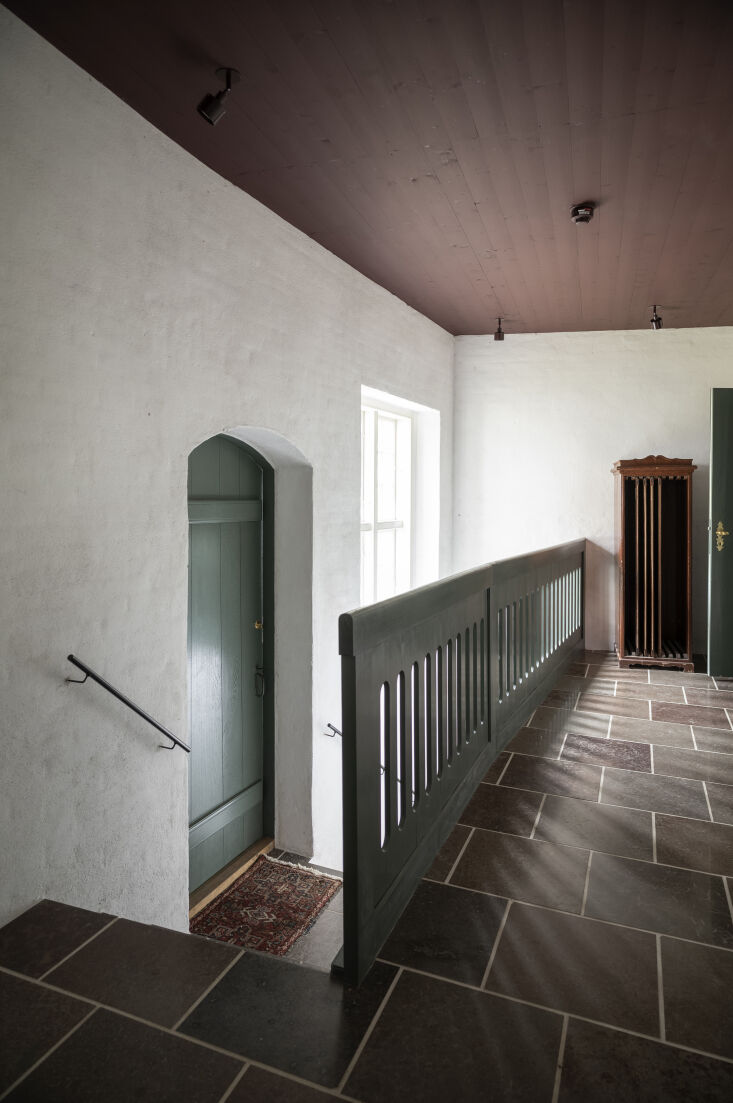 Above: Original stone and brick floors were retained wherever possible, repaired with traditional methods rather than replaced. A similar shade to that applied to the ceiling here is 68 Erindring.
 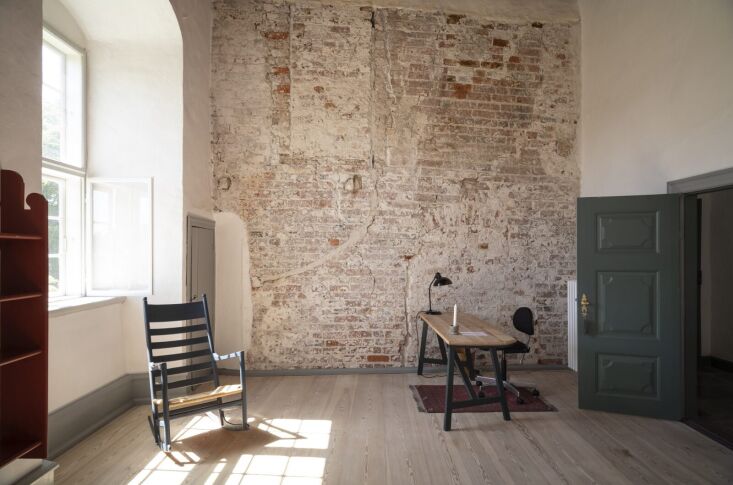 Since 1969, Ørslev Monastery has functioned as one of Scandinavia’s longest-running work refuges. Guests stay for extended periods, often weeks or months at a time working on a defined project and scope.















On a similar note: This is a keeper — saving for later. Great share.
Also – Such a warm note about “A Historic Work-Stay Retreat in Denmark” — delightful. Great share.
Also — This feels very authentic — great post. Great share.
PS: This is so satisfying to read — thank you. Great share.