
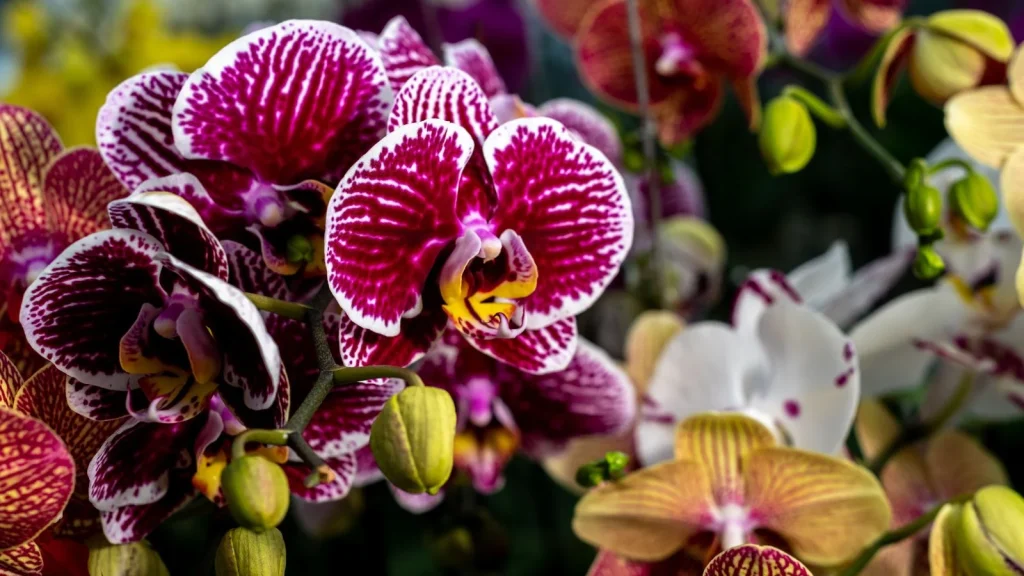
Low-maintenance orchids anyone — a quick note to anchor this piece for readers.
Low-maintenance orchids anyone: Quick notes
We tend to think of orchids as fragile, high-maintenance plants that need special conditions and expert care to survive. While not totally unfounded, that reputation comes mostly from the more temperamental species, not from orchids as a whole.
Plenty of orchids adapt well to average homes and bloom year after year with care that’s simpler than you may think. If you have experience growing houseplants, the basic requirements aren’t that different, with some quirks due to their native habitats and growth patterns.
The low-maintenance orchids on this list are easy to grow, don’t need elaborate setups, and will forgive occasional watering mistakes. If you’ve avoided orchids because they seem intimidating, these varieties are worth reconsidering.
Phalaenopsis
These are the most widely available orchids.
Phalaenopsis orchids (moth orchids) are everywhere for a reason (not just because they’re easy gifts in a pinch). They’re genuinely easy to keep alive once you understand their needs, and they’re famous for blooming for months. A single flower spike can stay in bloom for two to three months, sometimes longer, making them one of the longest-flowering houseplants you can grow.
These orchids tolerate the same temperatures most people keep their homes at. They don’t need a dramatic temperature drop to trigger blooming, though slightly cooler nights in fall and winter can encourage more reliable flower spike development.
As they are native to forests where they receive dappled light, an east-facing window provides enough light for them to flower reliably. Or you can place them a few feet back from a brighter window.
Watering is where some people get tripped up with these low-maintenance orchids. Firstly, don’t water with ice cubes, if you’ve heard that advice. Orchids don’t need much water, so a soak once every week or so is usually plenty. It does depend on your home’s humidity and temperature. Phalaenopsis are more forgiving of slight underwatering than overwatering, so keep that in mind as you get used to their care.
Cattleya
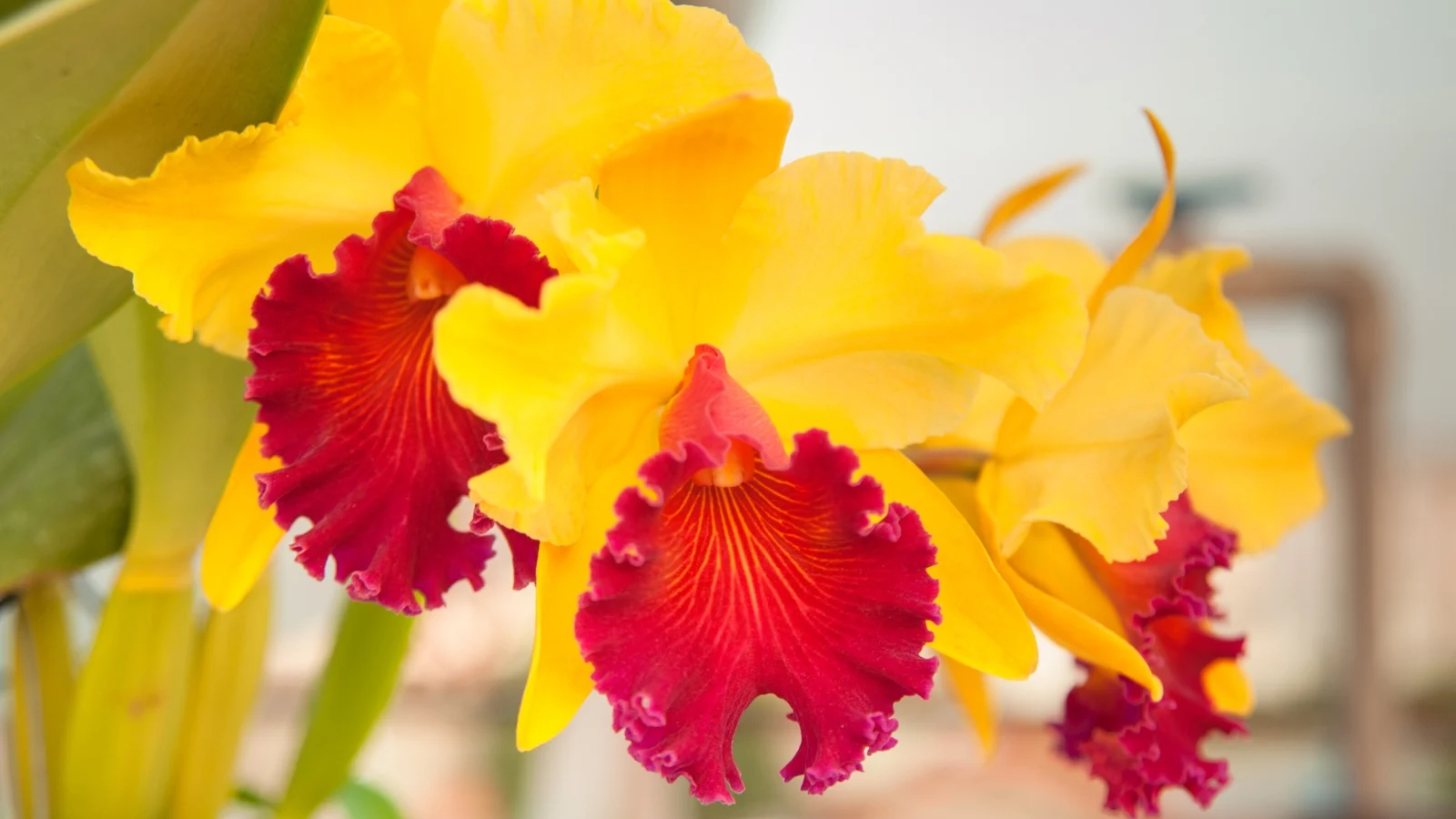 Let the growing medium dry out slightly before watering.
Cattleya orchids produce some of the showiest flowers in the orchid family. To get these flowers, you need to give them brighter light than Phalaenopsis, ideally several hours of gentle direct sun in the morning or late afternoon. But that’s about the only thing they’re particular about.
Cattleyas prefer to dry out between waterings. Let the potting medium (usually orchid bark for the epiphytic roots) get dry before watering again, allowing excess water to drain completely before you return the pot to its pot cover. They’re quite tolerant of underwatering thanks to their pseudobulbs (the swollen storage structures at the base of the leaves), which hold water reserves.
Temperature-wise, these low-maintenance orchids appreciate a slight drop at night, which happens naturally at the right time anyway. This day-night differential helps trigger blooming.
Paphiopedilum
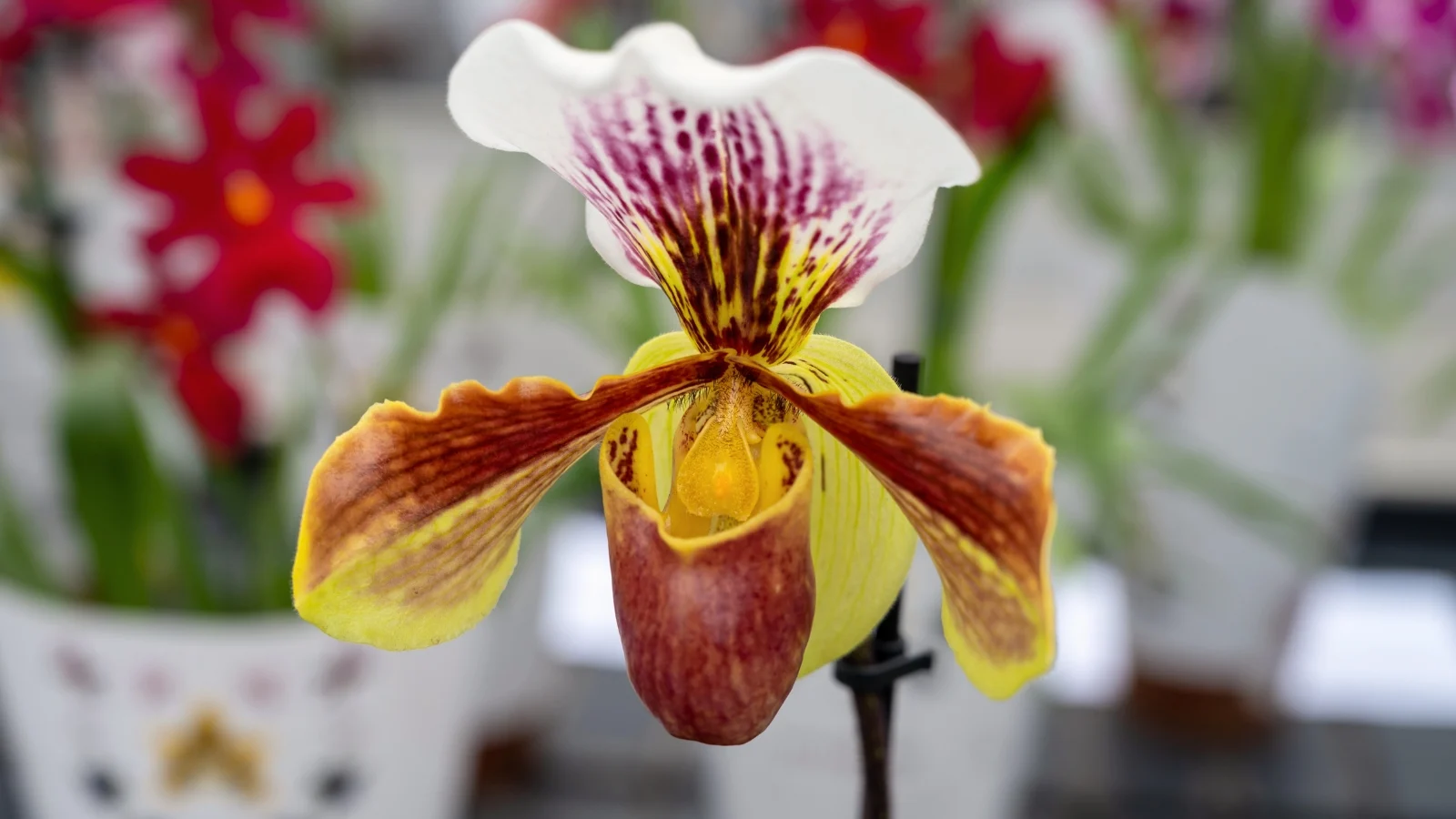 The intricate flowers make an impressive statement.
Lady slipper orchids have interestingly-shaped flowers that make them seem complex, but they’re surprisingly adaptable to home conditions. Unlike most orchids, they grow in soil rather than epiphytically, which makes their care feel more familiar if you’re used to typical houseplants.
They prefer lower light than most other low-maintenance orchids, making them ideal for north-facing windows or spots that get bright indirect light without direct sun. This also makes them good candidates for growing under artificial lights if natural light is limited in your home.
Paphiopedilums like consistent moisture. The potting medium should stay lightly moist but never waterlogged. They’re less tolerant of drying out completely than other orchids on this list, so you need to pay slightly more attention to watering frequency.
Oncidium
 Long flower stalks produce several small flowers.
Oncidium orchids produce wands of smaller flowers that can number in the dozens on a single spike. The flowers have a dancing appearance when they move in the wind, which is why they’re sometimes called dancing lady orchids.
These low-maintenance orchids have pseudobulbs that store water, so they tolerate drying out between waterings reasonably well. Water when the potting medium is approaching dry but before the pseudobulbs start wrinkling from dehydration. Frequency will change with the seasons and environmental conditions.
Oncidiums appreciate good air circulation and don’t love sitting in stagnant air. A small fan running nearby (but not blowing directly on the plant) can help if your home tends to have still air.
Dendrobium
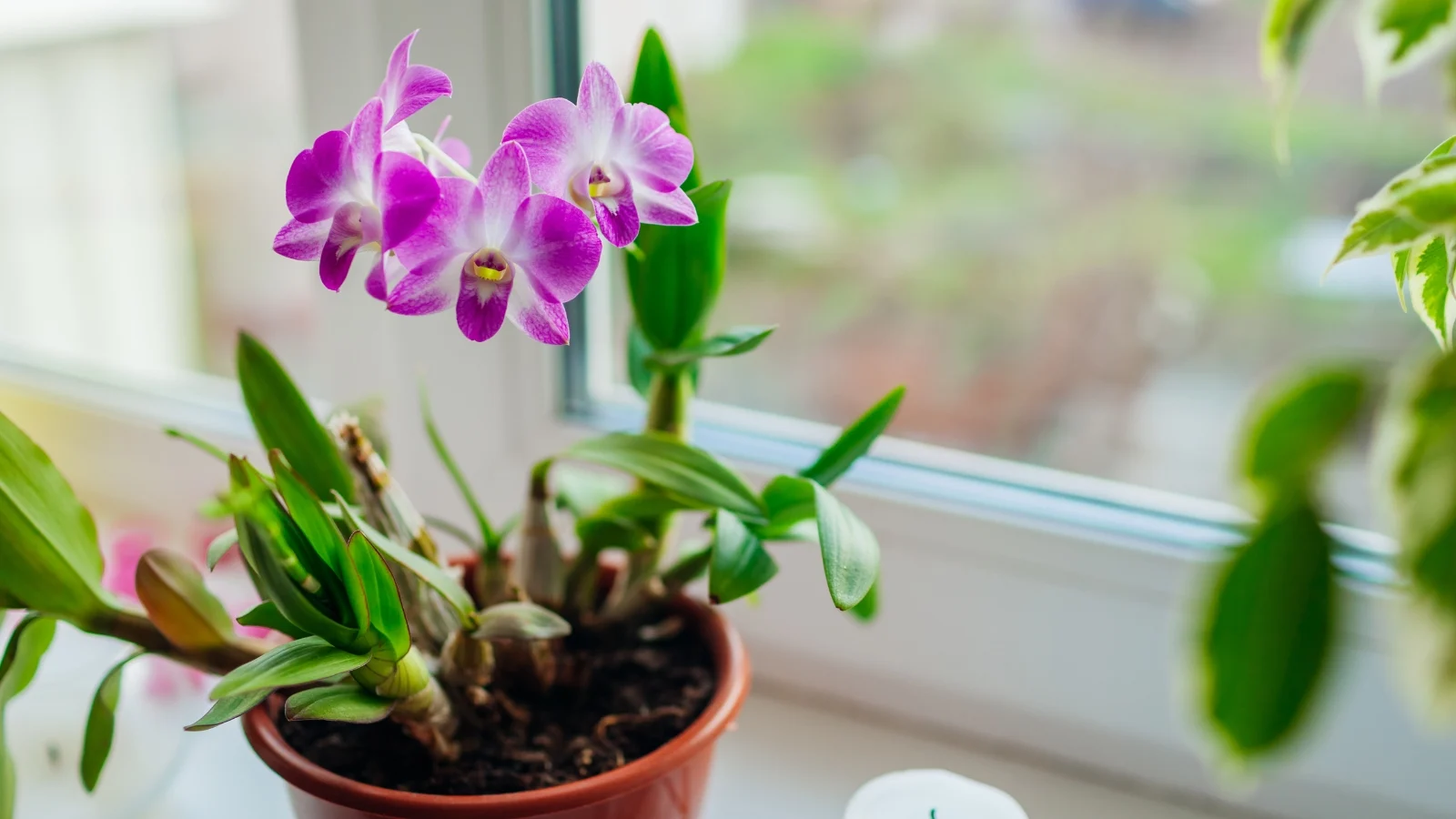 Commonly available varieties are generally easy to care for.
Dendrobium is a huge genus with thousands of species, but the commonly available hybrids sold in garden centers are generally straightforward to grow. They produce cane-like stems with flowers emerging along the length or clustered at the tips, depending on the type.
The nobile-type Dendrobiums need a distinct cool, dry rest period in winter to bloom well. This means cutting back watering significantly and keeping them in a cooler spot (around 50°F to 55°F or 10°C to 13°C) for several weeks. This might sound complicated, but an unheated spare room or enclosed porch usually provides the right conditions.
The other common type (phalaenopsis-type Dendrobiums, confusingly named) don’t need this rest period and bloom more reliably under standard conditions. These are the better choice if you can’t easily provide cooler temperatures in winter.
Cymbidium
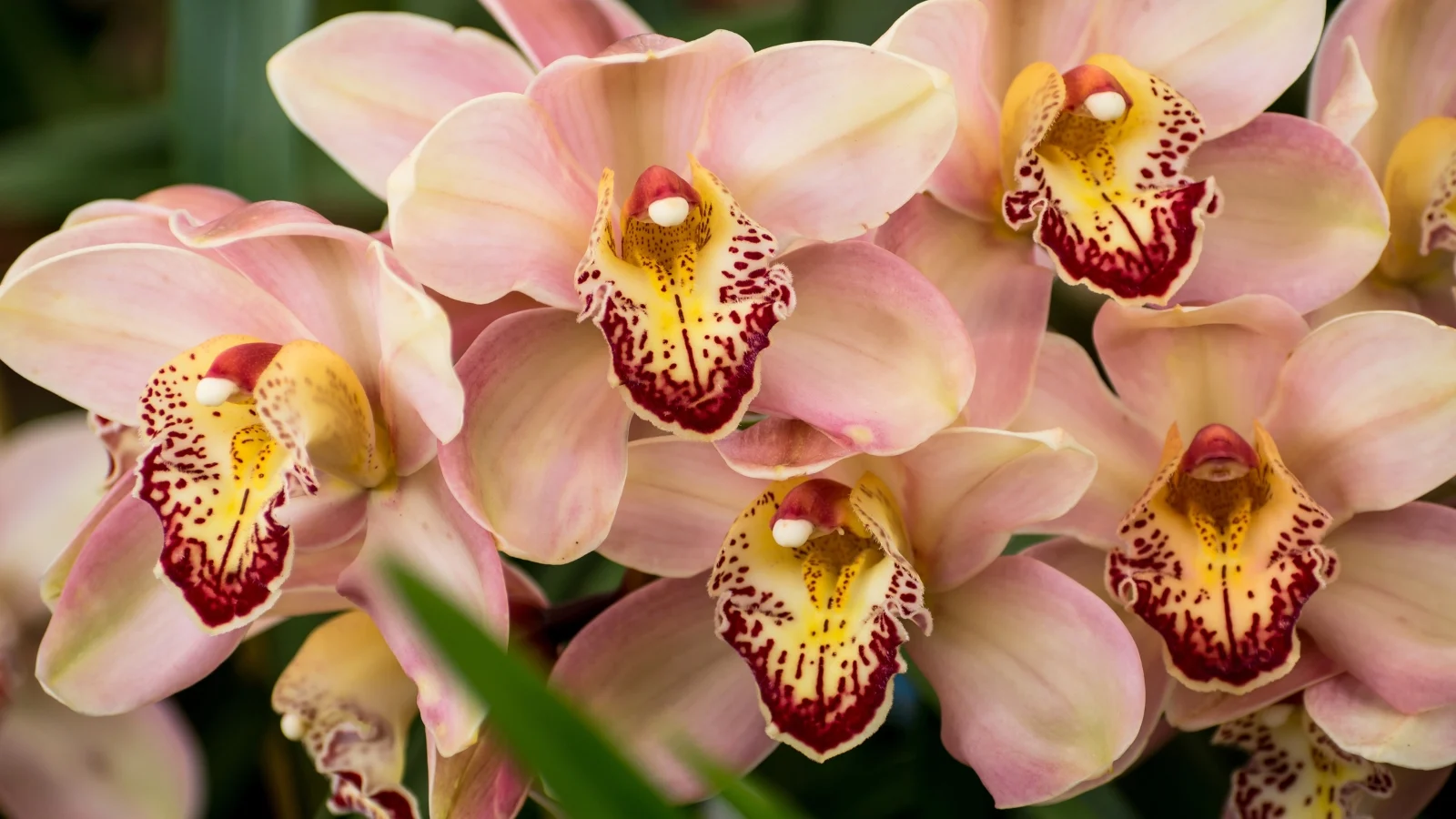 Place them in an area where temperatures drop in the evenings naturally.
Cymbidiums produce long-lasting flower spikes with multiple large blooms. The plants themselves are substantial, easily making a statement as houseplants or patio plants.
The challenge with Cymbidiums is temperature. They need cool nights (down to 50°F or 10°C) to initiate flowering. However, if you can move them around to find the perfect spot depending on the season, they’ll bloom reliably.
They tolerate lower light than many orchids and can even handle some direct sun without burning. Keep them evenly moist during active growth, then reduce watering slightly during their winter rest after blooming.
Ludisia Discolor
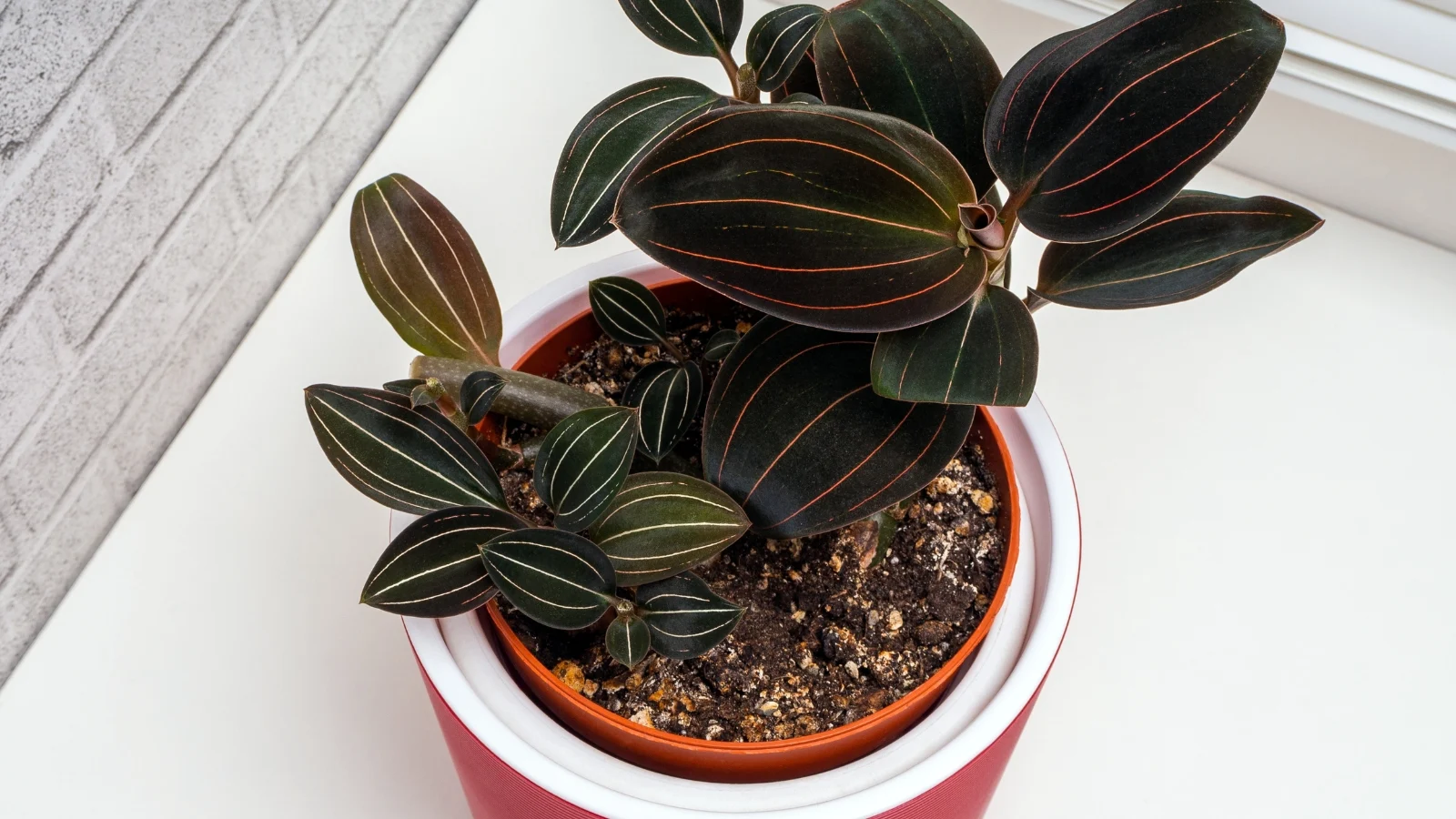 This orchid is grown for its leaves rather than its flowers.
Ludisia discolor (jewel orchid) is the outlier on this list because it’s grown primarily for foliage rather than flowers. The leaves are dark burgundy with contrasting pink or red veins that give them a jewel-like appearance, hence the common name.
When it does bloom, the flowers are small white spikes that aren’t particularly showy, but the foliage is attractive year-round. This makes it useful for spaces where you want orchid-family interest without depending on blooming cycles.
Ludisia grows more like a typical houseplant than most orchids. It tolerates lower light (similar to Paphiopedilum), prefers consistent moisture rather than drying out between waterings, and doesn’t need temperature fluctuations or rest periods.
The care for these low-maintenance orchids is genuinely easier than many houseplants, making it an excellent choice if you want to grow orchids but aren’t confident about meeting specific environmental requirements. It also provides a different aesthetic than flower-focused orchids, which can be a nice change.
We reference Low-maintenance orchids anyone briefly to keep the thread coherent.











Heads up — This is a small change with a big impact — thanks! So cozy.