
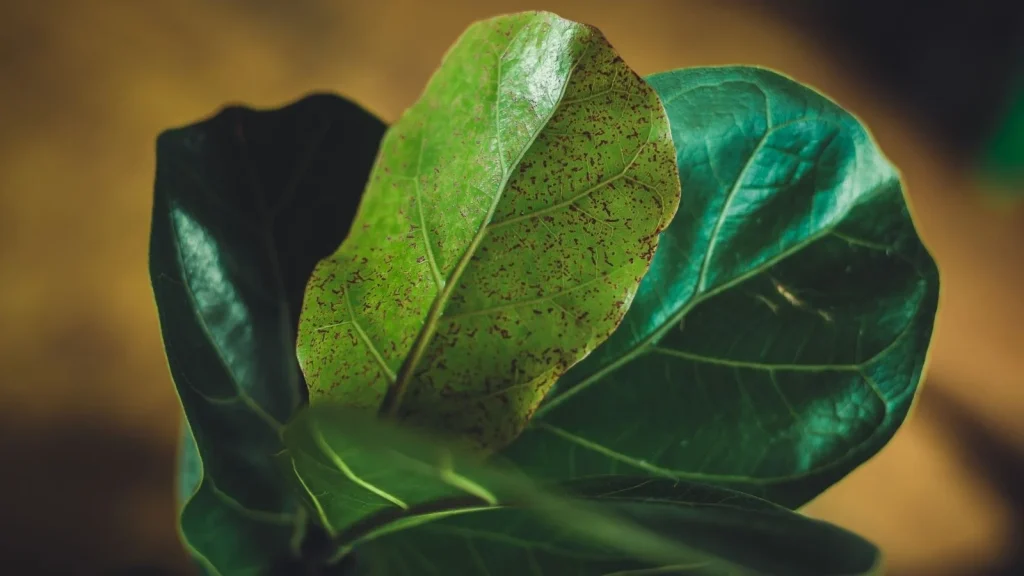
Any spots on fiddle leaf figs are always concerning, but brown spots in particular, mostly because they mean something serious is wrong. The spots themselves won’t kill the plant, but the underlying issue causing them might if you don’t address it.
Brown spots on a fiddle leaf fig are not as common as problems like yellowing, leaf drop, or leaning. But if you do notice the issue, it’s important to treat it as soon as possible. If you don’t, you might end up with bare branches or sad, drooping leaves.
Once you’ve identified the cause, treating brown spots is luckily straightforward. The damaged leaves sadly won’t recover, but you can stop new spots from forming and prevent the problem from spreading.
Identify the Cause
Before you start removing leaves or changing care routines, look at the whole plant. The pattern of the brown spots on your fiddle leaf fig tells you a lot about what’s causing the damage.
Pests and Diseases
Scale is a common issue on fiddle leaf figs.
Pests are a common cause of brown spots on fiddle leaf figs. Spider mites and scale both cause brown spotting, though the spots show up differently for each.
Spider mites create stippled spots that start small and gradually spread as the infestation progresses. Check the undersides of affected leaves for fine webbing or tiny moving specks.
Scale insects cause brown spots around their feeding sites, usually along the veins or on the branches. The insects themselves look like small brown or tan bumps that don’t move. People often mistake them for part of the plant until they notice the spots spreading.
Fungal and bacterial leaf spot diseases create brown or black spots with yellow halos around them. The pattern is usually scattered across multiple leaves, and the spots may have distinct dark borders that differentiate them from environmental damage.
If pests or diseases are the problem, you’ll typically see the damage on multiple leaves scattered across the plant rather than concentrated in one area. New growth might look fine initially, but spots will develop as pests move to feed on fresh leaves or as disease spreads.
Direct Sun
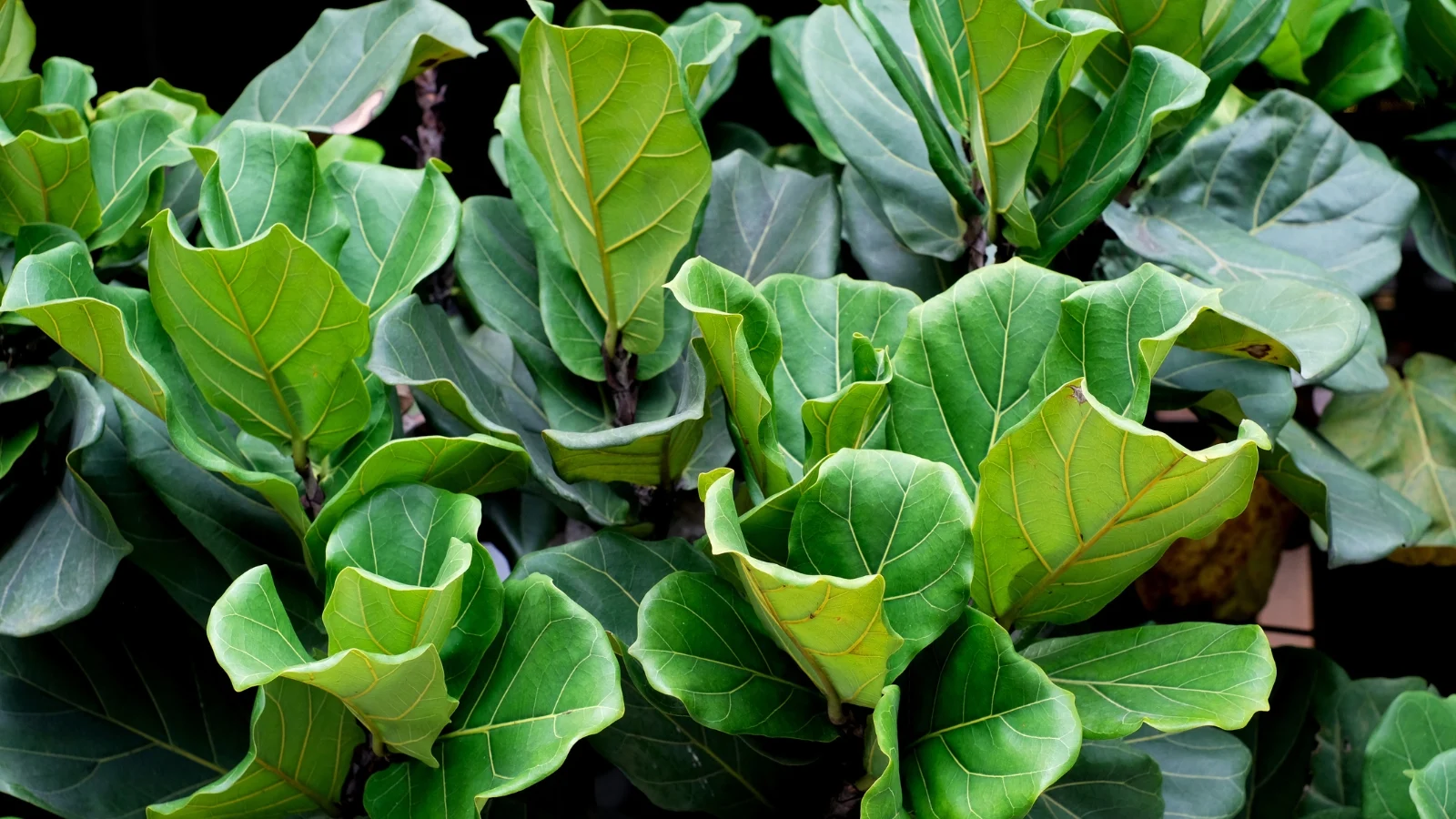 Excessive direct sun can damage the leaves.
Sunburn creates crispy brown or tan patches on the parts of leaves that receive the most intense light. The damage often appears suddenly after you’ve moved the plant closer to a window or during summer when the sun angle changes.
These spots show up on the sides of leaves facing the light source, not evenly distributed across the plant. That’s what makes this issue relatively easy to diagnose. The brown patches feel dry and papery to the touch. The tree may also lean in the opposite direction.
Lack of Humidity
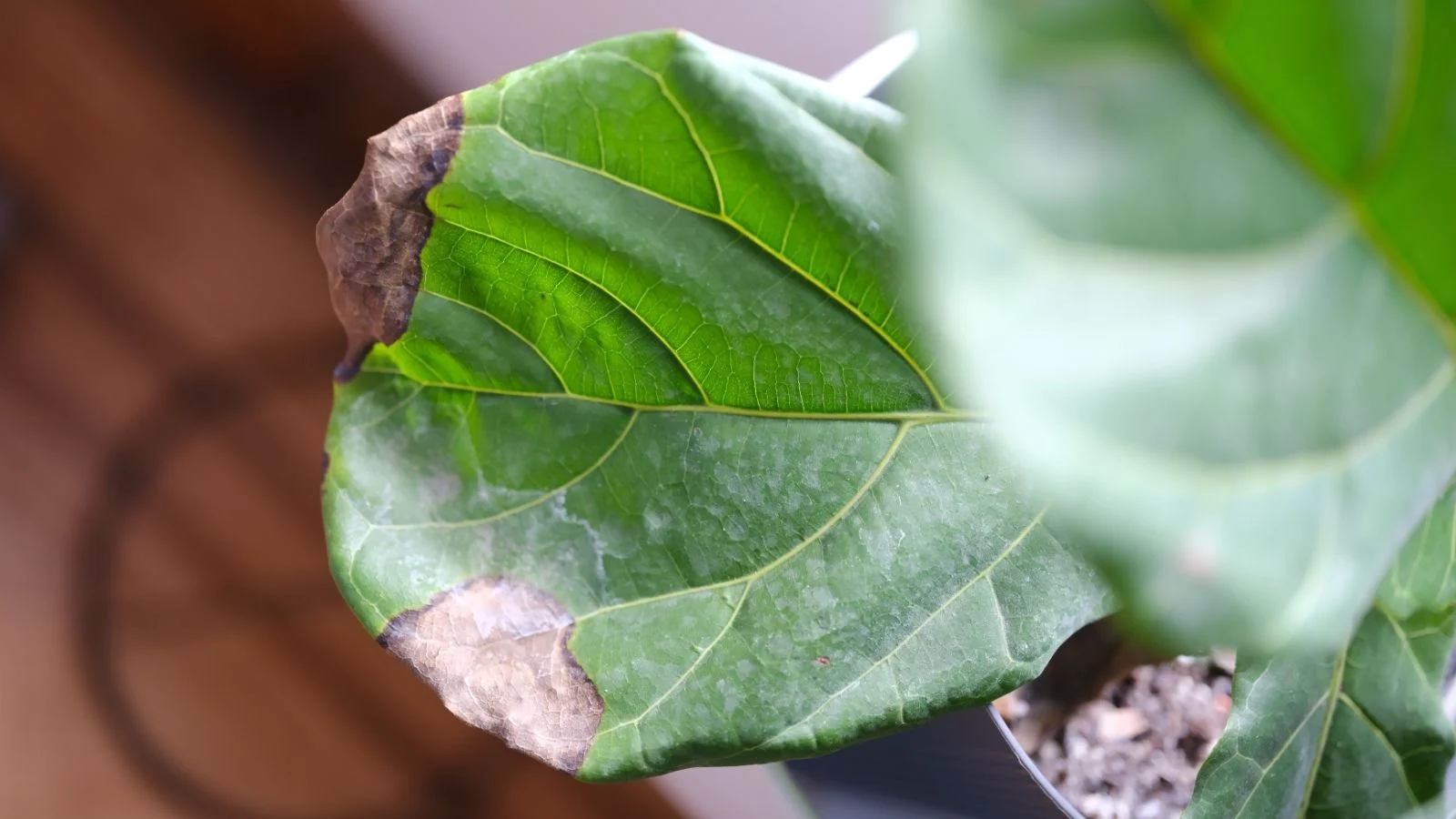 Lack of humidity causes leaf tips to turn brown in patches.
Low humidity causes brown edges and tips rather than distinct spots in the middle of leaves. The browning starts at the leaf margins and works its way inward as the problem continues, eventually becoming larger spots. Fiddle leaf figs tolerate average household humidity reasonably well, so this typically only becomes an issue in winter when indoor air gets very dry from heating systems.
If humidity is the problem, you’ll see the browning on the outer edges of multiple leaves across the plant. The brown areas feel crispy and dry, similar to sunburn, but located differently on the leaf.
This problem develops gradually over weeks rather than appearing overnight. Newer leaves might show less damage initially, but they’ll develop brown edges as they mature in the same dry conditions.
Physical Damage
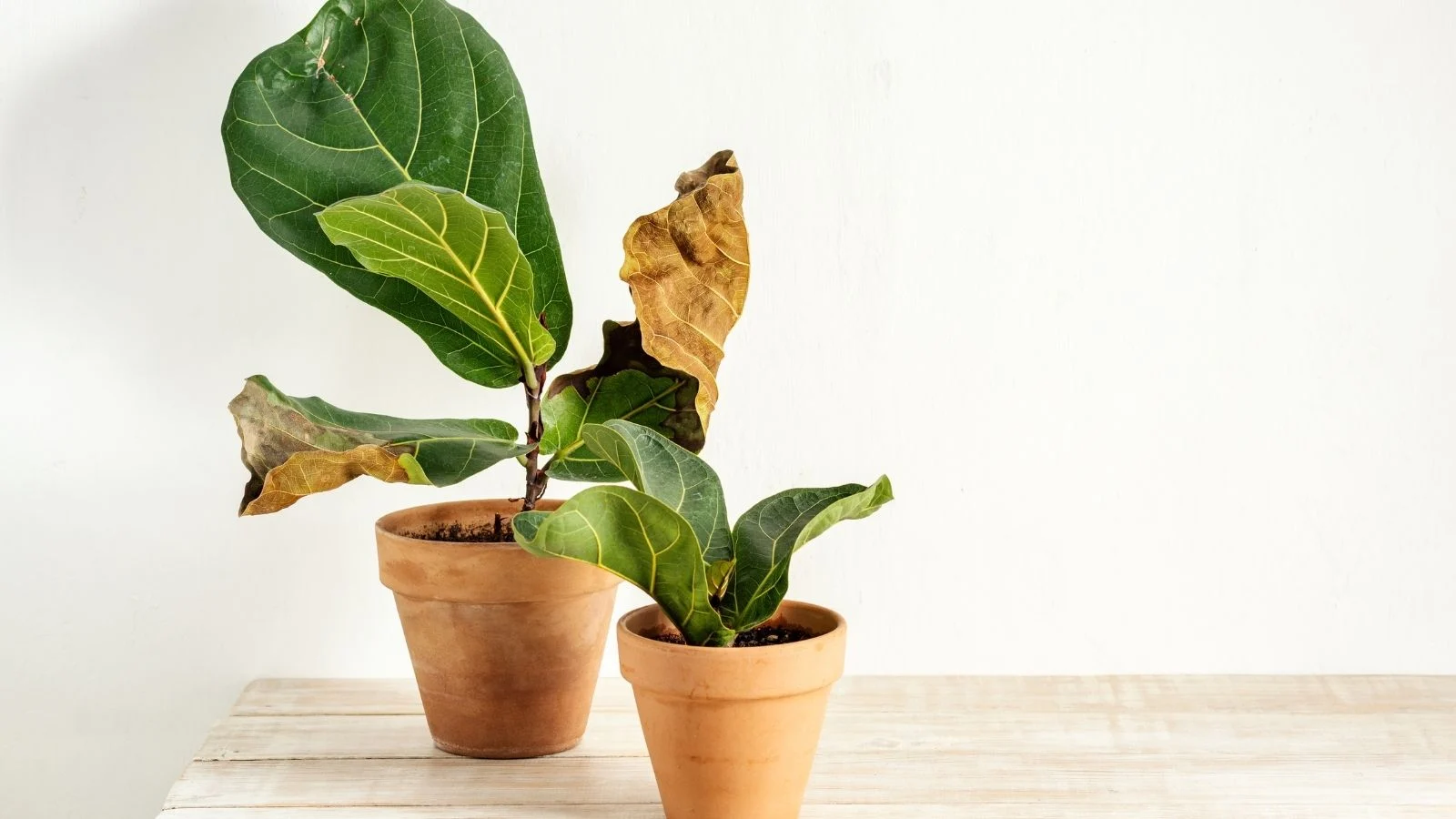 Avoid placing your plant in high-traffic spaces.
Bumping into leaves, pets brushing past (or attacking, depending on your pets), or handling the plant roughly during repotting all cause brown spots or patches where the tissue was damaged. These spots appear within a day or two of the injury and don’t spread to other leaves.
Physical damage is usually isolated to one or two leaves rather than affecting the whole plant. The spots might be irregular in shape, following the pattern of whatever caused the damage rather than the uniform circles or patches you see with other problems.
If you remember moving the plant recently or notice damage only on leaves near a high-traffic area, physical injury is the likely culprit.
Assess the Damage
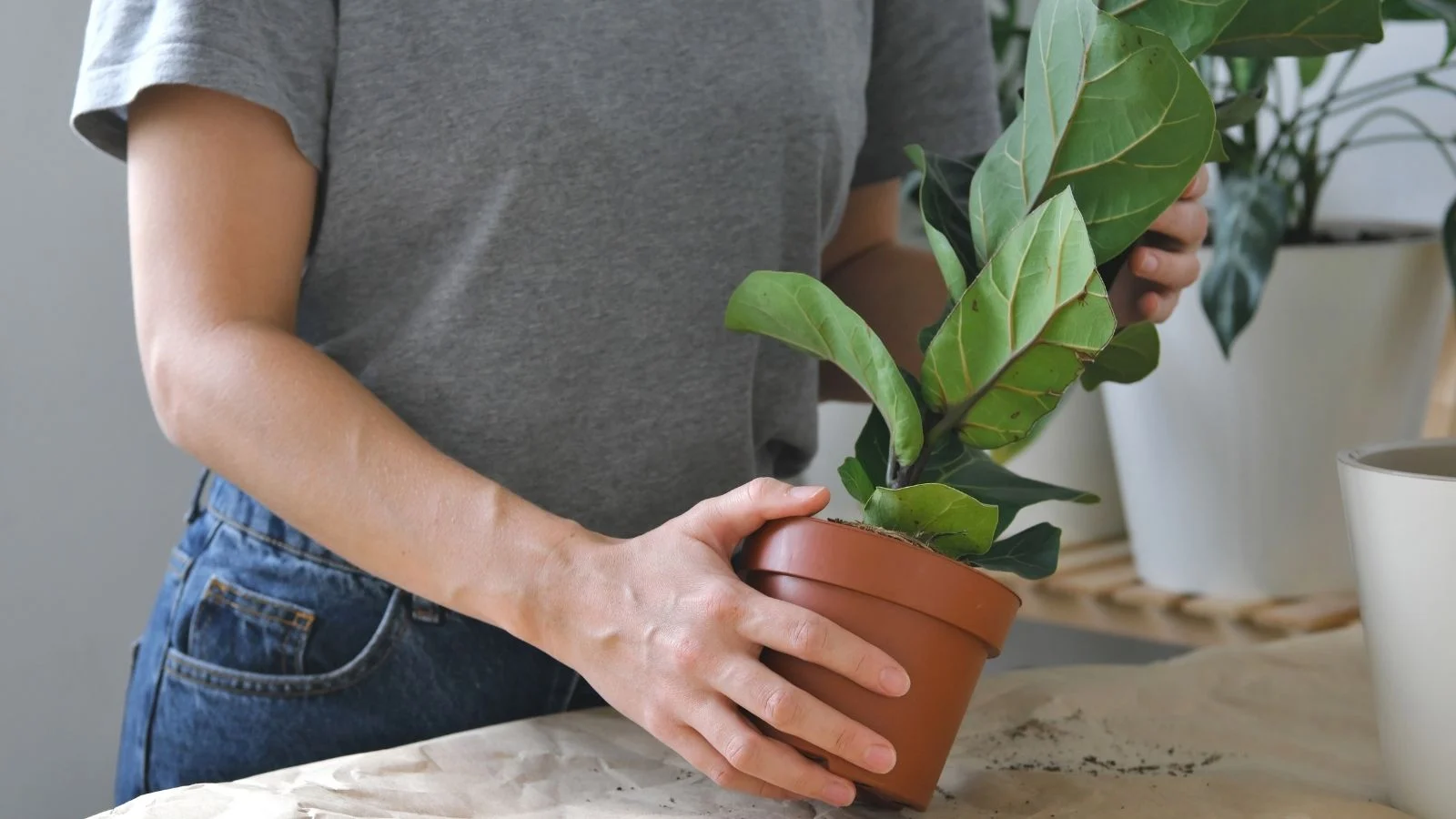 Determine how bad the problem is before fixing it.
Once you’ve identified what’s causing the brown spots on your fiddle leaf fig, look at how much of each leaf is affected. A few small brown spots on otherwise healthy leaves aren’t worth removing, but leaves that are more than 50% brown aren’t contributing much to the plant anymore.
Check whether the spots are still spreading or if they’ve stopped. Active problems (like ongoing pest infestations) create spots that grow larger over days, while resolved issues leave spots that stay the same size. This tells you whether your intervention is working.
Also consider the plant’s overall health. If the fiddle leaf fig is still producing new growth and most leaves look good, a few spotted leaves won’t set it back significantly. But if the entire plant is struggling with widespread damage, you’ll need to be more conservative about leaf removal to preserve the plant’s ability to photosynthesize.
Remove Majorly Impacted Leaves
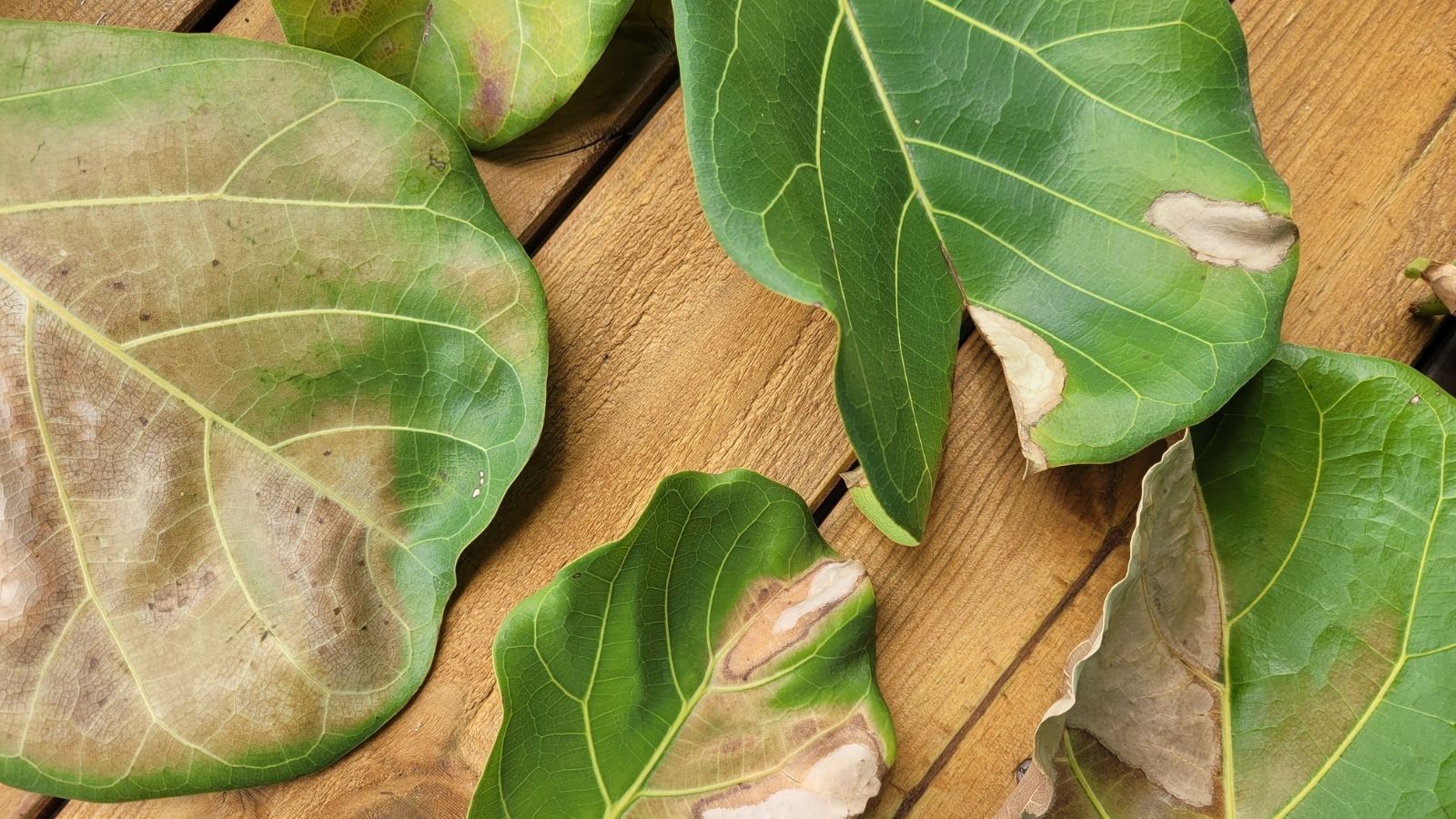 Trim off any leaves that are mostly brown.
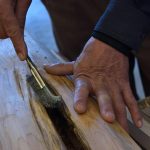
Leaves that are mostly brown serve no purpose and actually drain energy from the plant as it tries to maintain damaged tissue. Use clean, sharp pruning shears to remove these leaves at the base where they meet the stem.
Focus on leaves that are more than half covered in brown spots or leaves where the browning has reached the central vein. These won’t recover, and removing them allows the plant to redirect resources toward healthy growth.
Don’t remove more than 20% of the plant’s leaves at once, even if many are damaged. The fiddle leaf fig needs those leaves for photosynthesis while it recovers. If the damage is extensive, remove the worst leaves first and wait a few weeks before removing additional ones.
Wipe your pruning shears with rubbing alcohol between cuts if you’re dealing with a pest infestation or disease. This prevents spreading the problem from damaged leaves to healthy ones.
Prevent the Same Problem in Future
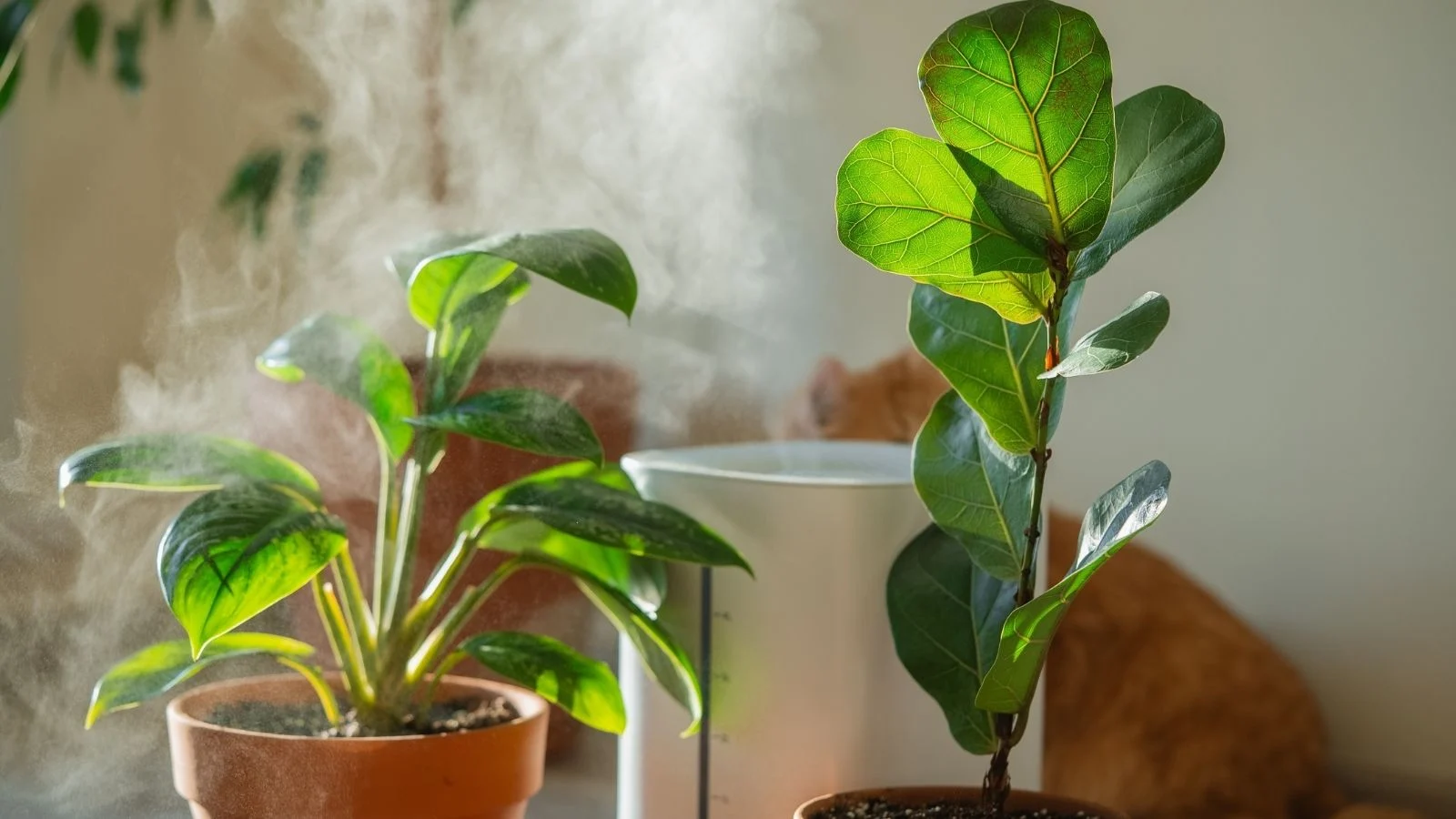 Resolve the problem to stop more leaves from turning brown.
Prevention depends entirely on what caused the brown spots in the first place. For pest issues, inspect your plant regularly (at least weekly) and isolate it from other houseplants until you’re certain the infestation is controlled. Treat with insecticidal soap or neem oil according to package directions, reapplying as recommended to catch newly hatched pests.
If sunburn was the problem, move the plant back from the window or add a sheer curtain to filter intense light. East or west-facing windows work better than south-facing ones for fiddle leaf figs, providing bright light without harsh afternoon sun.
For humidity issues, increase moisture in the air around the plant using a humidifier or by grouping it with other plants. Misting doesn’t help much since the moisture evaporates too quickly to make a difference.
Physical damage just requires more awareness of the plant’s location. Move it away from high-traffic areas or door swings, and handle leaves gently when cleaning or repotting.
The brown spots that have already formed won’t disappear, but new growth should emerge healthy once you’ve addressed the underlying cause. If new leaves continue developing brown spots after you’ve made changes, revisit your diagnosis and look for other factors you might have missed.












Quick thought — This tip on “How to Treat Brown Spots on Your Fiddle” is so useful — thanks for sharing. Love this!
Tiny tip: Yes, that makes a lot of sense. Will try it.
Tiny tip: Yes, that makes a lot of sense. Will try it.
Tiny tip: Yes, that makes a lot of sense. Will try it.
Tiny tip: Yes, that makes a lot of sense. Will try it.