
Happy Friday, GPODers!
On New Year’s Day I shared some of my garden-related highlights from 2025 (Happy New Year, GPOD!), which included the trip I made to Maywood Gardens in Bridgewater, Connecticut, on their annual Open Days for The Garden Conservancy. At the time of writing that post, I was confident that I had shared photos of that trip on Garden Photo of the Day, but I was shocked to find that I had not even mentioned it. Now, at the end of January, after more winter weather has rolled in and summer color still feels painfully far away, I thought it would be a great time to share photos from this sunny day with some of my favorite scenes from the gardens.
Maywood is a private estate in the hills of Litchfield County, which is the northwest corner of Connecticut. Totaling around 1,000 acres of land, the formal gardens and more-naturalized woodlands around the main buildings are just a fraction of the property, which also includes an orchard and vineyard. While the European-inspired architecture and garden designs would incline someone to believe these gardens have origins in the Gilded Age, they only date back to the 1980s.
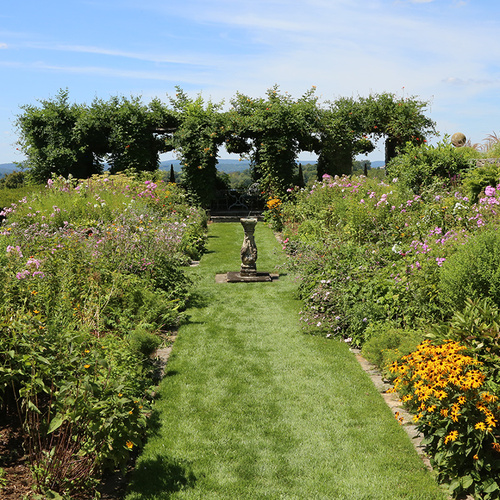
One of the most iconic parts of Maywood Gardens is the Sunken Perennial Garden, so it was no surprise to see it at its peak for their annual day of public viewing. While these are designed in a very traditional style, they still take on the modern need for more beneficial plantings. Throughout these meadow-like beds you’ll find plenty of native blooms attracting and supporting a range of pollinators.
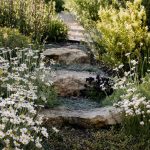
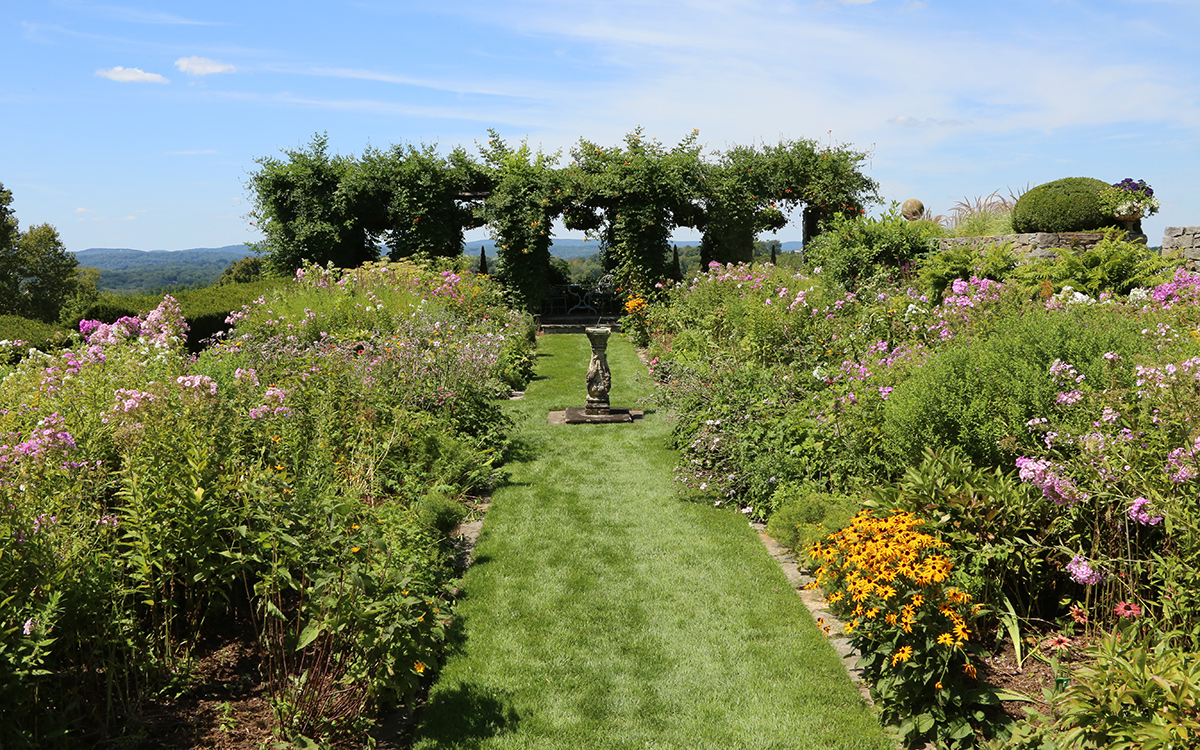 All through the gardens, wildness and formality collide to marvelous effect. This allows the grand architecture of the estate to mend with the rolling hills and woodland landscape of Litchfield County.
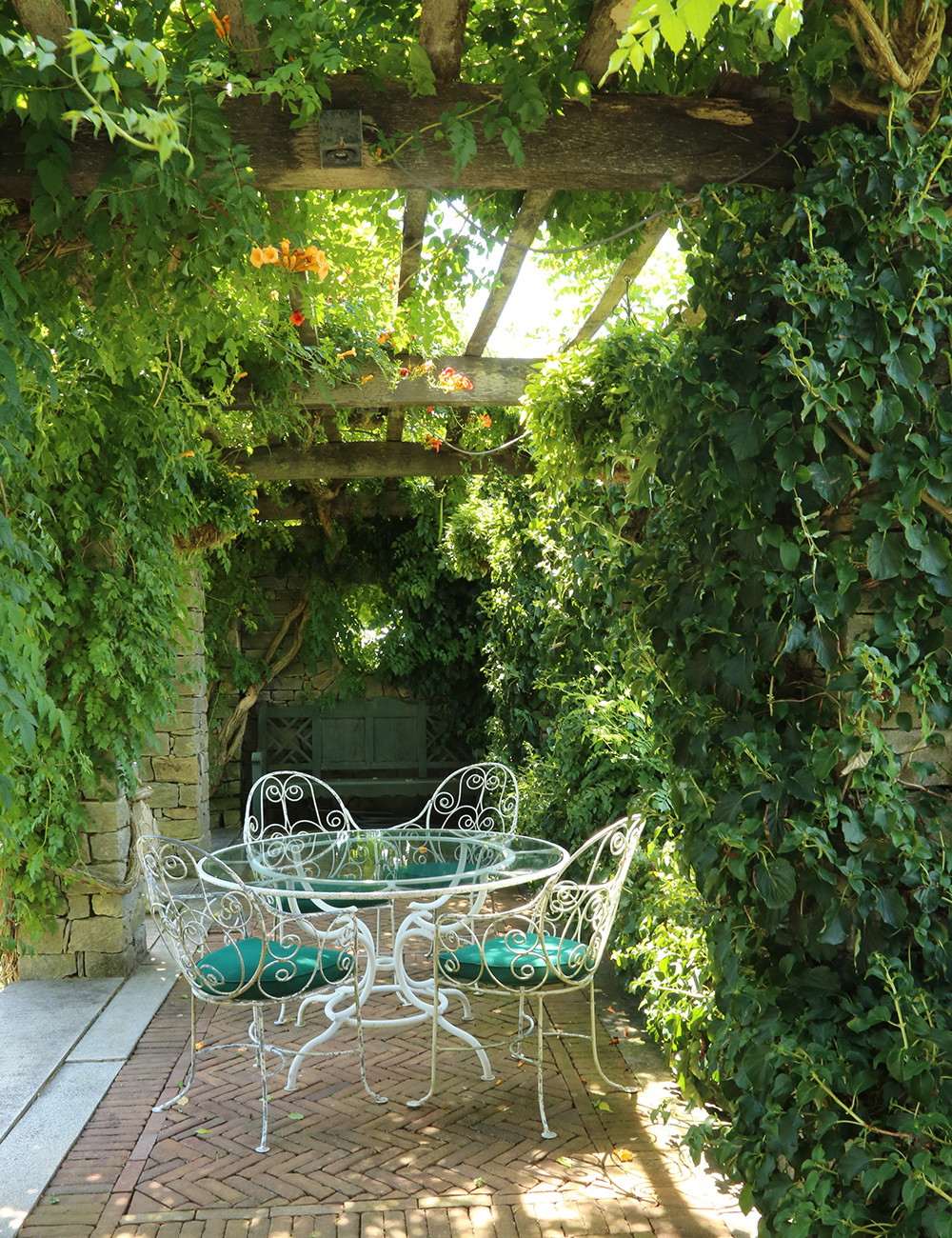 The pergola at one end of the Sunken Perennial Garden feels like a lush hideaway when you step inside. Trumpet vines (Campsis radicans, Zones 4–9) cling to and cover almost every surface, only letting pockets of light spill through the dense foliage.
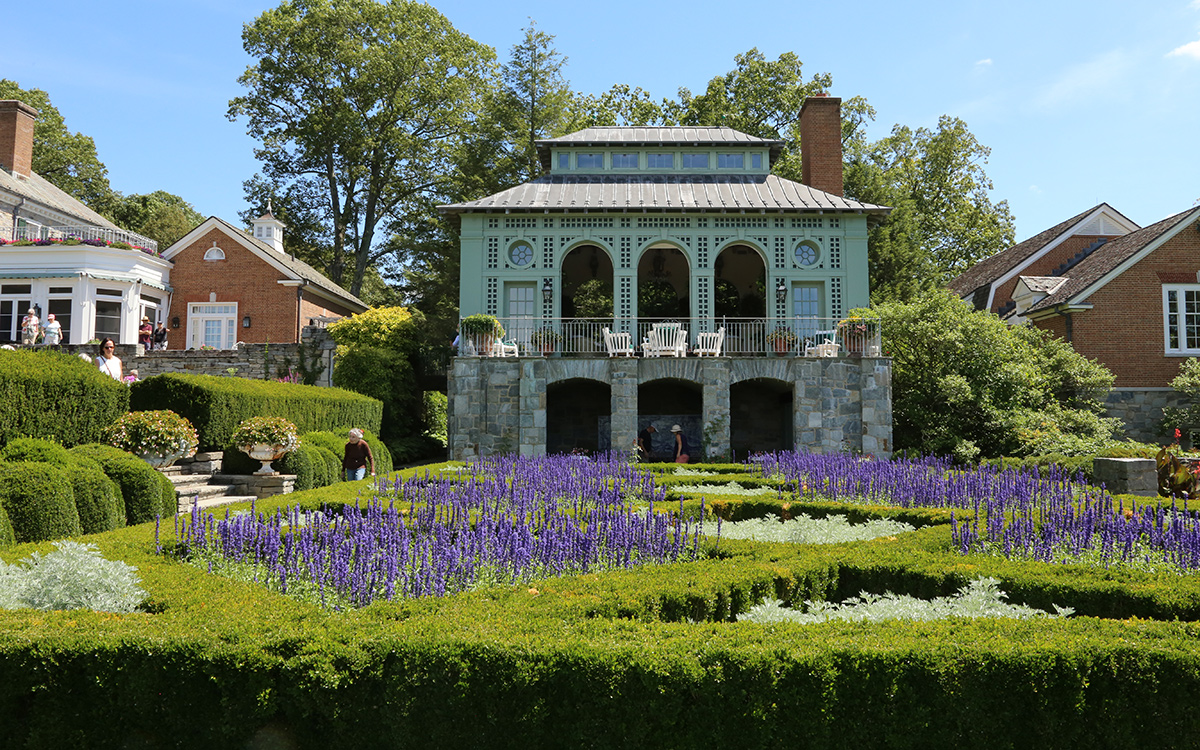 Below the Sunken Perennial Garden is a traditional boxwood garden with inlays of annuals that create fabulous patterns of cool colors. The structure on the far side of this garden, a covered exterior gallery called a loggia, adds to the European style of this part of the estate.
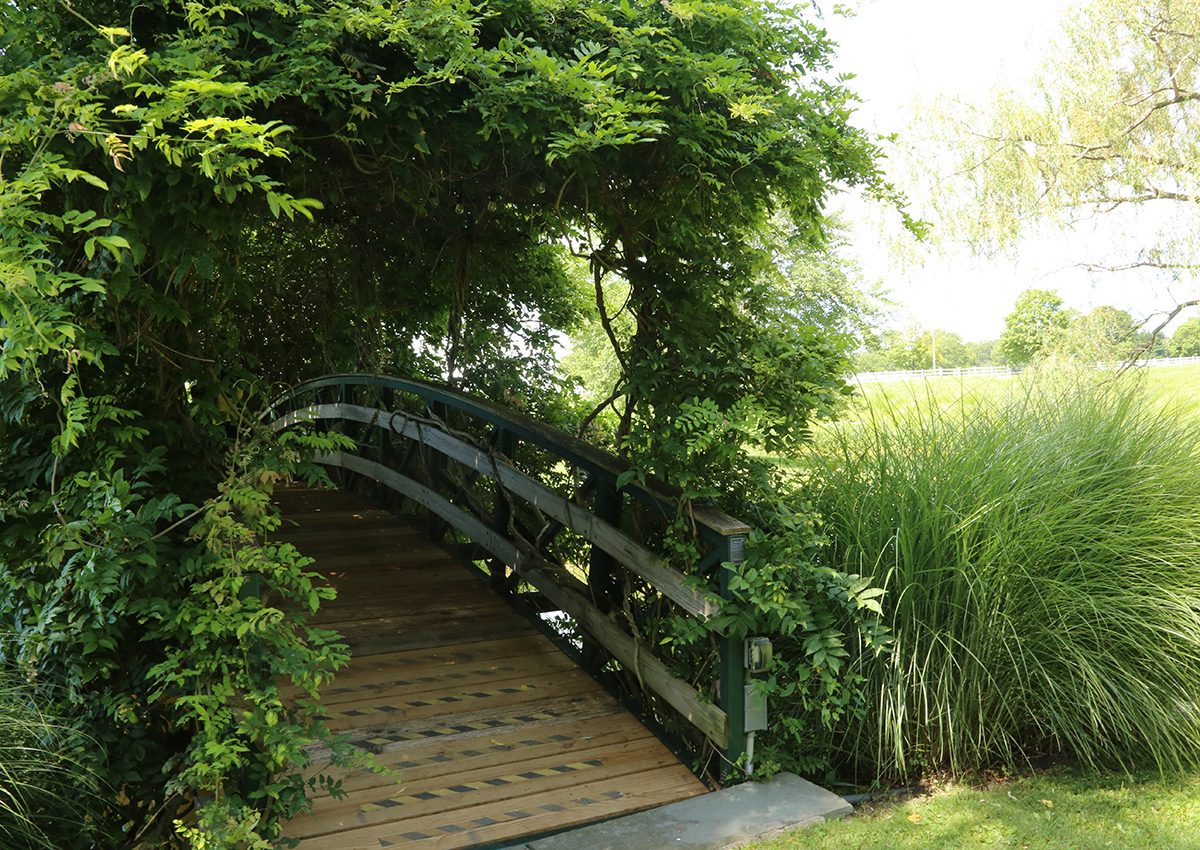 While the grandiose gardens are full of expansive designs that are as impressive in their detail as they are in their scale, I often find myself drawn to the smaller special elements in the garden that enchant and transport. This covered footbridge is one of those most memorable scenes.
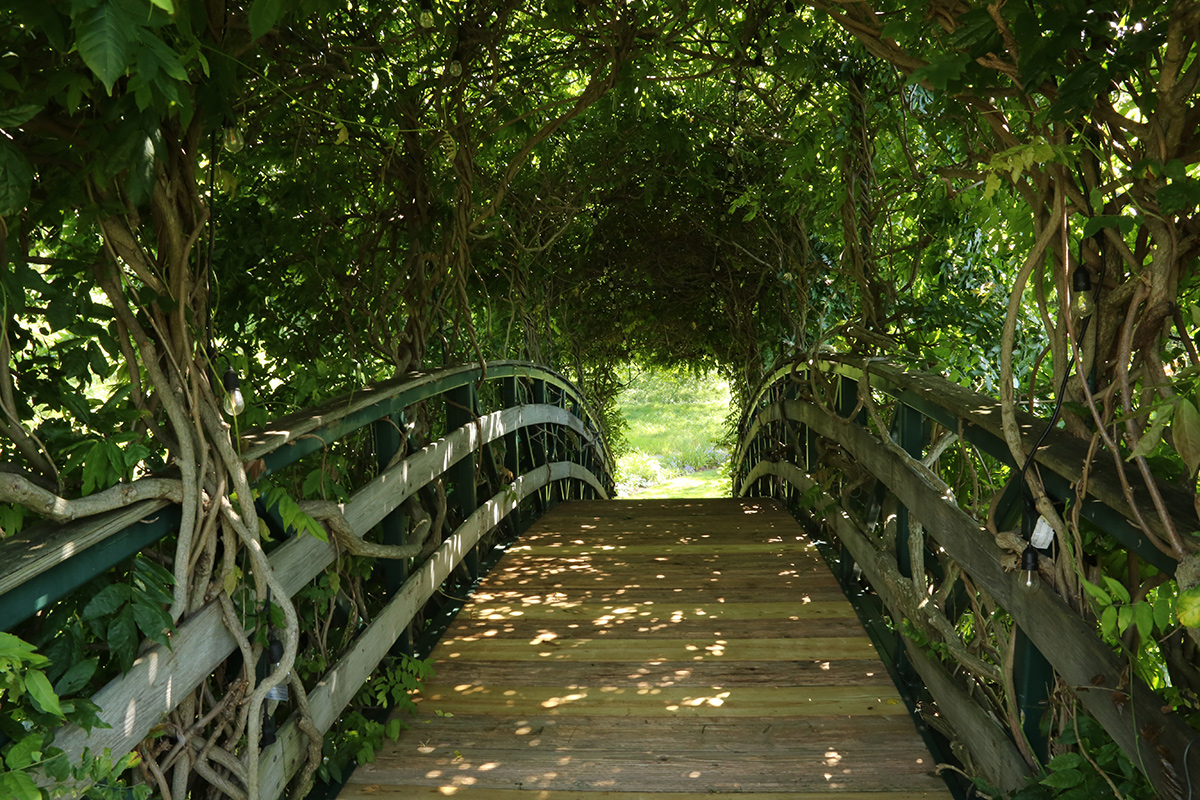 As we’ve already seen a sample of, several structures throughout the grounds were covered in climbing plants that softened edges while adding more spots of shade. However, this bridge felt straight out of a fairytale.
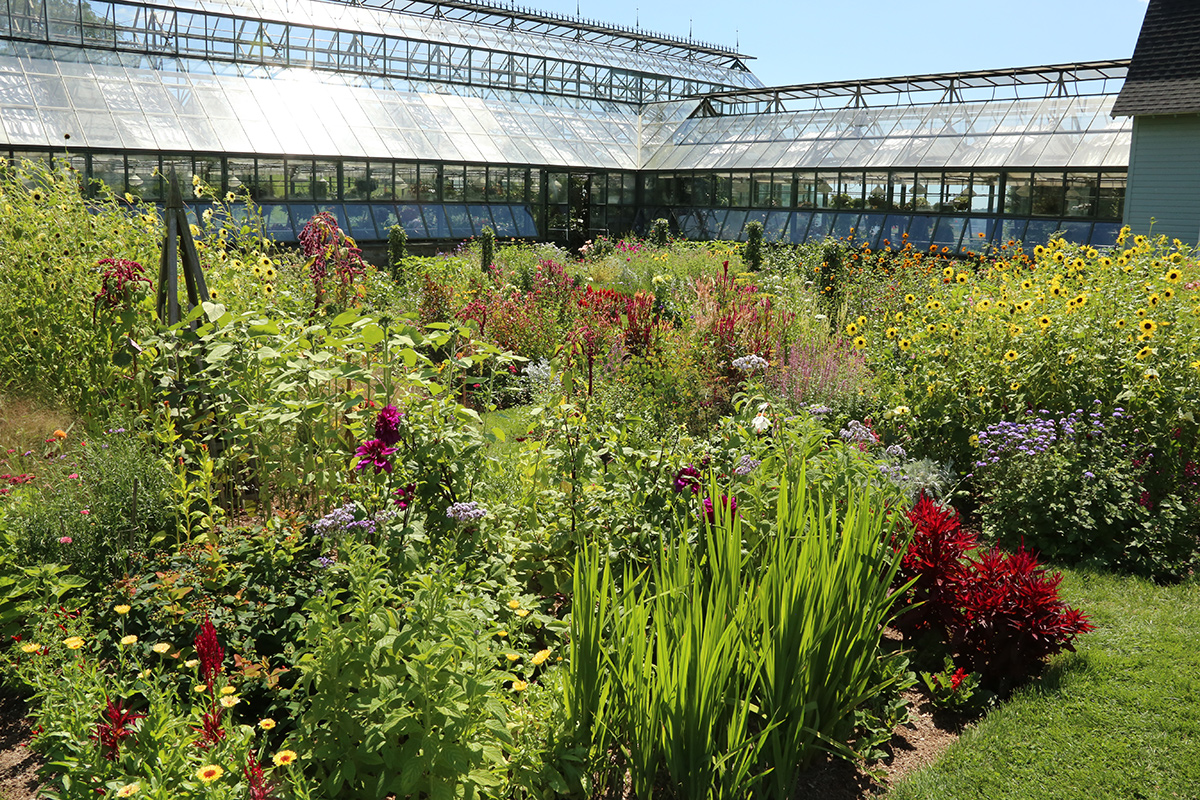 While there are several buildings that make up the estate, any gardener that visits Maywood will likely find the massive greenhouse a focal point on the grounds. The front of the greenhouse features formal garden beds, but the backside is the home to the Annual Cutting Garden. A great mix of annuals somehow comes together cohesively, and these flowers are actually utilized as a real cutting garden. Much of the plant material harvested from these beds create weekly flower arrangements.
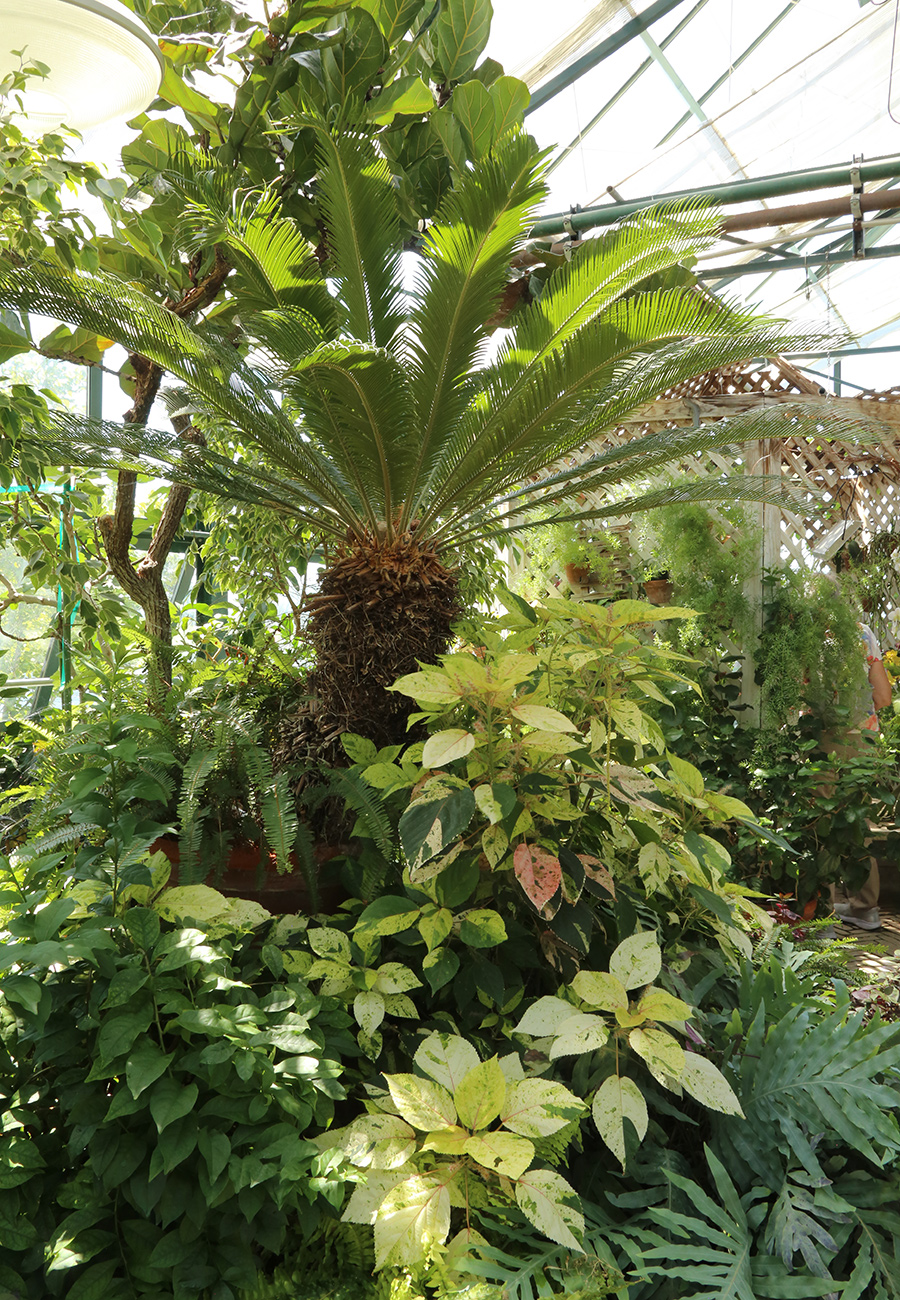 The greenhouse, aside from its main purpose of starting and overwintering plants for future outdoor planting, is home to large collections of tropical plants that range from orchids to warm-climate woodies. These conservatory plants are divided up by type (as in the Orchid House) or arranged into incredible displays like this one with a sago palm (Cycas revoluta, Zones 9–12) focal point.
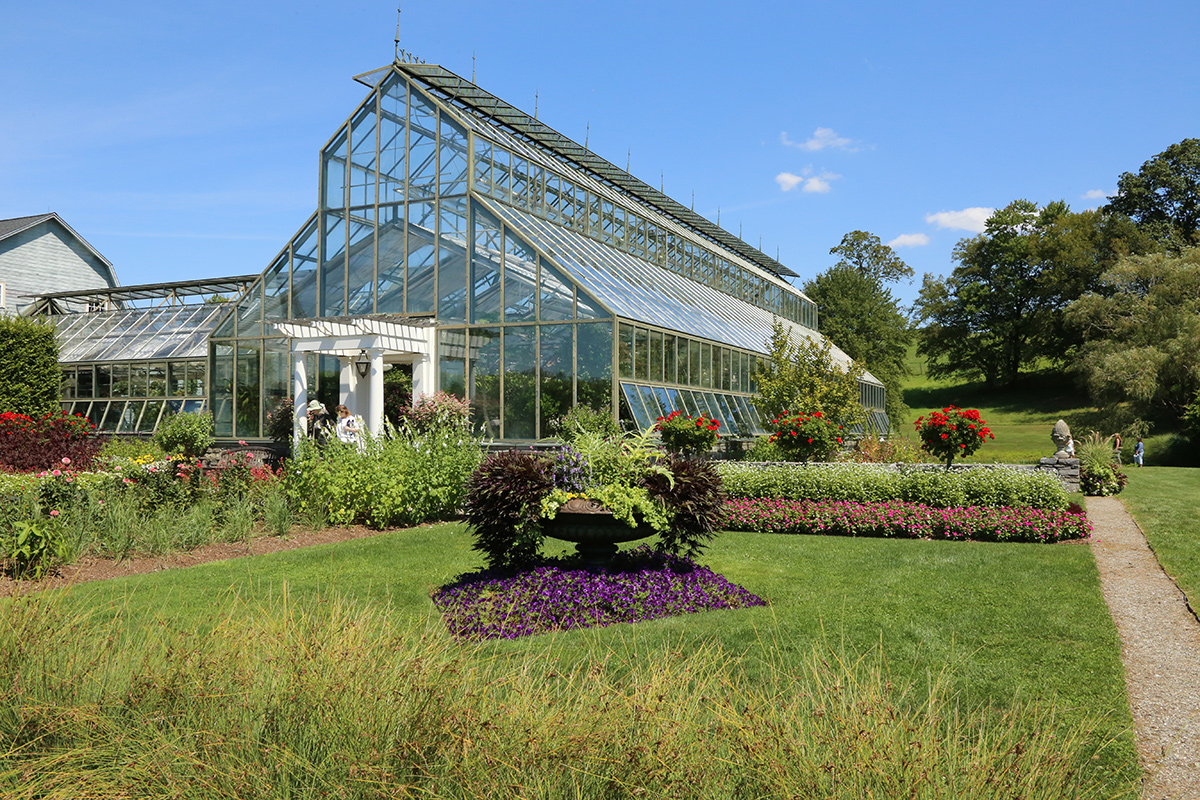 While the greenhouse is a functional addition to the estate, it also adds more beauty to the gardens. A handful of lawn areas situated around the greenhouse make up the formal gardens that I mentioned above, some with espaliered trees and others with long beds of colorful annuals.
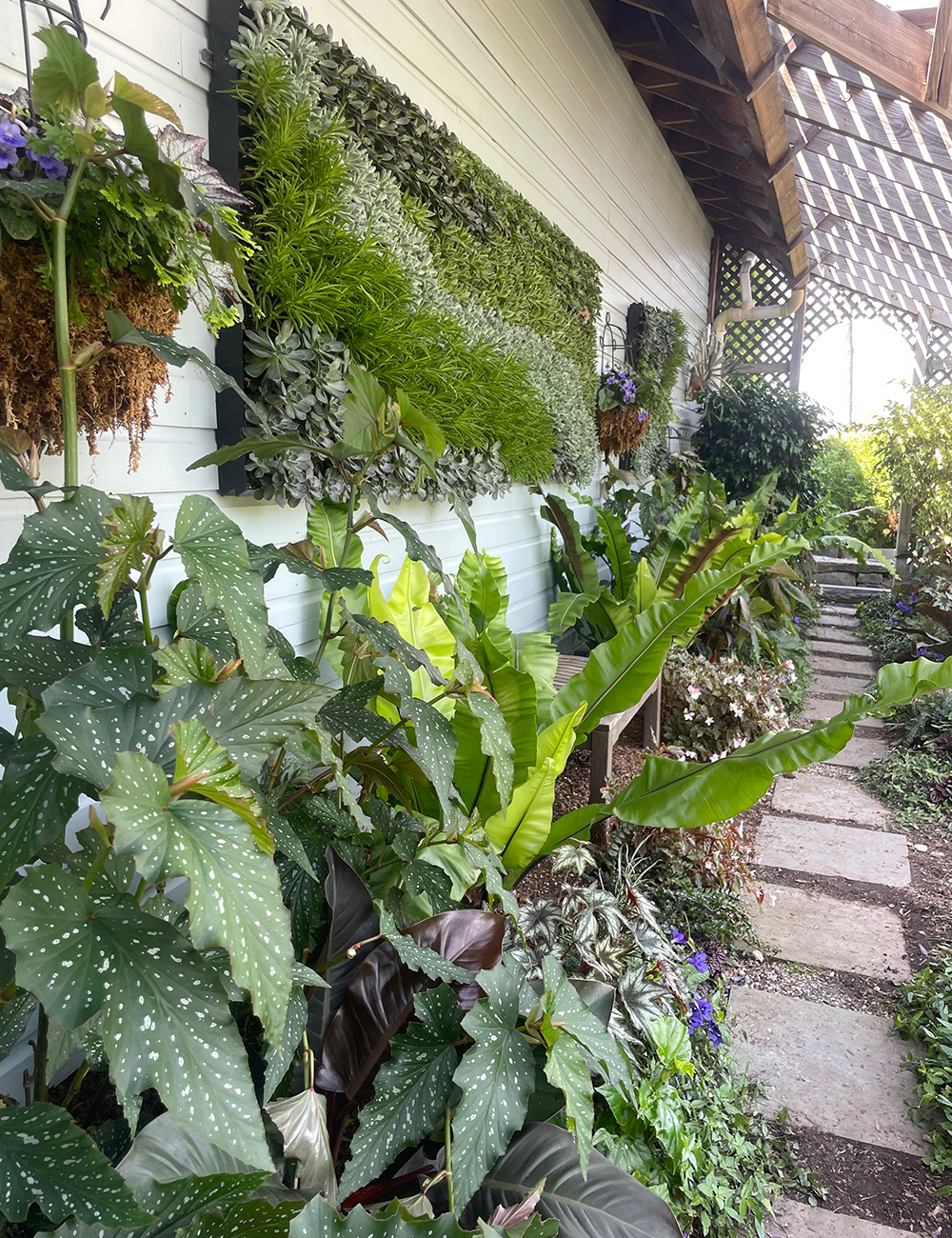 There are so many different garden areas at Maywood, tucked into corners or waiting for you around a bend, that it is very easy to miss whole garden rooms as you’re exploring the grounds. That was almost the case with this smaller section of tender and tropical plants near the rose garden (which did not have many blooms when I visited). As a houseplant collector and succulent obsessive, viewing this fascinating foliage was actually a highlight. I’m thrilled I carried my tired legs down yet another garden path to find it.
I hope you enjoyed this tour of a Connecticut garden marvel. This year’s Open Day has yet to be announced, but if you’re in the area this summer I would highly suggest blocking out your schedule to make the trip. And if you visited any public or private gardens last year, please consider sharing your photos with the blog. Follow the NEW directions below to submit your photos to Garden Photo of the Day!
We want to see YOUR garden!
Have photos to share? We’d love to see your garden, a particular collection of plants you love, or a wonderful garden you had the chance to visit!
To submit, fill out the Garden Photo of the Day Submission Form.
You can also send 5–10 photos to [email protected] along with some information about the plants in the pictures and where you took the photos. We’d love to hear where you are located, how long you’ve been gardening, successes you are proud of, failures you learned from, hopes for the future, favorite plants, or funny stories from your garden.
Do you receive the GPOD by email yet? Sign up here
Fine Gardening Recommended Products
Hunter Industries MP-1000-90 Hunter Nozzle
Fine Gardening receives a commission for items purchased through links on this site, including Amazon Associates and other affiliate advertising programs.
– 8′ to 15′ radius with an adjustable arc of 90° to 210°, radius can be reduced by up to 25% to fit landscape needs
– Double-pop technology flushes the nozzle during start-up and shutdown to prevent clogging
– Wind-resistant, multi-directional streams provide even coverage
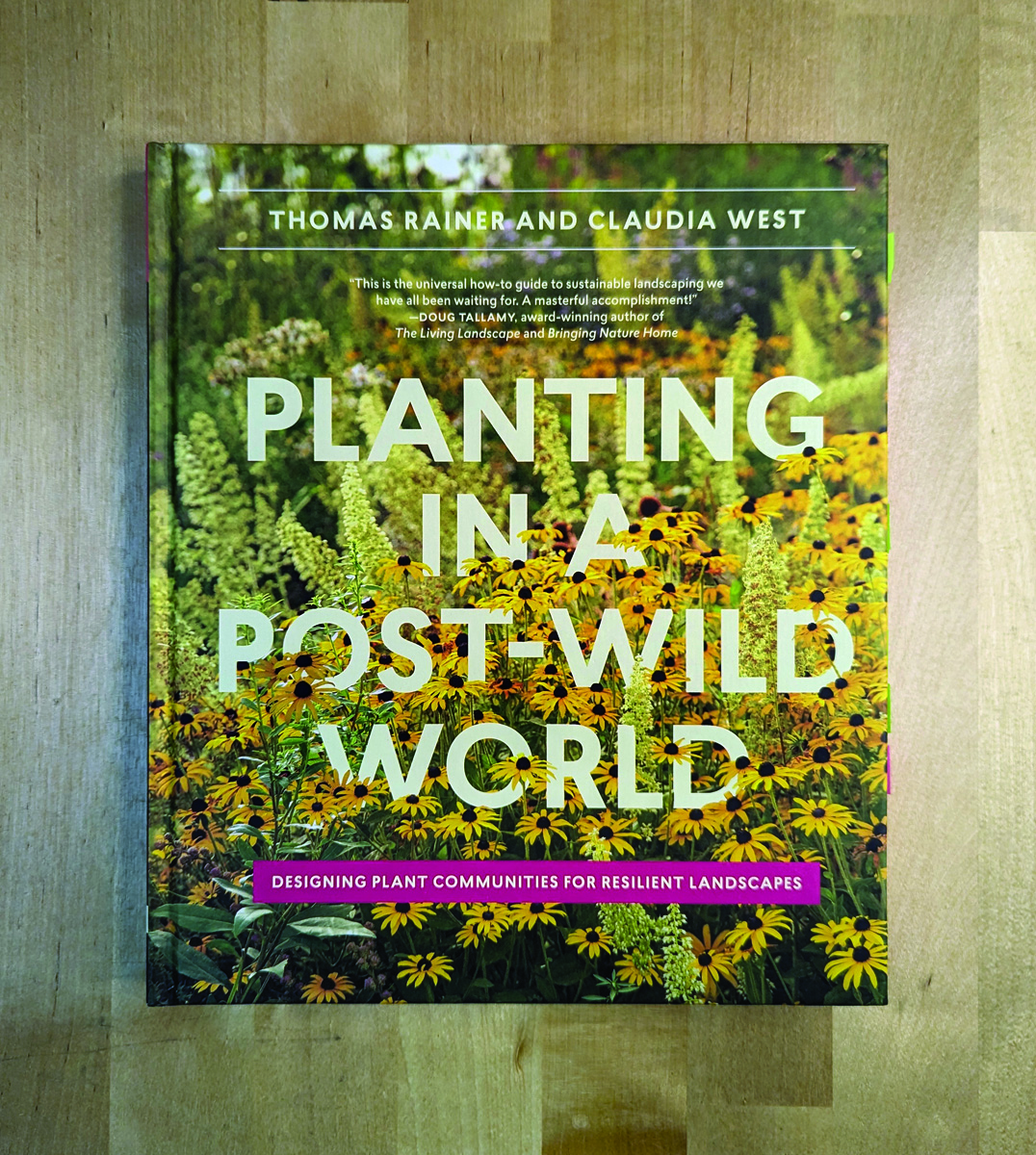
Planting in a Post-Wild World: Designing Plant Communities for Resilient Landscapes
Fine Gardening receives a commission for items purchased through links on this site, including Amazon Associates and other affiliate advertising programs.
Featuring gorgeous photography and advice for landscapers, Planting in a Post-Wild World by Thomas Rainer and Claudia West is dedicated to the idea of a new nature—a hybrid of both the wild and the cultivated—that can nourish in our cities and suburbs.

SHOWA Atlas 370B Nitrile Palm Coating Gloves, Black, Medium (Pack of 12 Pairs)
Fine Gardening receives a commission for items purchased through links on this site, including Amazon Associates and other affiliate advertising programs.
Lightweight and close-fitting for excellent dexterity. Machine washable. Breathable back of hand to reduce perspiration. Designed for easy movement and continuous wear. Ideal for aerospace, assembly, automotive, construction, final fix, gardening, manufacturing, operating machinery, packaging, precision handling, tiling, warehousing.















PS: This tip on “GPOD on the Road: Maywood Gardens” is so useful — thanks for sharing. Thanks for this!
On a similar note · I appreciate the point about “GPOD on the Road: Maywood Gardens” — very practical. Will try it.
Quick thought: This tip on “GPOD on the Road: Maywood Gardens” is so useful — thanks for sharing. So cozy.
Small note — I appreciate the point about “GPOD on the Road: Maywood Gardens” — very useful. Will try it.