
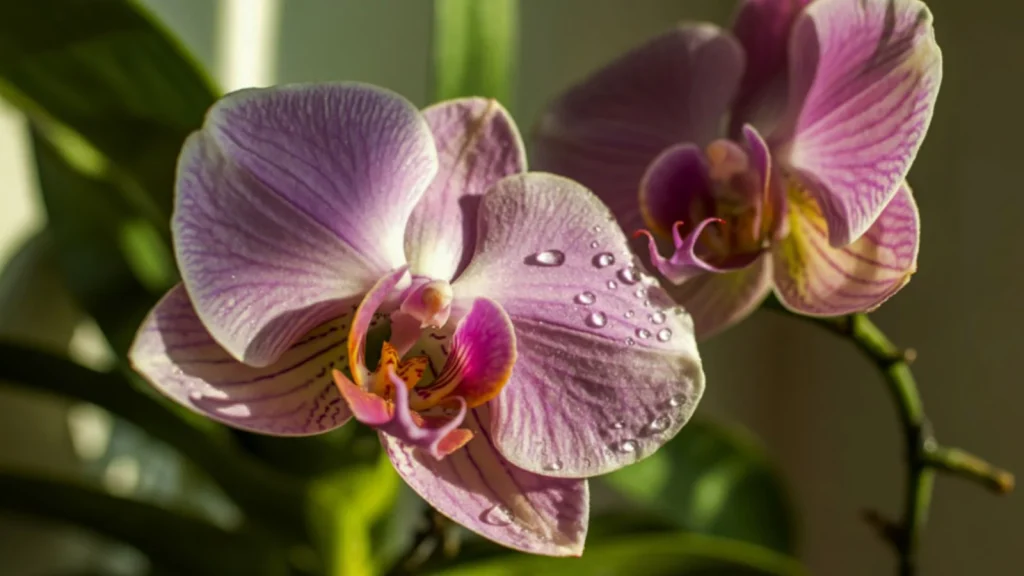
Orchids for low-light. A brief context to set expectations.
Orchids for low-light: Quick notes
Orchids have a reputation for being difficult and demanding, particularly when it comes to light requirements if you want them to flower (who doesn’t?).
You might assume these exotic bloomers need greenhouse-level brightness or sunny windowsills to flower, which puts orchids out of reach for anyone dealing with north-facing windows or naturally dim garden spots.
But luckily, orchid diversity is staggering, so there are species and hybrids adapted to nearly every light level imaginable. While some do need intense brightness to bloom, plenty of others evolved in forests where dappled shade is the norm.
These low-light orchids bring the same stunning blooms and elegant foliage without requiring the brightest spots in your home.
Phalaenopsis
These are some of the most common orchids grown around the world.
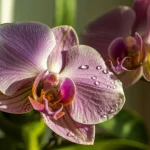
Phalaenopsis orchids (commonly called moth orchids) are the most widely available orchids and also among the most tolerant of lower light.
These orchids naturally grow as epiphytes in forest understories where they receive filtered light through tree canopies. They’ve adapted to make efficient use of dappled light, which is found in typical home environments without needing prime window real estate.
If you’re growing indoors, an east-facing window provides ideal conditions for phalaenopsis, giving them gentle morning sun followed by bright ambient light the rest of the day. They also perform well in west windows if you filter afternoon sun with sheer curtains, or even in bright rooms without direct window exposure.
The leaves tell you whether light levels are appropriate. Dark leaves indicate the plant would welcome more light, while pale leaves suggest it’s getting too much. Adjust placement based on what the leaves are showing you.
Blooms last for months on these low-light orchids, which more than compensates for the waiting period between flowering cycles. With proper care and adequate (though not intense) light, mature plants typically bloom once or twice annually. The long-lasting flowers mean you get weeks or even months of display from each spike.
Oncidium
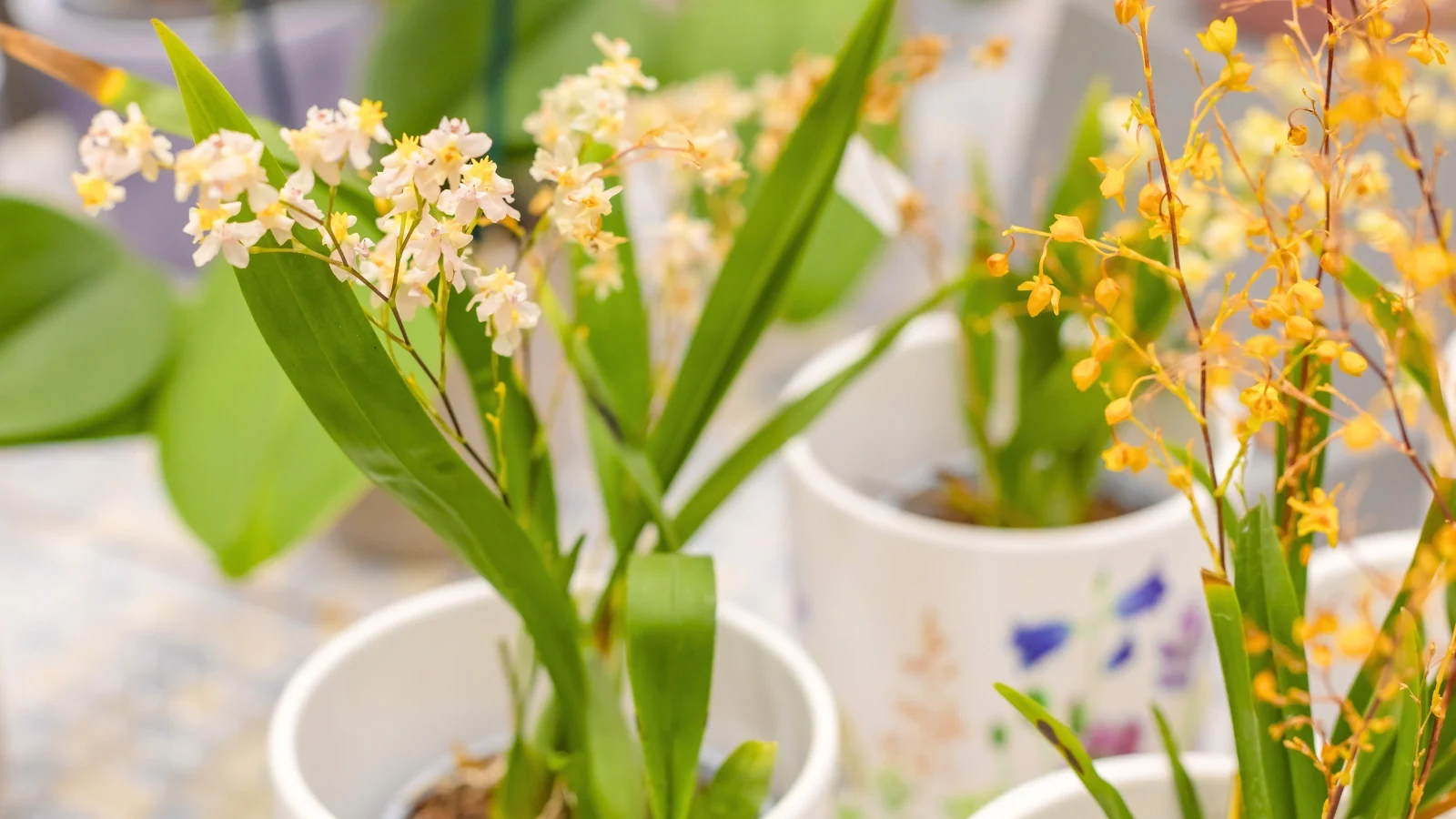 Species in this genus can tolerate lower light levels.
Oncidium orchids include species and hybrids spanning a range of light requirements. Many tolerate moderate to lower light levels, particularly the thicker-leaved varieties.
The genus is diverse enough that generalizations only go so far, but many oncidiums grow well in similar conditions to phalaenopsis. They appreciate bright light but don’t require direct sun and actually perform better with some protection from harsh rays.
Oncidiums with thinner, more delicate leaves typically need brighter conditions and aren’t the best choice for genuinely low-light spaces. But varieties with substantial, almost succulent foliage handle lower brightness better.
Many produce branching sprays covered in dozens of small flowers, creating clouds of blooms. Growth habit differs from phalaenopsis, as oncidiums produce pseudobulbs (thickened stem structures) that store water and energy. These bulbs need to mature fully before the plant blooms, which means young divisions might not flower for a year or two, even with perfect care.
Dendrobium
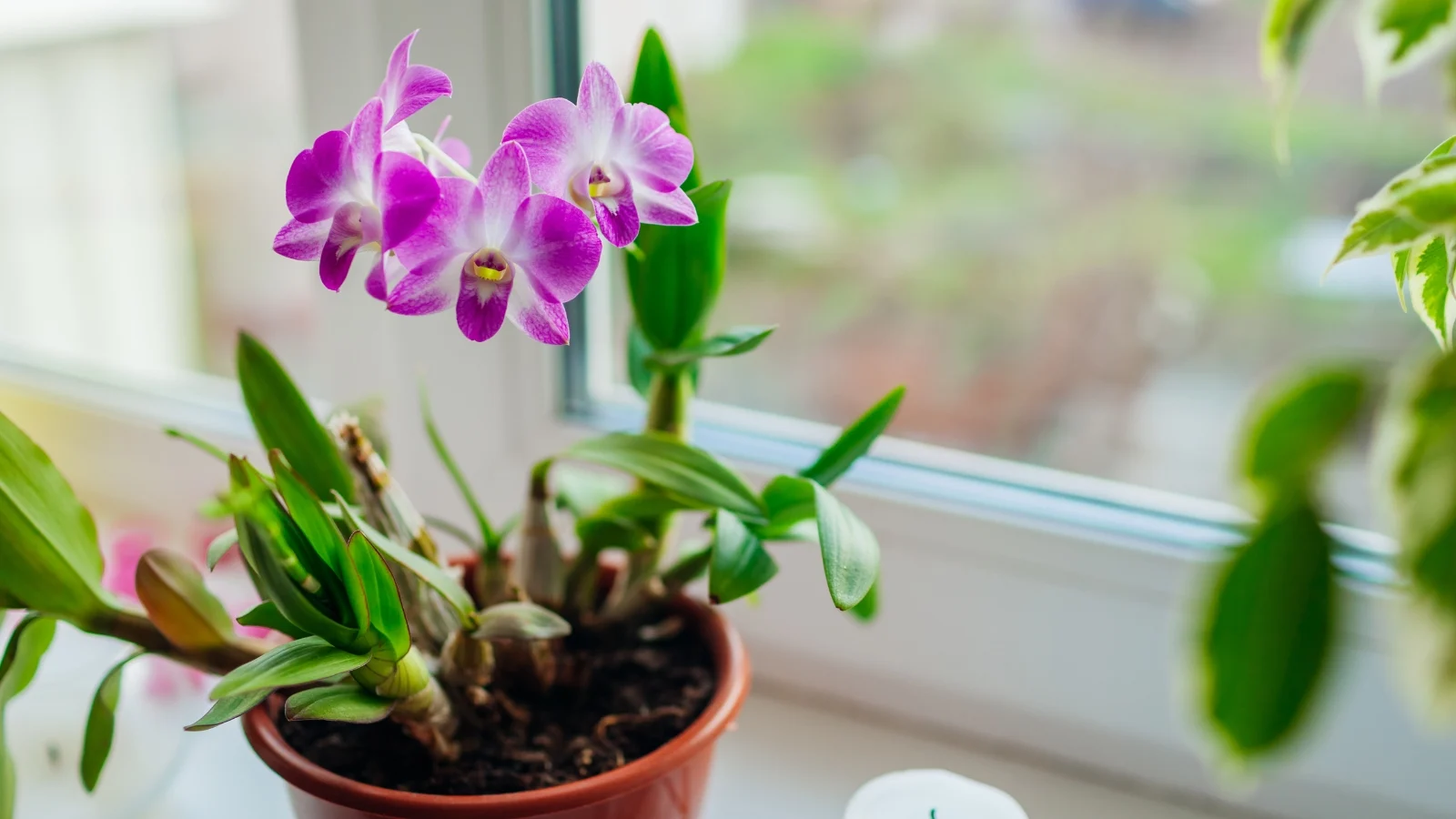 With the right light, you can look forward to beautiful flowers.
The dendrobium genus is massive and varied, including both high-light and lower-light species. For lower-light situations, focus on varieties labeled as “soft-cane” or “nobile-type” dendrobiums, which generally tolerate less intense brightness than their hard-cane relatives.
These orchids can handle the same light levels as phalaenopsis: bright but indirect. They’re slightly more flexible about placement than some orchids, tolerating brief morning sun without damage while also accepting somewhat dimmer conditions than ideal if necessary.
These low-light orchids prefer a rest period after blooming, where water and fertilizer are reduced significantly. This triggers the next season’s bloom development, so skipping it often means the plant grows vegetatively but doesn’t flower.
For low-light growers, this is actually advantageous since you’re not trying to push active growth year-round in conditions that might not be adequate.
Paphiopedilum
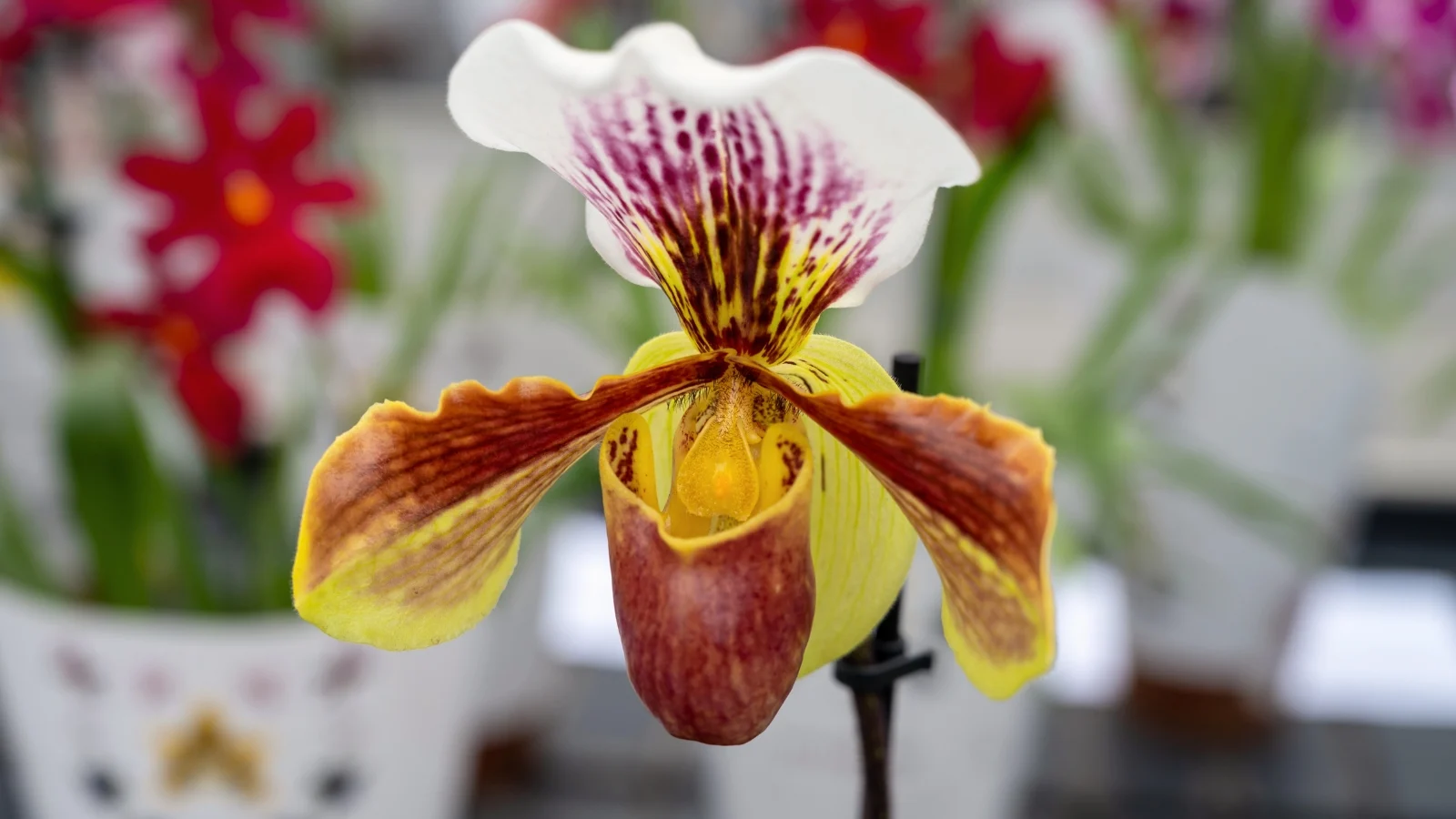 These orchids actually prefer low-light conditions.
Lady slippers are terrestrial orchids that naturally grow on forest floors rather than as epiphytes in tree canopies. This evolutionary history makes them uniquely suited to lower light conditions compared to many orchids.
These are genuinely low-light orchids that not only tolerate but actually prefer conditions that would be too dim for even phalaenopsis or most other commonly grown varieties. An east window is bright enough, and they can even grow successfully in north windows or in spots several feet from windows with good ambient brightness.
The foliage on paphiopedilums is attractive in its own right. Leaves with mottled or striped patterns add visual interest even when plants aren’t blooming. The flowers are distinctive with their pouch-like lower petals and often intricate markings and colors.
Growth requirements differ somewhat from epiphytic orchids. Paphiopedilums grow in terrestrial mixes that retain more moisture than the bark-based media used for phalaenopsis or oncidiums. They prefer consistent moisture without drying out completely, though they still need good drainage to prevent rot.
Miltonia
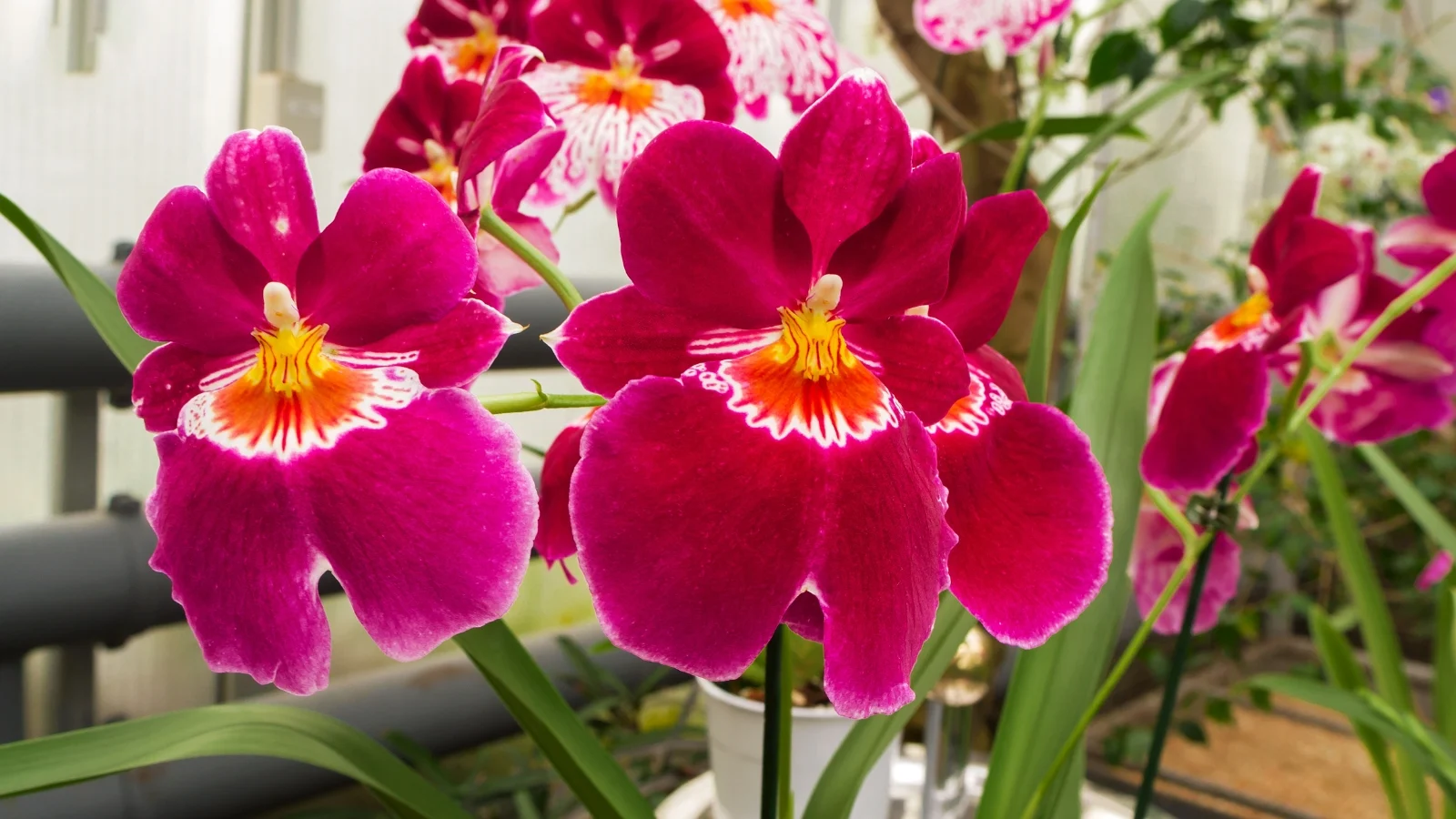 The large flowers are incredibly eye-catching.
Miltonia orchids require the same cool, shaded conditions they experience in their native forest habitats. This makes them excellent candidates for spaces that are bright, but not intensely so.
These orchids like somewhat lower light than phalaenopsis, though calling them true “low-light” orchids stretches things a bit. They’re better described as moderate-light orchids that can tolerate lower brightness better than many alternatives.
The flowers are the main attraction, with bold markings and colors that resemble pansies. Many have distinctive patterns around the center. Individual flowers are substantial compared to the plant size, creating impressive displays when multiple blooms open simultaneously.
Humidity matters more for miltonias than for some other orchids on this list. They evolved in constantly moist forests and struggle in dry air. Aim for 50 to 70% humidity if possible, using humidifiers or grouping plants to create more favorable conditions.
Miltonias can be slightly more challenging than phalaenopsis for beginners, but they’re not unreasonably difficult if you can provide their preferred cooler, more humid environment. For growers who have those conditions naturally or are willing to create them, miltonias have beautiful blooms in spaces where higher-light orchids would struggle.
Orchids for low-light comes up here to connect ideas for clarity.
A short mention of Orchids for low-light helps readers follow the flow.









Heads up · This tip on “5 Orchids for Low-Light Spaces” is so useful — thanks for sharing. Saving it 🌸