
How grow comfrey: a concise orientation before we get practical.
How grow comfrey: Quick notes
Comfrey is one of those plants that does a lot of behind-the-scenes work in the garden. If you want a steady supply of leafy “green matter” to feed your soil, boost your compost, or make a homemade liquid fertilizer, comfrey is a great choice. Learn how to grow it with the tips in this guide.
It can be tough to grow in hot, dry summer climates because it really likes consistent moisture. But, with the right spot and a little extra attention during heat, it can still be worth growing. And if it ends up being more trouble than it’s worth, borage is an excellent substitute that gives you similar benefits with less commitment.
Key Takeaways
- Comfrey is an excellent plant for adding nutrients to soil and compost, but it requires consistent moisture and care, especially in hot climates.
- You can use comfrey as a chop-and-drop mulch, a homemade liquid feed, or a compost activator to enhance your garden’s productivity.
- Choose true comfrey or a sterile cultivar like ‘Bocking 14’ to prevent self-seeding, and plant it in rich, well-draining soil.
- Water deeply and frequently, especially when establishing comfrey, and use mulch to help it thrive in hot weather.
- If comfrey struggles in your climate, consider borage as an easier alternative that provides similar benefits.
Why gardeners grow comfrey
Chop-and-drop mulch
This is the simplest reason to grow comfrey. Cut a handful of leaves, lay them around your plants, and let them break down right on the soil. It’s an easy way to protect the soil surface and add organic matter without hauling anything in from outside the garden.
Homemade liquid feed
Comfrey leaves can be soaked to make a strong liquid fertilizer. People often call it comfrey tea. It’s a common way to give heavy-feeding plants a boost.
Compost activator
Comfrey is a great “green” compost material. If your pile has a lot of “browns” (dead leaves, straw, shredded paper), adding chopped comfrey helps bring things back into balance and keeps the pile moving. Learn how to compost in this guide.
Pollinator support
If you let it bloom, bees love it. You get fertilizer leaves and pollinator flowers in the same plant. Learn about more plants to attract pollinators in this guide.
Choosing the right comfrey
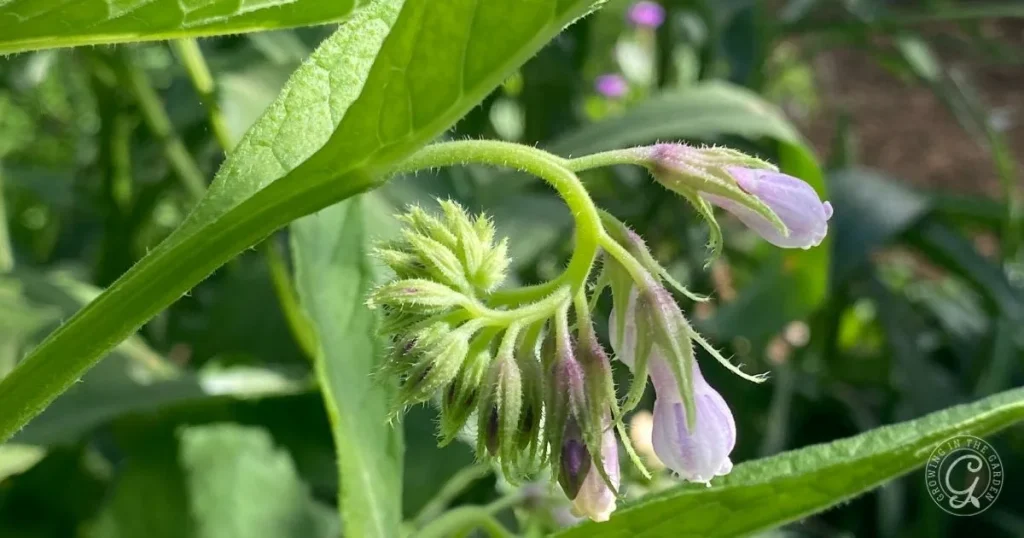
If you’re buying seed labeled true comfrey (Symphytum officinale), that’s the traditional comfrey with pretty purple flowers. It can also set seed and reseed. It can be invasive in some areas.
Many gardeners who grow comfrey mainly for fertilizer choose Russian comfrey or a sterile cultivar (often sold under names like ‘Bocking 14’) because it won’t self-seed.
One important note: even sterile comfrey can be tough to remove once it’s established because it can regrow from root pieces. So no matter which type you grow, pick the location carefully.
Where to plant comfrey
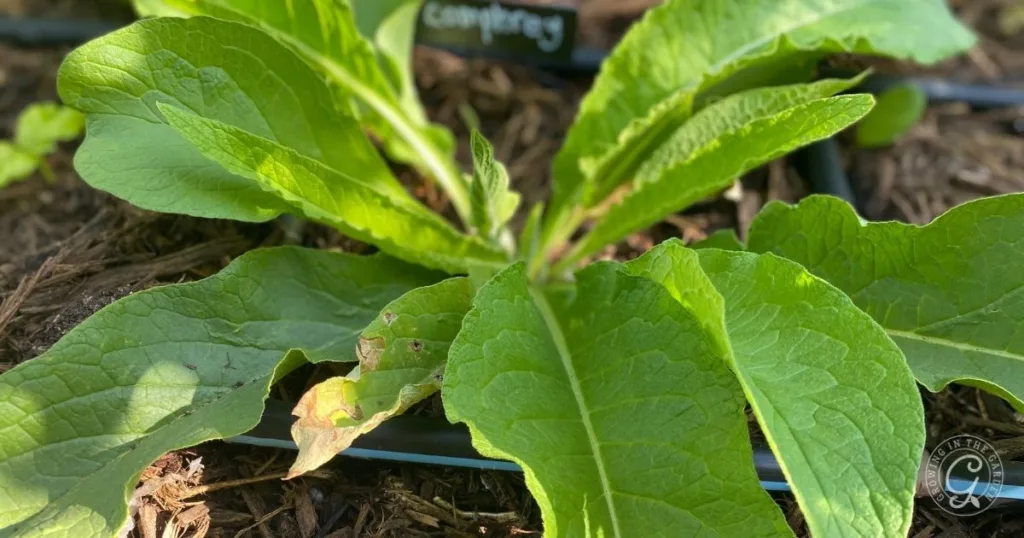
Comfrey does best in rich, moist soil that drains well.
A good rule of thumb:
- In mild climates, full sun is usually fine if you water regularly.
- In hot summer climates, give it morning sun and afternoon shade or dappled shade.
Comfrey is a great plant to tuck near fruit trees or your compost area.
Not sure where to plant comfrey? Grow it in a large pot for a season. You can see how it handles your heat and decide where it belongs later.
When to Plant Comfrey
In most climates, plant comfrey during the cooler parts of the year so it has time to establish roots before extreme weather. For many gardeners, that means early spring (as soon as the soil can be worked) or fall (about 4–8 weeks before your first hard frost).
Low Desert Arizona: Plant comfrey seeds or transplants outdoors from October through January. If starting from seed, cold stratify first (see directions below), then sow outside during this cool-season window and keep the soil evenly moist while seeds germinate.
How to start comfrey
Start from seed (cold stratification)
Comfrey seed often germinates better after a cold, moist rest period.
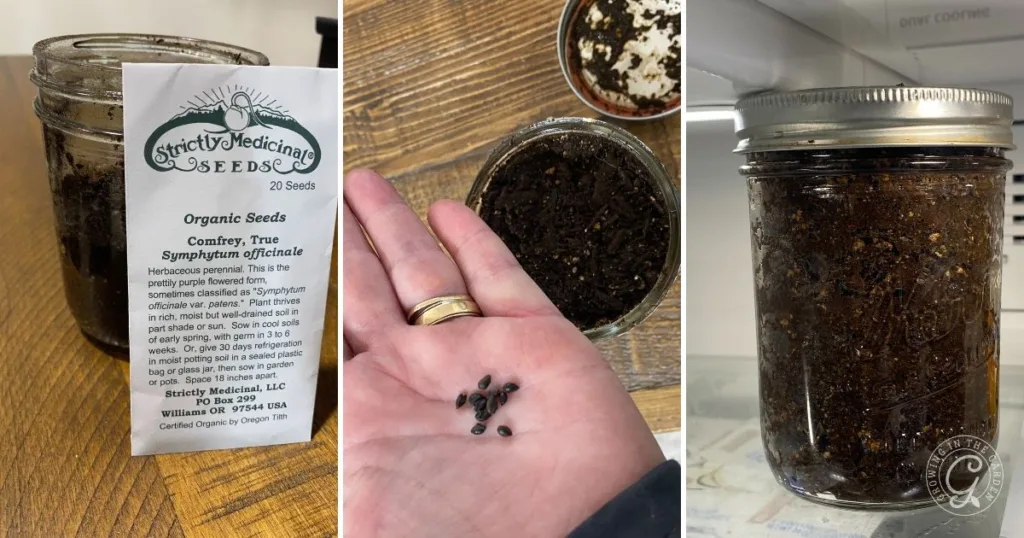
Easy fridge method (30 days):
- Moisten potting soil so it feels like a wrung-out sponge.
- Mix the seeds into the damp soil.
- Seal the soil and seeds in a plastic bag or glass jar.
- Refrigerate for 30 days.
- After 30 days, sow in pots or outside in cool soil and keep evenly moist.

Germination can be slow, so be patient. Set a reminder. It’s easy to forget that the soil is in the fridge.
 Comfrey in my garden started from cold-stratified seeds
Start from roots (faster and easier)
If your main goal is fertilizer leaves, starting from a root cutting or division is usually quicker than seed if you can find them.
Comfrey care
Watering
- Water deeply so moisture reaches the root zone.
- Don’t let it stay bone dry, particularly during heat.
Mulch
- Use 2 to 4 inches of mulch around the plant.
- Keep mulch pulled back a little from the crown.
Harvesting for fertilizer or cutting back
Once established, comfrey handles regular cutting well.
- Cut outer leaves near the base.
- Don’t remove more than half of the plant.
3 ways to use comfrey leaves as fertilizer
1) Chop-and-drop mulch
Cut leaves and lay them around plants. Chop them up if you want them to break down faster. This works especially well around heavy feeders and fruit trees.
2) Comfrey Tea (Homemade Liquid Fertilizer)
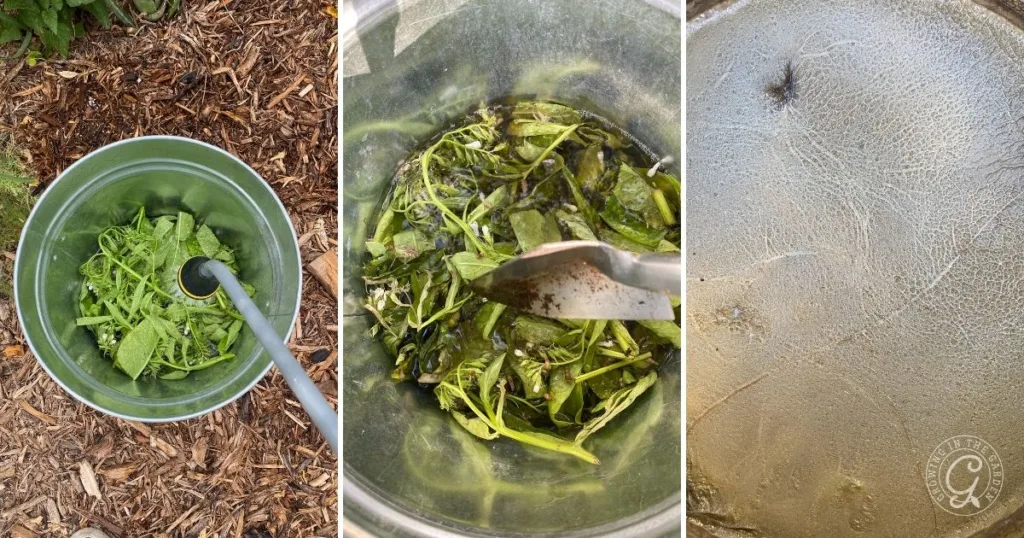
Comfrey tea is an easy way to turn a bucket of comfrey leaves into a liquid feed you can pour at the base of plants. It’s strong, so start diluted and use it as a supplement, not the only fertilizer.
Simple bucket method (water-based)
- Fill a bucket ½ to ¾ full with comfrey leaves (chop if you want faster breakdown).
- Add water to cover the leaves (weigh them down if they float).
- Cover loosely and let it steep 2–4 weeks. You can use it after 10–14 days for a weaker batch.
- Strain if you want, then compost the leftover leaf sludge.
How to dilute
- Standard dilution: 1:10 (1 part tea to 10 parts water)
- If it’s very dark/strong: 1:20
- For seedlings or sensitive plants: 1:20–1:30
How often to use it
- In-ground vegetables: every 1–2 weeks during active growth
- Containers: every 2–4 weeks (go lighter to avoid buildup)
Tip: Apply as a soil drench, not a foliar spray, and avoid feeding plants that are currently heat-stressed. Fair warning: it can smell awful. Keep the bucket somewhere you won’t notice it.
3) Compost activator
Add comfrey leaves to your compost pile to help balance out dry “brown” materials.
Growing comfrey in hot summer climates
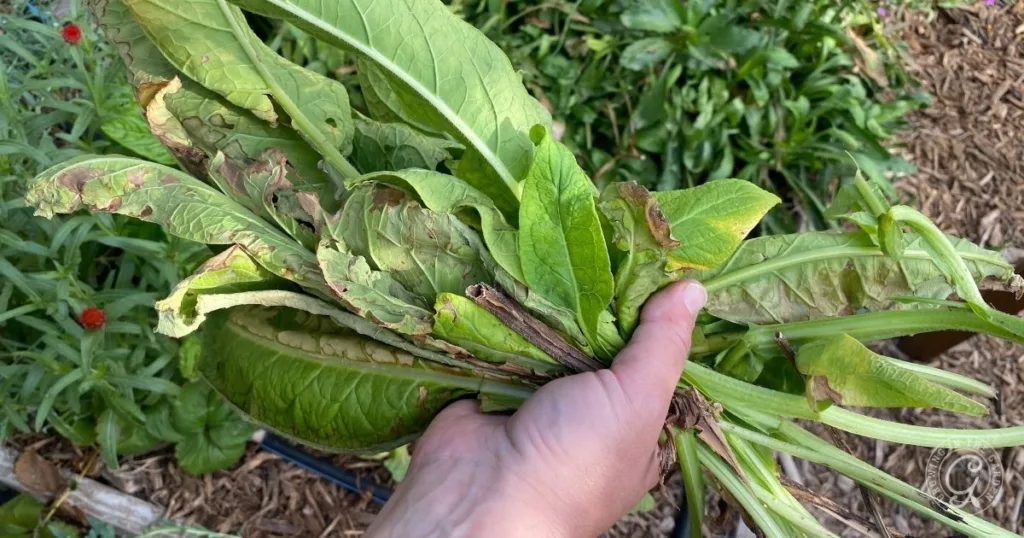
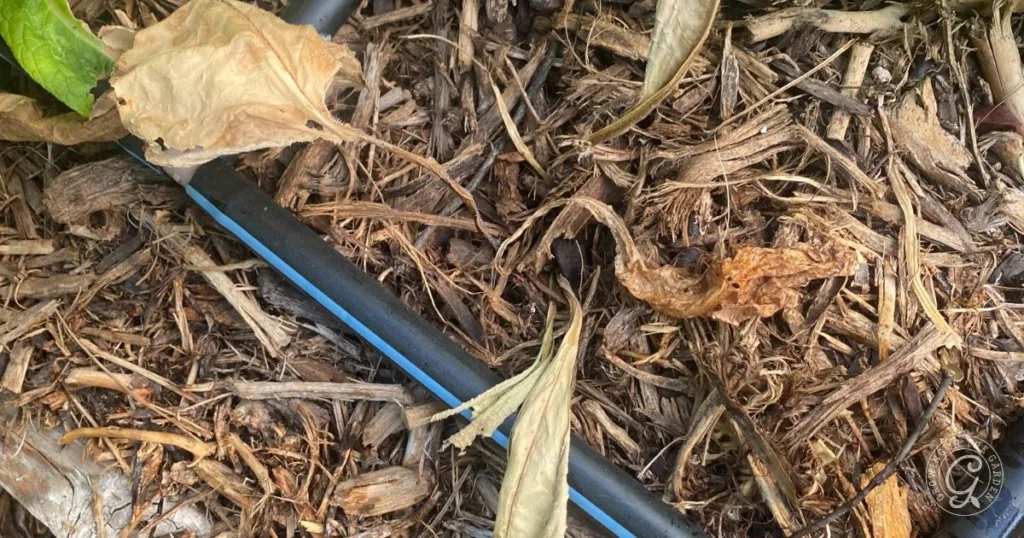 Dead comfrey in my Arizona garden
In hot summer climates, give it morning sun and afternoon shade, keep a thick layer of mulch over the soil, and water deeply so moisture reaches the root zone. It also helps to plant it away from reflected heat, like block walls, gravel, or pavement, which can bake the leaves and soil.
If comfrey is struggling you’ll see scorched leaf edges, wilting that doesn’t bounce back overnight, or slow growth with smaller, tougher leaves.
You can add more shade during the hottest part of the day, increase the mulch, and focus on watering deeper instead of just watering more often. If it’s in a container, moving the pot to a cooler spot can make a difference.
Borage is an easy-to-grow substitute that can give you a similar payoff. It grows quickly, makes plenty of leafy growth you can use for mulch or compost, and the flowers are a magnet for bees. Think of borage as a mild-season “fertility plant” you can rely on when summers are too tough for comfrey. Learn how to grow borage in this guide.
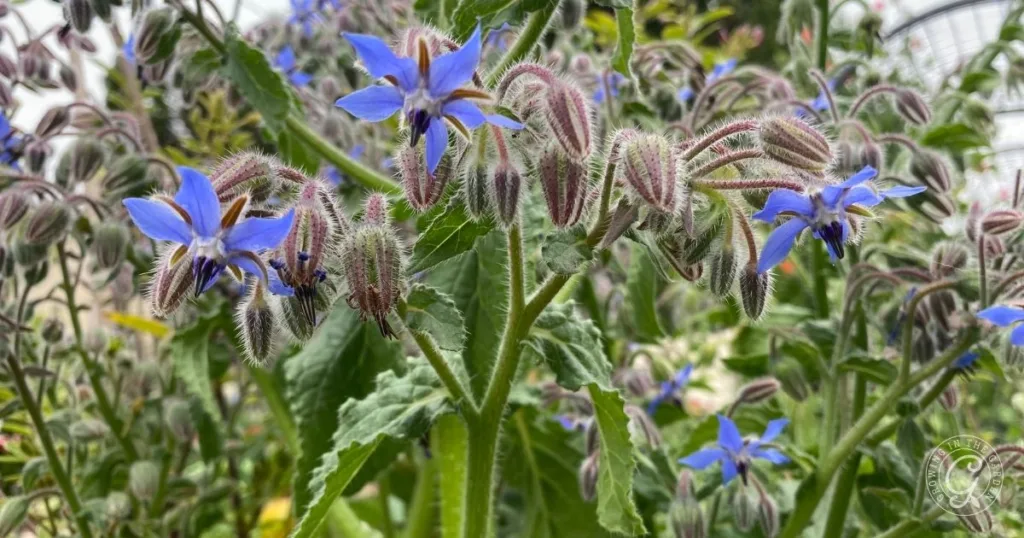 Borage
Safety note about medicinal use
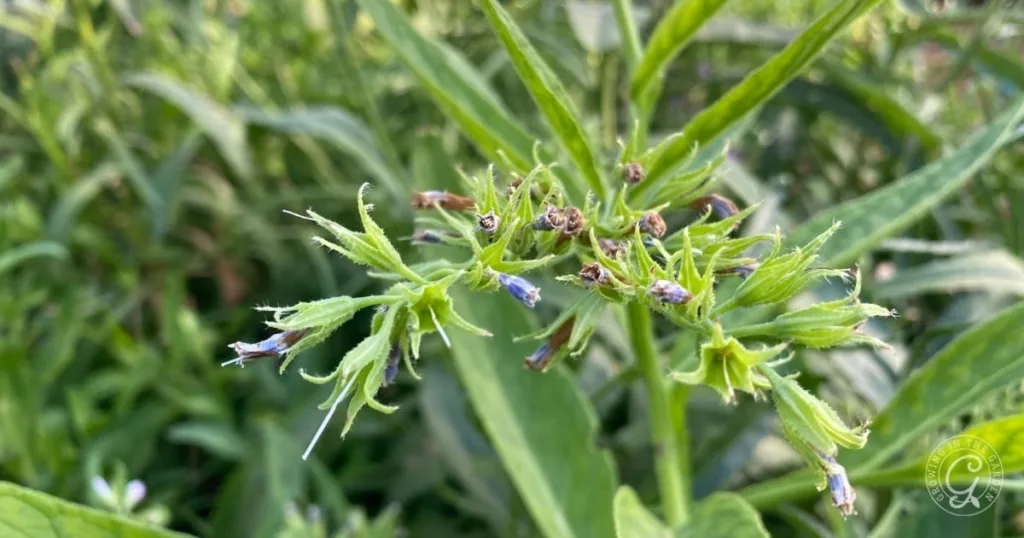
If you want to use comfrey internally please research carefully and check with your doctor. For gardeners comfrey is best used for soil and feeding purposes.
FAQ
Is comfrey invasive?
It can be persistent. Some types self-seed, and many can regrow from root pieces if you dig around them. Pick the spot carefully.
What’s the easiest comfrey to manage?
Sterile types don’t self-seed, which helps. Even so, avoid disturbing the roots.
Can I grow comfrey in a container?
Yes. Use a large pot, keep it evenly moist, and mulch the surface.
How long does comfrey take to germinate?
It can take weeks. Cold, moist stratification helps.
How often can I harvest comfrey?
Once established, usually multiple times per year. Regrowth depends on water and heat.
Will comfrey survive a hot summer?
Sometimes, if it has shade, mulch, and consistent deep watering. If it struggles every year, use borage instead.
A short mention of How grow comfrey helps readers follow the flow.
We reference How grow comfrey briefly to keep the thread coherent.















Small note – Such a warm note about “How to Grow Comfrey for Fertilizer and S” — charming. Love this!
Quick thought: pleasant point — I noticed that too.
FYI – So helpful — clear and practical, much appreciated. Will try it.
Also – Loved this about “How to Grow Comfrey for Fertilizer and S” — such a lovely idea. Thanks for this!
Heads up — This tip on “How to Grow Comfrey for Fertilizer and S” is so useful — thanks for sharing.
Tiny tip · Neat idea — simple and effective. So snug 💡