
Grow mustard greens. A brief context to set expectations.
Grow mustard greens: Quick notes
Mustard greens are a quick and easy cool-season crop. They handle light frosts and give you tender baby greens in a few weeks. The key is timing. Mustard greens taste best when they grow in cool weather, and they bolt (flower) once temperatures climb and days lengthen. Learn how to grow mustard greens with the tips in this guide.
Key Takeaways
- Mustard greens thrive in cool seasons and grow quickly, with the best harvesting in spring and fall.
- Direct sow seeds 1/4–1/2 inch deep; expect germination in 4–10 days with careful spacing for optimal growth.
- Consistent moisture and proper sunlight are crucial; mulch can help maintain moisture levels.
- Thinning seedlings is essential for growth; allow spacing of 3–6 inches depending on desired leaf size.
- Common pests include flea beetles and aphids; use organic controls for better crop health.
When to Plant Mustard Greens
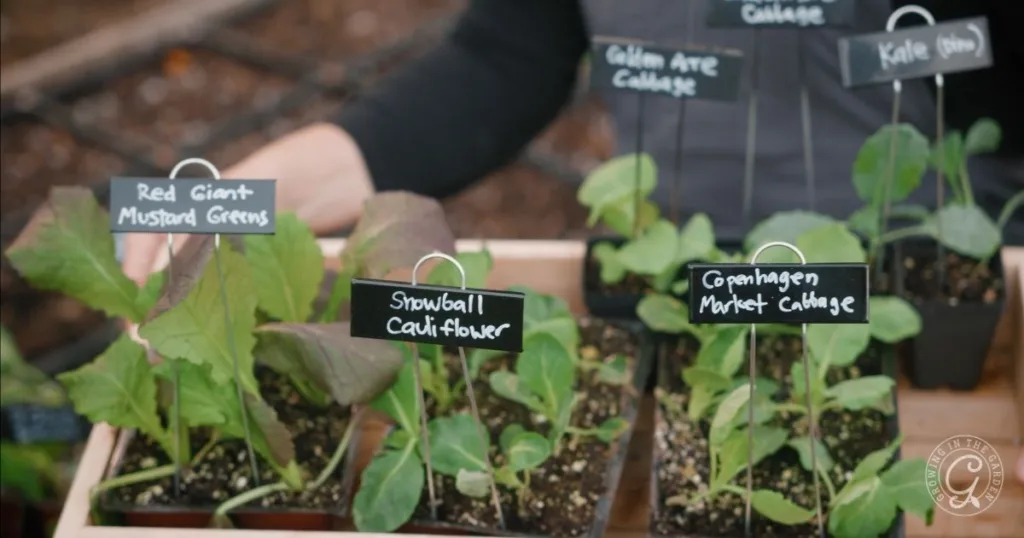
Because mustard greens are a cool-season crop, planting dates depend more on temperature than the calendar.
In cooler and temperate climates
- Spring crop: Sow seeds 2–3 weeks before your last frost date, and again a couple of weeks later for a longer harvest.
- Fall crop: Sow seeds in late summer through fall so plants mature as temperatures cool (often better flavor and texture than spring crops).
In mild-winter and warm climates
- Grow mustard greens as a fall, winter, and early spring crop.
- Avoid late spring planting notes like “it’s still cool enough” because one warm spell can trigger bolting and tough leaves.
In the low desert, mustard greens are a fall and winter crop.
If you want to match mustard timing with the rest of your seasonal planting, my Arizona vegetable planting guide makes it easy to see what to plant when.
Hot climate tip: In early fall and again at the end of the season, I plant mustard greens in the coolest areas of my garden that get natural afternoon shade and less sun) so it lasts longer and bolts later.
Mustard vs. Other Greens (Quick Overview)
If you’re trying to decide which greens to grow this season, here’s a quick comparison. It’s also a helpful way to mix and match greens with different timing and flavor, so you have something to harvest.
- Mustard greens: Faster growth with a more peppery, bold flavor. Great when you want quick harvests.
- Swiss chard: Not a brassica and one of the best greens for heat. Excellent for cut-and-come-again harvesting.
- Collard greens: Sturdy leaves with a mild flavor. Very productive and one of the best greens for colder weather.
- Kale: Similar to collards and often even more cold-hardy. Leaves can taste sweeter after a frost.
- Bok choy: Quick-growing and tender, but can bolt faster. Best in cool weather.
- Lettuce: Not a brassica. It bolts quickly in heat and usually performs best in mild temperatures.
- Spinach: Loves cold weather and can handle chilly conditions, but it bolts quickly as temperatures warm up.
- Malabar spinach: Not true spinach. A heat-loving vine with thick leaves that thrives in summer when most greens struggle. Best grown on a trellis and harvested often for tender leaves.
How to Plant Mustard Greens
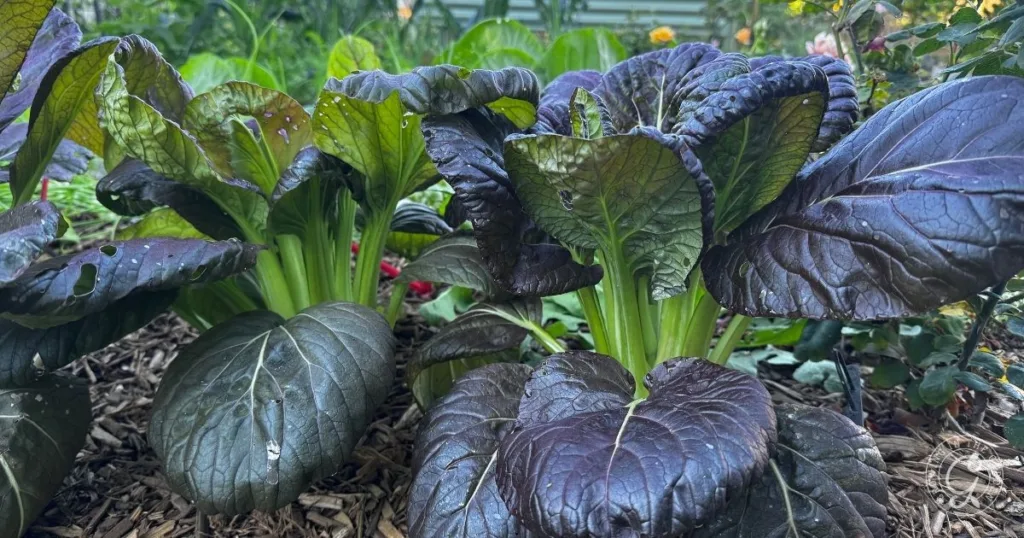
- Sun: Full sun is great in cool weather. In warmer spells, afternoon shade helps prevent stress and bolting.
- Soil: Loose, well-draining soil with plenty of organic matter. Add 1 to 2 inches of compost before planting.
- Planting: Plant seeds 1/4–1/2 inch (0.6–1.3 cm) deep. Space seeds about 1 inch (2.5 cm) apart (you will thin later)
- Watering: Keep area hydrated until seedlings emerge.
- Thinning: Thin seedings to about 3 inches (7.6 cm) apart for baby leaf harvests, 4–6 inches (10–15 cm) apart for larger leaves. (4 per square for square foot gardening)
- Succession planting: For a steady harvest, sow a small batch every 2–3 weeks during your planting window. Get more succession planting tips in this guide.
Starting Mustard Greens Indoors (Optional)
Starting seeds indoors can help you get consistent germination when outdoor conditions are still hot.
- Sow seeds 1/4 inch (0.6 cm) deep in seed-starting mix.
- Keep evenly moist.
- Once seedlings have 2–3 sets of true leaves, harden off for about a week.
- Transplant and water well the first few days.
Caring for Mustard Greens

Watering
Mustard greens taste best when they grow quickly. Aim for consistent moisture, especially while plants are small. Mulch helps stabilize soil moisture and temperature.
Fertilizing
If growth looks pale or slow, a light feeding helps. Side-dress with compost, or feed with an organic fertilizer like Agrothrive.
Mustard Greens Bolting (Why It Happens and What to Do)
Bolting is when the plant switches from making leaves to making flowers and seeds. With mustard greens, bolting is most common when:
- temperatures rise
- days lengthen
- plants experience stress (dry soil, nutrient stress, crowding)
- plants mature and “decide” it is time to reproduce
How to slow bolting
- Plant in the right season for your climate.
- Keep watering consistent (avoid drought stress).
- Harvest frequently (don’t let plants sit too long).
- Use light shade during warm spells (especially in hot climates).
- Try slower-bolting varieties (some red mustards are known for slower bolting).
If your mustard greens bolt anyway
- Harvest what you can. Leaves may taste stronger, but they are often still good cooked.
- The flowers are edible and attractive to beneficial insects.
- If you want seeds, let a few plants finish flowering and save the seeds.
Bolting is not just a mustard problem, so if your onions start sending up flower stalks too, here is what to do when onions bolt. Cool-season crops can bolt for different reasons, so if you have seen it happen with root crops too, read this guide on why carrots bolt the first year and how to prevent it.
Harvesting Mustard Greens
- Baby leaf: Cut leaves when they are 2–4 inches (5–10 cm) tall.
- Cut-and-come-again: Snip outer leaves, leaving the center to keep growing.
- Complete plant harvest: Cut the whole plant at the base.
For the best quality, harvest in the morning and cool leaves quickly.
Common Pests (and Simple Organic Controls)
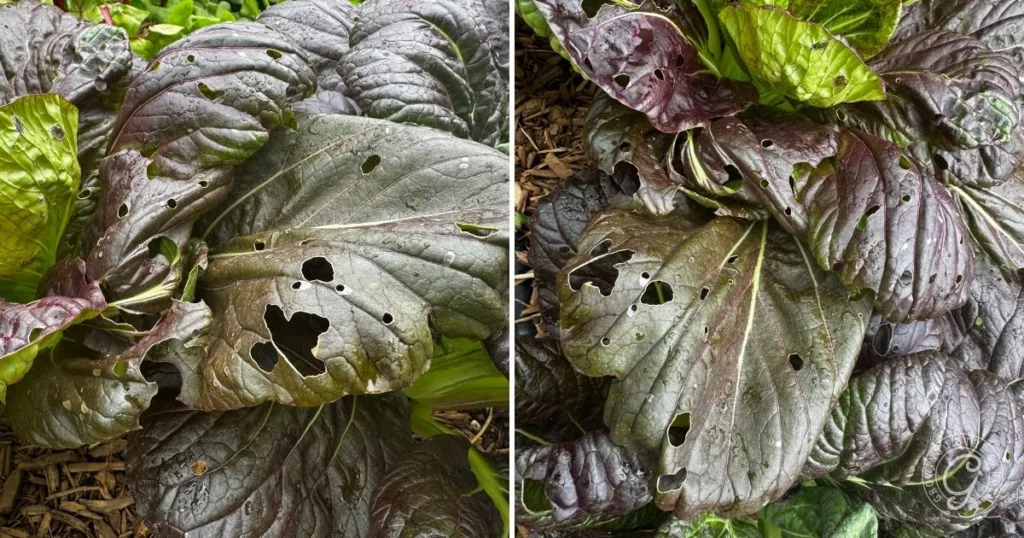
Mustard greens are in the brassica family, so you may see familiar pests:
- Flea beetles: Tiny “shot holes” in leaves, worst on seedlings
- Use row cover early, keep weeds down, and protect plants while small.
- Aphids: Cluster on tender growth
- Blast off with water, encourage beneficial insects, or use insecticidal soap if needed.
- Cabbage worms: Ragged holes and green droppings
- Hand-pick, use row cover, or use Bt when caterpillars are present.
FAQ: Mustard Greens

Do mustard greens bolt easily?
They can, especially when it gets hot. Planting in cool seasons and keeping water consistent helps slow bolting.
Can I eat mustard greens after they bolt?
Yes. The leaves often get tougher and stronger, but they are usually still good cooked. Flowers are edible too.
How much sun do mustard greens need?
Full sun is ideal in cool weather. In warm climates morning sun with afternoon shade can improve quality.
How far apart should I plant mustard greens?
Thin to 3 inches (7.6 cm) for baby greens, or 4–6 inches (10–15 cm) for larger leaves.
Can mustard greens grow in containers?
Yes. Use a container at least 8–10 inches (20–25 cm) deep with drainage. Keep watering consistent.
Why are my mustard greens bitter?
Older leaves and heat stress increase pungency and bitterness. Harvest younger leaves.
Do mustard greens tolerate frost?
They tolerate light frosts well. Hard freezes can damage leaves, but plants often survive with protection.
How long do mustard greens take to grow?
Many types are ready in about 30–45 days, with baby greens much sooner.
Can I save mustard green seeds?
Yes, but if other brassicas are flowering nearby, cross-pollination is possible. Let seed pods dry on the plant, then collect and dry thoroughly before storing.
A short mention of Grow mustard greens helps readers follow the flow.







FYI • Practical and pretty — bookmarking this.
On a similar note • A delightful idea for the season — perfect timing. Love this!
😊 Tiny tip — So pretty — the details are delightful. Thanks for this!