
This post may contain affiliate links. If you make a purchase through links on our site, we may earn a commission.
Morning glories (Ipomoea species) have graced gardens for centuries with their quick growth and spectacular, trumpet-shaped flowers. As tender annuals, they complete their life cycle in a single season, but what a dramatic season it is—bursting with magenta, blue, purple, and white flowers. These beautiful vines are renowned for their ability to climb and twine, rapidly covering trellises, fences, or arbors. They are great for bringing privacy and beauty to any space. Beyond their ornamental value, morning glories are magnets for certain pollinators, including butterflies and hummingbirds. By learning more about growing morning glories from seed, you can experience the joy of growing these charismatic flowers yourself, keeping your summer garden vibrant and colorful.
Choosing the best seeds
I’ve grown morning glories for years in my own garden, and as with many other plants, I’ve found that successfully growing morning glories from seed starts with purchasing high-quality seeds. There are many cultivars to choose from, each offering their own unique shades and growth habits. Classic ‘Heavenly Blue’ is famed for its sky-blue blooms, while ‘Scarlett O’Hara’ dazzles with deep magenta trumpets. When choosing your seeds, consider the eventual size and color scheme you want in your garden. Purchase seeds from reputable suppliers and check their packaging for germination rates. It’s also possible to save your own morning glory seeds, which I’ll touch on later in this article.
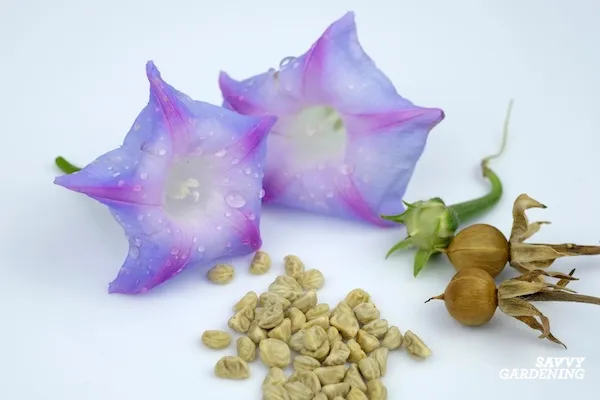 Purchase high-quality morning glory seeds for the best germination rates. Or, if you’re open to experimentation, save your own seeds (more on this process later).
Choosing an ideal growing site
Location is equally important. For abundant flowers and robust vines, growing morning glories from seed requires a site with full sun. These plants crave at least six hours of direct sunlight daily; 8 or more is even better and often results in more blooms. Morning glories are not fussy about soil, but they thrive in well-draining soil with a neutral to slightly acidic pH. If your soil is heavy clay or prone to waterlogging, amend it with compost to improve drainage prior to planting. Think about vertical space, too—a sturdy trellis, a classic split-rail fence, or a decorative obelisk are perfect for supporting their climbing habit.
If you want to grow morning glories on a patio or balcony, containers are excellent choices, just be sure they hold at least 5 gallons of potting soil and have several drainage holes. Containers allow you to move your plants for best sun exposure and keep invasive tendencies in check. And remember, you’ll need a sturdy support system for container-grown morning glories too.
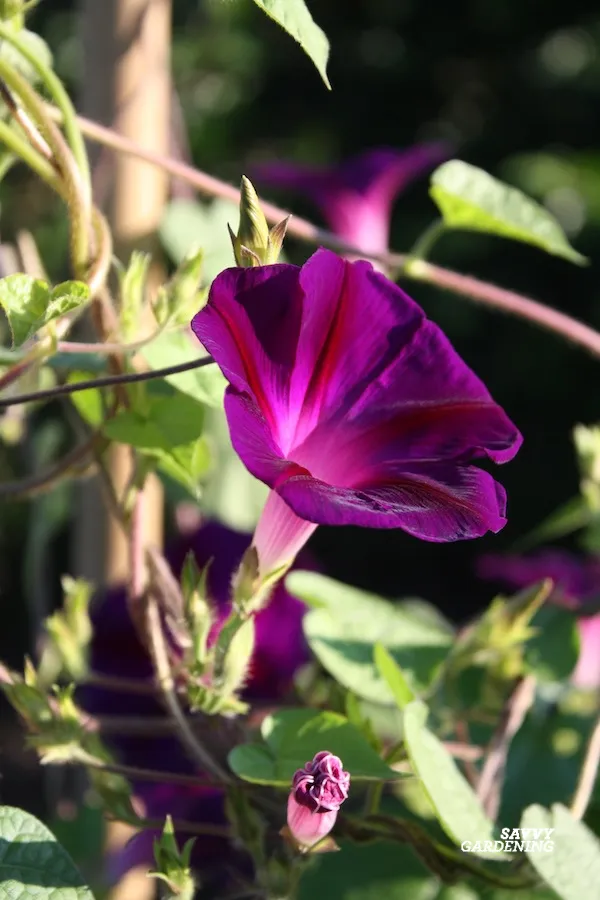 Choose a site with at least 6-8 hours of full sun and be sure to have a sturdy trellis ready for the plants to climb.
Two ways of growing morning glories from seed
There are two ways you can grow morning glories from seed. The first involves starting the seeds indoors under grow lights. The second involves planting the seeds directly into the garden soil outdoors. Remember, these are tender annual plants, so you’ll want to hold off on planting them outdoors (as seeds or transplants) until after the danger of frost has passed. I’ll cover both indoor and outdoor seed starting throughout this article.
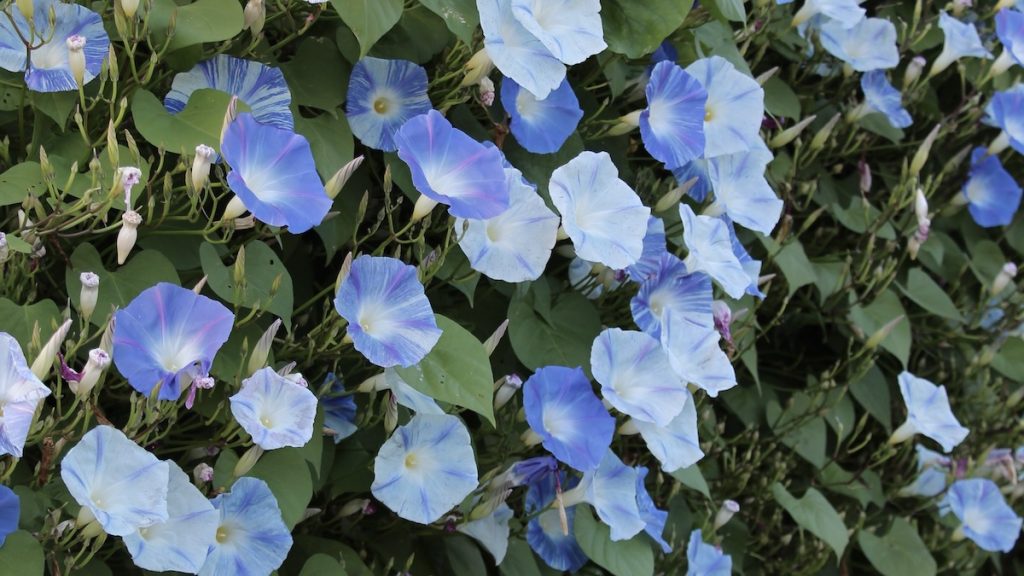
 Morning glories come in a range of colors, from blue and magenta to pink and white.
How to prepare the seeds for planting
Growing morning glories from seed is straightforward, but their tough outer shells can slow germination. Whether you’re sowing them indoors or out, pre-treating your morning glory seeds will help them sprout more quickly and evenly, leading to stronger, more uniform seedlings. Here’s a step-by-step guide for preparing seeds:
- Start about a week after your last average frost date (if sowing directly outdoors) or 4-6 weeks before you intend to transplant them outside (if starting the seeds indoors).
- Place your morning glory seeds in a small, shallow dish.
- Pour warm (not boiling) water over the seeds to fully submerge them.
- Let the seeds soak for 24 hours. This helps soften the hard seed coat, which allows water to penetrate and stimulates germination.
- If, after soaking, some seeds still feel very hard, gently nick the edge of each seed with a nail file or emery board. Take care not to damage the inside of the seed.
- Drain and rinse the seeds before planting.
This simple pre-treatment can make a remarkable difference in your success with growing morning glories from seed. Well-prepared seeds sprout faster and more reliably, ensuring good germination and growth.
 Morning glory seeds can be started indoors under grow lights for a jumpstart on the season. Or they can be sown directly into the garden.
Starting morning glory seeds indoors
Many gardeners begin growing morning glories from seed indoors, especially in regions with short summers or unpredictable spring weather. Starting indoors gives you a head start on the season and ensures strong, resilient seedlings. Here’s how to do it:
- Use small pots, seed trays, or biodegradable peat pots. Morning glories dislike root disturbance, so individual pots are ideal to ease the transplanting process.
- Fill containers with a loose, well-draining potting mix formulated for seed starting.
- Plant pre-treated morning glory seeds about ¼ inch deep. Press the soil gently over them to ensure good contact, but do not compact it. Plant one or two seeds per pot.
- Water the pots so the soil is moist (not wet).
- Set the containers beneath grow lights positioned 2–4 inches above the seedlings. Keep the lights on for 14–16 hours a day to mimic the long days of spring and prevent seedlings from growing spindly.
- Maintain a temperature of 65–75°F (18–24°C) for healthy germination and growth. I use a seedling heat mat beneath my pots to speed germination.
- If more than one seed germinates in each pot, consider snipping off the weakest ones at their base, leaving only one strong seedling to continue growing.
- Keep the soil consistently moist, but never waterlogged.
- Once the seedlings have two sets of true leaves and the danger of frost has passed, begin hardening them off: place the pots outdoors for a few hours each day, gradually increasing their time outside over the course of one week.
- Transplant the seedlings carefully to their final location, spacing them 6–12 inches apart at the base of your trellis, fence, or other support. Try not to disturb the roots as you transplant.
Growing morning glories from seed indoors ensures vigorous young vines that can quickly establish themselves and cover supports with dazzling blooms and lush foliage.
 Plant a few seeds per pot, but plan to thin them down to the largest one when they grow a few inches tall. This helps prevent transplant shock, as does growing them in plantable peat pots.
How to direct seed morning glories
If you prefer to let nature take its course, growing morning glories from seeds planted directly in the garden is just as simple—and just as rewarding. Here’s how you can do it:
- Wait until all danger of frost has passed and nighttime temperatures consistently remain above 50°F (10°C)
- Choose a sunny spot with well-prepared, well-drained soil near a trellis, fence, or other structure your vines can climb.
- Plant your pre-treated morning glory seeds about ¼ inch deep and 10–12 inches apart along the base of your support.
- Water gently and keep the area moist until seedlings appear, usually within 1–2 weeks.
- As seedlings grow, thin them to prevent overcrowding. This encourages each vine to develop strong roots and prolific blooms.
By direct seeding, you allow the vines to establish themselves naturally and you reduce the chance of transplant shock. Over the course of the summer, morning glories will quickly blanket trellises, fences, or other supports, creating a spectacular living wall of privacy, color, and pollinators.
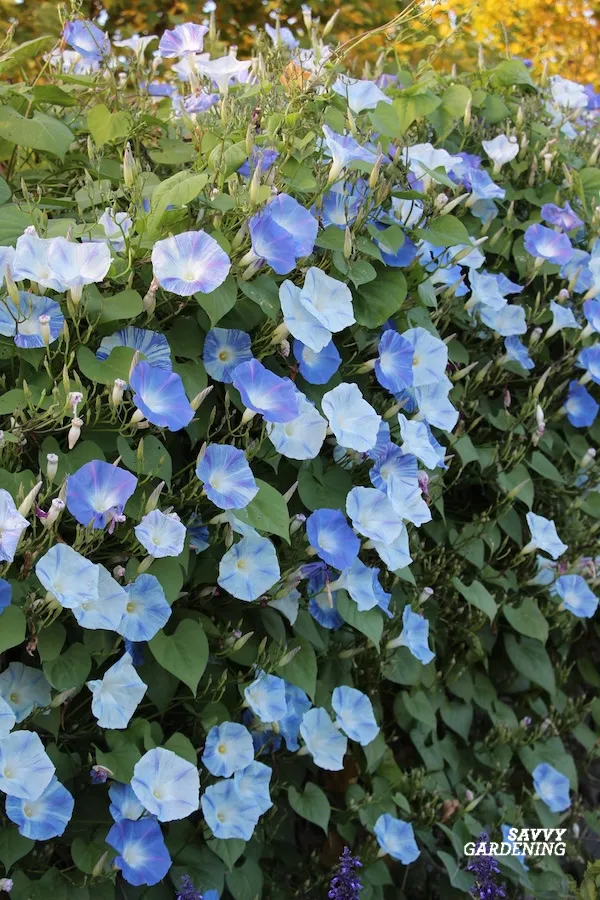 For maximum coverage of fences, direct sow the seeds 10-12 inches apart along the fence line.
More tips for growing morning glories from seed
To make the most of growing morning glories from seed, keep these extra tips in mind:
- It’s important to know that, in certain climates, morning glories can be invasive. In milder climates, their seedlings easily sprout up wherever the seeds fall, so responsible gardening is a must.
- Install your trellis, fence, or other supports before planting. Morning glories climb by twining and can be easily damaged if support is added too late.
- Water morning glories regularly, especially during hot, dry spells. Allow the soil to dry slightly between waterings, but never let it become parched.
- Fertilize lightly. Too much nitrogen can lead to lush foliage but fewer blooms. A balanced or phosphorus-rich fertilizer promotes flowering.
- Deadhead the spent trumpet-shaped flowers to encourage new blooms and reduce unwanted reseeding. This is especially important in regions where morning glories can be invasive.
- Monitor for signs of invasiveness, especially in mild climates. Pull unwanted seedlings promptly and consider growing in pots or containers if spread is a concern.
- You can save your own morning glory seeds at the end of the growing season by harvesting the dry seed pods when they start to crack open. Be sure the seeds are fully dry before storing them in a cool, dry, dark location. Some heirloom varieties will come “true to seed” (meaning the offspring will look just like the parent plant) while seeds saved from other varieties (hybrids in particular) will likely not be identical to the parent. It’s a fun experiment, though, to see what flower colors will be produced from saved seed.
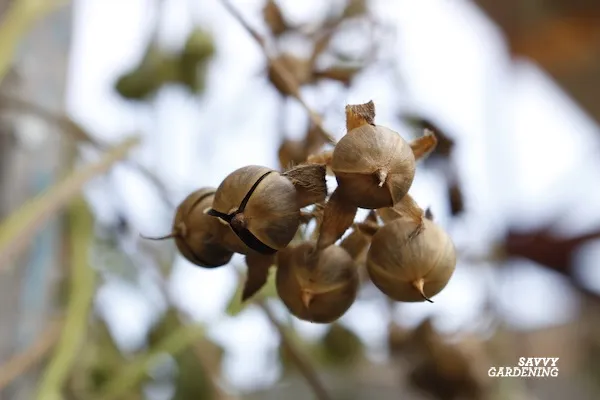 To save your own seeds, pluck the dried seed pods off the plants when they start to crack open. Let them fully dry indoors, removing the seeds from the pods for long-term storage in a dry, cool location.
The glory of glories
Whether you’re growing morning glories from seed in containers, along a fence, or up a trellis, the rewards are spectacular—lush vines, vibrant magenta, pink, white, or blue trumpet-shaped blooms. With thoughtful preparation, the right growing site, and a watchful eye for invasiveness, you’ll discover just how rewarding it is to grow these classic, cheerful tender annuals season after season.
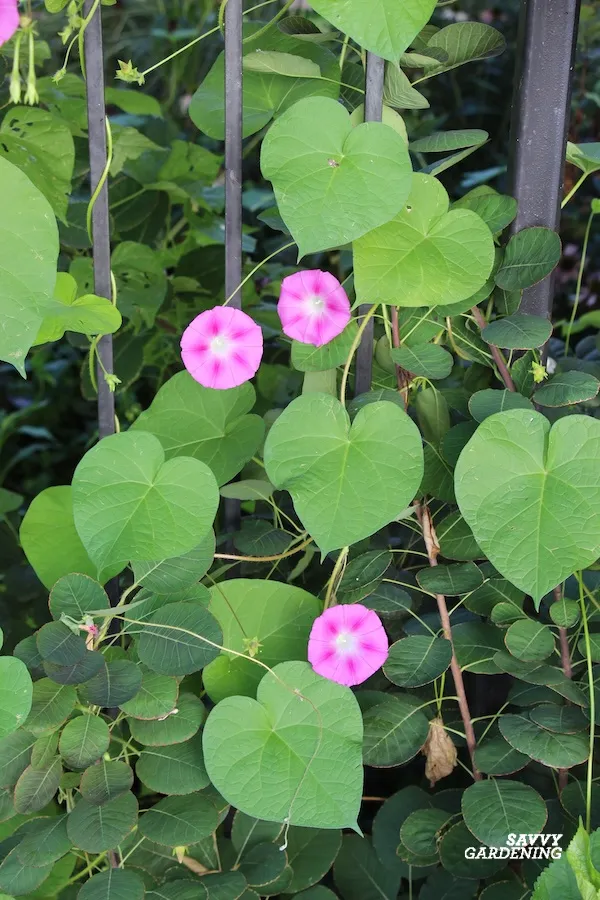 Growing morning glories from seed is easy, if you keep a few tips in mind.
Here’s how to grow other flowers from seed:














🙂 FYI – So helpful — clear and practical, much appreciated. Thanks for this!
great and clear — thanks for the step-by-step. Love this!
Heads up • Loved this about “Growing Morning Glories from Seed: A Com” — such a lovely idea. Great share.
🌿 PS • Great addition — thanks for pointing it out. So cozy.