
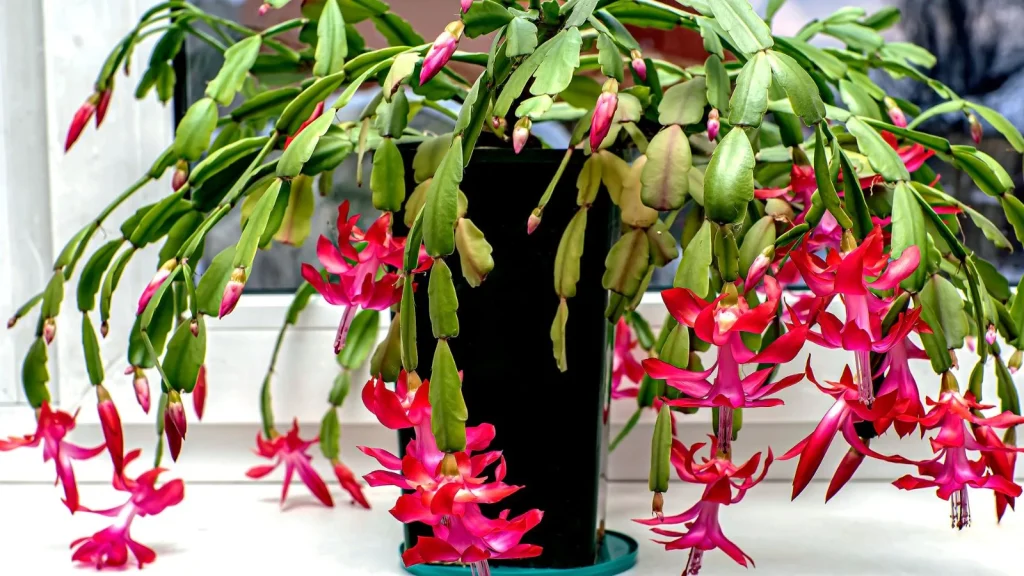
Your christmas cactus: a concise orientation before we get practical.
Your christmas cactus: Quick notes
Christmas cacti are generally low-maintenance plants that grow into attractive shapes without much intervention. But after years of growth, they can become lopsided, leggy, or just look messy overall. That’s when a little strategic pruning comes in handy.
Shaping your Christmas cactus isn’t complicated, and the plant responds well to trimming. In fact, pruning often encourages bushier growth and more abundant flowering. If your plant is looking a bit wild or unbalanced, here’s how to shape a Christmas cactus.
Decide Whether it Needs Shaping
Not all Christmas cacti need shaping.
Before you start cutting, take a look at your plant and figure out if it actually needs pruning. Not every Christmas cactus requires shaping, and sometimes leaving it alone is the best option.
To shape a Christmas cactus, look for signs that pruning would help. Identify long, trailing stems that have few segments or look sparse. You can balance out uneven growth where one side is significantly fuller than another. Stems growing in awkward directions or crowding the center of the plant should probably be removed, too.
On the other hand, if your Christmas cactus looks full and balanced with healthy growth all around (and most importantly, plenty of flowers), there’s no need to prune just for the sake of it. These plants don’t require annual pruning the way some shrubs do.
The best time to shape your Christmas cactus is right after it finishes flowering. This gives the plant time to produce new growth before the next bloom cycle begins. Pruning during active growth or bud formation can delay flowering or cause developing buds to drop.
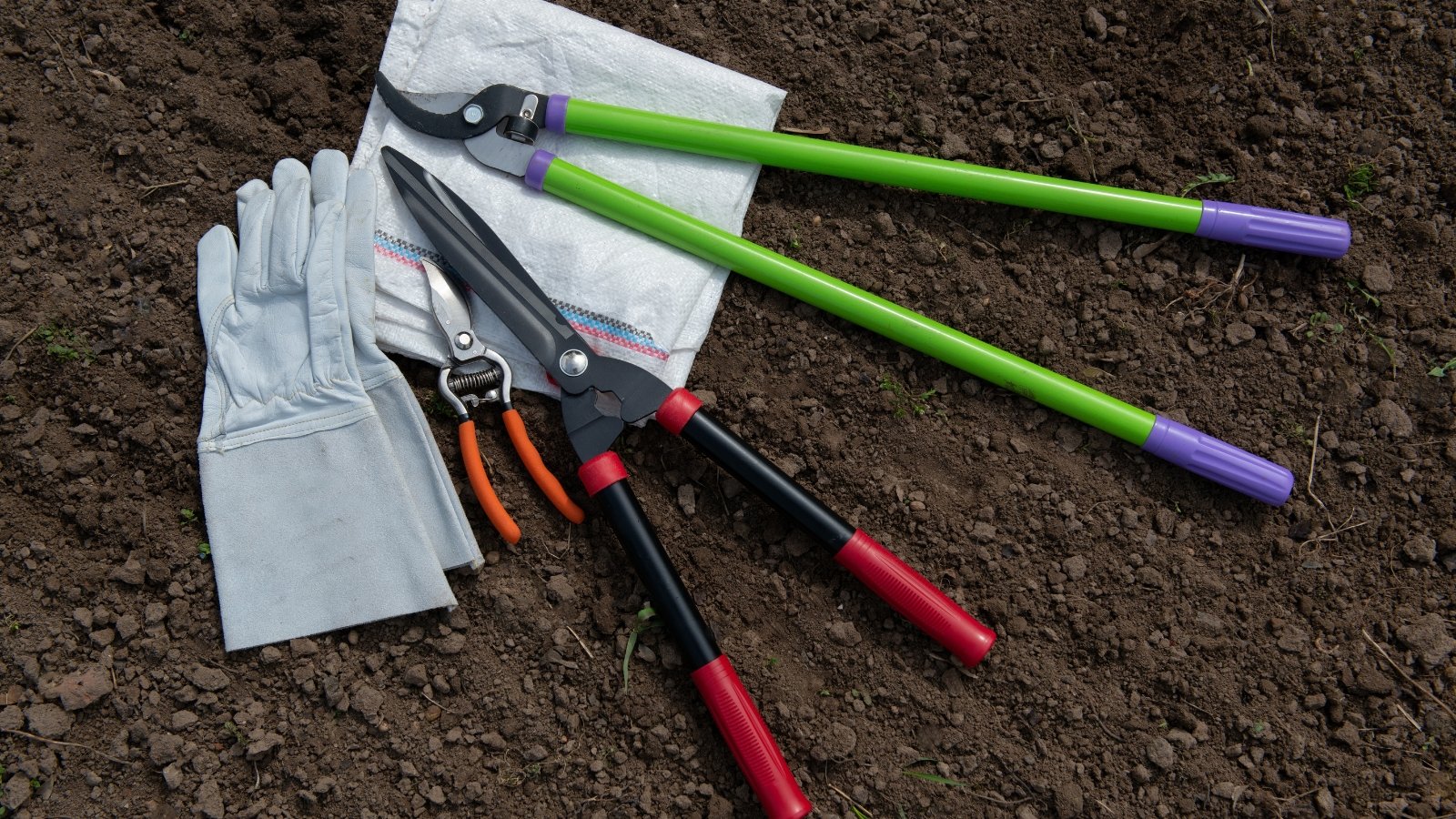 Clean shaping tools limit the spread of disease.
Once you’ve decided that you need to shape your Christmas cactus, clean your cutting tools to prevent the spread of disease between plants. This might seem excessive for houseplants, but bacterial and fungal infections can transfer on dirty tools, especially when you’re cutting living tissue.
You don’t need anything fancy. Rubbing alcohol or a diluted bleach solution (one part bleach to nine parts water) works fine. Wipe down your pruning shears, scissors, or knife with your chosen disinfectant and let them air dry before you start cutting.
If you’re only pruning one plant, cleaning beforehand is sufficient. But if you’re working on multiple plants, clean your tools between each one to avoid accidentally spreading problems from a diseased plant to healthy ones.
Sharp tools make cleaner cuts that heal faster, so this is also a good time to check that your pruners or scissors are in good condition. Dull blades crush stems rather than cutting cleanly, which creates larger wounds that take longer to callus over.
Remove Damaged Stems
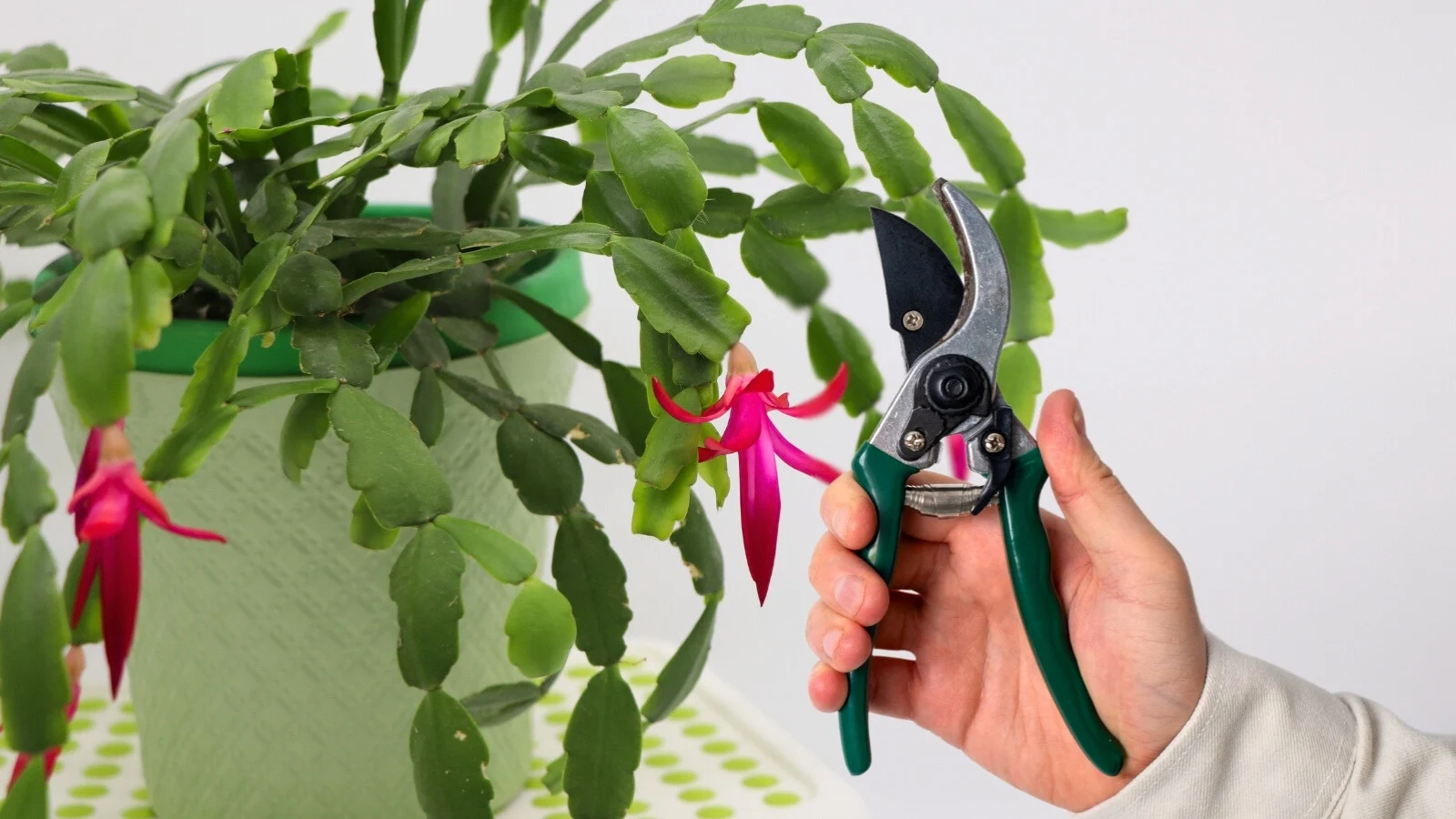 Start by cutting back problematic stems.
Now is the time to begin shaping. The most important step is cutting away any obviously damaged, diseased, or dead segments. These don’t contribute to the plant’s health or appearance, and removing them improves both immediately.
Look for stems that are shriveled, discolored, or mushy to the touch. These damaged sections should be cut back to healthy tissue. Make your cut at a segment joint rather than through the middle of a segment, as this looks more natural and heals better.
If you find stems with signs of rot or disease, cut back further than you think necessary. It’s better to remove an extra segment or two than to leave infected tissue that could spread to healthy parts of the plant.
Sometimes you’ll find segments that are just old and tired-looking without being technically damaged. These can be removed as well if they’re detracting from the plant’s appearance. Old segments often have a rougher texture or faded color compared to newer growth.
Cut Leggy Sections
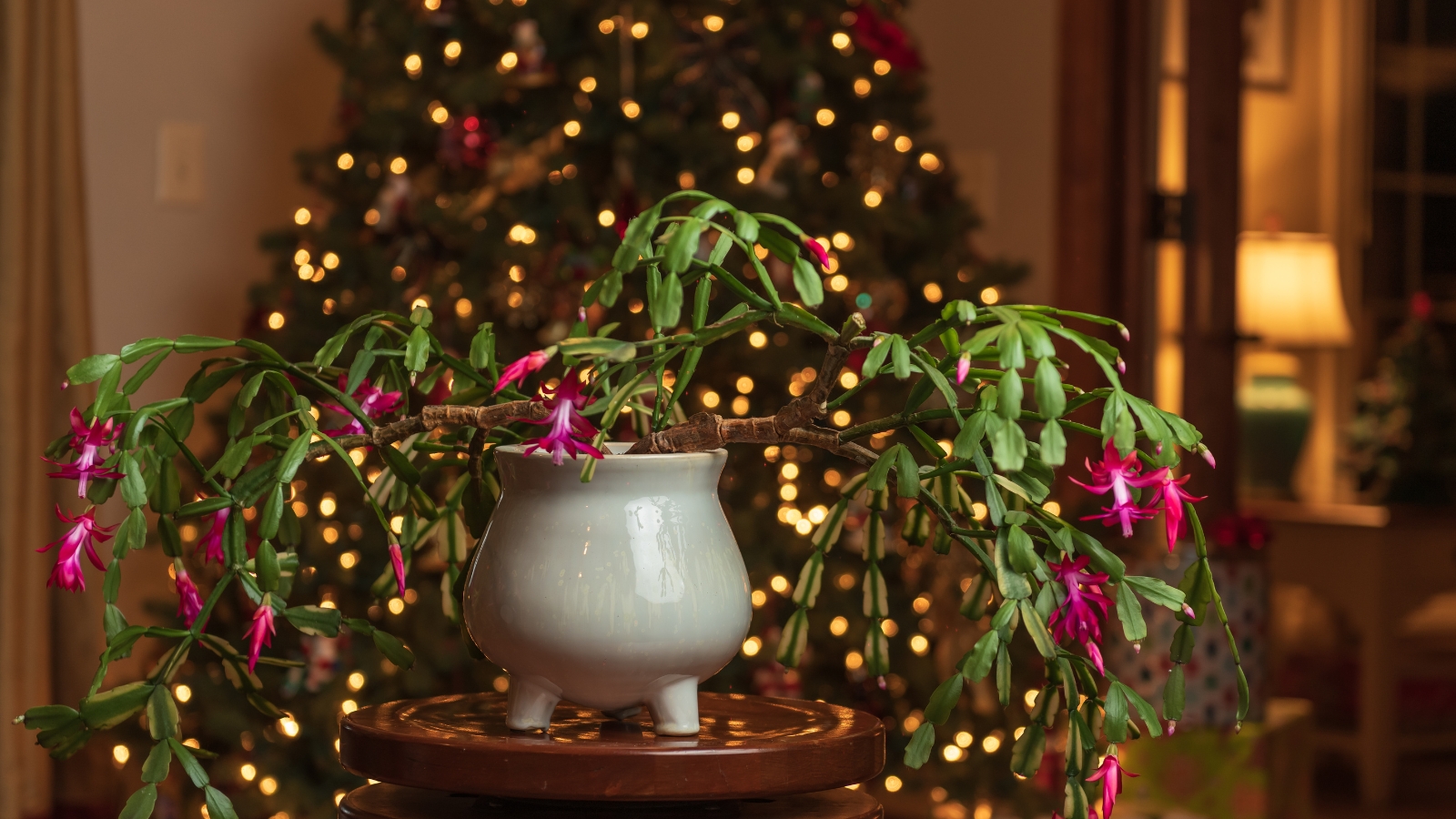 Leggy growth can be rectified with pruning.
Leggy growth happens when stems get too long without enough branching, creating sparse, unattractive sections. This usually occurs when plants don’t get adequate light, but it can also happen naturally over time as stems age and extend outward.
To fix leggy stems while you shape your Christmas cactus, cut them back to a fuller section closer to the plant’s center. You’re just shortening the stem so it looks more proportional to the rest of the plant. Make your cut at a segment joint, removing as many segments as needed to bring the stem back to a reasonable length.
Don’t worry about being too aggressive here. Christmas cacti handle pruning well and will branch out from where you made the cut, creating fuller growth. If you only trim off one or two segments from a very long stem, you might not see much improvement. Cutting back to where the stem still looks full and healthy gives better results.
The segments you remove can be propagated into new plants if you want. Simply let the cut end callus over for a day or two, then stick it into moist potting mix. Most segments will root readily, giving you backup plants or gifts for friends.
Trim Lopsided Growth
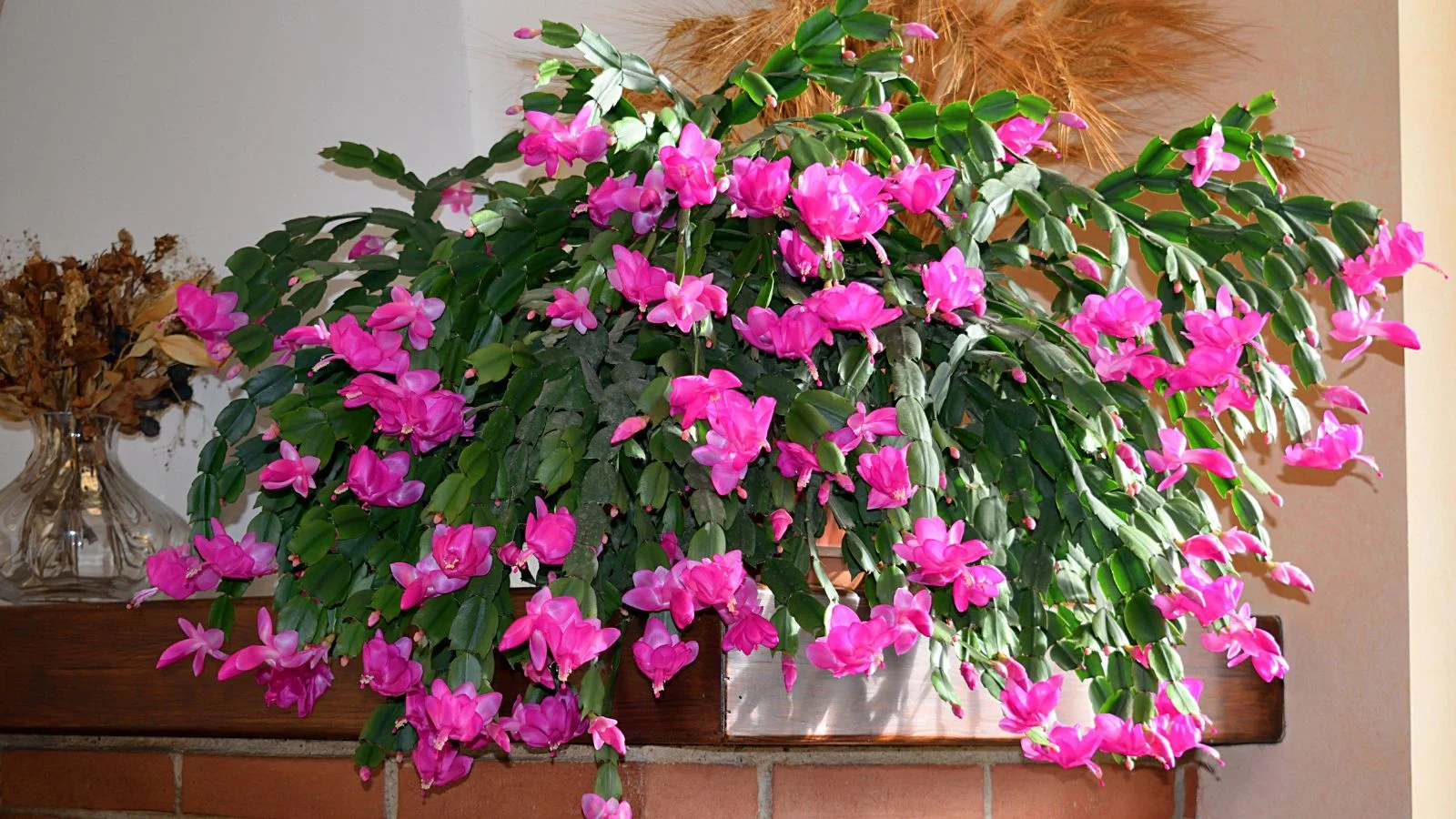 Rotate pots frequently to prevent lopsided growth.
Uneven growth is one of the most common reasons people shape a Christmas cactus. Often, one side grows vigorously while the other remains sparse, creating an awkward, unbalanced appearance that’s hard to ignore.
Luckily, the fix is straightforward. Trim back the fuller side to match the sparser side. This feels counterintuitive since you’re removing the good growth while leaving the weak growth alone, but it works. The heavier pruning on the full side encourages it to branch, and the lighter side has a chance to catch up without competing for resources.
You can also encourage more even growth going forward by rotating your plant regularly. Christmas cacti naturally grow toward their light source, and if you never turn them, one side becomes much fuller than the other. A small turn every few weeks distributes growth more evenly.
After pruning, don’t expect immediate results. It takes several weeks for new growth to emerge from where you made cuts. Be patient and resist the urge to keep trimming. Your Christmas cactus needs time to respond to the pruning and fill back in with fresh, bushy growth. Water and care for your newly shaped plant as usual.
The pruning process isn’t particularly stressful for Christmas cacti, so there’s no need to change your routine or baby the plant afterward. Within a few months, you should see improved shape and likely more abundant flowering when the next bloom season arrives.
















I appreciate the detail — very useful indeed. Love this!
PS – Good observation — well put. Saving it.
PS – Good observation — well put. Saving it.