
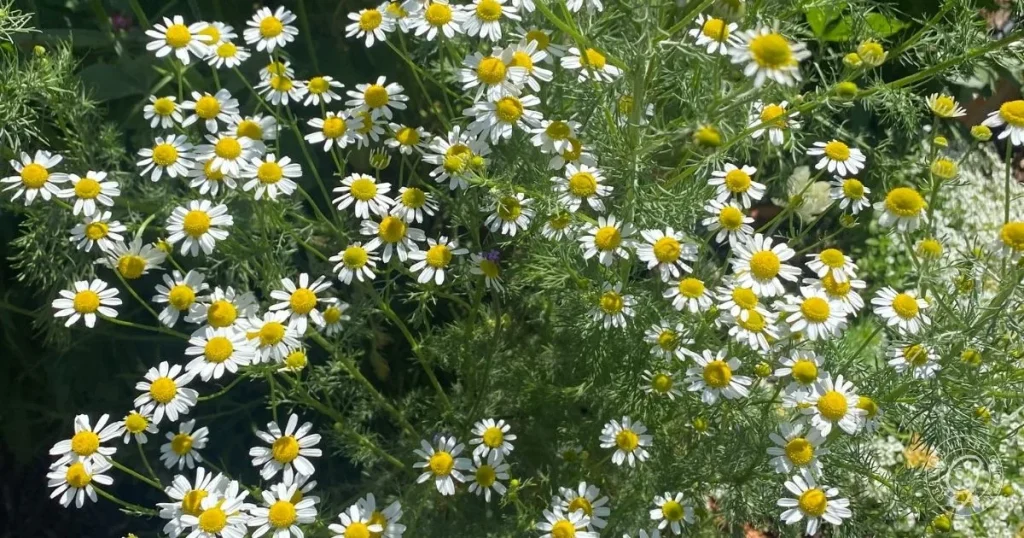
Chamomile is one of the easiest herbs to grow for a home harvest. The small daisy-like flowers are beautiful in the garden, loved by pollinators, and easy to dry for tea.
If you garden in Arizona or any hot climate, chamomile is a cool-season herb. The biggest secret is planting early enough that your plants grow and bloom during mild weather, then using shade and steady moisture to keep them blooming as spring warms up.
If you are building an herb bed, start with my Herb Growing Guide for easy herbs to grow alongside chamomile.

What to know about how to grow chamomile
- Chamomile is easy to grow, especially in warm climates, and thrives as a cool-season herb.
- German chamomile is ideal for tea; it grows upright and can reseed, while Roman chamomile spreads as groundcover.
- To successfully plant chamomile, start seeds indoors, provide good drainage, and ensure they receive enough light.
- Harvest flowers when fully open and dry them for storage; frequent harvesting promotes more blooms.
- Learn to use chamomile in tea or as a natural remedy for various purposes, like soothing puffy eyes.
German vs. Roman chamomile
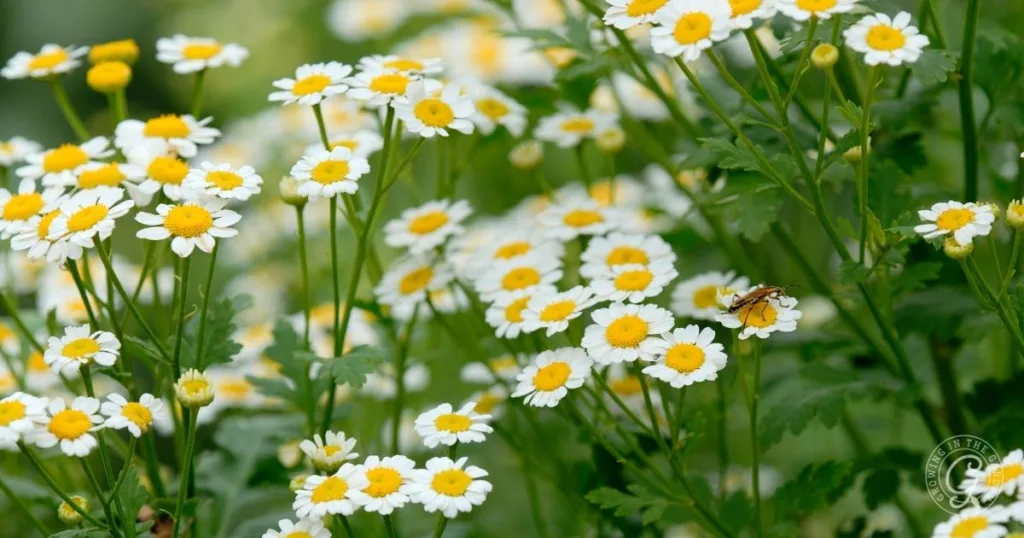 Roman Chamomile
There are two common types of chamomile. They look similar at a glance, but they grow very differently.
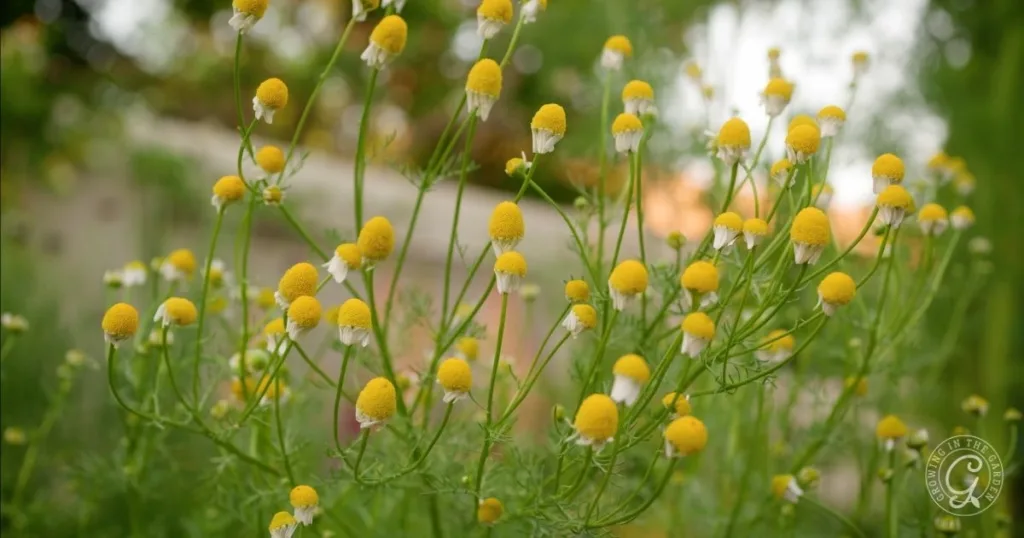
German chamomile
- Best choice if your goal is tea
- An upright annual that you plant each year
- Grows taller and branches, producing lots of blooms
- Can reseed in your garden if you let some flowers mature
Roman chamomile
- Low-growing, spreading plant that returns in many climates
- Often used as edging or a soft groundcover
- Produces fewer blossoms than German chamomile in most gardens
If you want a jar of flowers to dry for tea, choose German chamomile.
Important Arizona note: do not confuse chamomile with stinknet
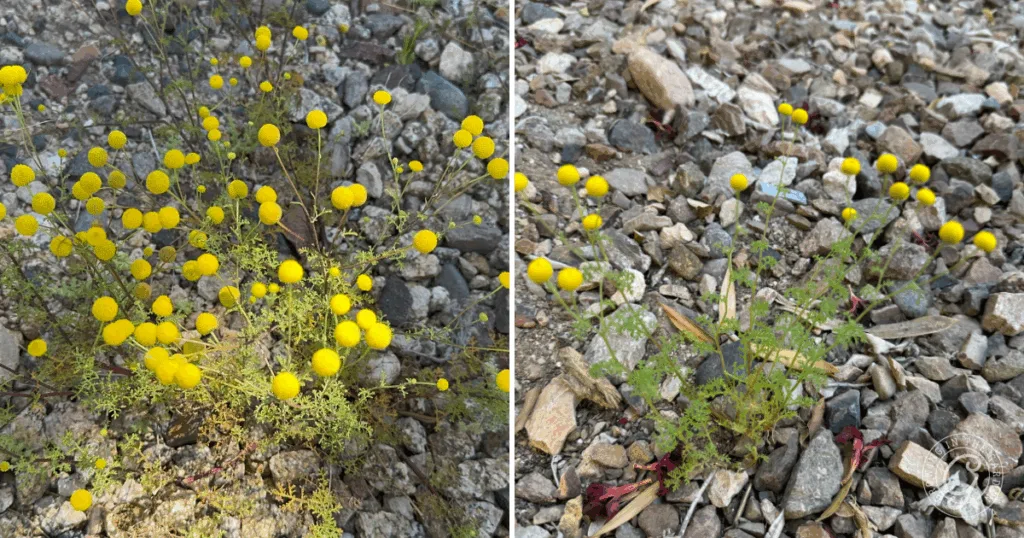 Stinknet
In Arizona, an invasive weed called stinknet is sometimes nicknamed “globe chamomile.” It spreads quickly and should be pulled and removed before it goes to seed.
A few easy ways to tell them apart:
- German chamomile has white petals around a yellow center and a pleasant, apple-like scent.
- Stinknet has round yellow flower heads and an unpleasant odor when crushed.
When to plant chamomile
Chamomile tolerates cold well and grows best in mild weather. In hot climates, it is planted and harvested during the cool season, then it dies when it gets too hot.
In the low desert of Arizona
If you are unsure whether it is time to plant, use soil temperature as your guide. Chamomile germinates best in soil temperatures of 65–75°F (18.3–23.9°C).
In cold-winter climates
Start seeds indoors about 6 to 8 weeks before your last frost date and transplant outside in early spring. You can also direct sow outdoors once the soil can be worked.
How to grow chamomile from seed
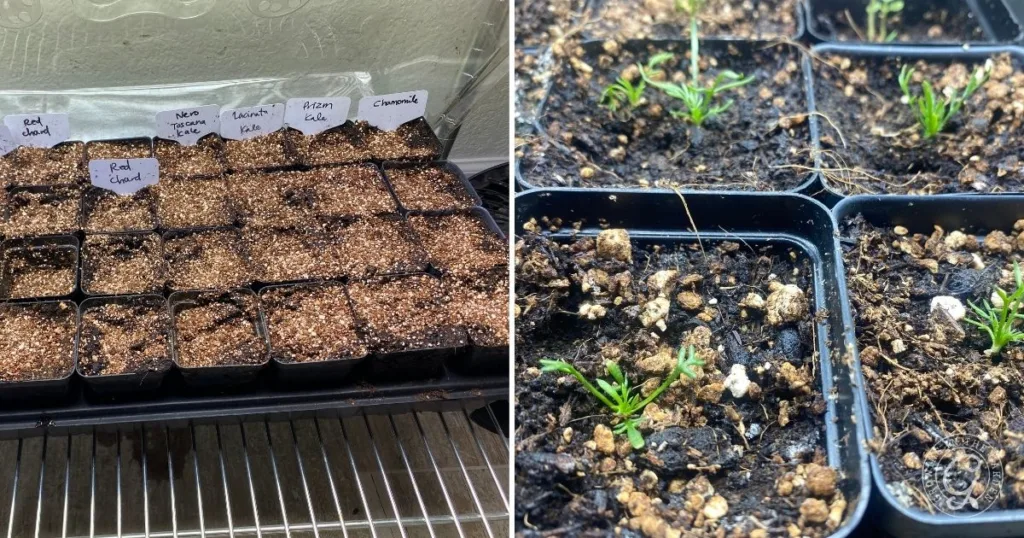
I like starting chamomile indoors because it gives you a head start and helps you control moisture during germination. This is where most people struggle, but it is simple once you know one key detail. Chamomile seeds need light to germinate. Chamomile seeds are tiny and should not be buried.
To start seeds indoors:
- Fill trays or pots with seed-starting mix and water it first.
- Sprinkle seeds on the surface.
- Press them in gently so they make contact with the soil.
- Do not cover the seeds with soil.
- Keep the surface evenly moist until germination.
Seeds often sprout in about 7 to 10 days, depending on temperature and moisture.
Thin seedlings for stronger plants
Once seedlings have a couple sets of true leaves, thin to the strongest seedling. Crowded plants stay smaller, flop more easily, and produce fewer flowers. Seedlings can look slow at first. Be patient. Once established, they take off. Plant outside anytime after seedlings have several sets of true leaves.
Planting chamomile
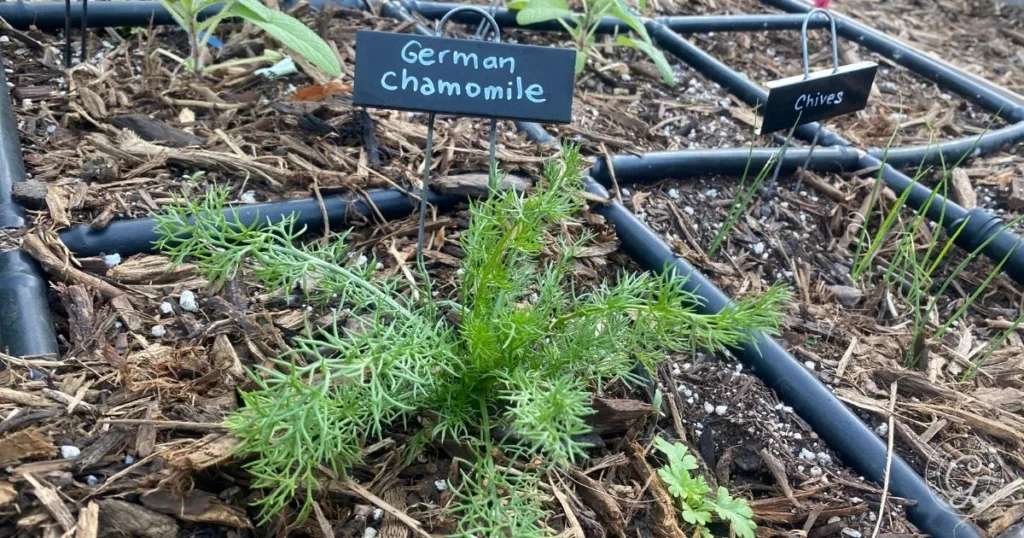
Chamomile is adaptable, so it is easy to tuck throughout your garden.
Spacing
- German chamomile (tea): Space 8–12 in (20–30 cm) apart. Use 12 in for bigger plants and better airflow. Plant 1-2 plants per square foot if using square foot gardening.
- Roman chamomile (groundcover): Space 6–12 in (15–30 cm) apart. Use 6–8 in for faster fill-in.
- Thinning tip: Thin seedlings to final spacing as early as possible for the best growth.
Sun and shade
- Full sun grows the fastest plants and the most flowers.
- In hot climates, chamomile often lasts longer with morning sun and afternoon shade, especially from late spring onward.
A great strategy in Arizona is planting chamomile in a few different areas. Add a plant or two in full sun for the earliest blooms during cooler weather. Then plant a few more where they get filtered afternoon shade, which helps blooms last longer into spring.
Soil
Chamomile tolerates average or poor soil, but it must drain well. If your soil stays wet after watering, grow chamomile in raised beds or containers.
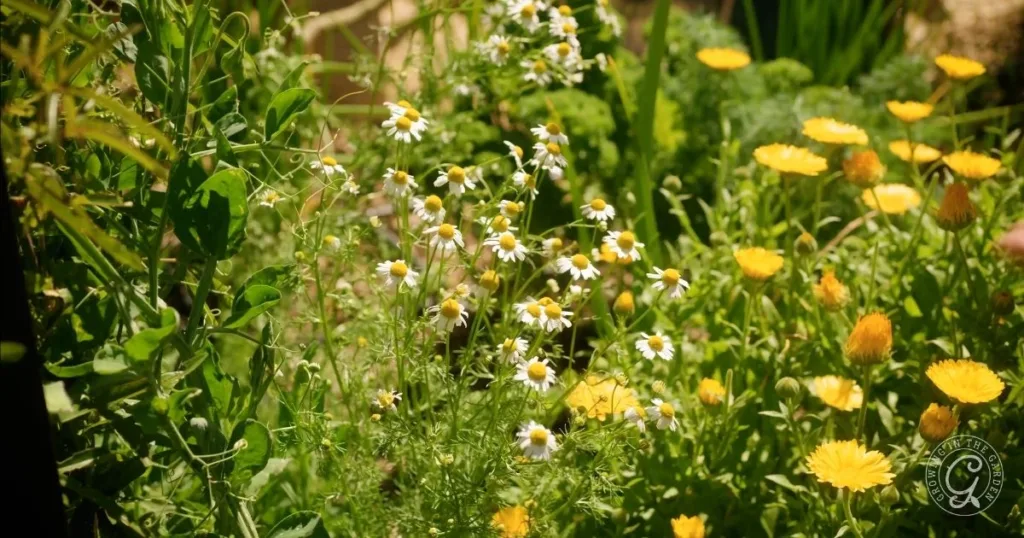
Companion planting
Chamomile fits beautifully in cool-season beds and mixes well with most herbs and vegetables. It also attracts beneficial insects. For more flowers and herbs to sprinkle throughout your beds for beneficial insects, see my Cool-Season Companion Plant Guide.
Growing chamomile in containers
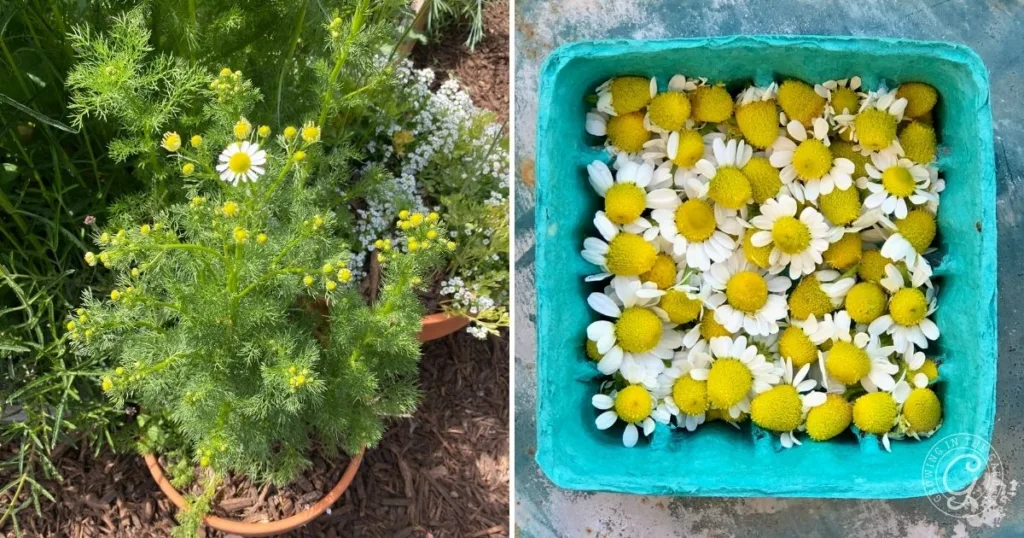
Chamomile grows very well in pots, which is a big advantage in hot climates because you can move them into afternoon shade as temperatures warm.
- Choose a container about 10 to 12 inches tall with drainage holes.
- Use a well-draining potting mix.
- Water more consistently than in-ground plants, since containers dry out faster.
- In late spring, move pots to morning sun and afternoon shade to extend blooming.
Care tips
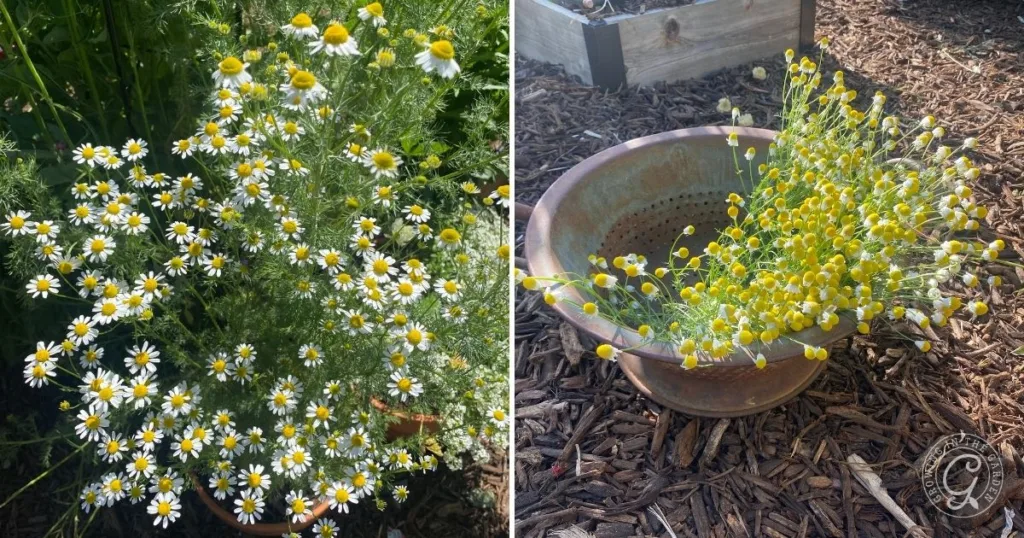
Chamomile is low-maintenance once established.
Watering
- After planting, do not let young chamomile transplants dry out.
- Once established, water regularly and deeply, allowing the top inch or two to dry before watering again. Avoid soggy soil. Chamomile does not like wet feet.
In warm spring weather, consistent moisture is one of the best ways to keep plants blooming longer.
Fertilizing
Chamomile is not a heavy feeder. In most gardens, it does not need supplemental feeding, even in containers. Too much fertilizer can lead to leafy growth and fewer blooms.
Pests and problems
Chamomile is usually not bothered by many pests or diseases. The biggest problem most gardeners have is letting it get too dry or waiting too long to harvest, which leads to fewer blooms and a scruffier plant.
Occasionally, chamomile can get powdery mildew, especially when plants are crowded or they get too much shade, or leaves stay damp from overhead watering. If you see the telltale white coating on leaves, read this article for treatment tips.
How to make chamomile last longer in spring and early summer heat
Hot-climate gardeners can get a long chamomile season with a few simple strategies.
- Plant early. The earlier it blooms, the more you harvest before heat arrives.
- Give afternoon shade. Even light shade can extend flowering.
- Mulch lightly. Mulch helps keep roots cooler and stabilizes moisture.
- Water consistently. Heat plus dry soil shortens bloom time quickly.
- Harvest often. Picking blooms encourages more blooms.
- Succession sow. Plant a small patch every 2 to 3 weeks during your cool season for a longer harvest window.
How to harvest chamomile
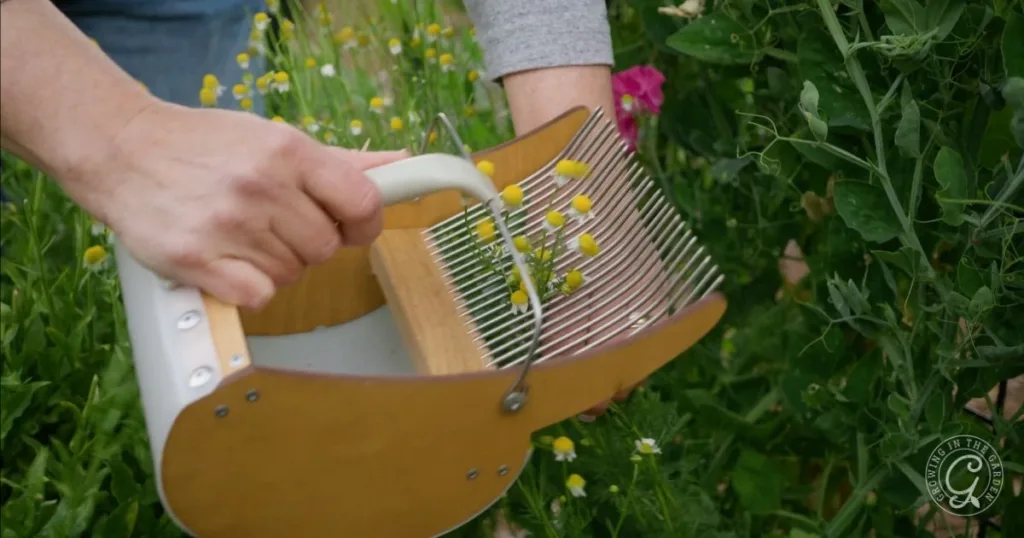
Harvesting is the key to keeping plants tidy and productive. Harvest in the morning after dew dries for the best quality. Don’t wait until flowers look tired or droopy. Frequent harvesting promotes more blooms.
When to harvest
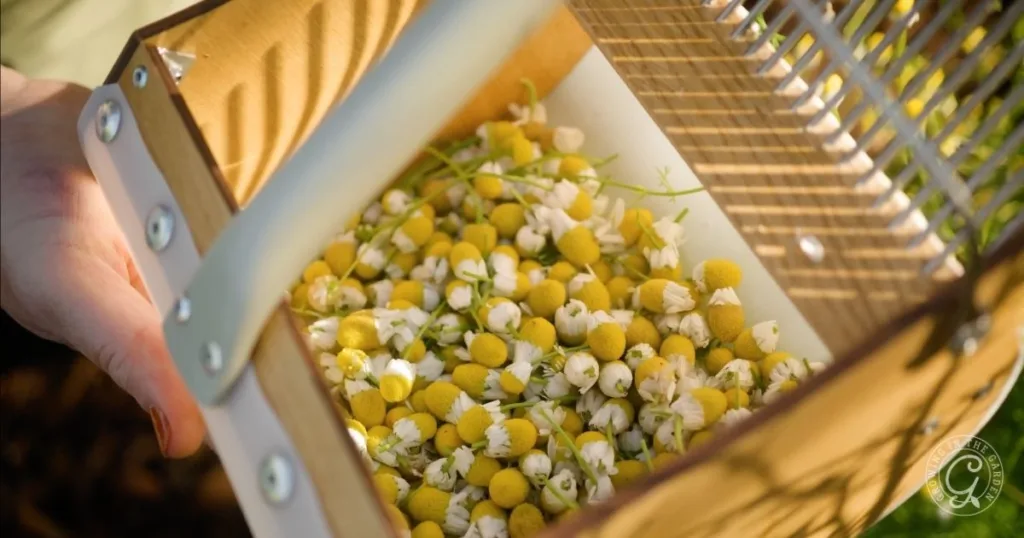
Pick blooms when they are fully open, fragrant, and still fresh.
How to harvest
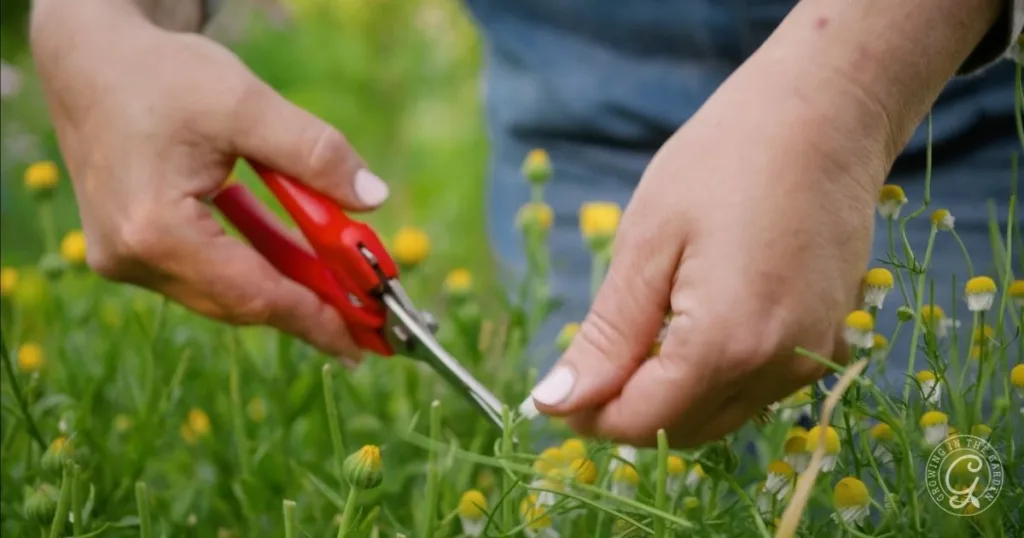
- Snip flower heads with small scissors or snips
- Pull flower heads through your fingers
- Use a berry picker
How to dry and store chamomile
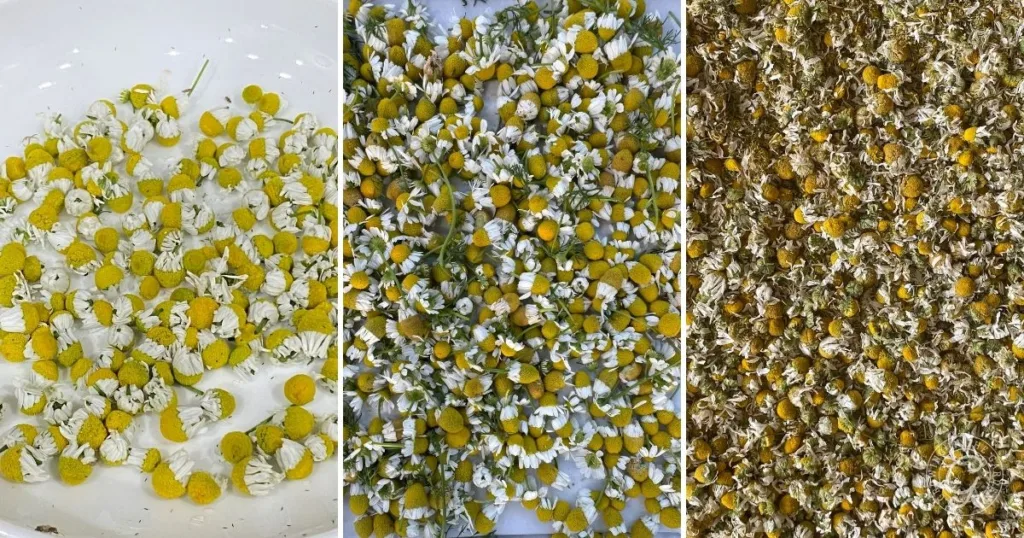
- Spread flower heads in a single layer out of direct sun in a cool, dry place.
- Dry for several days until completely dry, and they crumble easily.
- Store in an airtight container, like a mason jar, away from heat and light.
For the best flavor, use within about one year.
Will it reseed?
Yes. If you leave some flowers on the plant to mature, German chamomile often reseeds for next season.
How to use chamomile
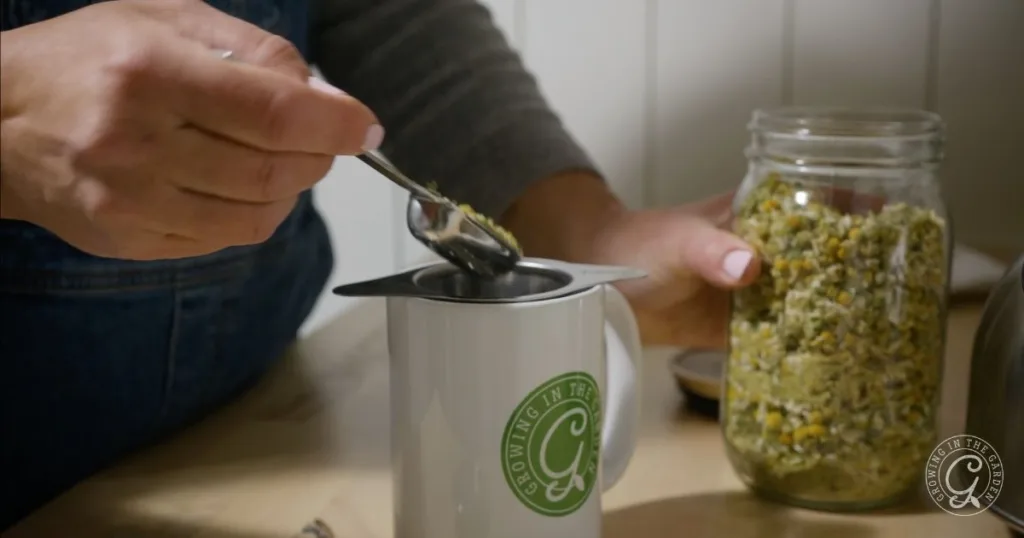
Make chamomile tea
This is my favorite way to use homegrown chamomile.
- Use 1 tablespoon dried flowers or 2 tablespoons fresh flowers per cup of hot water.
- Steep 5 to 8 minutes.
- Adjust the strength to taste.
Other ways to use chamomile
- Add dried flowers to sachets for drawers and linens
- Make a simple hair rinse (traditional use)
- Use cooled tea bags as a gentle compress for puffy eyes
If you want more ideas for growing and using flowers you can eat or brew, you may also like my post on Growing and Using Edible Flowers.
Chamomile FAQ
Does chamomile come back every year?
German chamomile is an annual, but it often reseeds. Roman chamomile can return in many climates, but in extreme heat it may struggle through summer.
Why is my chamomile tall and floppy?
Most often it is too much shade, too rich of soil, or crowding. Harvest often and thin plants to improve airflow.
Can I grow chamomile indoors?
Chamomile can be started indoors from seed, but it grows best outdoors with good airflow and bright light.
How many plants do I need for tea?
A few German chamomile plants can produce a surprising amount if you harvest consistently. Start small and expand next season if you want more.
Quick checklist for Arizona success
- Grow German chamomile for tea
- Plant as a cool-season herb in fall and winter
- Surface sow seed and press in gently, do not bury
- Thin to about 8 inches
- Provide good drainage and steady moisture
- Use afternoon shade to extend the season
- Harvest often, dry thoroughly, store airtight














Heads up — So helpful — clear and practical, much appreciated. Great share.
Small note: This is so satisfying to read — thank you. Love this!
On a similar note — great point — I noticed that too. Great share.
Quick thought · This brightened my day — thank you for sharing 🙂
Heads up: Practical and pretty — bookmarking this. Will try it.
FYI • Absolutely — that’s a charming detail. Love this!
FYI • Absolutely — that’s a charming detail. Love this!
Heads up · I appreciate the detail — very handy indeed. So cozy 🌸