
Banana peels power: a concise orientation before we get practical.
Banana peels power: Quick notes
Did you know that you can use the leftover banana peels to power your houseplants?
It’s true! Banana peels might seem like little more than a by-product of a quick snack, but they are actually one of the easiest and most natural ways to power your houseplants. And instead of tossing them in the trash or compost bin, you can turn them into a gentle, nutrient-boosting fertilizer that helps indoor plants grow stronger, greener, and healthier.
Because banana peels are filled with potassium, calcium, magnesium, and a small amount of phosphorus, they give plants a slow, steady supply of nutrition that encourages good root growth and strong stems. And best of all, using them is simple, inexpensive, and safe for nearly every indoor plant you grow!
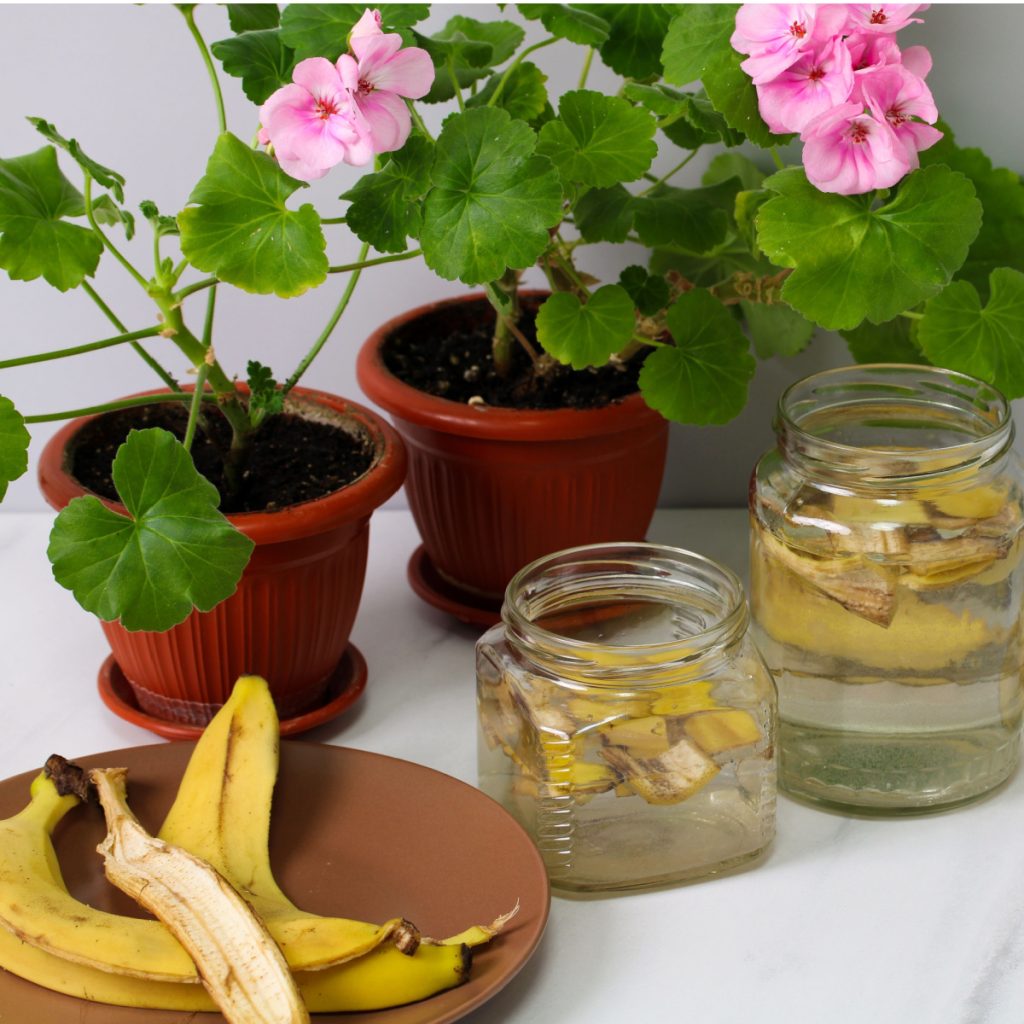
Banana peels are excellent for all kinds of plants – including these geraniums growing indoors!
Using Banana Peels To Power Plants
Houseplants often struggle in the winter. Especially when daylight is limited and the dry indoor air pulls moisture from the soil. Giving them a small boost from banana peels is a great way to help them recover from stress and continue growing well throughout the year.
The good news? You don’t need complicated recipes or fancy tools to get started. In fact, there are several easy ways to use banana peels that take only minutes to prepare.
How Banana Peels Can Help Power Your Plants
Banana peels contain many of the essential nutrients houseplants need for good growth. They are especially rich in potassium. And that happens to be a key nutrient that helps maintain overall plant health.
Potassium strengthens stems and improves root development. It also helps plants move water and nutrients more efficiently. This becomes even more important for indoor plants that often don’t receive regular fertilizing.
In addition to potassium, banana peels contain a moderate amount of calcium, which supports strong cell structure and reduces the risk of leaf tip burn. They also provide small amounts of magnesium, which deepens leaf color and boosts photosynthesis. When these elements are released slowly into the soil, they help indoor plants maintain steady growth – all without overwhelming them.
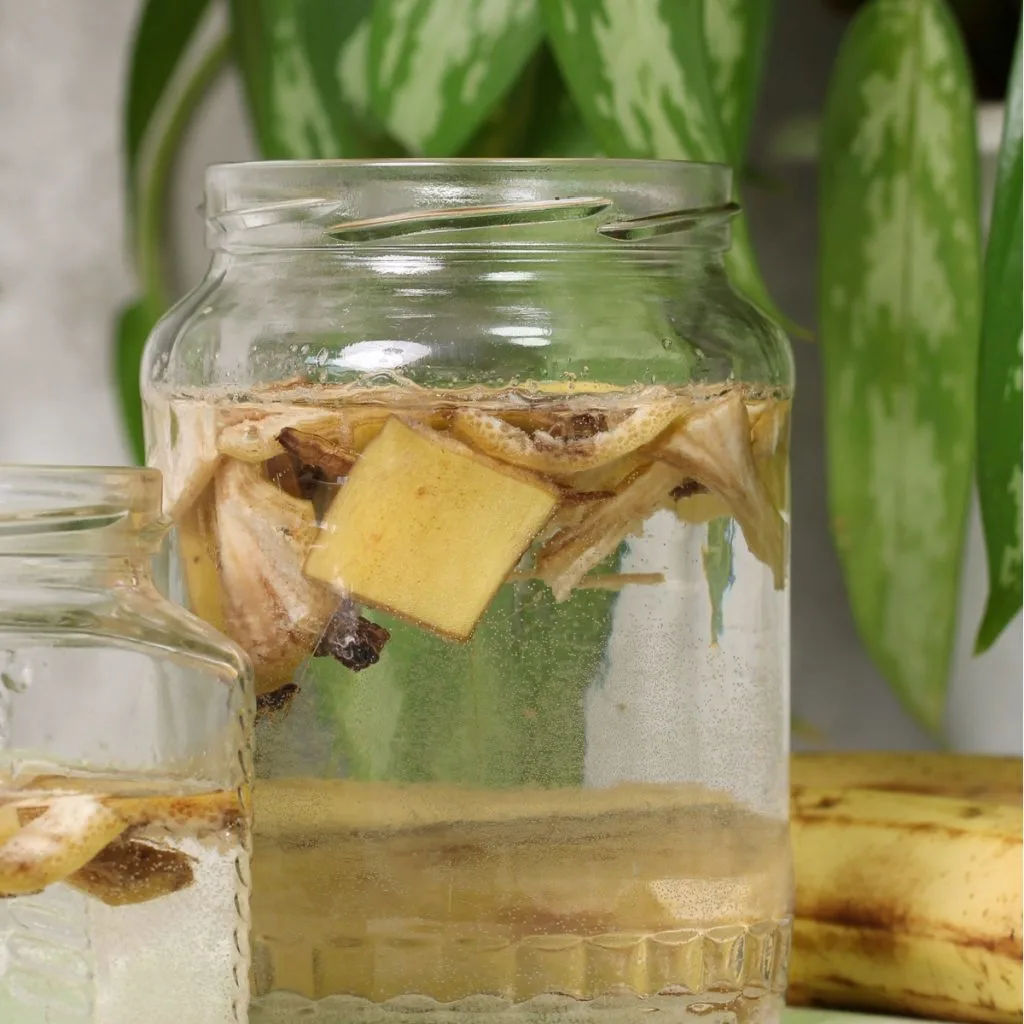 One of the easiest ways to use banana peels is to make a liquid fertilizer by simply soaking the peels in water.
Banana peels do not contain high levels of nitrogen, so they can’t take the place of a well-balanced fertilizer completely. However, they work wonderfully as a supplement, especially for plants that benefit from potassium such as pothos, snake plants, philodendrons, spider plants, aloe, and peace lilies.
Below are a few of the most effective ways to use banana peels for houseplants, from simple banana water to dried peel powder and homemade peel tea. These methods are very safe for potted plants. Why? Because they deliver nutrition in a form that is gentle enough to never burn the roots!
Making Simple Banana Peel Water
Banana peel water, often called banana tea, is one of the easiest and most popular ways to use banana peels for indoor plant care. It’s fast to make. Mild enough for sensitive plants. And even better, a great replacement for plain watering. This works best for plants that like consistent moisture and respond well to gentle, natural fertilizers.
To make banana peel water, start by cutting one or two fresh banana peels into smaller pieces. This helps them break down faster and release nutrients more easily. Place the pieces in a jar, bowl, or container and cover them with water.
Let the mixture sit for at least 24 hours. The longer the peels soak, the more nutrients the water absorbs. Just be sure not to leave the mixture sitting for too many days because it can begin to ferment and develop a strong odor.
After soaking, strain out the banana pieces and pour the nutrient-rich water into another container. You can use this mixture to water your houseplants just as you normally would. If the solution seems too strong or has a slight smell, dilute it by half with fresh water.

Making Banana Peel Tea
If you want to take banana water a step further, you can make banana peel tea, which pulls even more nutrients from the peels. The process is very similar, but instead of soaking the peels in room-temperature water, you use hot water to extract more minerals.
To make banana peel tea, cut two or three banana peels into smaller pieces and place them in a heat-safe jar or bowl. Pour boiling water over the peels and let the mixture steep until it cools completely. The heat helps break down the peel fibers and release more potassium and calcium.
Once it has cooled, strain out the peels and save the liquid. Because this tea is slightly stronger than simple banana water, it’s best to dilute it with an equal amount of plain water before using.
You can pour the banana tea directly into the soil of any indoor plant that needs a quick boost. It works especially well for houseplants that have pale or drooping leaves, plants that have been recently repotted, or plants that are recovering from stress. Most houseplants only need banana peel tea once every three to four weeks.
Creating Banana Peel Powder
Banana peel powder is another excellent way to use banana peels for indoor plant fertilizer. Unlike banana water, which delivers nutrients quickly, peel powder provides long-lasting nutrition that slowly breaks down over weeks and months.
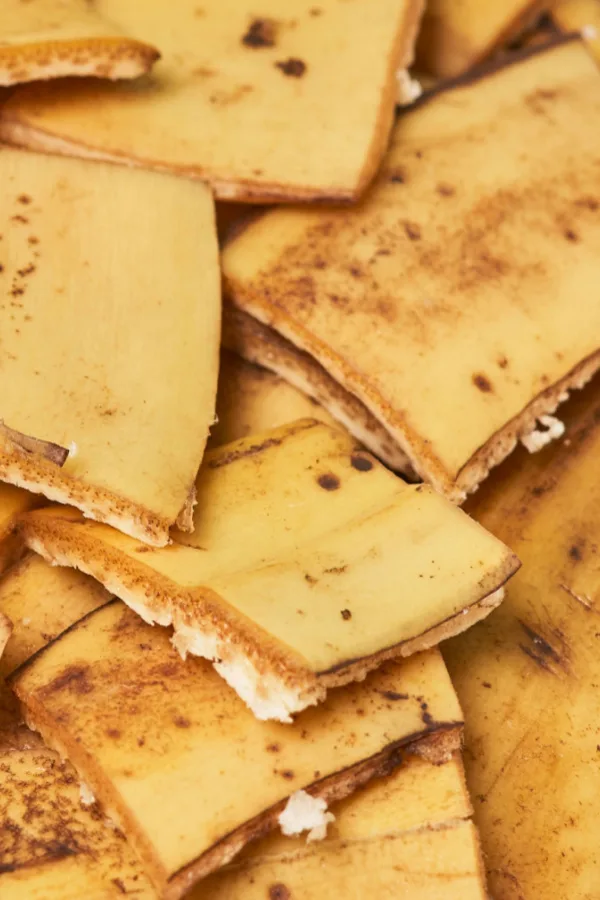 There are a lot of nutrients in banana peels – whether you steep them in water or dry them into a powder.
It’s especially helpful for potted plants that don’t get repotted often – or for soil mixes that need an extra mineral boost.
To make banana peel powder, wash the peels to remove any dirt or residue. Cut them into small strips and place them on a baking sheet. Dry them in the oven on the lowest possible setting. You can also use a dehydrator if you have one.
The peels need to be completely dry and crisp before turning them into powder, because any leftover moisture can cause mold later. Once dry, grind the peels in a blender or food processor until they form a fine powder. You can store the powder in a sealed jar for several months.
To use, sprinkle about a teaspoon of the powder on top of the soil for small pots or up to a tablespoon for larger containers. Lightly mix the powder into the top layer of soil and water normally. As the powder breaks down, it releases potassium, calcium, and magnesium into the soil, helping the plant maintain strong growth.
When Not To Use Banana Peels
Although banana peels are safe for nearly every indoor plant, plants that prefer sandy or very fast-draining soil, such as succulents and cacti, don’t need much fertilizer and will not benefit as much from banana peels.
Overusing banana water on these types of plants can lead to soft or weak growth, so it’s best to use it sparingly. Here is to using banana peels to power your houseplants – all for free! Happy Gardening – Jim & Mary.
Old World Garden Farms
Jim and Mary Competti have been writing gardening, DIY and recipe articles and books for over 15 years from their 46 acre Ohio farm. The two are frequent speakers on all things gardening and love to travel in their spare time.
As always, feel free to email us at thefarm@owgarden.com with comments, questions, or to simply say hello! You can sign up for our free email list in the subscribe now box in the middle of this article. Follow us on Facebook here : OWG Facebook. This article may contain affiliate links.
Banana peels power comes up here to connect ideas for clarity.
We reference Banana peels power briefly to keep the thread coherent.














Beautifully done; the instructions are easy to follow. Thanks for this!