This post may contain affiliate links. If you make a purchase through links on our site, we may earn a commission.
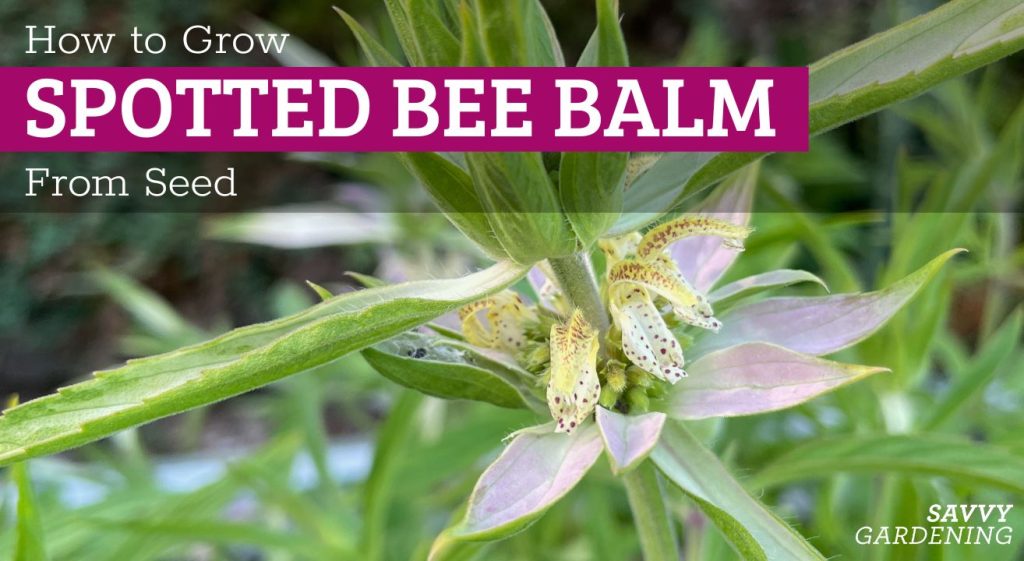
I have various plant obsessions, but spotted bee balm is my latest. My local seed library introduced me to this fascinating plant. I picked up some seeds, winter sowed them (along with a few other native plants), and was delighted by the result when they bloomed in summer. The flowers, which are pollinator magnets, are really hard to describe. Layers of bracts and flowers look like they’ve been stacked on top of each other, and encircle a bright green stem with long, narrow leaves. The sturdy-looking bracts that resemble petals are a light mauve or pink hue, while the delicate flowers, that look a bit like talons, are pale yellow with maroon polka dots (I’ve read that these are nectar guides). They remind me a bit of snapdragons or the pattern of a toad lily.
Part of the mint family, spotted bee balm (Monarda punctata) is native to eastern North America, as well as in some parts of California, in the Great Lakes region (which is where I live), and into Mexico. Also called spotted horsemint, it’s considered a short-lived perennial. This generally means it will last about three to five years. But it does reseed itself in the garden, so you can constantly be generating new plants.
Why grow spotted bee balm?
For me, I wanted to diversify my collection of native plants in my garden. I hadn’t heard of spotted bee balm before, so when I saw the seed packet and did a quick online search, I was intrigued. This plant did not disappoint. I love unusual-looking plants, so this one definitely fits the bill.
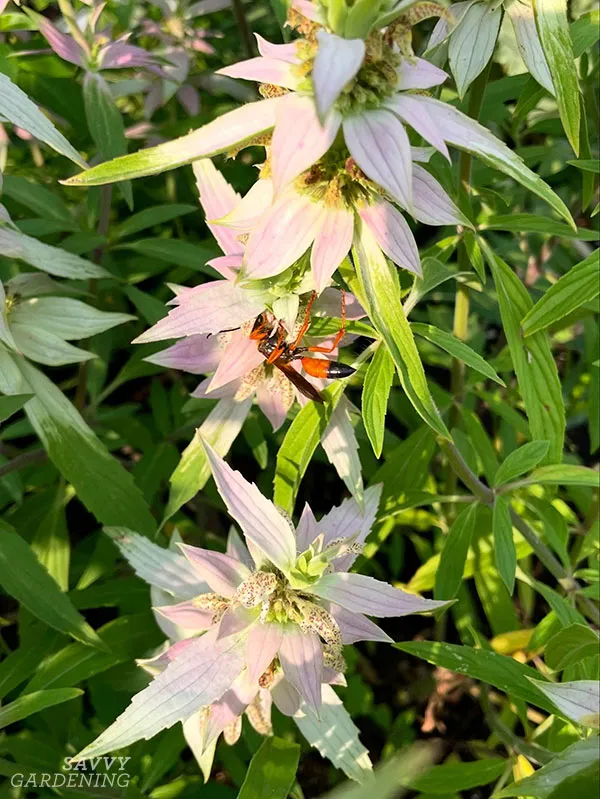 My plants start blooming in July and last into September. Around October, the seed heads start to form. In the meantime, the blooms are constantly abuzz with a variety of bees and wasps feeding on their pollen and nectar. Pictured here is a great golden digger wasp. I also get blue mud dauber wasps buzzing about.
The plants add a nice height—they can grow up to three feet tall—to the garden. They are also drought tolerant once they become established. Spotted bee balm is hardy down to -40°F (-40°C). And, as mentioned, the plants attract loads of beneficial insects, as well as hummingbirds. Mine were covered by bees and these vibrant blue mud dauber wasps. I love that I am nourishing the beneficial insects that come to my garden by providing them with native plants to feast on.
Spotted bee balm is also a host plant for some moths and butterflies, including the Raspberry pyrausta butterfly, as well as the gray marvel, snout, and hermit sphinx moths. If you have a black walnut tree on your property, the plants do not mind juglone.
Where can you get spotted bee balm seeds?
Spotted bee balm can be purchased from some seed companies. You may be better off sourcing seeds from somewhere local. I’m able to get native plant seeds gardening events, like Seedy Saturday. My first seeds were procured from a seed library in my neighborhood. And a local native plant nursery in my area sells seedlings in spring.
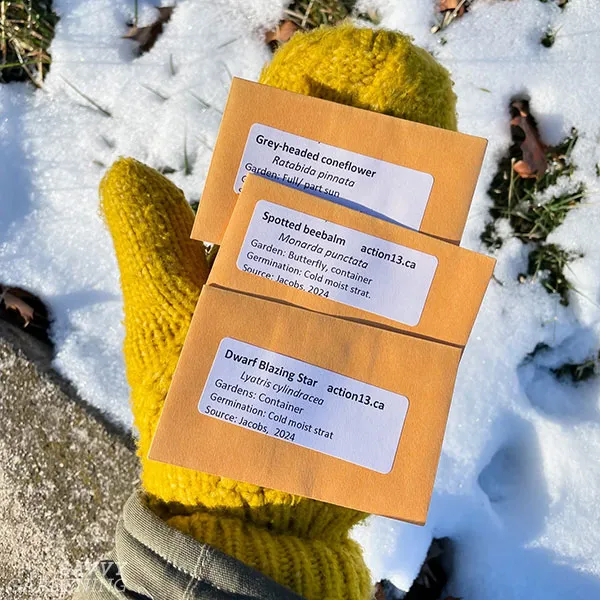 I first discovered spotted bee balm seeds when I opened up the door to a local seed library that I pass on my walks.
Winter sowing spotted bee balm seeds
Any seeds that may have fallen into the garden after the seed heads formed will likely come up for you the following spring. If you’ve never planted spotted bee balm before, I think winter sowing is an incredibly easy way to start a variety of native plants, especially those that need a period of cold stratification to break dormancy. These seeds do not require this process to grow, but they still benefit from being winter sown. This can happen in mid to late winter.
All you need are some empty milk jugs or empty salad containers, and high-quality potting soil. Further instructions about winter sowing can be found here.
Starting spotted bee balm seeds indoors under grow lights
Spotted bee balm seeds don’t need cold stratification, they just need to be warm. A seedling heat mat can help with germination. About six to eight weeks before your last average frost date, fill a seedling tray with seed-starting mix (we also have a DIY recipe here). Sprinkle the seeds on top of the soil, pressing them in gently. They do not need to be covered with lots of soil.
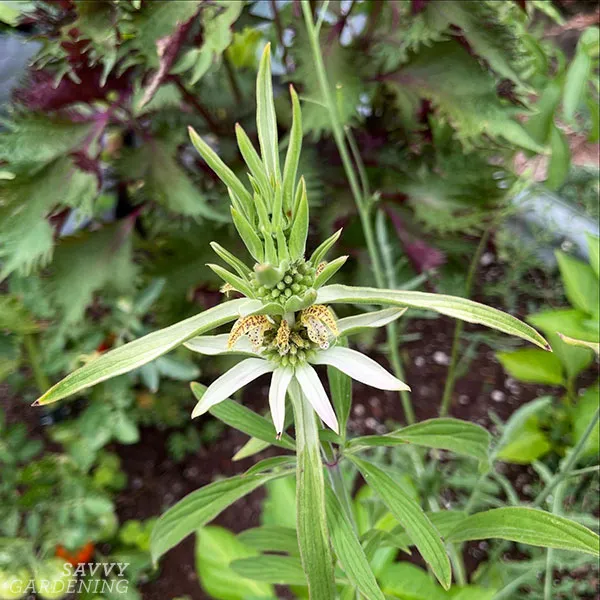 Give your seedlings lots of space when planting so that there is plenty of room for the leaves to grow and so you can actually see the flowers and bracts as they form.
The seeds need lots of light, so if possible, move the lights towards the tray. Keep the soil evenly moist (I use a mister) until the seeds have germinated.
Transferring seedlings to the garden
After all risk of frost has passed, plant spotted bee balm seedlings in an area of the garden that gets full sun to partial shade. Be sure to harden off your seedlings if you started seeds indoors. If you winter sowed the seeds, they will already be outside and ready to plant.
The soil should be well draining—the plant will tolerate sandy soils. Many gardeners will include spotted bee balm in a mass planting, like a meadow or small prairie garden. While some perennials take a few years to become established, I love that spotted bee balm grows into lush plants that flower in their first year.
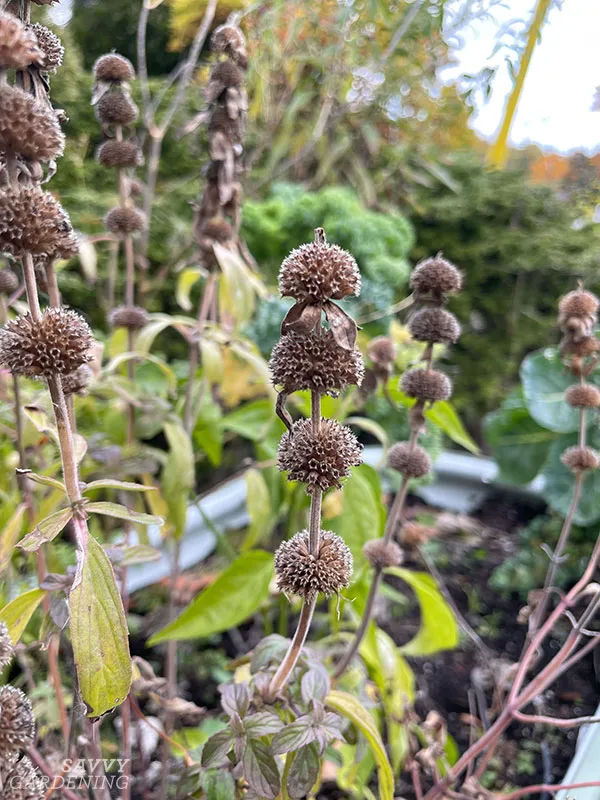 I leave most of my plants in the garden over the winter to provide food and shelter to small animals, insects, and birds. Spotted bee balm is a great winter interest plant, but the birds also eat the seeds.
If the seeds are planted closely together in your plastic winter sowing container, you’ll want to be careful as you separate them for planting. If seedlings are stuck to each other, gently tease them apart. A chopstick can be helpful for this task.
Plant the seedlings 12 to 18 inches (30 to 46 cm) apart in the garden. Water them until they become established. Make sure the soil drains well as plants don’t like when their roots remain wet. The plants can be susceptible to powdery mildew.
Leaving plants in the garden over the winter
As the flowers fade in the fall, they transform into seed heads, full of tiny seeds. Not only do the seed heads provide winter interest, they also are a food source for birds.