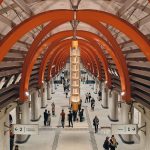

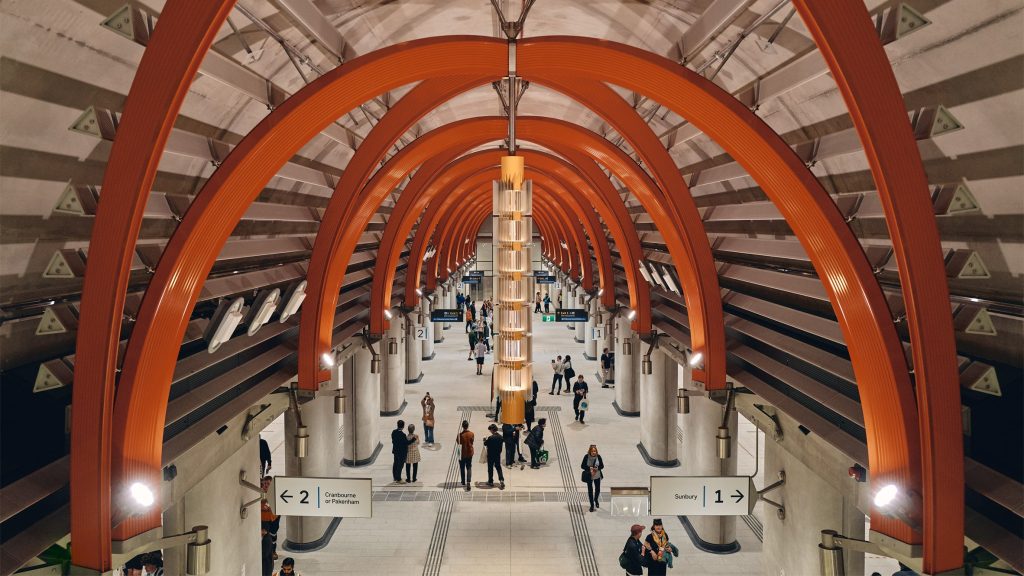
Architecture studios RSHP, Hassell and WW+P Architects have created the five stations for the Metro Tunnel rail network in Melbourne, designed to provide enjoyable spaces for commuters.
Set to be fully operational in February 2026, Melbourne’s Metro Tunnel aims to ease congestion on the City Loop underground infrastructure by connecting the Sunbury line in the west to the Cranbourne and Pakenham lines in the southeast.
RSHP, Hassell and WW+P Architects have completed five stations for the Metro Tunnel in Melbourne
RSHP, Hassell and WW+P Architects designed five stations for the new Metro Tunnel line, each with a distinct street-level appearance that aims to blend with the surrounding streetscape.
The studios intended to draw natural light into the Metro Tunnel stations and used coloured structural elements and sculptural lighting to brighten the commuter journey as they move below ground.
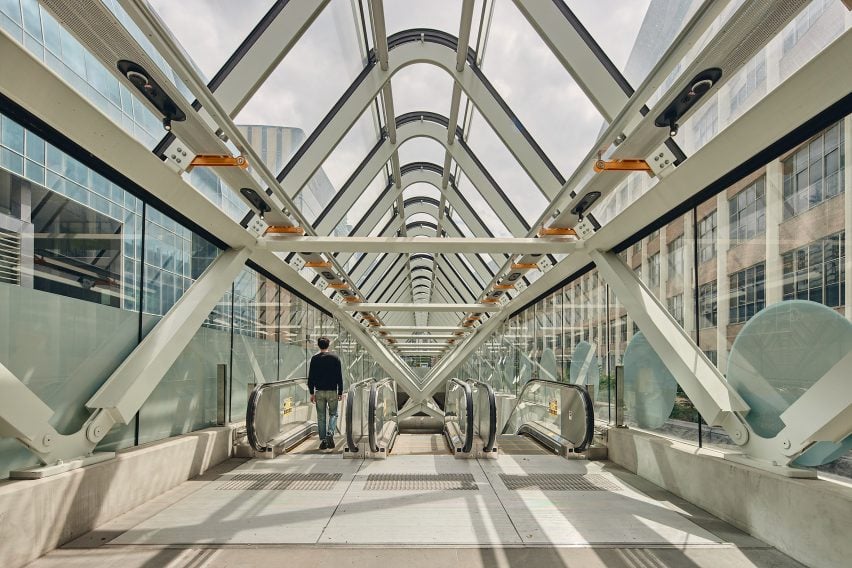 The stations, including the glazed Parkville Station, were designed to let in natural light
“The main design goal was to create a unique, distinctive, and timeless line-wide experience, open to daylight and defined by expressive artificial lighting, for all those using the metro,” said RSHP senior design partner Ivan Harbour.
“The design is founded on the celebration of the raw spaces and the technological overlay that together make the metro function,” he continued.
“Human-scale, precision-engineered and crafted components are set against the backdrop of bold, exposed civil-engineering structures, forming a loose-fit definition of space that will readily absorb changing technology into the future without disrupting the spatial qualities achieved today.”
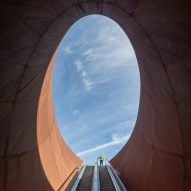
Anish Kapoor’s long-awaited underground station set to open in Naples
Arden Station is characterised by a tall arched entrance lined with bricks, while Parkville Station is a glazed structure topped with a pitched roof.
Aiming to integrate the structure into the leafy surroundings, the studios designed Anzac Station with green columns that support a timber canopy.
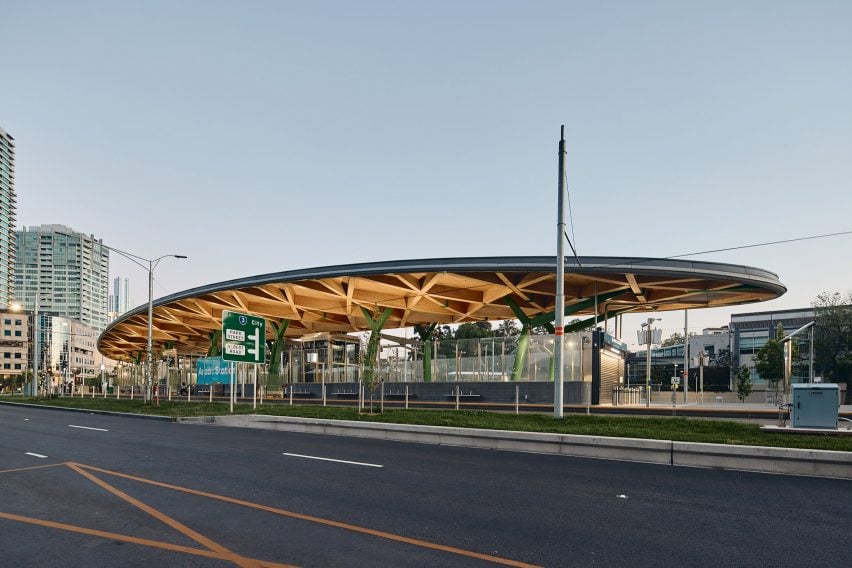 Anzac Station is topped with a timber canopy
State Library Station and Town Hall Station are located in Melbourne’s central business district and have cathedral-like interiors.
Artwork panels are set between concrete columns inside State Library Station, while the roof at Town Hall Station is perched on tree-shaped columns.
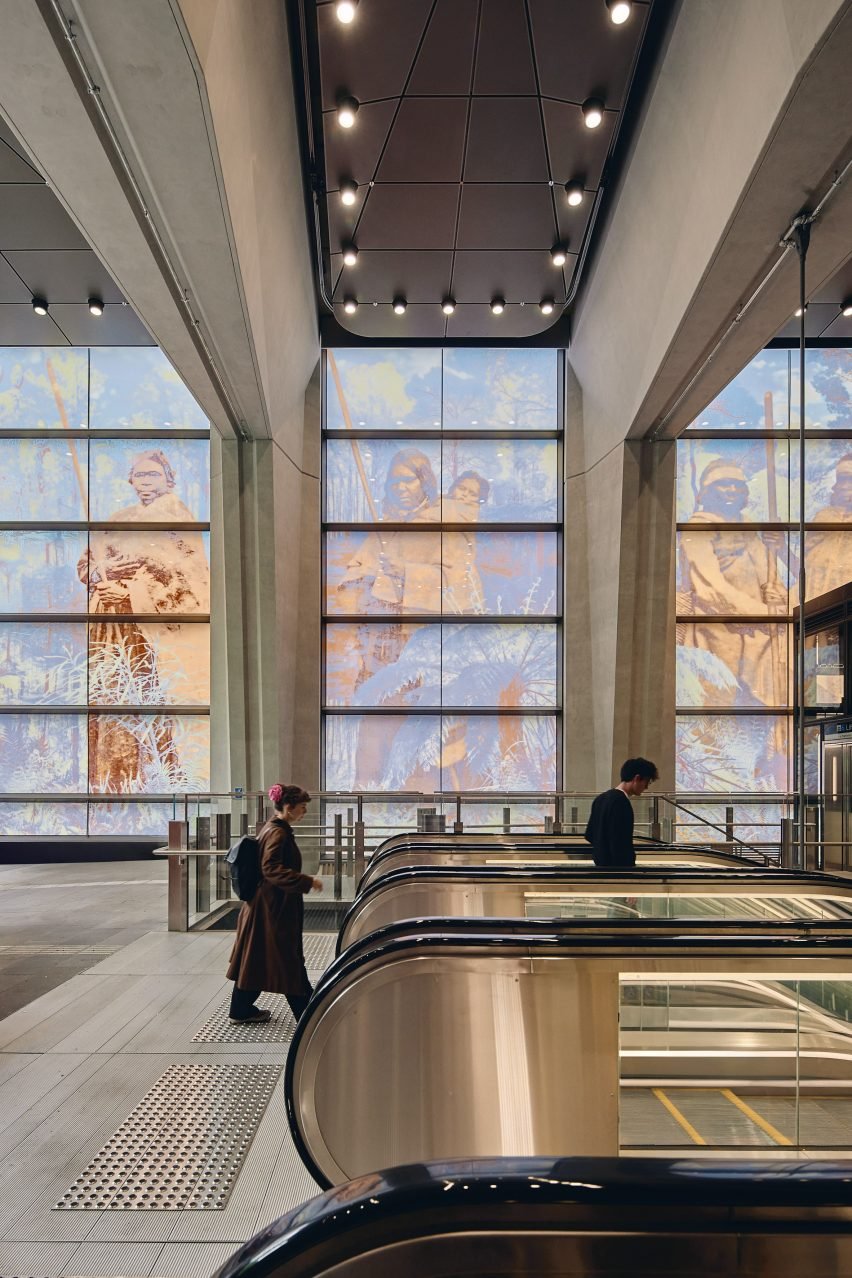 Lofty cathedrals informed the design for the State Library Station
“The stations are all siblings, with their own distinct character and common DNA,” said Harbour.
“A tangible connection with the streets is exemplified by the creation of distinctly different principal portals, each dramatically emerging from below, drawing daylight in, and responding carefully to the station’s location in the city fabric, thereby improving the urban spaces where they sit.”
Other metro stations that have been featured on Dezeen include one in Naples by Anish Kapoor with curved, weathering steel walls and an “inverted skyscraper” by Dominique Perrault Architecture.
The photography is by Peter Bennetts.