
What Is String Trellising?
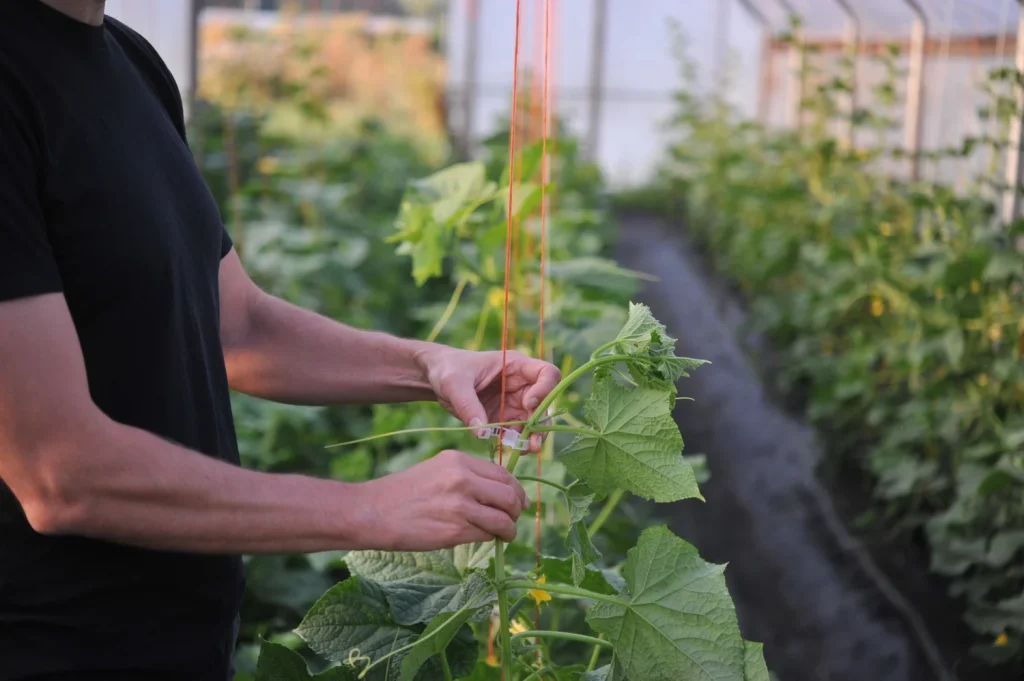
String trellising uses twine instead of cages or other structures to support plants. Each plant is supported by string, growing upward toward light and air.
The approach originated in greenhouse vegetable production, where crops like tomatoes and cucumbers are grown on hanging strings. But you don’t need a greenhouse to make it work—just a simple frame, some good twine, and a few minutes a week.
Why String Trellising Works So Well
String trellising keeps plants organized, accessible, and productive. Here’s why we love it:
Better plant health. Lifting foliage improves airflow and reduces soil-borne disease.
Simpler pruning and harvests. Fruit grows at eye level, and vines stay neat and open.
Higher yields in less space. Plants grow vertically, so you can fit more per bed.
Cleaner fruit. No muddy cucumbers or bruised tomatoes from sprawling on the soil.
Once you try it, you’ll see why professional growers rely on strings —it’s faster, cleaner, and easier to maintain.
Choosing the Right Twine
Hemp twine – The strongest natural twine. It’s biodegradable, can hold virtually anything and easily lasts a full season.
Linen twine – Nearly as strong as hemp, just as attractive and also biodegradable. Our linen twine comes in a variety of colors.
Jute twine – Good for horizontal strings, lighter crops, and netting.
Plastic twine – We don’t recommend plastic twine. It’s durable but not biodegradable; it can shed microplastics into the garden and removing it from old vines can be tedious.
Whenever possible, go with natural fibers. At season’s end natural twine and spent vines can go straight into the compost—no plastic waste, no cleanup headache.
Vertical strings, Horizontal Strings, and Nets
There are 3 main approaches to string trellising:
Vertical string trellising: One string per plant (or per main stem – we often let our tomatoes have 3-4 main stems, so we add additional strings to support them), hanging straight down. Ideal for tomatoes, cucumbers, beans, and peppers.
Horizontal string trellising: Twine runs side-to-side between posts, supporting plants in layers—great for peas, flowers, and even bush beans – short crops that need a “fence” rather than a single line.
Netting: String nets are a great mix with benefits of both vertical and horizontal strings. Set up the net before planting and train crops to grab on as they grow. Nets work best when supplemented by occasional horizontal strings across the front (to help fruit-laden vines stay in place)
Many gardeners mix these methods in the garden: vertical strings for tall crops like tomatoes, cucumbers, and pole beans, horizontal lines or nets for peas and flowers.
How to Set Up a String Trellis
Set up your frame. Install two sturdy posts and a crossbar 5–7 feet above the ground. A Freyr trellis, cedar posts, or an existing arbor all work.
Attach the string. For vertical strings, you’ll drape twine over the top bar so both ends hang to the soil. Clip or tie them loosely to the plant’s base. For horizontal strings, simply tie the string to a post, weave it between your plants and tie off on the other post.
Train the plant. As stems grow, gently wrap them around the string, add new horizontal strings, and/or secure them with trellis clips. Check weekly and guide new growth upward.
Prune as you go. Remove crowded or downward-facing branches to keep air and light moving freely.
Pro tip: When using vertical strings, use a double string (looped up and over the bar). It’s stronger and avoids tension knots that can slip or weaken midseason.
Managing Height and Growth
Not all plants will reach the top of the trellis, but some particularly vigorous vines, like indeterminate tomatoes can. When plants climb past the top of the trellis, we like to let them get about 6-12” above the top bar. This is short enough that the branches won’t snap or bend, but tall enough that it looks great and gives you a little extra vertical space.
When they’ve reached a height that you can still easily manage, simply snip off the tops. Some plants will send up new shoots, which is okay, just trim those tops as needed for the rest of the season.
If your plants regularly exceed that height, you can use a tomahook or similar reel to unwind extra string and lower the vine in a gentle arc.













Also — So comfortable — makes me want a cup of tea and a quiet afternoon ☕. Will try it.