

Water snake plant. A brief context to set expectations.
This post may contain affiliate links. If you make a purchase through links on our site, we may earn a commission.
Snake plants are my all-time favorite houseplants thanks to their striking foliage and adaptability to a wide range of growing conditions. And while these are low care plants, knowing when to water a snake plant is important for providing the right type of care. Too much water and the roots will rot. Too little and it will fail to thrive. In this article you’ll learn what factors affect watering frequency, how to tell the best time to water, and how to do it right.
What is a snake plant?
Snake plants (Dracaena trifasciata, formerly Sansevieria trifasciata), are beautiful houseplants with most types having upright, sword-like leaves. Also called mother-in-laws tongue, snake plants are tough plants forgiving of varying levels of light and seem to thrive on neglect. These tropical plants are native to Africa and are very drought-tolerant.
These long-lived succulents green up practically any space with their pointed leaves which grow between 6 inches to 4 feet tall, depending on the type. It’s not just the leaf shape that’s striking as snake plants often have foliage edged in gold or varying shades of green as well as leaf surfaces adorned with unique patterns and markings.
Why it’s important to know when to water a snake plant
Understanding the watering needs of snake plants helps ensure your plants thrive. As noted, these are low care plants, but the quickest way to kill your snake plant is overwatering. An overwatered snake plant is susceptible to root rot with the leaves turning yellow and feeling squishy. The succulent leaves of snake plants store water, so soggy soil quickly overwhelms the plant.
Overwatering damages the plants, but give them too little water and they’ll also decline. When underwatered the leaves of snake plants start to shrivel and look wrinkly. As they dry out further, you may notice brown leaves, or the foliage curling or drooping. Ideally, you should water before the leaves show signs of water stress.
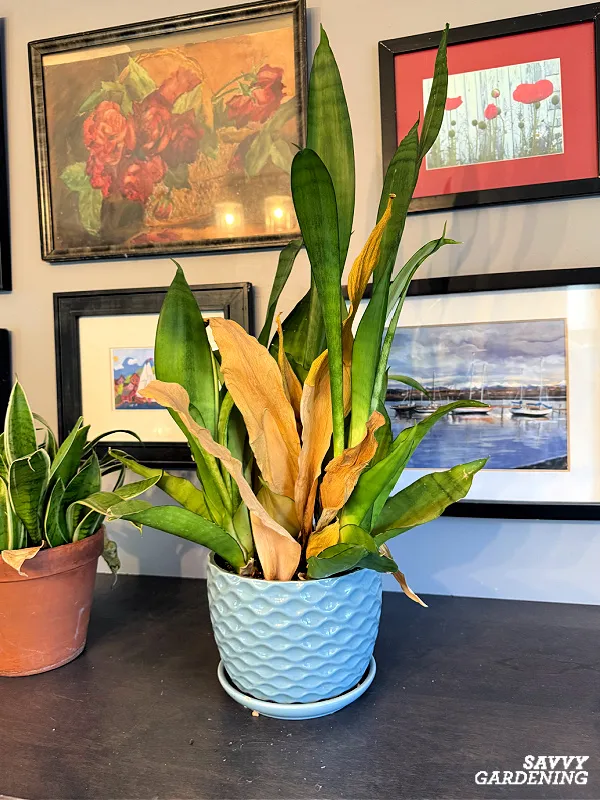 When a snake plant isn’t watered properly, the leaves shrivel and turn yellow or brown.
What factors impact when to water
It’s best not to water a snake plant on a schedule, but instead water based on need. Factors that impact the frequency of watering include environmental factors like temperature and light as well as the season. Here is more information on what dictates how often you should water:
- The season – Snake plants need to be watered more often in the active growing season from spring though early autumn. In late autumn and winter the plants enter a period of dormancy where growth slows and they need less water.
- Temperature – If placed in a warm room or near a heat source like a heat pump or fireplace, they’ll dry out faster.
- Light – The amount to light is another factor that influences watering frequency because higher light levels dry out the soil faster than plants growing in less sunlight. Snake plants also grow quicker in bright light and need more water to support the new growth.
- Soil type – There are various types of potting soil available at garden centres. Some, like peat-based mixes, are moisture retentive and others, like cactus mixes, dry out fast. Water snake plants growing in well-draining soil more often.
- Pot size and material – Snake plants growing in small, or too tight pots, require more frequent irrigation than those in larger containers because there is a smaller volume of soil. The container should be about 2 inches larger than the diameter of the plant and have drainage holes on the bottom. Repot snake plants every few years to make sure they’ve got space to grow. Also consider container material because porous materials like terra-cotta pots dry out faster than plastic pots.
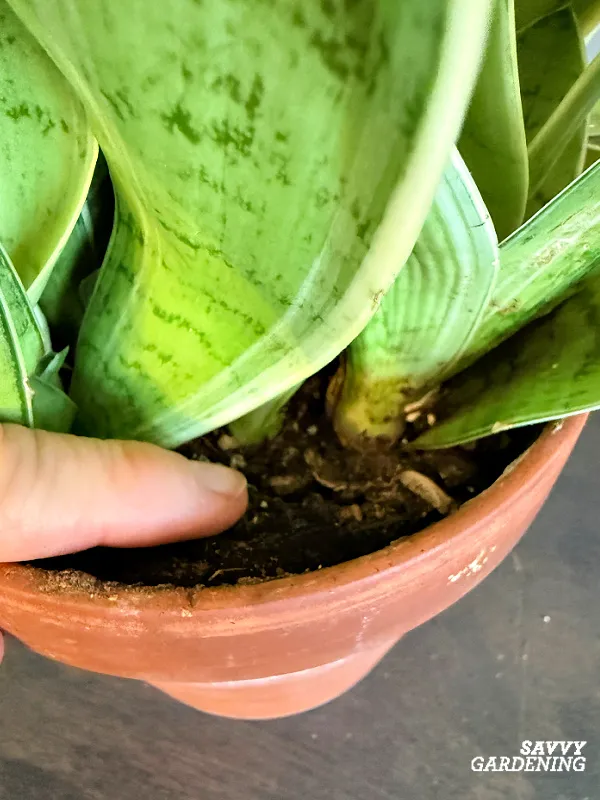 Don’t wait to water until the plant is showing signs of stress. Instead do a quick soil check to see if it’s time to water.
When to water a snake plant
The best time to water a snake plant is when the soil has completely dried out, but the plant isn’t yet showing signs of water stress. To gauge soil dryness I stick a finger about two inches into the growing mix. If it’s dry two inches down, it’s time to water. You can also use a moisture meter to check the moisture level of the soil. These handy devices give you an accurate reading of how dry the soil is further down in the pot.
How to water snake plants: 2 easy options
It’s important to water a snake plant properly. Don’t give the growing mix a light sprinkle, but instead, water deeply and saturate the soil completely. This prevents dry spots and ensures even watering. There are two ways to water a snake plant; top water or bottom water. Here’s more information on each technique:
- Top watering – This is the most common method for irrigating where water is poured over the soil with a watering can. It’s a quick way to water and should be repeated several times, spaced a minute or two apart, to fully saturate the soil. Be sure to use a saucer or tray under the pot to catch excess water as it drains away. Once the soil is completely damp, discard excess water in the saucer.
- Bottom watering – To bottom water, add several inches of water to a tray, deep saucer, sink, bucket, or tub and place the potted snake plant in the water. The soil is able to slowly absorb the water it needs through the drainage holes in the container. The benefit to this technique is that it fully soaks the soil, not just the top layer which can happen if top watering isn’t done correctly. Leave the plant in the water until the top surface of the soil is damp. This may take 15 to 30 minutes depending on the size of the pot. Remove the fully watered pot from the sink or saucer, let it drain for a few minutes and place it back in its spot.
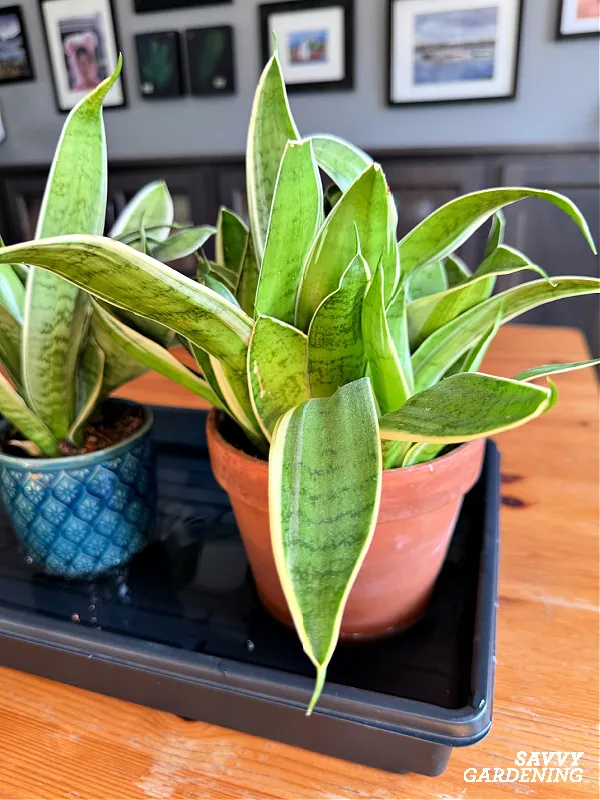 Bottom water snake plants by putting the pot in a tray of water or in a sink or tub.
Can you use tap water to water?
I use tap water to water my snake plants, but I have a well, not municipal water. If using tap water with added chlorine and chemicals, fill up your watering can and let it sit for 24 hours before watering. This allows chlorine to dissipate and also brings the water to room temperature which is less shocking to the roots.
Other care tips for snake plants
Forgiving snake plants don’t demand much from their growers and are adaptable to varied indoor environments. However, if you wish to encourage optimum growth, here are a few more snake plant needs.
- Light – The best lighting conditions for snake plants is a site with bright, indirect light such as that of an east or west-facing window. They still grow in low light, but the growth rate will be reduced and the foliage colors and patterns may be muted.
- Fertilizing – Feed your snake plants during the active growing season with an organic all-purpose houseplant fertilizer. I dilute it to half strength, and repeat every 4 to 6 weeks.
- Repotting – As a rule of thumb, snake plants are repotted every 3 to 4 years. This is best done just as the growing season begins. Learn more about when and how to repot a snake plant.
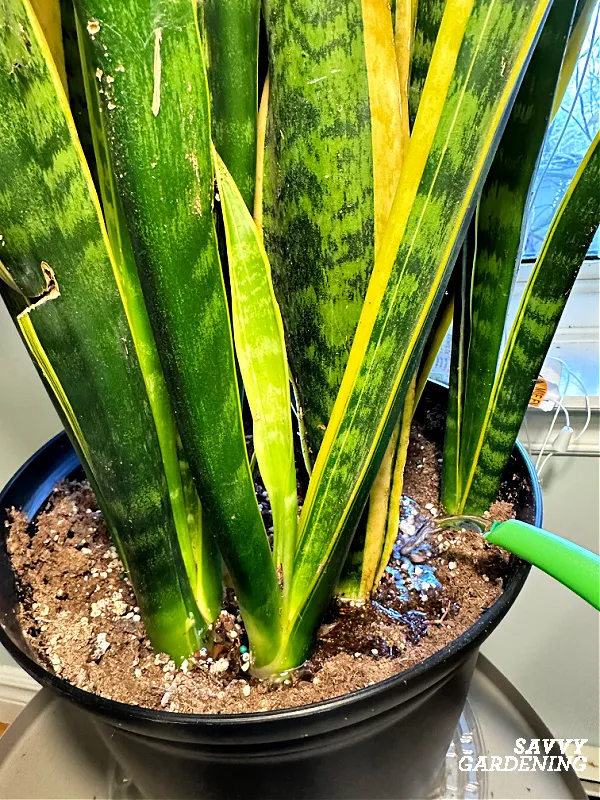 Top watering with a watering can is the most common method of watering snake plants.
For more articles on growing snake plants and other low-care houseplants, check out these articles:
A short mention of Water snake plant helps readers follow the flow.
Water snake plant comes up here to connect ideas for clarity.
















Heads up: Neat idea — simple and effective. Thanks for this!
PS — I like how you phrased that — very natural. Love this!
Quick thought — Such a warm note about “When to Water a Snake Plant and How to D” — lovely. Thanks for this!